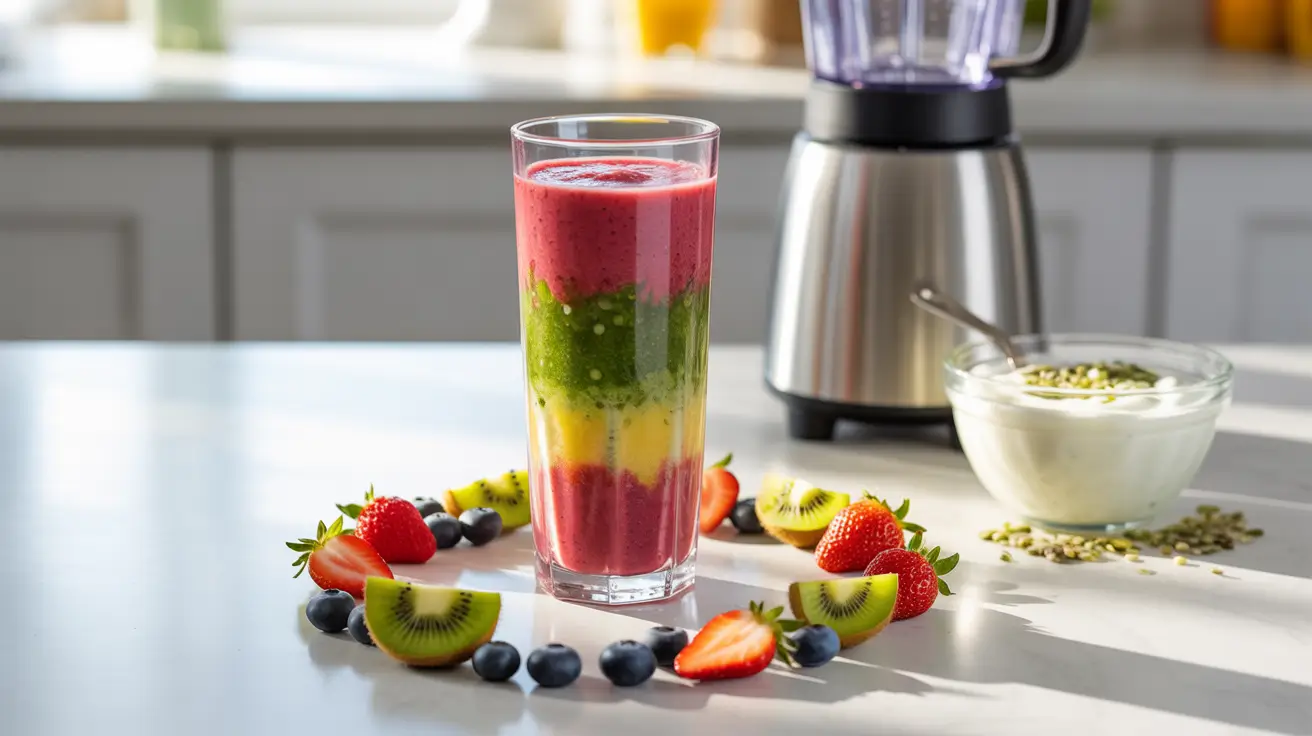
If you’re looking for healthy smoothies that are simple, filling, and easy to make at home, start here. A good smoothie is not just sweet or trendy. It should match your goal, whether that means more protein, less sugar, a banana-free texture, or a quick breakfast that may feel more satisfying on a busy morning.
This guide brings together practical healthy smoothie ideas, balanced ingredient tips, and easy next steps. You’ll also find related recipes and breakfast ideas to help build a better morning routine without overcomplicating it.
Nutrition and fullness can vary depending on ingredients, portion size, and your overall eating habits.
The healthiest smoothies usually include a protein source, a smart fruit base, something for texture, and a liquid that matches your goal. For many people, the best healthy smoothie for breakfast is one that feels balanced, filling, and not overly sweet.
Need more protein? Greek yogurt, skyr, soy milk, cottage cheese, and protein powder are all useful options.
Trying to keep sugar lower? Berries, plain yogurt, chia seeds, avocado, and unsweetened milk usually make a better base.
Want to skip banana? Yogurt, oats, avocado, frozen mango, nut butter, and frozen cauliflower can still give your smoothie a creamy texture.
Short on time in the morning? Frozen fruit, plain yogurt, milk, oats, and simple make-ahead ingredients can make prep much easier.
Choose the Best Healthy Smoothie for Your Goal
High-Protein Healthy Smoothies
If you want a smoothie that feels more like a real breakfast, protein matters. Ingredients like Greek yogurt, skyr, soy milk, cottage cheese, and protein powder can help make a smoothie feel more satisfying and better balanced, depending on ingredients and portion size. If you want more breakfast ideas built around protein, see High-Protein Breakfast Ideas.
Low-Sugar Healthy Smoothies
Healthy smoothies do not have to taste overly sweet. A lower-sugar smoothie usually starts with unsweetened milk, plain yogurt, berries, chia seeds, avocado, or oats instead of fruit juice and large amounts of sweet fruit. The goal is a smoothie that tastes fresh and balanced rather than overly sweet.
Banana-Free Healthy Smoothies
If you do not like banana or simply want other texture options, you still have plenty of choices. Yogurt, oats, nut butter, avocado, frozen cauliflower, and mango can all help create a creamy blend. For a simple example, try this Peanut Butter Smoothie Without Banana.
Gut-Friendly Smoothie Drinks and Yogurt Drinks
If you enjoy drinkable yogurt, cultured drinks, or lighter smoothie-style breakfasts, these can be a useful option to rotate into your week depending on ingredients and your overall routine. Start with this Homemade Yogurt Drink or explore more Probiotic Drinks for inspiration.
Fruit-Forward Healthy Smoothies
Some mornings call for something brighter and more refreshing. Fruit-forward smoothies can still feel balanced when you pair fruit with protein, fiber, or a creamy base. For a more vibrant option, see this Lemon-Blueberry Smoothie.
What Makes a Healthy Smoothie Filling and Balanced?
A more balanced smoothie usually includes protein, fruit, texture, and a liquid base. For a broader guide to building balanced meals, see Harvard’s Healthy Eating Plate.
1. A Protein Source
Protein helps a smoothie feel more complete. Depending on your preferences, that might be Greek yogurt, skyr, soy milk, cottage cheese, kefir, or protein powder.
2. A Smart Fruit Base
Frozen berries, mango, peaches, pineapple, and banana all work well, but you do not need to use a large amount. Keeping fruit portions reasonable can help the smoothie taste fresh without becoming too sweet.
3. Something for Texture
Oats, chia seeds, flax, yogurt, avocado, and nut butter can improve both texture and staying power. This is especially helpful if your smoothies often feel thin or leave you hungry too quickly.
4. A Liquid That Fits the Goal
Unsweetened almond milk, dairy milk, soy milk, coconut water, kefir, and plain yogurt drinks all change the final result. Choose the liquid based on whether you want more protein, a lighter texture, or a creamier blend.
Easy Healthy Smoothie Recipes and Formula Ideas
Berry Protein Smoothie Formula
- 1 cup unsweetened milk
- 1/2 to 3/4 cup Greek yogurt
- 3/4 cup frozen berries
- 1 tablespoon chia seeds
Banana-Free Peanut Butter Smoothie Formula
- 1 cup milk of choice
- 2 tablespoons peanut butter
- 1/4 cup oats or yogurt for texture
- Ice as needed
Green Breakfast Smoothie Formula
- 1 cup unsweetened milk
- 1/2 banana or 1/4 avocado
- 1 handful spinach
- 1/2 cup frozen fruit
- 1 protein add-in of choice
Yogurt Drink Style Formula
- 1 cup plain yogurt
- 1/2 to 3/4 cup milk or water
- 1/2 cup fruit
- Cinnamon, mint, or honey if desired
Easy 3-Ingredient Smoothie Ideas
This quick cheat sheet gives you a few easy 3-ingredient smoothie ideas for busy mornings, lighter breakfasts, and simple banana-free blends.
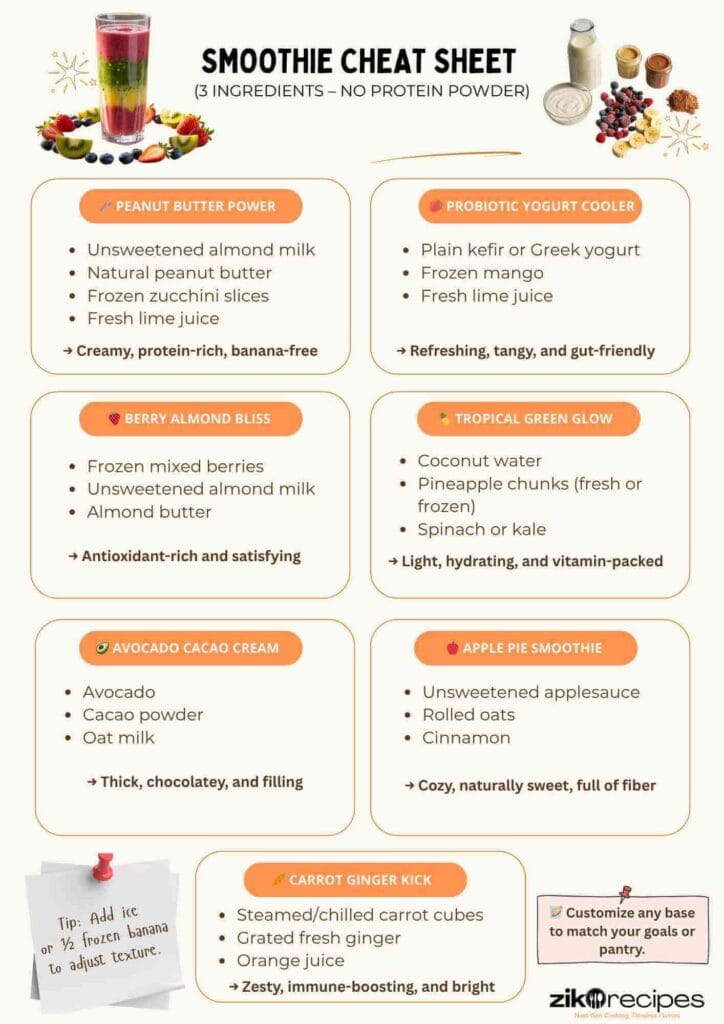
Want a quick version you can keep nearby? Get a printable PDF with seven easy smoothie ideas you can pin to your fridge. Each blend uses three simple ingredients, with no protein powder required.
Get the Printable Smoothie PDFBest Add-Ins for Healthy Smoothies
- For more protein: Greek yogurt, skyr, cottage cheese, soy milk, protein powder
- For more fiber: chia seeds, flaxseed, oats, berries
- For more creaminess: avocado, yogurt, frozen mango, nut butter
- For more freshness: mint, lemon, lime, ginger, cucumber
- For warmer flavor: cinnamon, vanilla, cocoa powder
Common Healthy Smoothie Mistakes
Even healthy smoothies can miss the mark when the balance is off. A smoothie that looks good on paper may end up tasting too sweet, feeling too thin, or leaving you hungry too soon. Here are some of the most common mistakes people make when building smoothies at home.
- Using too much fruit: Fruit adds flavor and texture, but too much can make a smoothie overly sweet and less balanced.
- Skipping protein: A smoothie made with only fruit and liquid may not feel filling enough for breakfast.
- Relying on fruit juice: Juice can quickly make a smoothie sweeter without adding much texture or staying power.
- Adding too many extras at once: Nut butter, seeds, oats, yogurt, protein powder, and sweeteners can work well, but too many add-ins can make the smoothie heavy or muddled.
- Ignoring texture: A smoothie that is too thin often feels less satisfying. Ingredients like yogurt, oats, chia seeds, or avocado can help create a better texture.
- Making it dessert-like: Sweetened yogurt, flavored syrups, chocolate spreads, and too much sweet fruit can turn a smoothie into something closer to a treat than a balanced breakfast.
How to Blend Smoothies for Better Texture
A few simple blending habits can make healthy smoothies feel smoother, creamier, and more enjoyable. The goal is not to make the process complicated, but to use a better order and a few small adjustments depending on your ingredients and blender.
- Layer ingredients in the right order: Start with liquid, then add soft ingredients, powders, frozen fruit, and ice last. This can help the blades move more easily and create a smoother blend.
- Pulse before blending: A few short pulses can help break up larger frozen pieces before blending continuously.
- Blend powders with liquid first: If you are using protein powder, cacao, or similar dry ingredients, blend them briefly with the liquid before adding the rest. This can help reduce clumps and gritty texture.
- Adjust for a basic blender: If your blender is not very powerful, cut frozen fruit into smaller pieces and add a little extra liquid if needed.
How to Keep Smoothies from Getting Too Sugary
If your smoothie tastes more like dessert than breakfast, a few small changes can make a big difference. The goal is not to avoid fruit, but to build a smoothie that tastes fresh, balanced, and easy to enjoy regularly.
- Start with unsweetened liquid: Unsweetened almond milk, dairy milk, soy milk, kefir, or water usually work better than juice.
- Use fruit more strategically: Berries tend to add flavor without making smoothies taste overly sweet. Mango, pineapple, and banana are useful too, but portion size matters.
- Choose plain yogurt: Plain Greek yogurt or plain regular yogurt gives you more control than pre-sweetened flavored yogurt.
- Add protein or fiber: Chia seeds, oats, yogurt, nut butter, and protein powder can help round out the flavor and make the smoothie feel more balanced.
- Skip extra sweeteners unless needed: In many cases, honey, maple syrup, or sweetened add-ins are not necessary once the fruit is blended in.
- Taste before adjusting: Blend first, then decide if it actually needs anything extra.
Using ingredients with more fiber can help slow digestion and make smoothies feel more balanced. For more context, see Harvard’s guide to carbohydrates and blood sugar.
Best Ingredient Swaps for Healthy Smoothies
One of the easiest ways to make healthy smoothies more practical is to know a few simple swaps. These ingredient ideas can help if you want a different texture, less sugar, more protein, or a banana-free option.
- For banana-free creaminess, try yogurt, avocado, frozen mango, oats, or frozen cauliflower.
- If you want to skip fruit juice, use unsweetened milk, kefir, coconut water, or plain water instead.
- For a less sweet yogurt base, plain Greek yogurt or plain regular yogurt usually works better than flavored yogurt.
- To get a thicker, creamier texture, blend frozen fruit with yogurt instead of relying on dessert-style ingredients.
- If you do not want protein powder, Greek yogurt, skyr, cottage cheese, or soy milk can be useful alternatives.
- For a nut-free option, swap nut butter for seed butter.
- If oats feel too heavy, chia seeds or avocado can help with thickness depending on the texture you want.
- For a lighter fruit profile, use berries, kiwi, or peaches instead of very sweet fruit combinations.
Troubleshooting: Fix Common Smoothie Problems Fast
Even simple healthy smoothies do not always blend the way you expect. If the texture or flavor feels off, a small adjustment can often fix it quickly.
| Problem | Quick Fix |
|---|---|
| Too thick | Add 1/4 cup more liquid and pulse again until the texture loosens up. |
| Too thin | Add oats, chia seeds, yogurt, or a little more frozen fruit and blend again. |
| Tastes too bitter | Add a little more fruit, yogurt, or vanilla to soften the flavor without overdoing sweetness. |
| Feels gritty | Blend the smoothie a little longer, especially if it includes seeds, oats, or powder-based ingredients. |
A more balanced smoothie usually includes a mix of protein, fruit, texture, and a liquid base, depending on your ingredients and goals.
Helpful Tools for Easier Smoothie Prep at Home
You do not need a complicated kitchen setup to make healthy smoothies at home, but a few practical tools can make prep faster, cleanup easier, and your routine more consistent. The goal is not to buy more than you need. It is simply to use tools that make homemade smoothies easier to repeat on busy mornings.
- Best blenders for smoothies: A reliable blender can make a big difference in texture, especially if you use frozen fruit, oats, seeds, or thicker ingredients. If you are comparing options, see our guide to the best blenders for smoothies.
- Smoothie cups with lids: Reusable cups with secure lids are helpful if you like to take your smoothie on the go or store it in the fridge for a short time. They also make portioning feel easier and less messy.
- Meal prep jars: Jars or small containers are useful for organizing smoothie ingredients ahead of time. You can portion fruit, oats, seeds, or other add-ins in advance so everything is ready when you need it.
- Measuring tools for smoothie ingredients: Simple measuring cups and spoons can help you build more consistent smoothies, especially when you are testing new ingredient combinations or trying to keep sweetness and texture balanced.
If you make smoothies often, even a few basic tools can save time and make the process feel much easier from start to finish.
Healthy Smoothie Prep Tips for Busy Mornings
Quick Answer: The easiest way to make healthy smoothies part of your morning routine is to keep the prep simple. Using a few make-ahead ingredients, a repeatable smoothie formula, and basic tools can help you make breakfast faster without overcomplicating it.
Healthy smoothies are much easier to stick with when the routine feels realistic. You do not need a perfect system or a long ingredient list. A few simple prep habits can make breakfast smoothies faster, easier to repeat, and more practical on busy mornings.
- Prep a few ingredients ahead of time: Portion frozen fruit, oats, seeds, or other smoothie add-ins into jars or containers so everything is easier to grab in the morning.
- Use a simple smoothie formula: Start with a liquid, add a protein source, choose fruit, and finish with one ingredient for texture such as oats, chia seeds, or yogurt. This makes healthy smoothies easier to build without guessing every time.
- Keep frozen fruit on hand: Frozen fruit saves prep time and helps create a thicker smoothie without needing extra ice. It is one of the easiest ways to make breakfast smoothies faster.
- Choose ingredients you already use: A practical smoothie routine usually works best with familiar basics like yogurt, milk, berries, oats, peanut butter, or soy milk.
- Do not use too many ingredients at once: Healthy smoothies do not need to be complicated. In many cases, a shorter ingredient list gives you better flavor, easier prep, and a more balanced result.
- Store tools where they are easy to reach: Keeping your blender, measuring tools, and smoothie cups in one place can make the whole process feel quicker and less inconvenient.
- Clean the blender right away: A quick rinse after pouring your smoothie can save time later and make it much easier to keep the habit going during the week.
For busy mornings, the best healthy smoothie is usually the one that is easy to make, easy to enjoy, and simple enough to repeat. If you want to make prep even easier, see our guide to the best blenders for smoothies.
Related Smoothie Guides
If you want more ideas beyond this guide, these related smoothie and breakfast articles can help you find the right fit for your routine, taste, and ingredient preferences.
- Peanut Butter Smoothie Without Banana
- Anti-Inflammatory Lemon-Blueberry Smoothie
- How to Make a Probiotic Yogurt Drink at Home
- Probiotic Drinks That Beat Bloating
- High-Protein Breakfast Ideas
- More Breakfast Recipes
Frequently Asked Questions
They can be, especially when they include a source of protein, some fiber, and ingredients that help with texture and balance. A smoothie made only with juice and fruit may feel less satisfying than one built with yogurt, oats, seeds, or milk.
Adding protein and texture can help. Greek yogurt, skyr, nut butter, oats, chia seeds, and soy milk may help a smoothie feel more satisfying, depending on ingredients and portion size.
Yes. Banana is common, but it is not required. Yogurt, oats, avocado, frozen mango, and nut butter are all useful for creaminess and body.
Berries are a popular choice because they are flavorful and easy to pair with yogurt, oats, and seeds. Mango, peaches, pineapple, and banana also work well depending on the texture and taste you want.
If you want a more balanced smoothie, be careful with large amounts of fruit juice, sweetened yogurt, syrups, and too many sweet add-ins at once. A simpler ingredient list often works better.
Final Thoughts
Healthy smoothies work best when they are built around your real needs, not just trends. Some mornings call for more protein, some for lighter fruit-forward blends, and some for a quick banana-free option you can make in five minutes. Start with one simple formula, adjust it to your taste, and build from there.
Ready to upgrade your smoothie routine? Explore our best blenders for smoothies, try this banana-free peanut butter smoothie, or browse more easy breakfast ideas on ZikoRecipes.