This bread and butter pickle recipe turns fresh cucumber chips and sliced onion into a sweet, tangy refrigerator pickle with mustard seed, celery seed, and turmeric. The method is simple, requires no canning equipment, and makes about two pint jars for burgers, sandwiches, wraps, and summer meals.
The short salting step removes some of the cucumbers’ moisture before they meet the warm brine. That small step, along with firm pickling cucumbers and minimal heating, helps the slices keep a satisfying crisp-tender bite.
Quick Answer
Bread and butter pickles are sliced cucumbers and onions preserved in a sweet vinegar brine flavored with spices such as mustard seed, celery seed, and turmeric. To make this refrigerator version, salt the vegetables for one hour, rinse and drain them, briefly warm them in the prepared brine, and refrigerate them for at least 24 hours. These jars are not shelf-stable and must remain refrigerated.
Bread and Butter Pickles at a Glance
| Detail | Information |
|---|---|
| Recipe type | Refrigerator pickles |
| Flavor | Sweet, tangy, and gently spiced |
| Best cucumber | Pickling or Kirby cucumbers |
| Yield | About 2 pint jars |
| Active time | About 25 minutes |
| Salting time | 1 hour |
| Minimum final chill | 24 hours |
Why You’ll Love This Recipe
- Sweet and tangy: Sugar softens the vinegar’s sharp edge without hiding it.
- No canning required: Clean jars and refrigerator space are all you need.
- Useful small batch: The recipe makes about two pint jars instead of a large preserving batch.
- Classic seasoning: Mustard seed, celery seed, and turmeric create the familiar bread and butter pickle flavor.
- Easy to serve: The chips fit naturally on burgers, sandwiches, wraps, bowls, and picnic plates.
What Are Bread and Butter Pickles?
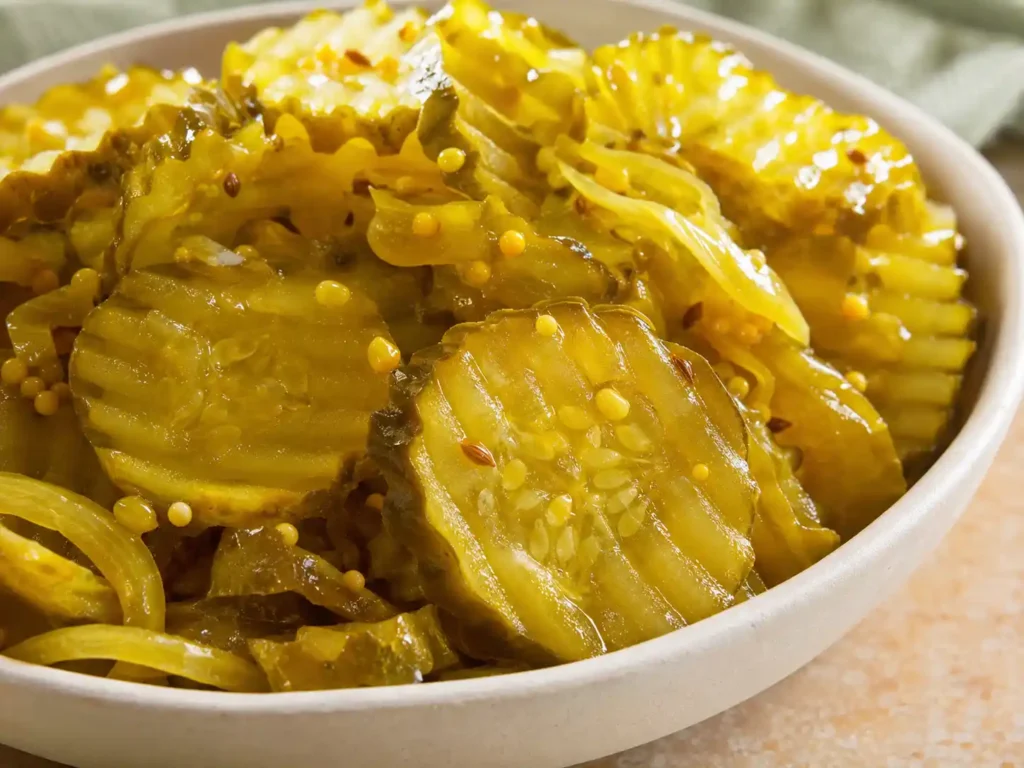
Bread and butter pickles are sweet-and-sour cucumber chips commonly prepared with sliced onion. Their brine usually contains more sugar than a dill pickle brine, along with warm spices such as mustard seed, celery seed, and turmeric.
Turmeric gives the brine its golden color, while mustard and celery seeds add a gently spiced flavor. These pickles are usually served as a condiment rather than as a cucumber salad.
Bread and Butter Pickles vs Dill Pickles
| Feature | Bread and Butter Pickles | Dill Pickles |
|---|---|---|
| Dominant flavor | Sweet and tangy | Savory and herbal |
| Typical seasonings | Mustard seed, celery seed, turmeric | Dill, garlic, peppercorns |
| Sugar level | Noticeably sweet | Usually low or unsweetened |
| Common shape | Thin chips | Chips, spears, or whole pickles |
| Serving ideas | Burgers, sandwiches, wraps | Snacking, burgers, sandwiches |
If you prefer a savory, dill-forward flavor, use this dill pickle recipe. For a lighter vegetable side that is served with its marinade, try these cucumbers and onions in vinegar.
Ingredients You’ll Need
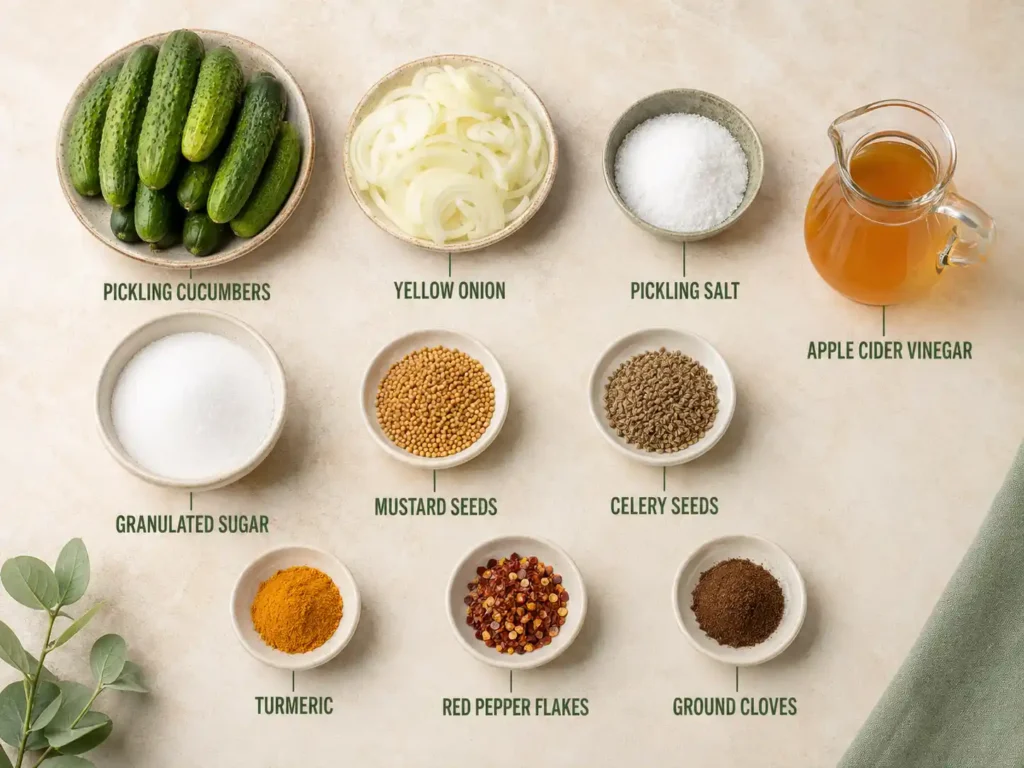
Pickling Cucumbers
You need 4 cups of evenly sliced pickling cucumbers. Kirby cucumbers are another good option because their firm flesh and smaller seeds hold up well in brine. Choose cucumbers that feel firm from end to end and do not have soft spots.
Yellow Onion
Thinly sliced yellow onion adds a mild savory note that balances the sweet brine. Measure one cup after slicing so the vegetable-to-brine ratio remains consistent.
Pickling Salt
Pickling or canning salt dissolves cleanly and does not contain the anti-caking ingredients that can make a brine look cloudy. Most of this salt is rinsed away after the one-hour rest.
Apple Cider Vinegar
Use apple cider vinegar labeled 5% acidity. It gives the pickles a rounder, slightly fruity tang. Distilled white vinegar labeled 5% acidity can be substituted for a sharper, cleaner flavor.
Sugar and Spices
Granulated sugar creates the defining bread and butter pickle flavor. Yellow mustard seeds, celery seeds, and turmeric provide warmth, texture, and color. Red pepper flakes and ground cloves are optional and should be used sparingly.
Which Cucumbers Work Best?
| Cucumber | Expected Result | Recommendation |
|---|---|---|
| Pickling cucumbers | Firm with a classic pickle texture | Best choice |
| Kirby cucumbers | Firm with small seeds | Excellent substitute |
| Persian cucumbers | Thin-skinned and fairly crisp | Works when very fresh |
| English cucumber | Softer with more moisture | Use only if firm and well drained |
| Large slicing cucumber | More watery and likely to soften | Not recommended |
How to Make Bread and Butter Pickles
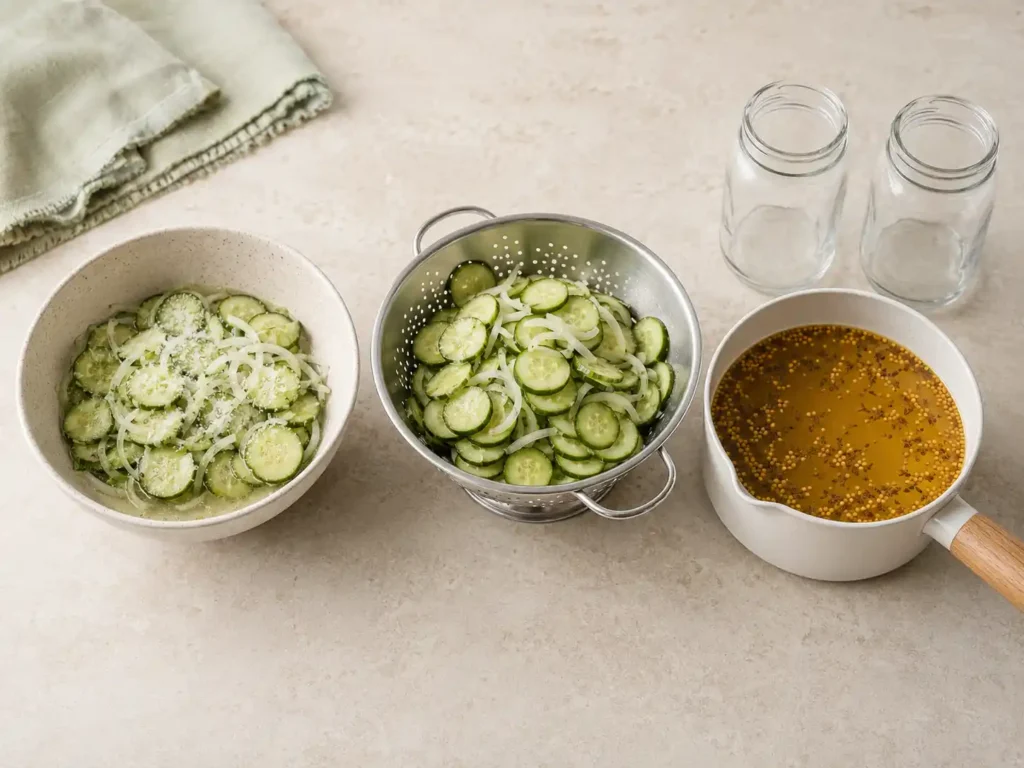
1. Slice the Vegetables Evenly
Wash and dry the cucumbers. Trim a thin slice from both ends, then cut the cucumbers into 1/4-inch chips. Slice the onion into thin half-moons.
A mandoline can make even slices quickly, but always use its hand guard. A sharp knife also works well when you keep the slice thickness consistent.
2. Salt and Chill
Place the cucumbers and onion in a large nonreactive bowl. Sprinkle them with 2 tablespoons of pickling salt and toss until evenly coated.
Cover the bowl and refrigerate for one hour. During this time, the vegetables will release liquid.
3. Rinse and Drain Well
Transfer the vegetables to a colander and rinse thoroughly under cold water. Toss them gently while rinsing so excess salt is removed from every layer.
Let the vegetables drain for several minutes. Shake the colander gently or blot excess surface moisture with a clean kitchen towel. Water left on the vegetables can unnecessarily dilute the brine.
4. Prepare the Sweet Pickle Brine
Combine the apple cider vinegar, sugar, mustard seeds, celery seeds, turmeric, and any optional seasonings in a medium saucepan. Bring the mixture to a gentle simmer over medium heat while stirring until the sugar dissolves.
5. Warm the Cucumbers Briefly
Add the drained cucumbers and onion to the saucepan. Stir gently for about 2 minutes, just until the vegetables are evenly coated and heated. Do not let them boil for an extended period because too much heat can soften the cucumber chips.
6. Fill the Jars
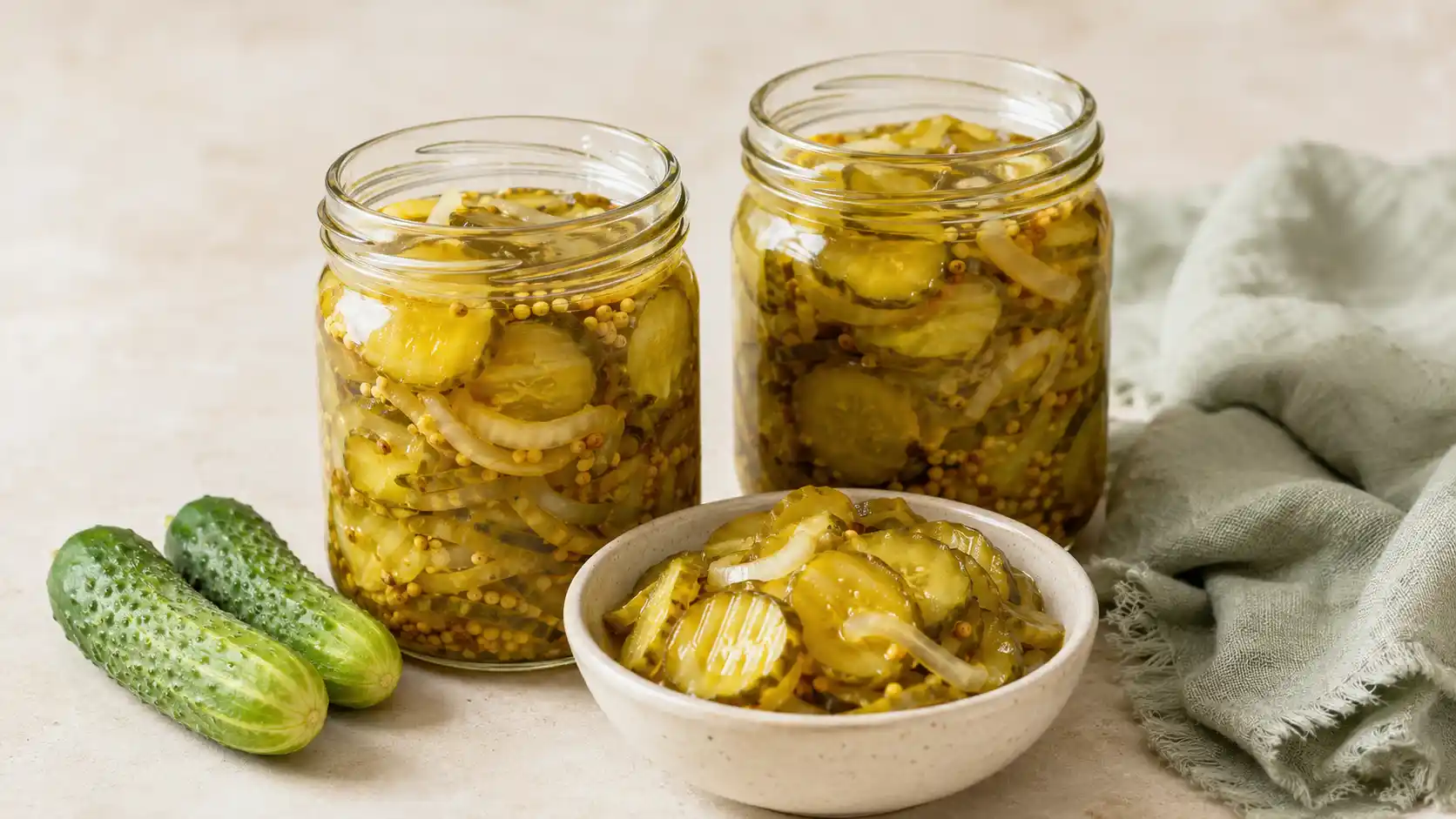
Divide the vegetables between two clean pint jars. Pour in the warm brine, dividing the mustard and celery seeds between the jars. Press the vegetables down gently so they remain covered by the brine.
Let the uncovered jars cool for up to one hour. Add the lids, refrigerate, and wait at least 24 hours before serving. The spice flavor becomes more noticeable after about 48 hours.
How to Keep the Pickles Crisp
- Start with small, firm cucumbers that have no soft spots.
- Keep the slices close to 1/4 inch thick.
- Do not skip the one-hour salting step.
- Rinse away the excess salt and drain the vegetables thoroughly.
- Warm the cucumbers only briefly in the brine.
- Keep the cucumber chips covered by brine during refrigeration.
- Use a clean utensil each time you remove pickles from the jar.
Bread and Butter Pickle Troubleshooting
| Problem | Likely Cause | What to Do Next Time |
|---|---|---|
| Soft cucumber chips | Older cucumbers or excessive heating | Use firmer cucumbers and limit heating to about 2 minutes |
| Watery flavor | Vegetables were not drained well | Drain thoroughly after rinsing |
| Pickles taste too salty | Salt was not fully rinsed away | Separate the slices and rinse them carefully |
| Cloudy brine | Table salt or vegetable sediment | Use pickling salt and well-rinsed vegetables |
| Uneven flavor | Different slice thicknesses | Cut all cucumber chips to a similar thickness |
Substitutions and Variations
White Vinegar
You can replace the apple cider vinegar with the same amount of distilled white vinegar labeled 5% acidity. White vinegar creates a sharper flavor and a lighter-colored brine.
Less-Sweet Pickles
Reducing the sugar changes the characteristic flavor of bread and butter pickles. If you want to experiment, make a small refrigerator batch and keep the full amount of vinegar unchanged. Do not use an altered formula for shelf-stable canning.
Spicy Bread and Butter Pickles
Add the optional red pepper flakes for gentle heat. For a stronger result, divide a few thin fresh pepper slices between the jars, but keep the main cucumber, vinegar, and sugar quantities unchanged.
Warm Spice Variation
A small pinch of ground cloves adds warmth, but more can overwhelm the mustard and turmeric. Start with the listed 1/8 teaspoon or leave it out.
How to Serve Bread and Butter Pickle Chips
Serve these pickles cold as a sweet and tangy topping for burgers, sandwiches, wraps, and grain bowls. They are especially useful when a rich meal needs a bright, crunchy contrast.
- Add them to a burger bowl.
- Serve them beside turkey avocado wraps.
- Include them with your favorite cookout side dishes.
- Pack a cold jar as part of these summer picnic food ideas.
Helpful Tools for This Recipe
You do not need specialized canning equipment. These basic tools make the preparation easier:
- Sharp knife and cutting board
- Mandoline with a hand guard, optional
- Large nonreactive mixing bowl
- Colander
- Measuring cups and spoons
- Medium saucepan
- Two clean pint jars with lids
- Wide-mouth funnel, optional
- Clean fork or small serving tongs
Storage and Food Safety
These are refrigerator pickles. They are not shelf-stable and must not be stored in a pantry or at room temperature. Keep the sealed jars refrigerated at 40°F or below.
For best quality, use the pickles within two weeks. Keep the cucumber chips covered by brine and use a clean utensil for serving. Discard the batch if you notice mold, an unpleasant odor, unusual bubbling, or a slimy texture.
Do not process this refrigerator formula for pantry storage. Anyone who wants to make shelf-stable pickles should follow the separate tested bread-and-butter pickle instructions from the National Center for Home Food Preservation.
Easy Bread and Butter Pickle Recipe
Ingredients
Equipment
Method
- Wash and dry the cucumbers. Trim a thin slice from both ends, then cut the cucumbers into even 1/4-inch chips.
- Place 4 cups of sliced cucumbers and 1 cup of thinly sliced yellow onion in a large nonreactive bowl.
- Sprinkle the pickling salt over the cucumbers and onion. Toss until evenly coated, cover the bowl, and refrigerate for 1 hour.
- Transfer the salted vegetables to a colander. Rinse thoroughly under cold running water, gently separating and tossing the slices so excess salt is removed.
- Let the cucumbers and onion drain for several minutes. Gently shake the colander or blot away excess surface moisture without crushing the cucumber slices.
- Add the apple cider vinegar, granulated sugar, mustard seeds, celery seeds, turmeric, and optional red pepper flakes and cloves to a medium saucepan.
- Bring the mixture to a gentle simmer over medium heat, stirring until the sugar has completely dissolved.
- Add the drained cucumbers and onion to the saucepan. Stir gently for about 2 minutes, just until the vegetables are heated and evenly coated with the brine. Do not boil for an extended period.
- Divide the cucumber and onion mixture between two clean pint jars. Distribute the mustard and celery seeds evenly between the jars.
- Pour the warm brine over the vegetables. Gently press the cucumber slices down so they remain covered by the liquid while leaving enough room to close the jars without overflowing.
- Allow the uncovered jars to cool for up to 1 hour. Add the lids and transfer the jars to the refrigerator.
- Refrigerate the pickles for at least 24 hours before serving. For a more developed sweet and spiced flavor, allow them to chill for about 48 hours.
Notes
Frequently Asked Questions
What is the difference between bread and butter pickles and dill pickles?
Bread and butter pickles are sweet and commonly seasoned with mustard seed, celery seed, and turmeric. Dill pickles have a more savory flavor built around dill and often garlic.
What cucumbers are best for bread and butter pickles?
Small, firm pickling cucumbers or Kirby cucumbers are the best choices. Persian cucumbers can also work when they are very fresh. Large slicing cucumbers contain more water and tend to become softer.
Why did my bread and butter pickles turn soft?
Common causes include starting with older cucumbers, cutting slices too thin, skipping the salting step, or heating the cucumbers too long. Begin with firm produce and warm the vegetables only briefly.
Can I reduce the sugar?
You can reduce the sugar in a refrigerator batch, but the pickles will taste less like traditional bread and butter pickles. Keep the vinegar quantity unchanged, continue refrigerating the jars, and never treat an altered refrigerator formula as a canning recipe.
Are these pickles shelf-stable?
No. These jars must remain refrigerated. Shelf-stable pickles require a separately tested canning formula with exact proportions, headspace, processing time, and altitude adjustments.
More Homemade Pickles and Summer Sides
For a savory alternative, make these easy refrigerator pickles. You can also try these pickled banana peppers when you want a tangy topping with a different vegetable.
Once the jars have chilled, keep one ready for quick lunches and summer dinners. A few sweet, tangy pickle chips can bring crunch and contrast to even the simplest sandwich, wrap, or bowl.