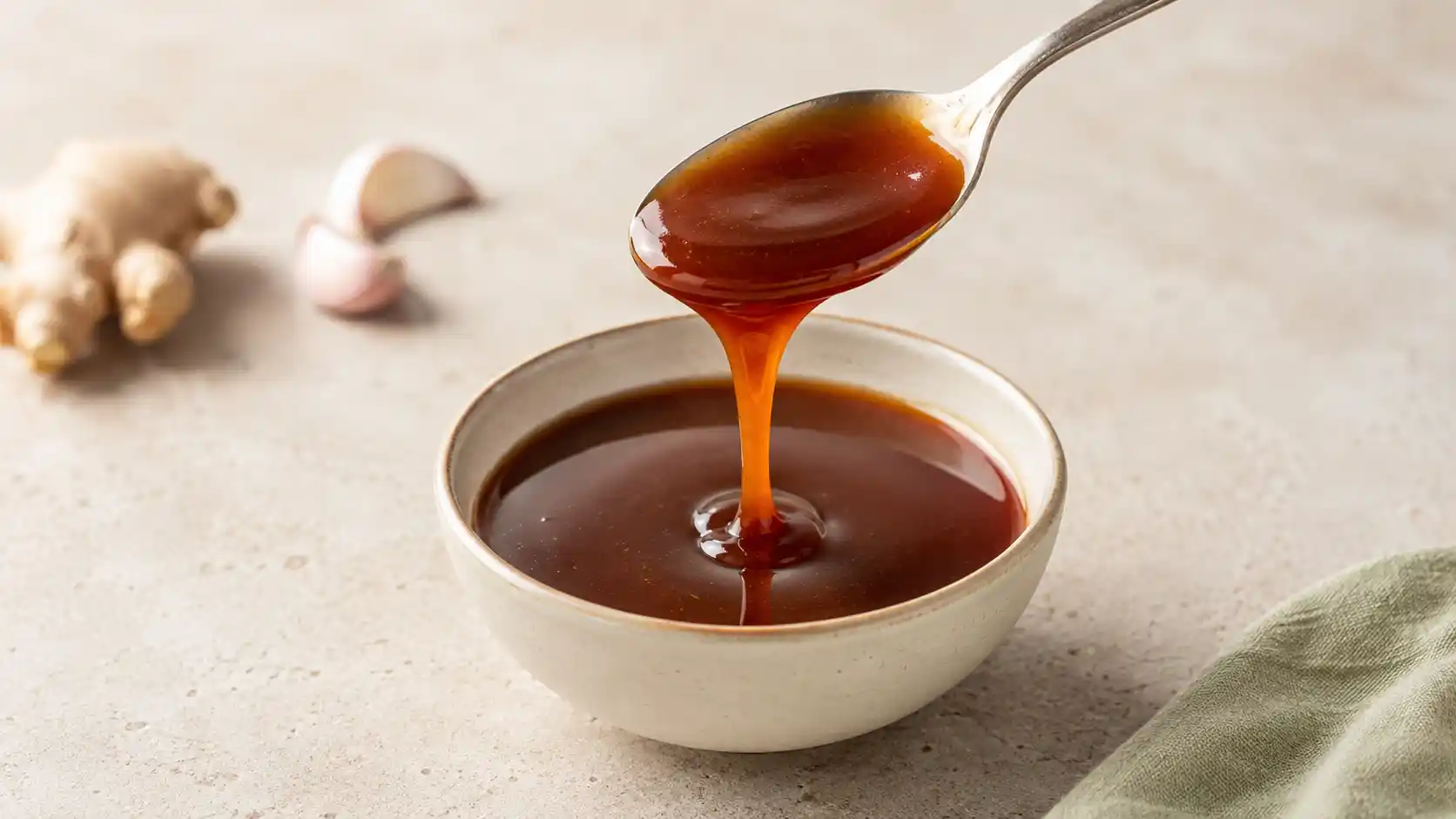
This homemade teriyaki sauce is thick, glossy, and balanced with soy sauce, brown sugar, honey, rice vinegar, fresh ginger, and garlic. It comes together in about 12 minutes and works as a finishing glaze, stir-fry sauce, dip, or unthickened marinade.
The recipe is designed for familiar US grocery ingredients and does not use mirin or sake. A cold cornstarch slurry creates the shiny, spoon-coating texture without requiring a long reduction.
Quick Answer
Whisk the sauce base in a small saucepan and bring it to a gentle simmer. Mix cornstarch with cold water in a separate bowl, slowly whisk the slurry into the hot sauce, and cook for 30 to 60 seconds. Remove the pan as soon as the sauce coats the back of a spoon because it will thicken more as it cools.
| Detail | Information |
|---|---|
| Prep time | 5 minutes |
| Cook time | 7 minutes |
| Total time | 12 minutes |
| Yield | About 1 1/4 cups |
| Serving size | 2 tablespoons |
| Allergen note | Contains soy; some soy sauces also contain wheat |
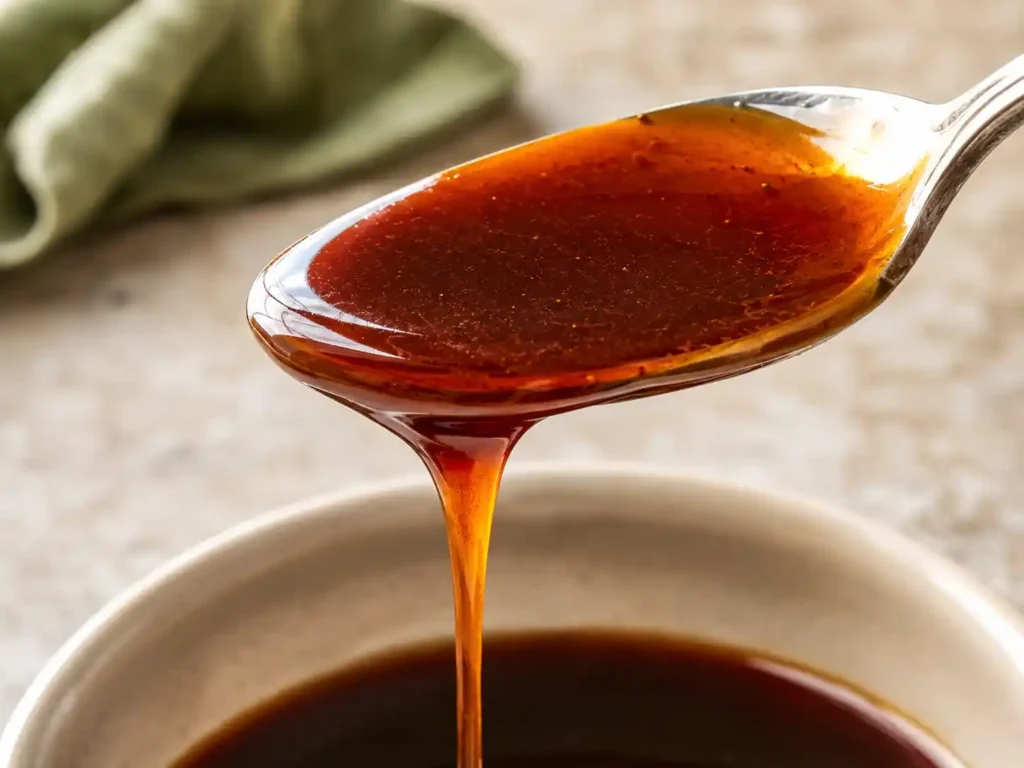
Why This Homemade Teriyaki Sauce Works
Water softens the saltiness of the soy sauce, while brown sugar and honey add sweetness, body, and shine. Rice vinegar keeps the sauce from tasting flat or overly sweet. Fresh ginger and garlic bring the aromatic flavor many US readers expect from an American-style teriyaki sauce.
Only one tablespoon of cornstarch is needed for this batch. That amount gives the sauce enough body to cling to a spoon without making it heavy or overly firm after cooling.
American-Style Teriyaki Sauce vs. Traditional Teriyaki
Teriyaki originally describes a Japanese cooking method that produces a glossy finish on grilled, broiled, or pan-cooked food. This recipe follows the thicker American-style sauce familiar in rice bowls, stir-fries, dipping sauces, and takeout-inspired meals. It uses garlic, ginger, sweeteners, and a cornstarch slurry, so it should not be presented as a traditional Japanese formula.
Ingredients You Need
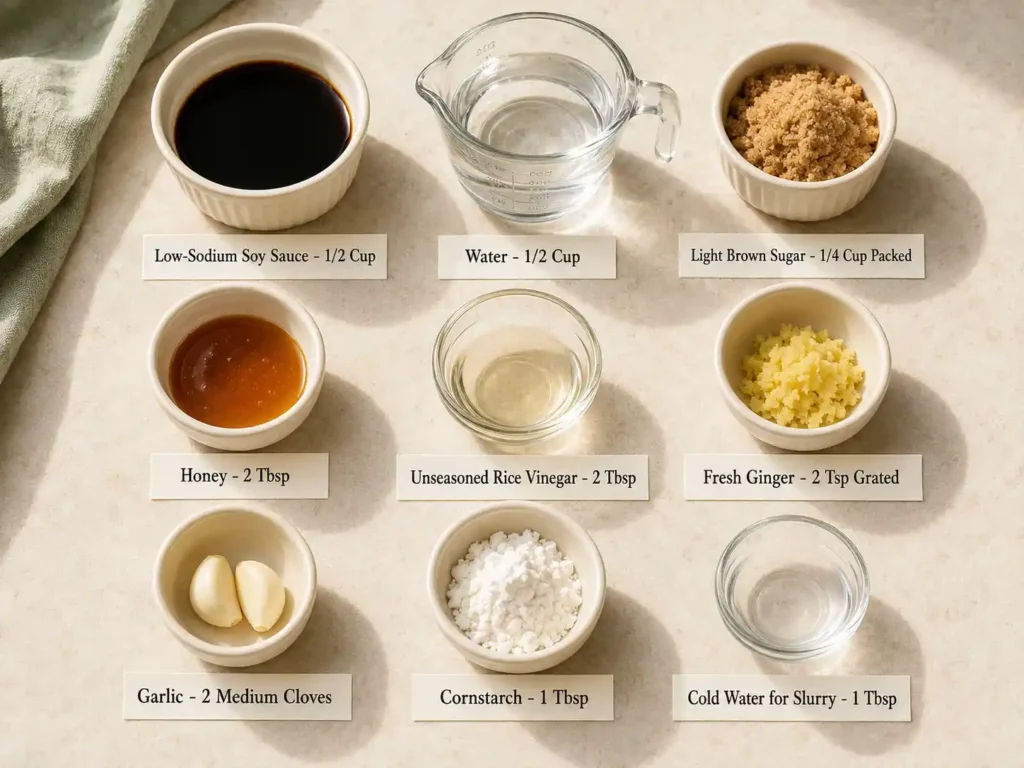
- 1/2 cup low-sodium soy sauce: Provides the salty, savory base while leaving more room to control the final balance.
- 1/2 cup water: Dilutes the soy sauce and gives the aromatics time to simmer.
- 1/4 cup packed light brown sugar: Adds sweetness, body, and a deeper caramel note.
- 2 tablespoons honey: Supports the glossy texture and rounds out the sweetness.
- 2 tablespoons unseasoned rice vinegar: Adds acidity without introducing extra sugar or salt.
- 2 teaspoons finely grated fresh ginger: Brings a warm, fresh aromatic flavor.
- 2 medium garlic cloves, finely grated or minced: Adds a savory garlic note without overwhelming the sauce.
- 1 tablespoon cornstarch: Thickens the sauce into a glaze.
- 1 tablespoon cold water: Combines with the cornstarch to make a smooth slurry.
Ingredient and Allergen Notes
Soy sauce contains soy and may contain wheat. Check the product label if either allergen is a concern. For a gluten-free variation, use a soy sauce or tamari specifically labeled or certified gluten-free. Tamari brands can differ in saltiness, so taste the finished sauce before making any additional adjustment.
Helpful Tools
You only need basic kitchen equipment for this sauce:
- A small saucepan with enough room for the sauce to bubble without overflowing
- A compact whisk for the sauce and slurry
- Measuring cups and spoons
- A fine grater for the ginger and garlic
- A small bowl for mixing the slurry
- An optional fine-mesh strainer for an extra-smooth finish
- A clean airtight container for refrigeration
How to Make Teriyaki Sauce
1. Build the sauce base
Whisk the soy sauce, 1/2 cup water, brown sugar, honey, rice vinegar, ginger, and garlic together in a small saucepan.
2. Bring it to a gentle simmer
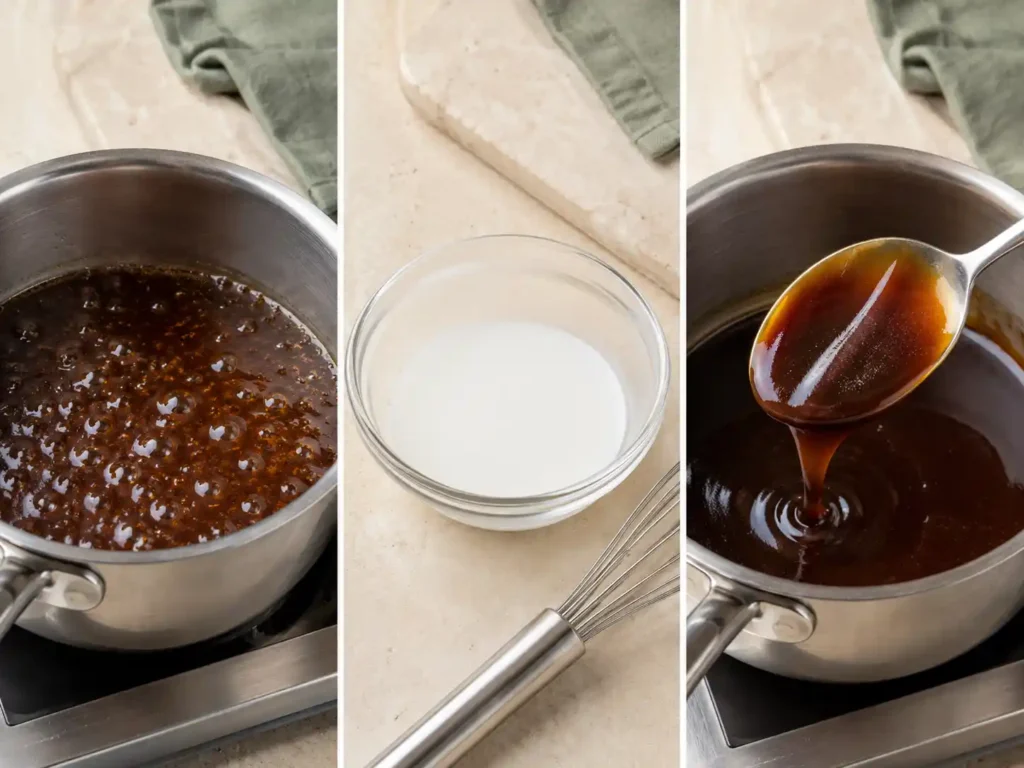
Set the saucepan over medium heat. Stir until the brown sugar dissolves and the mixture begins to simmer gently. Continue simmering for 3 to 4 minutes. Avoid a hard boil because the sugar can scorch and the sauce may reduce too quickly.
For an extra-smooth sauce, pour the hot base through a fine-mesh strainer, then return it to the saucepan before adding the slurry.
3. Make the cornstarch slurry
In a small bowl, whisk 1 tablespoon cornstarch with 1 tablespoon cold water until no dry pockets or lumps remain. Stir the slurry again immediately before using it because cornstarch settles quickly.
4. Thicken the sauce
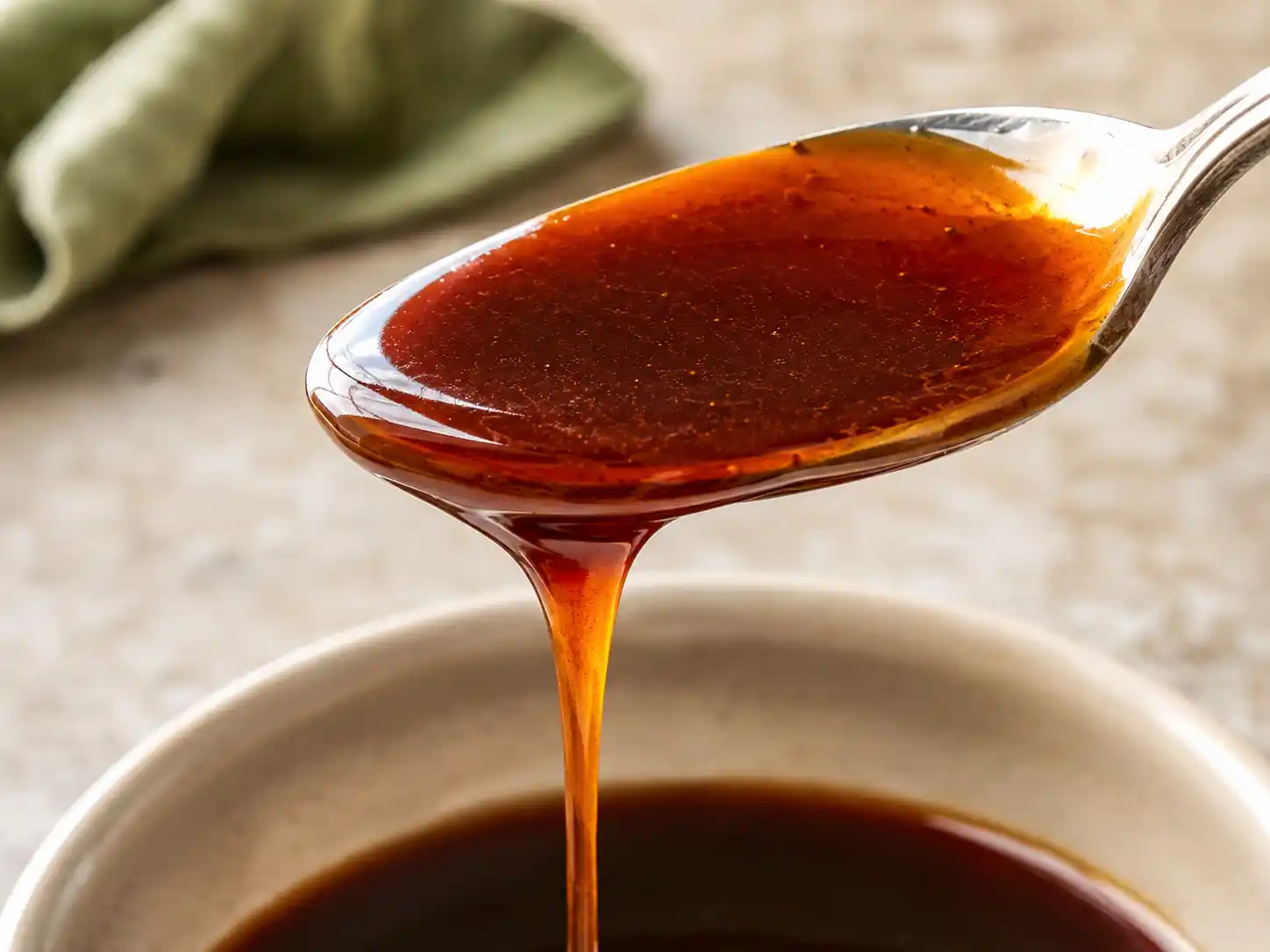
Reduce the heat slightly. Pour the slurry into the gently simmering sauce in a thin stream while whisking continuously. Cook for 30 to 60 seconds, just until the sauce looks glossy and coats the back of a spoon.
5. Cool and store
Remove the saucepan from the heat before the sauce looks very thick. It will continue to thicken while cooling. Let it cool briefly, then transfer it to a clean airtight container and refrigerate promptly.
How Thick Should Teriyaki Sauce Be?
While warm, the sauce should coat the back of a spoon and leave a clear line when you draw a finger through the coating. It should fall from the spoon in a short ribbon rather than run off like water.
Do not wait for the sauce to look as thick in the pan as it will look in the refrigerator. Cornstarch-thickened sauces become firmer as they cool.
Teriyaki Sauce Troubleshooting
| Problem | Likely cause | What to do |
|---|---|---|
| Too thin | The sauce did not return to a simmer after the slurry was added | Whisk over gentle heat for another 30 seconds, then check the texture again |
| Too thick | The sauce cooked too long or thickened further while cooling | Whisk in warm water 1 teaspoon at a time over low heat |
| Lumpy | The cornstarch was added dry or the slurry settled | Strain the sauce, then reheat gently while whisking |
| Too salty | The soy sauce brand was saltier than expected | Add water gradually, then recheck both flavor and thickness |
| Burned or bitter | The heat was too high or the sugars scorched | Discard the burned batch because dilution will not remove a scorched flavor |
How to Use Teriyaki Sauce
Use the thickened version as a glaze near the end of cooking so the sugars have less time to burn. It is a natural fit for Panda Express teriyaki chicken or grilled teriyaki chicken.
Stir a small amount into chicken fried rice, drizzle it over rice bowls, or serve it as a dipping sauce for cooked chicken, salmon, tofu, and vegetables. For a fresh side, pair the meal with an Asian cucumber salad.
If you enjoy sweet and savory glazes, the method also pairs well with the flavor direction of this honey garlic glazed salmon. For another homemade sauce to add to your collection, see this homemade hoisin sauce.
How to use it as a marinade
For a thinner marinade, omit the cornstarch and the 1 tablespoon of slurry water. Cool the unthickened sauce completely before adding it to chicken, seafood, or tofu.
If you want extra sauce for brushing or serving, set aside a clean portion before the marinade touches raw food. Discard any used marinade that has been in contact with raw chicken, meat, or seafood.
| Version | Cornstarch | Recommended use |
|---|---|---|
| Sauce or glaze | Use it | Finishing glaze, dipping sauce, or stir-fry sauce |
| Marinade | Omit it | Coating raw ingredients before cooking |
Storage and Make-Ahead Tips
Let the sauce cool briefly, transfer it to a clean airtight container, and refrigerate it within 2 hours. Keep the refrigerator at 40°F or below and use the sauce within 1 week.
The chilled sauce will be thicker than it was in the saucepan. To loosen it, warm only the amount you need over low heat and whisk in a teaspoon of water if necessary. Always use a clean spoon when removing sauce from the container.
Estimated Nutrition
Estimated nutrition per 2-tablespoon serving: approximately 45 calories, 10 grams carbohydrate, 1 gram protein, 0 grams fat, 8 grams sugar, and 440 milligrams sodium. Nutrition is an estimate, not a guarantee. Values vary with the soy sauce brand, exact cooked yield, and portion size.
Homemade Teriyaki Sauce Recipe (No Mirin or Sake)
Ingredients
Equipment
Method
- Whisk the low-sodium soy sauce, 1/2 cup water, brown sugar, honey, rice vinegar, fresh ginger, and garlic together in a small saucepan.
- Place the saucepan over medium heat. Stir until the brown sugar dissolves and the mixture reaches a gentle simmer.
- Continue simmering gently for 3 to 4 minutes. Avoid a hard boil so the sugars do not scorch and the sauce does not reduce too quickly.
- For an optional extra-smooth finish, pour the hot sauce base through a fine-mesh strainer and return it to the saucepan.
- In a small bowl, whisk the cornstarch with 1 tablespoon cold water until completely smooth with no dry pockets or lumps. Stir the slurry again immediately before adding it because cornstarch settles quickly.
- Reduce the heat slightly. Slowly pour the slurry into the gently simmering sauce in a thin stream while whisking continuously.
- Cook for 30 to 60 seconds, whisking, until the sauce becomes glossy and coats the back of a spoon. Remove it from the heat before it becomes very thick because it will continue to thicken as it cools.
- Let the sauce cool briefly, then transfer it to a clean airtight container and refrigerate promptly.
Notes
Frequently Asked Questions
Can I make teriyaki sauce without mirin or sake?
Yes. This American-style recipe uses soy sauce, water, brown sugar, honey, rice vinegar, ginger, and garlic. The cold cornstarch slurry supplies the thicker texture commonly expected from a bottled-style glaze.
How do I thicken teriyaki sauce without lumps?
Mix the cornstarch with cold water until completely smooth. Stir the slurry again just before slowly pouring it into the gently simmering sauce while whisking continuously.
Can I use this teriyaki sauce as a marinade?
Yes. Omit the cornstarch and slurry water, then cool the sauce completely. Reserve any portion intended for basting or serving before the marinade touches raw food.
Why does my teriyaki sauce taste too salty?
Sodium varies considerably among soy sauce brands. Start with low-sodium soy sauce as written. If the finished sauce is still too salty, whisk in water gradually and recheck the texture.
Can I replace soy sauce with tamari?
Yes, but the flavor and salt level may change by brand. If gluten is a concern, choose a tamari specifically labeled or certified gluten-free and check every packaged ingredient used in the recipe.
Final Takeaway
This homemade teriyaki sauce gives you one flexible base for glazing, dipping, stir-frying, or marinating. Keep the slurry cold, stop cooking as soon as the sauce coats a spoon, and remember that it will become thicker after cooling.
Save the recipe for your next chicken, salmon, tofu, or rice bowl dinner. For more practical homemade sauces and weeknight meal ideas, subscribe to the ZikoRecipes newsletter.