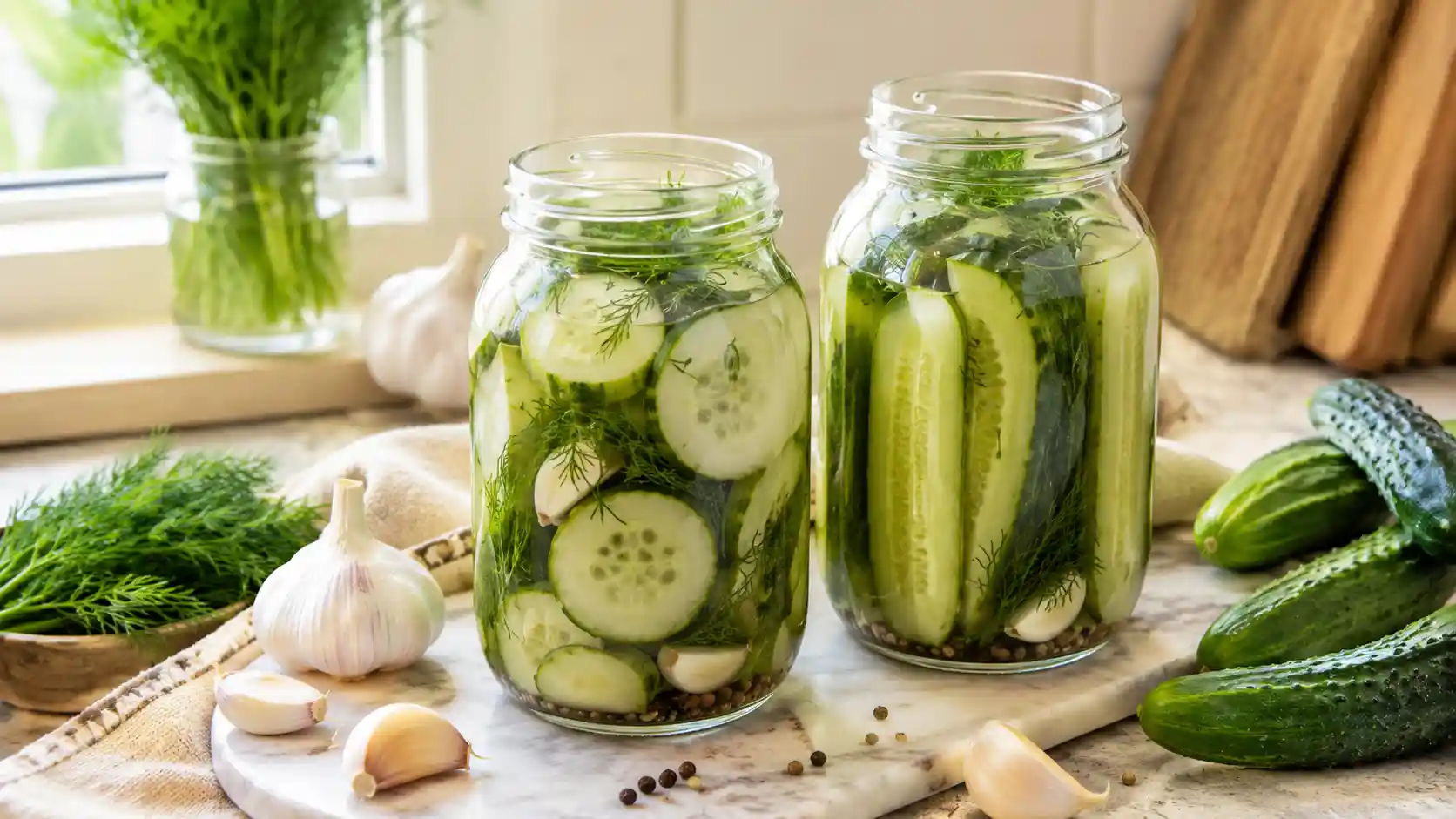
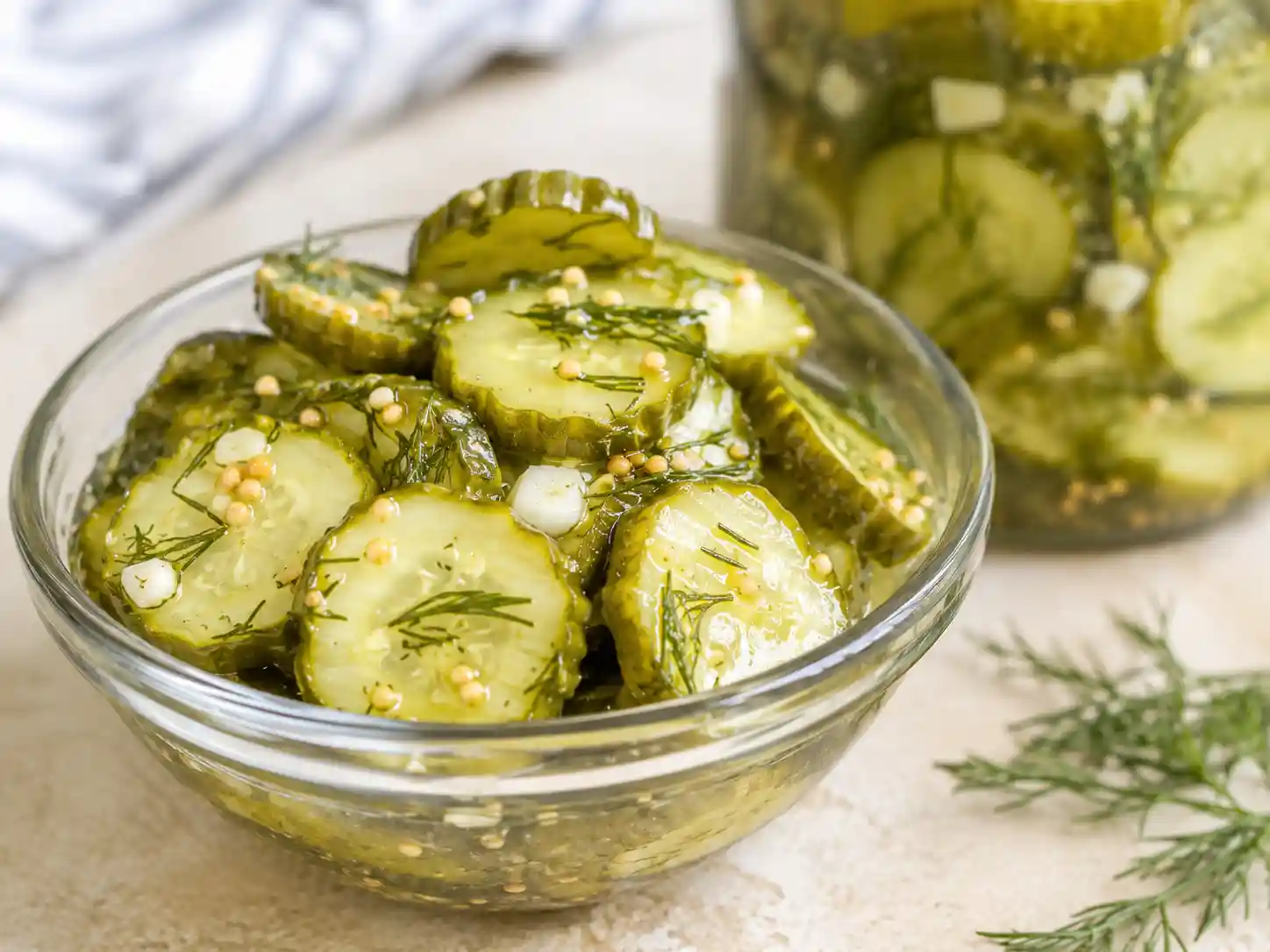
These refrigerator pickles are crisp, tangy, garlicky, and easy to make with no canning required. You only need firm cucumbers, a simple vinegar brine, fresh dill, and a little patience while the jars chill in the refrigerator.
This is a refrigerator-only pickle recipe, which means the jars are not shelf-stable and should stay cold the entire time. The reward is a fresh, crunchy homemade pickle that works beautifully with sandwiches, burgers, bowls, wraps, picnic plates, and summer meals.
If you love fresh cucumber recipes, you may also enjoy this Asian cucumber salad or this bright cucumber corn salad for another easy side dish.
Why You’ll Love These Refrigerator Pickles
- No canning required: These pickles are made for the refrigerator, not pantry storage.
- Crisp and tangy: Firm cucumbers, dill, garlic, and vinegar create that classic pickle bite.
- Beginner-friendly: The steps are simple, and you do not need special preserving equipment.
- Flexible cut: Make pickle chips for sandwiches or pickle spears for snacking.
- Great for summer meals: They add crunch to wraps, burger bowls, salads, and picnic plates.
What Are Refrigerator Pickles?
Refrigerator pickles are quick pickles made with cucumbers and a vinegar-based brine. Instead of being processed for long-term pantry storage, they are kept in the refrigerator and eaten cold.
That makes them much easier than traditional canned pickles, but it also means they must stay refrigerated. Do not store these jars at room temperature, and do not treat this recipe as a canning recipe.
Ingredients You’ll Need
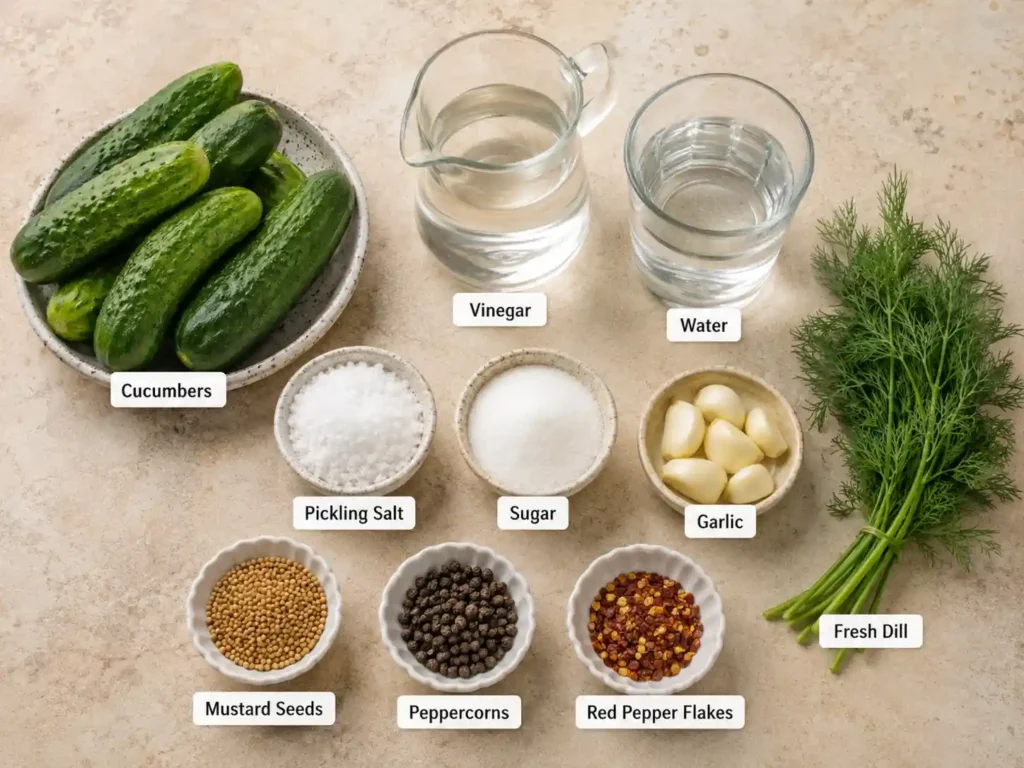
The best refrigerator pickles start with firm cucumbers and a balanced brine. The ingredients are simple, so each one matters.
Best Cucumbers for Refrigerator Pickles
Small, firm cucumbers are best. Pickling cucumbers, Kirby-style cucumbers, or Persian cucumbers usually hold their texture better than large slicing cucumbers.
If your cucumbers are soft before you start, the finished pickles will probably be soft too. Choose cucumbers that feel firm, fresh, and heavy for their size.
Vinegar, Salt, Sugar, and Dill
Use white distilled vinegar or apple cider vinegar labeled 5% acidity. Ohio State University Extension recommends using white distilled or cider vinegar with 5% to 6% acidity for pickling, which is why the vinegar label matters here. White vinegar gives a cleaner, sharper flavor, while apple cider vinegar gives a slightly rounder taste and a darker brine. You can read more about safe vinegar acidity in this Ohio State University Extension pickling guide.
Pickling salt or canning salt is the best choice because it dissolves cleanly. A small amount of sugar balances the sharp vinegar flavor without making the pickles taste sweet. Fresh dill gives these refrigerator pickles their classic flavor.
Optional Flavor Add-Ins
Garlic, mustard seeds, black peppercorns, coriander seeds, and red pepper flakes are easy ways to add more flavor. Keep the add-ins simple so the cucumber, dill, and vinegar still shine.
Refrigerator Pickles Ingredients
This recipe makes about 2 pint jars, depending on the size of your cucumbers and how tightly you pack them.
- 1 pound small firm cucumbers, cut into chips or spears
- 1 cup white distilled vinegar or apple cider vinegar, 5% acidity
- 1 cup water
- 1 tablespoon pickling salt or canning salt
- 2 teaspoons granulated sugar
- 4 garlic cloves, peeled and lightly smashed, optional
- 4 fresh dill sprigs
- 1 teaspoon mustard seeds, optional
- 1/2 teaspoon black peppercorns, optional
- 1/4 teaspoon red pepper flakes, optional
How to Make Refrigerator Pickles
The method is simple: slice the cucumbers, pack the jars, make the brine, and chill. The hardest part is waiting for the flavor to develop.
1. Prepare the Cucumbers
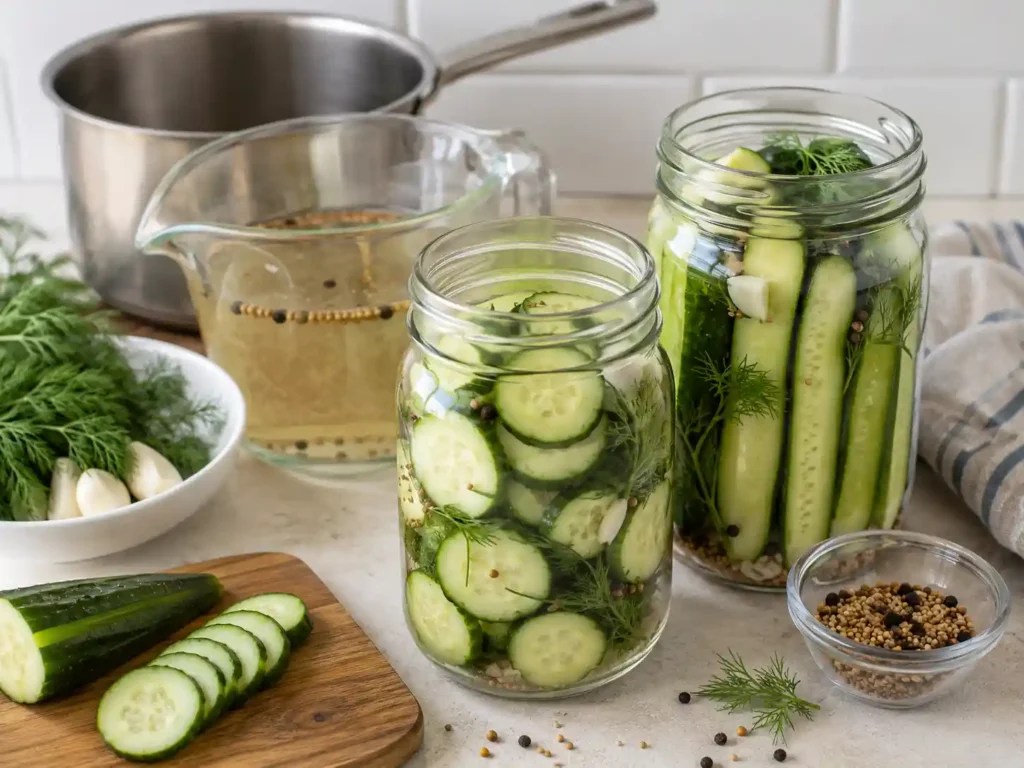
Wash the cucumbers well. Trim a very thin slice from the blossom end because that end can contribute to softer pickles. If you are not sure which end is the blossom end, trim a thin slice from both ends.
Cut the cucumbers into thin chips for sandwiches and burgers, or cut them into spears for snacking and side dishes.
2. Pack the Jars
Divide the garlic, dill, mustard seeds, peppercorns, and red pepper flakes between 2 clean pint jars. Pack the cucumber slices or spears into the jars snugly, but do not crush them.
3. Make the Brine
Add the vinegar, water, pickling salt, and sugar to a small saucepan. Warm over medium heat and stir until the salt and sugar dissolve. The brine does not need a long boil for this refrigerator recipe.
Let the brine cool for about 10 minutes so it is warm, not aggressively hot. A slightly cooled brine helps protect the crunch of the cucumbers.
4. Fill and Chill
Pour the brine over the cucumbers until they are fully covered. Tap the jars gently to release air pockets, then add a little more brine if needed.
Cover the jars with lids and refrigerate. Pickle chips can be tasted after 24 hours. Spears usually taste better after about 48 hours because they are thicker.
Pickle Chips vs Pickle Spears
Both cuts work well, but they serve slightly different purposes. Choose the shape based on how you plan to use the pickles.
| Cut | Best For | Flavor Timing | Texture Notes |
|---|---|---|---|
| Pickle chips | Sandwiches, burgers, bowls, salads | Taste after 24 hours | Thin slices absorb brine faster and give a crisp bite |
| Pickle spears | Snacking, picnic plates, lunch boxes | Best after about 48 hours | Thicker pieces stay firm and crunchy |
Tips for Crisp Refrigerator Pickles
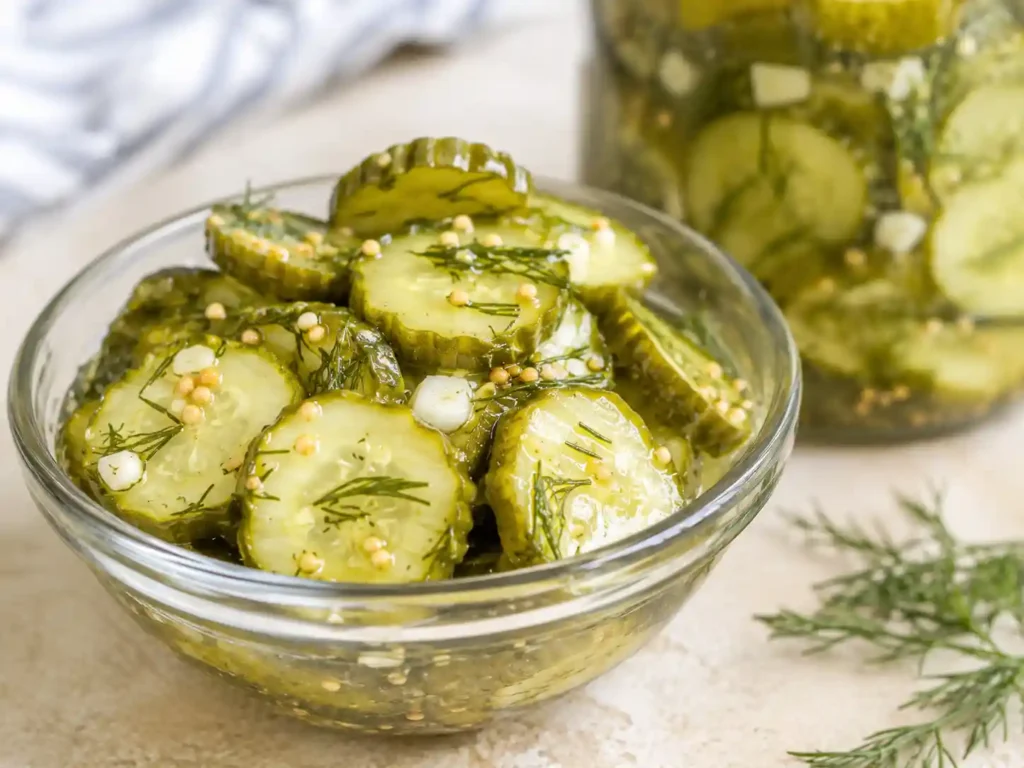
Start with firm cucumbers. Pickling cannot fix cucumbers that are already soft. Fresh, firm cucumbers give you the best crunch.
Trim the ends. Removing a thin slice from the blossom end can help reduce softening.
Keep the cucumbers covered. The cucumbers should stay under the brine in the jar. If a piece floats above the liquid, push it down with a clean utensil before closing the jar.
Use vinegar with known acidity. Choose vinegar labeled 5% acidity. Do not reduce the vinegar or add extra water to make the brine milder.
Chill before tasting. The pickles need time in the refrigerator for the flavor to move into the cucumbers.
Flavor Variations
Once you know the base recipe, you can adjust the flavor without changing the main method.
Garlic Dill Refrigerator Pickles
Add 1 or 2 extra garlic cloves to each jar for a stronger garlic flavor. This version is great for burgers, sandwiches, and wraps.
Spicy Refrigerator Pickles
Add extra red pepper flakes or a thin slice of fresh chili to each jar. Start small because the heat can get stronger as the pickles sit.
Slightly Sweet Refrigerator Pickles
Add 1 extra teaspoon of sugar to the brine if you prefer a softer tang. Keep the amount modest so the pickles still taste bright and vinegary.
Extra Tangy Pickles
Use white distilled vinegar for a sharper flavor. Do not reduce the vinegar or increase the water, since the brine needs a reliable balance.
Helpful Tools for This Recipe
You do not need special canning equipment for these refrigerator pickles. A few basic kitchen tools make the process easier and cleaner.
- Clean glass jars with lids
- Sharp knife and cutting board
- Measuring cups and measuring spoons
- Small saucepan for the brine
- Wide-mouth funnel for filling jars
- Small tongs or a clean fork for serving
- Mandoline slicer, optional, used with a hand guard for safety
How to Serve Refrigerator Pickles
These pickles add crunch, tang, and brightness to simple meals. They are especially good with burger bowls, sandwiches, wraps, salads, and picnic plates.
Try them with this burger bowl, these turkey avocado wraps, or these chicken lettuce wraps.
For more fresh side dish ideas, pair them with refreshing cucumber tomato salad, no mayo coleslaw, or these summer picnic food ideas.
Storage and Food Safety Notes
These are refrigerator pickles only. Keep the jars refrigerated at all times and do not store them at room temperature.
Use clean jars, clean utensils, and fresh cucumbers. Keep the cucumbers covered with brine, close the jars after each use, and use the pickles within about 2 weeks for a conservative refrigerator storage approach.
Discard the pickles if you notice mold, an off smell, unusual bubbling, slimy texture, or any other sign of spoilage.
Refrigerator Pickles
Ingredients
Equipment
Method
- Wash the cucumbers well. Trim a thin slice from the blossom end, or trim both ends if you are unsure which end is the blossom end.
- Cut the cucumbers into thin chips for sandwiches and burgers, or into spears for snacking and side dishes.
- Divide the dill, garlic, mustard seeds, peppercorns, and red pepper flakes between 2 clean pint jars.
- Pack the cucumbers snugly into the jars without crushing them.
- Add the vinegar, water, pickling salt, and sugar to a small saucepan.
- Warm the brine over medium heat, stirring until the salt and sugar dissolve. The brine does not need a long boil.
- Let the brine cool for about 10 minutes so it is warm but not aggressively hot.
- Pour the brine over the cucumbers until they are fully covered. Tap the jars gently to release air pockets, then add more brine if needed.
- Close the jars with lids and refrigerate.
- Chill pickle chips for at least 24 hours before tasting. Chill spears for about 48 hours for the best flavor.
- Serve cold and keep refrigerated between uses.
Notes
FAQs
How long do refrigerator pickles need to sit before eating?
Pickle chips can be tasted after about 24 hours in the refrigerator. Spears are thicker, so they usually taste better after about 48 hours.
Are refrigerator pickles shelf-stable?
No. Refrigerator pickles are not shelf-stable and should stay refrigerated the entire time. This recipe is not a canning recipe.
What cucumbers are best for refrigerator pickles?
Small, firm cucumbers are best. Pickling cucumbers, Kirby-style cucumbers, and Persian cucumbers usually give a better crunch than large slicing cucumbers.
Why are my refrigerator pickles soft?
Soft pickles can happen when the cucumbers are too old, too large, not fully covered in brine, or not kept cold. For better texture, start with firm cucumbers and trim the blossom end.
Can I make refrigerator pickles without dill?
Yes. The flavor will be different, but you can make a simple garlic pickle with mustard seeds, peppercorns, or red pepper flakes instead of dill.
More Easy Summer Sides
If you are building a fresh summer meal, these refrigerator pickles pair well with cookout side dishes, salads, wraps, and simple grilled-style dinners. Keep a cold jar ready in the fridge, and you will have an easy crunchy topping for quick meals all week.