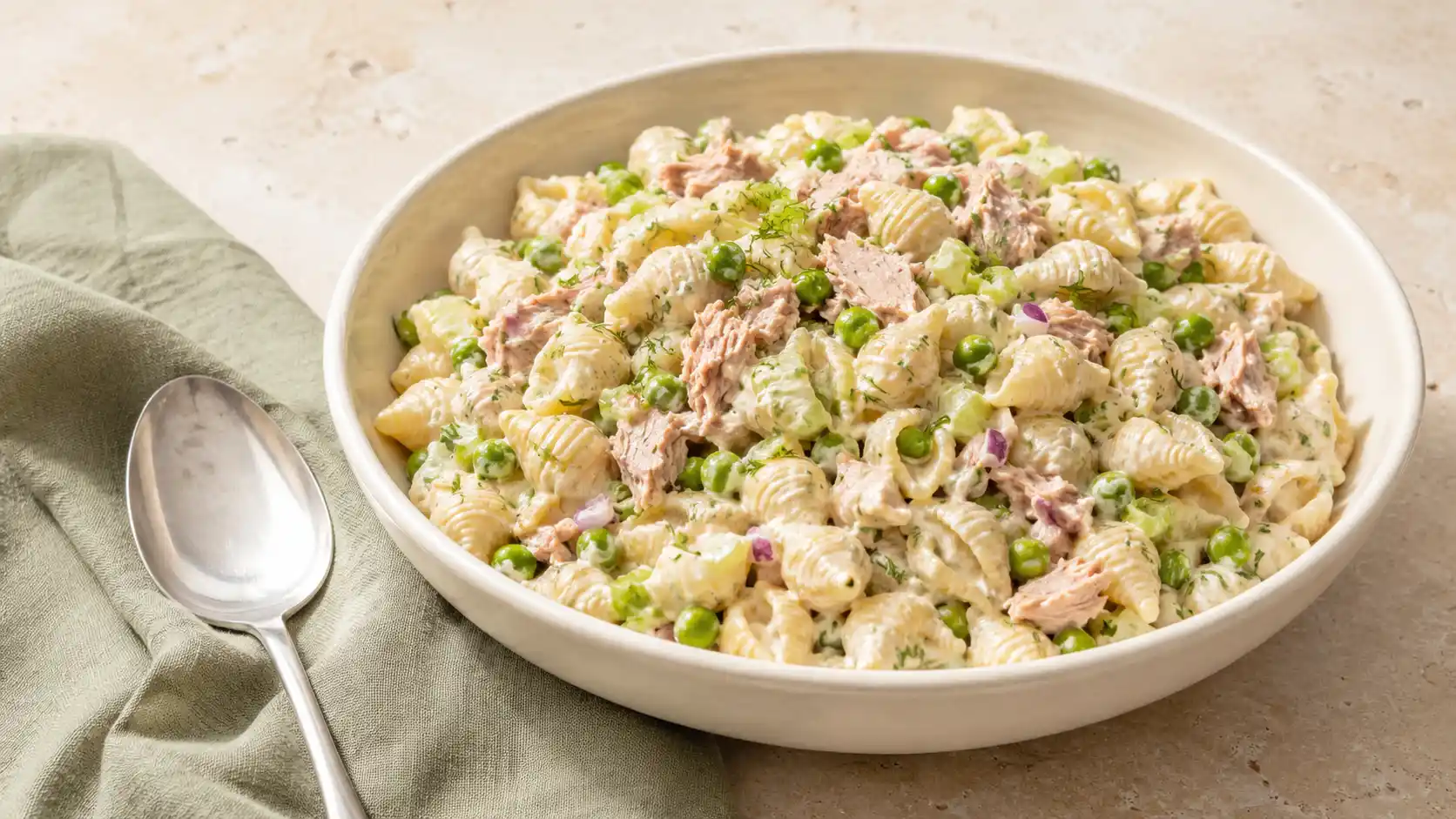
This creamy tuna pasta salad combines small pasta, flaky canned tuna, sweet peas, crisp celery, and finely diced red onion with a lemon dill dressing. Careful draining and cooling help prevent a watery sauce, while a reserved portion of dressing refreshes the salad after it chills.
Serve it as a cold lunch, a summer side, or part of a picnic spread. For more seasonal options, browse these summer pasta salad recipes.
Quick answer: Cook the pasta until just tender, rinse it briefly, and drain it thoroughly. Mix the cooled pasta with well-drained tuna, prepared peas, celery, red onion, and most of the dressing. Chill for 30 minutes, then fold in the reserved dressing before serving.
Tuna Pasta Salad at a Glance
| Recipe style | Cold, creamy pasta salad |
|---|---|
| Estimated yield | About 8 servings |
| Best pasta | Small shells or elbow macaroni |
| Main protein | Water-packed canned tuna |
| Chill time | 30 minutes |
| Refrigerator storage | 3 to 4 days at 40°F or below |
Why This Creamy Tuna Pasta Salad Works
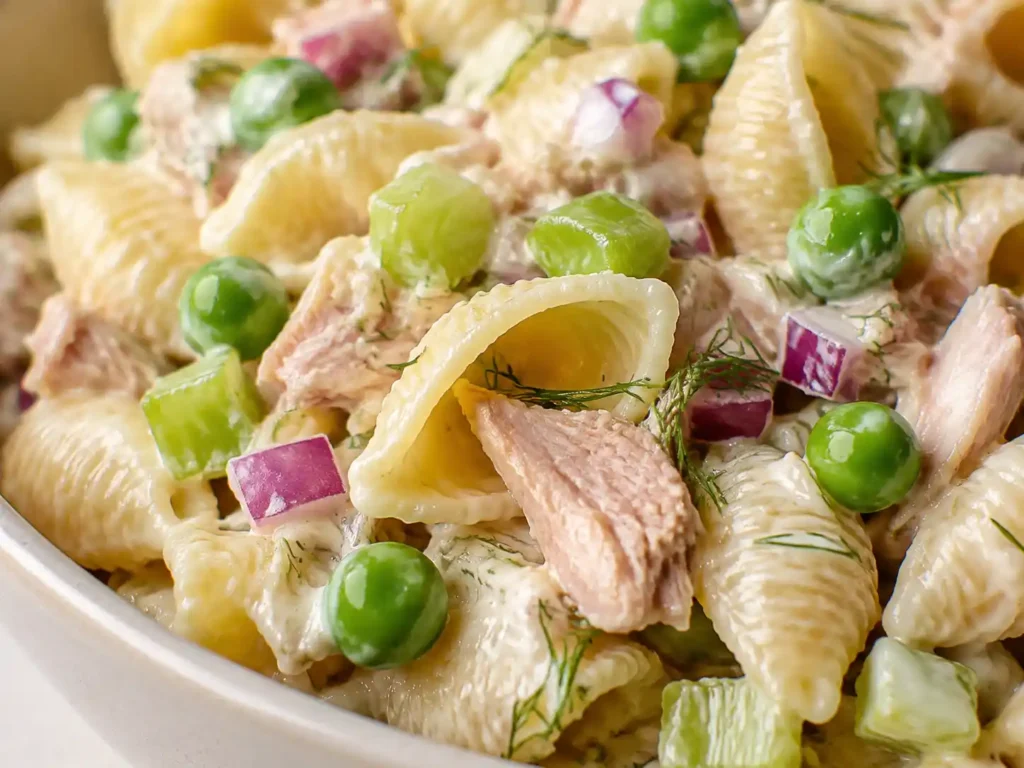
- Controlled moisture: The tuna, peas, and pasta are drained well before the dressing is added.
- Reserved dressing: Holding back 1/4 cup gives you a simple way to refresh pasta that absorbs sauce while chilling.
- Balanced texture: Small pasta, tender peas, crisp celery, and bite-size pieces of tuna make the salad easy to scoop and serve.
Ingredients and Why They Matter
Best Pasta Shape
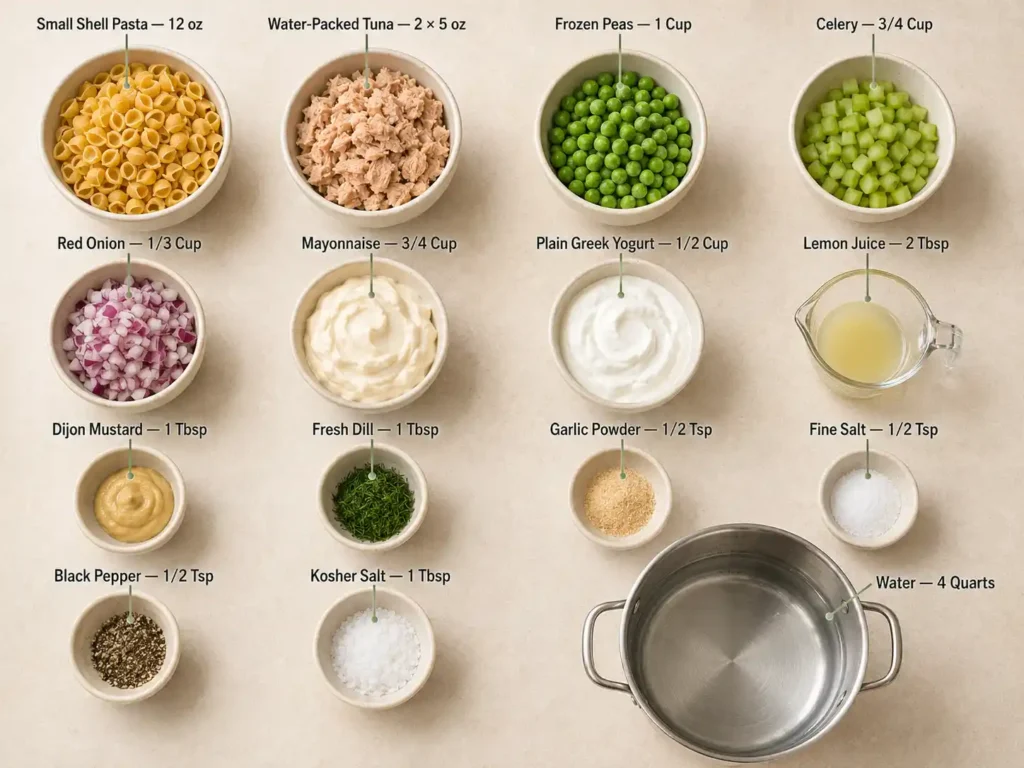
Small shells catch pieces of tuna, peas, and dressing in each spoonful. Elbow macaroni is an equal-weight substitute. Whichever shape you use, follow the package directions and stop cooking when the pasta is just tender. Pasta that becomes too soft in the pot can turn mushy after chilling.
Choosing and Draining Canned Tuna
The recipe uses two 5-ounce cans of water-packed tuna. Drain each can thoroughly, then separate the tuna into bite-size pieces. Leaving a few visible flakes gives the salad more texture than mashing the tuna into the dressing.
Dressing Ingredients
Mayonnaise provides the classic creamy base, while plain Greek yogurt adds tang. Lemon juice, Dijon mustard, fresh dill, garlic powder, salt, and black pepper keep the sauce bright without making the salad pickle-forward.
Prepare the frozen peas according to their package directions. Cool and drain them thoroughly before mixing so they do not add excess water to the salad.
How to Make Tuna Pasta Salad
Prepare the Peas and Dressing
Prepare the frozen peas according to the package directions. Cool them, drain them well, and remove any visible surface moisture.
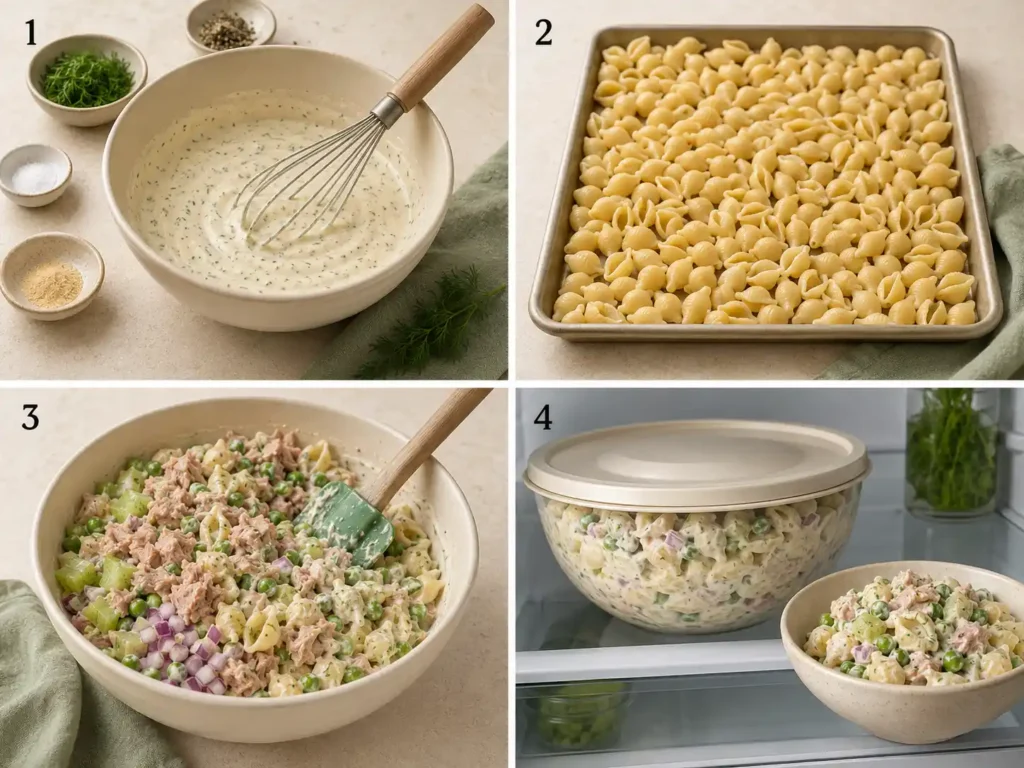
In a medium bowl, whisk the mayonnaise, Greek yogurt, lemon juice, Dijon mustard, fresh dill, garlic powder, fine salt, and black pepper until smooth. Transfer 1/4 cup of the dressing to a covered container and refrigerate it for later.
Cook, Rinse, and Drain the Pasta
Bring 4 quarts of water to a boil in a pot that holds at least 6 quarts. Add the kosher salt, then cook the pasta according to its package directions until just tender.
Drain the pasta and rinse it briefly under cold water to stop the cooking. Leave it in the colander for at least 5 minutes. If water remains visible, spread the pasta on a clean sheet pan for a few minutes. The pasta should feel cool and look dry on the surface before it meets the dressing.
Fold, Chill, and Refresh the Salad
Place the pasta, drained tuna, prepared peas, celery, and red onion in a large mixing bowl. Add the main portion of dressing and fold gently until the ingredients are evenly coated.
Cover and refrigerate for 30 minutes. Fold in the reserved dressing just before serving, then taste the cold salad. Add only a small pinch of salt if the flavor needs adjustment.
Texture Checkpoints
- The cooked pasta is cool and dry on the surface before dressing.
- The tuna remains in small, visible pieces rather than disappearing into the sauce.
- The peas are cool and well drained.
- The dressing coats the pasta without collecting at the bottom of the bowl.
- The reserved dressing is added after chilling, when the pasta has had time to absorb moisture.
Troubleshooting Tuna Pasta Salad
| Problem | Likely cause | What to do |
|---|---|---|
| The salad is dry | The pasta absorbed dressing while chilling | Fold in the reserved 1/4 cup of dressing before serving |
| The dressing is watery | The pasta, tuna, or peas carried extra liquid | Drain every component thoroughly before mixing |
| The pasta is mushy | It cooked for too long | Follow the package directions and cool the pasta promptly |
| The cold salad tastes flat | The seasoning needs adjustment after chilling | Taste the chilled salad and add a small pinch of salt if needed |
| The onion tastes too sharp | The pieces are too large or the onion is strong | Dice it very finely, use slightly less, or soak it briefly in cold water, then drain and dry it thoroughly |
Want more practical summer recipes? Save this recipe and join the ZikoRecipes newsletter for cold lunches, party food, and seasonal meal ideas.
Make Ahead, Storage, and Picnic Safety
| When | What to do |
|---|---|
| Serving the same day | Assemble the salad, chill it for 30 minutes, then fold in the reserved dressing |
| Serving the next day | Keep the reserved dressing covered and refrigerated separately, then add it before serving |
| Storing leftovers | Refrigerate promptly in an airtight container and use within 3 to 4 days |
Keep tuna pasta salad at 40°F or below. FoodSafety.gov lists tuna and macaroni salads for 3 to 4 days in the refrigerator and notes that they do not freeze well.
For a picnic or outdoor buffet, transport the salad in a cooler with ice or frozen gel packs. According to the FDA’s outdoor food safety guidance, cold perishable food should not sit out for more than 2 hours, or more than 1 hour when the temperature is above 90°F. Keep these limits in mind when planning summer picnic food ideas.
Substitutions and Variations
- Elbow macaroni: Replace the small shells with the same dry weight of elbow macaroni and follow the package cooking time.
- Egg-free mayonnaise: Use a mayonnaise alternative only when its label confirms that it meets your dietary needs. Check all packaged ingredients for additional allergens.
- Milder onion: Use slightly less red onion, dice it very finely, or soak the diced onion briefly in cold water. Drain and dry it completely before adding it.
- Pickle-forward flavor: Keep the base recipe unchanged and use this dill pickle pasta salad when you want pickles to be the main flavor.
What to Serve with Tuna Pasta Salad
This cold pasta salad can be served as a light lunch or as one part of a larger summer spread. Pair it with grilled vegetables, fresh fruit, crisp raw vegetables, or other summer side dishes.
For more pasta salad options, try a fresh cucumber tomato pasta salad, a hearty pasta salad with grilled chicken, or a cold tortellini pasta salad.
Helpful Tools
- A pot that holds at least 6 quarts
- A colander for draining the pasta and peas
- A mixing bowl that holds at least 4 quarts
- A small whisk and flexible spatula
- An airtight container for refrigeration
- A cooler and frozen gel packs for outdoor serving
Estimated Nutrition
Estimated nutrition per serving, based on 8 equal portions: approximately 365 calories, 15 g protein, 37 g carbohydrates, 17 g fat, and 3 g fiber. Sodium varies substantially with the pasta water, tuna, mayonnaise, mustard, and product labels. These rounded estimates are not guaranteed or medically precise.
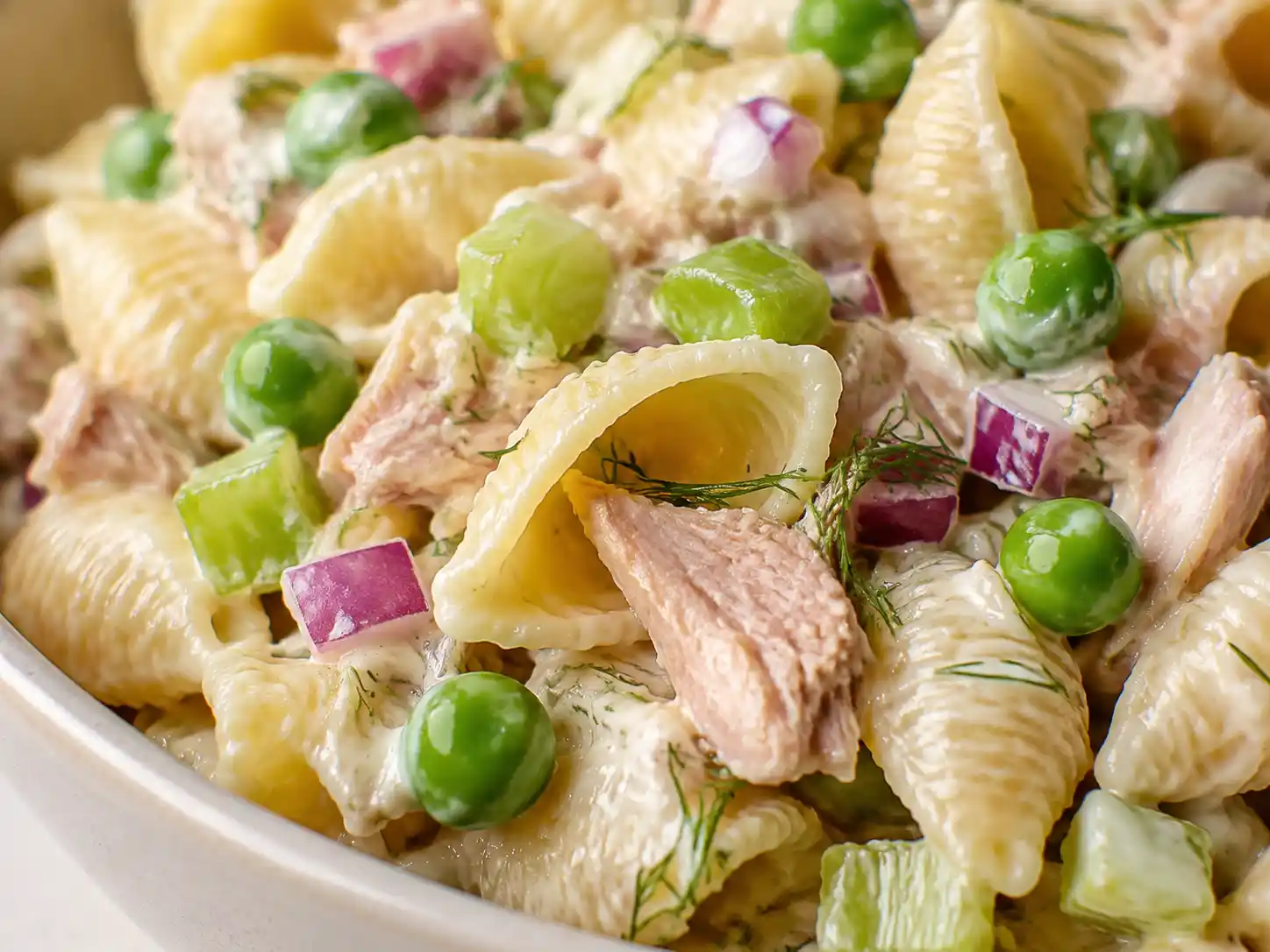
Creamy Tuna Pasta Salad with Peas
Ingredients
Equipment
Method
- Prepare the frozen peas according to the package directions. Cool them completely, drain thoroughly, and remove any visible surface moisture.
- In a medium bowl, whisk together the mayonnaise, Greek yogurt, lemon juice, Dijon mustard, fresh dill, garlic powder, fine salt, and black pepper until smooth.
- Transfer 1/4 cup of the prepared dressing to a covered container and refrigerate it for adding after the salad chills.
- Bring 4 quarts of water to a boil in a pot that holds at least 6 quarts. Add the kosher salt.
- Add the pasta and cook according to the package directions until just tender. Avoid overcooking because the pasta will soften further as it chills.
- Drain the pasta and rinse it briefly under cold water to stop the cooking. Leave it in the colander for at least 5 minutes. If visible water remains, spread the pasta on a clean sheet pan for a few minutes until cool and dry on the surface.
- Place the cooled pasta, thoroughly drained tuna, prepared peas, celery, and red onion in a large mixing bowl.
- Add the main portion of the dressing and fold gently with a flexible spatula until the ingredients are evenly coated and the tuna remains in small visible pieces.
- Cover the salad and refrigerate for 30 minutes.
- Just before serving, fold in the reserved dressing. Taste the cold salad and add only a small pinch of additional salt if needed. Serve chilled.
Notes
Frequently Asked Questions
Can I make tuna pasta salad the day before?
Yes. Assemble and refrigerate the salad, but keep the reserved 1/4 cup of dressing covered in a separate container. Fold it into the salad before serving.
How long does tuna pasta salad last in the refrigerator?
Store it promptly in an airtight container for 3 to 4 days in a refrigerator kept at 40°F or below.
Why does my tuna pasta salad get dry after chilling?
Cooked pasta continues to absorb moisture from the dressing. Reserving part of the dressing and adding it after chilling restores a creamier coating without making the initial mixture too wet.
Do I need to cook frozen peas before adding them?
Follow the preparation directions on the pea package. After preparing them, cool and drain the peas thoroughly before adding them to the salad.
What pasta shape is best for tuna pasta salad?
Small shells and elbow macaroni work well because they mix evenly with the tuna, peas, vegetables, and dressing. Use the same dry weight and follow the package cooking time.
Final Takeaway
Drain every component well, cool the pasta before dressing, and save 1/4 cup of sauce for the end. Those checkpoints make this tuna pasta salad easier to prepare ahead and refresh before serving.