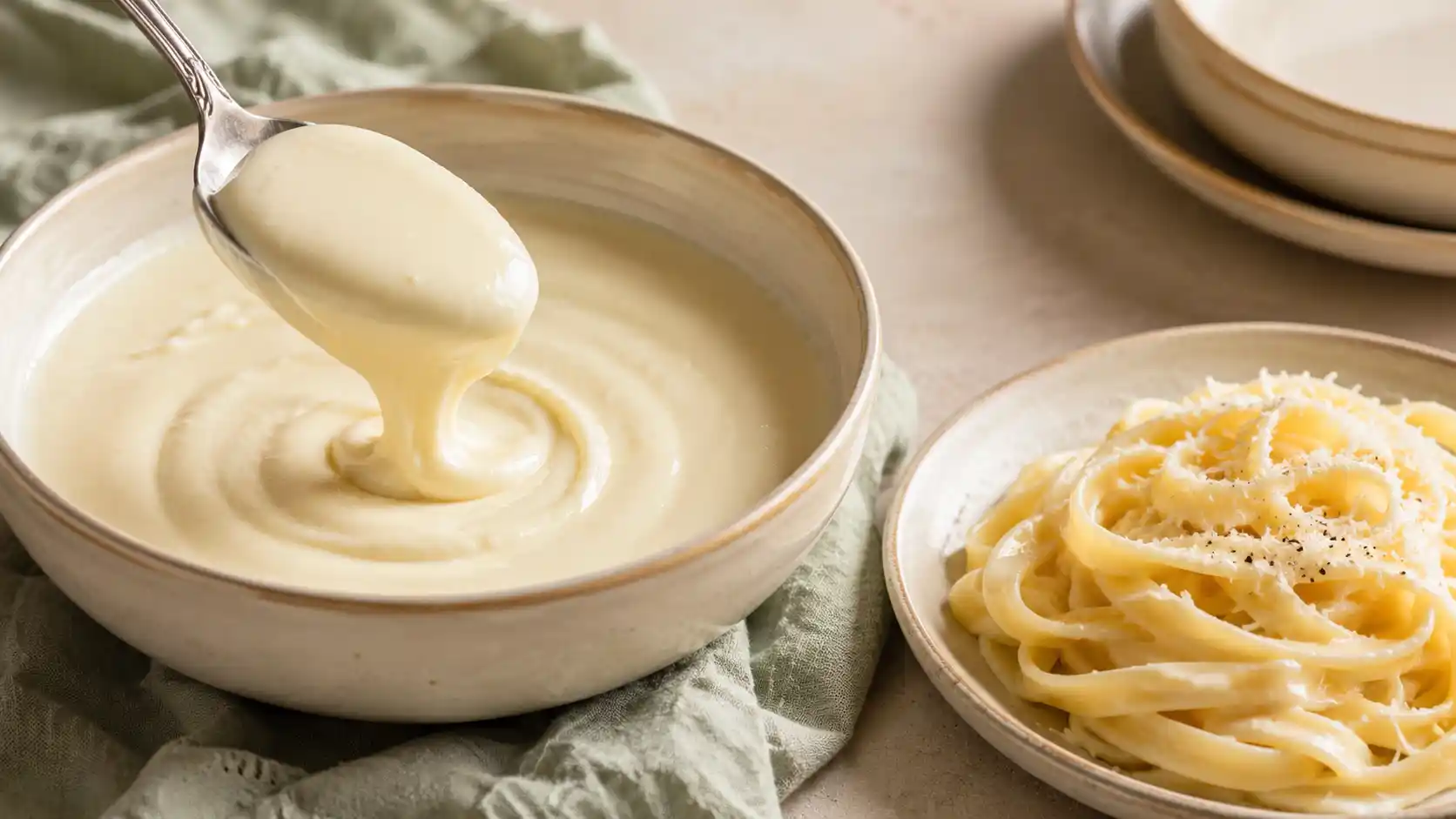
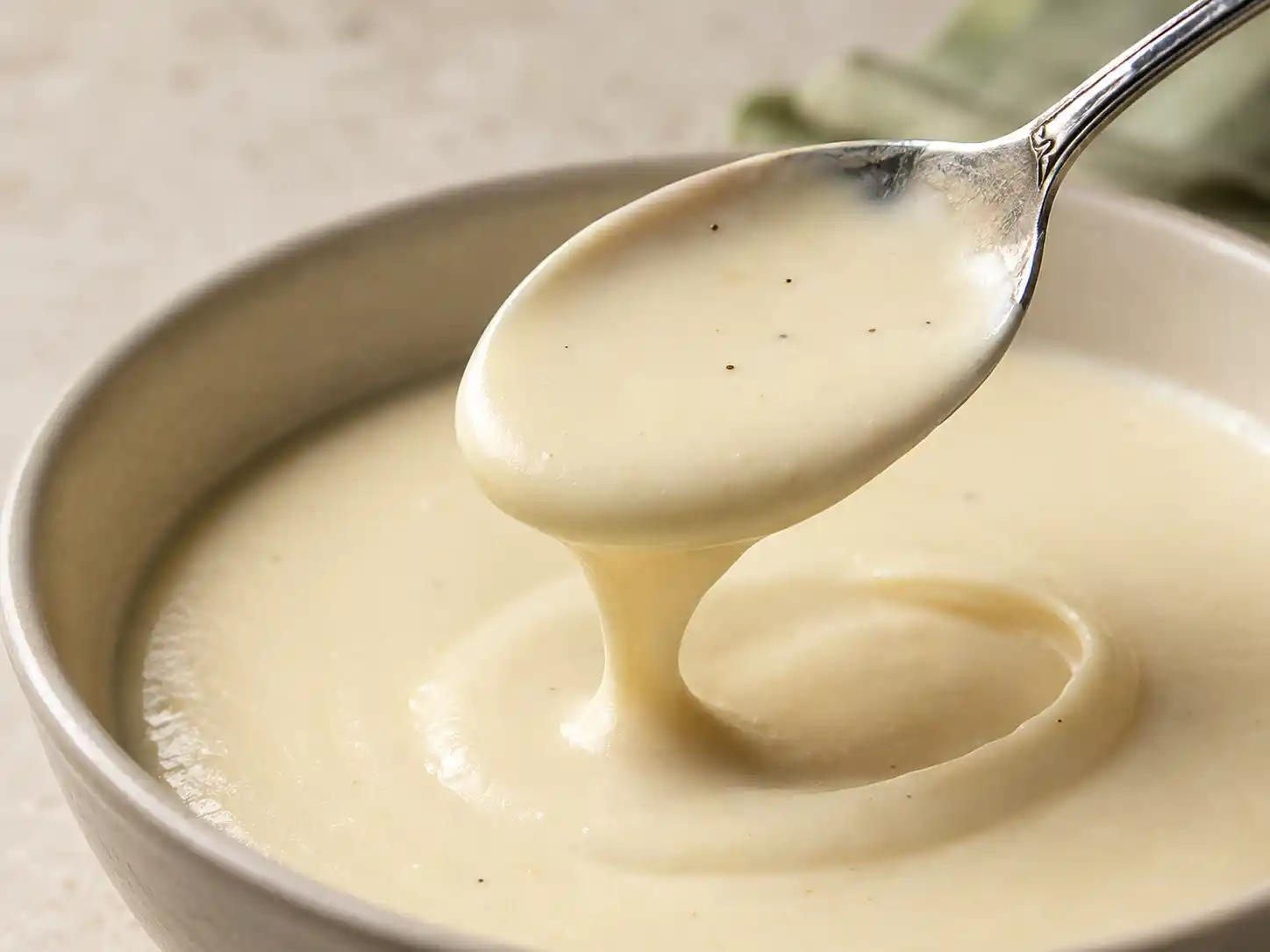
This homemade Alfredo sauce turns butter, heavy cream, and freshly grated Parmesan into a smooth sauce for pasta, chicken, shrimp, and vegetables. The method stays simple: warm the cream gently, add the cheese away from direct heat, and adjust the finished sauce only as needed.
You will get about 2 cups, enough to coat approximately 12 ounces of fettuccine. Keep the pan nearby when you serve it because Alfredo sauce thickens quickly as it cools.
Quick Answer: How Do You Make Alfredo Sauce?
Melt butter over medium-low heat, briefly cook the optional garlic, then whisk in heavy cream. Let the cream simmer gently for 3 to 5 minutes. Remove the pan from the heat and whisk in finely grated Parmesan a little at a time. Season after the cheese melts, then loosen the sauce with hot pasta water only if needed.
Alfredo Sauce at a Glance
| Style | American cream-based Alfredo sauce |
|---|---|
| Prep time | 5 minutes |
| Cook time | 10 minutes |
| Total time | 15 minutes |
| Yield | About 2 cups |
| Servings | 4 servings, about 1/2 cup each |
| Pasta coverage | About 12 ounces dry fettuccine |
American Alfredo Sauce vs. Roman-Style Alfredo
In the United States, Alfredo sauce usually means a rich sauce made with butter, heavy cream, and Parmesan. That is the style used in this recipe.
Roman-style fettuccine Alfredo is different. It creates a creamy coating by tossing hot pasta with butter, finely grated Parmigiano-Reggiano, and starchy pasta water. It does not rely on heavy cream. If you need a broader white sauce for several dishes, this cream sauce base follows a different purpose and method.
Ingredients for Homemade Alfredo Sauce
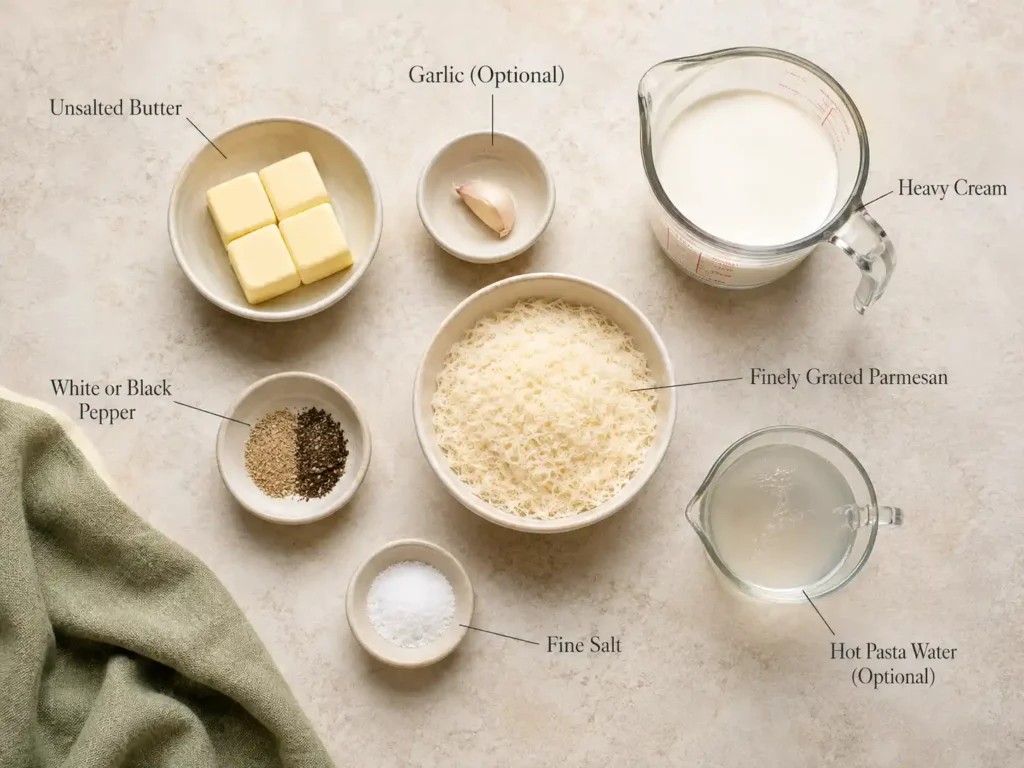
- 4 tablespoons unsalted butter: Unsalted butter gives you more control because Parmesan already contributes salt.
- 1 small garlic clove, finely grated, optional: A small amount adds flavor without leaving large pieces in the sauce.
- 1 1/2 cups heavy cream: This equals about 12 fluid ounces or 355 ml. Heavy cream provides the body needed for a flourless American-style sauce.
- 1 1/4 cups finely grated Parmesan: Use about 5 ounces or 142 g from a wedge. A measured weight prevents the wide variation caused by loose or packed cups.
- 1/4 teaspoon white or black pepper: White pepper keeps the sauce pale, while black pepper adds visible flecks.
- Fine salt, only if needed: Taste after adding the Parmesan before deciding whether to add salt.
- Up to 1/4 cup hot pasta water, optional: Use it one tablespoon at a time when tossing the sauce with pasta. It is not included in the 2-cup yield.
Allergen note: This recipe contains milk and dairy ingredients.
How to Make Alfredo Sauce
- Prepare the Parmesan. Finely grate the cheese before heating the pan. Measure 5 ounces by weight when possible, then keep it close to the stove.
- Melt the butter. Place a 3-quart saucepan or a 10-inch skillet over medium-low heat. Add the butter and let it melt without browning.
- Cook the optional garlic. Add the finely grated garlic and stir for 30 to 45 seconds, just until fragrant. Do not let it brown.
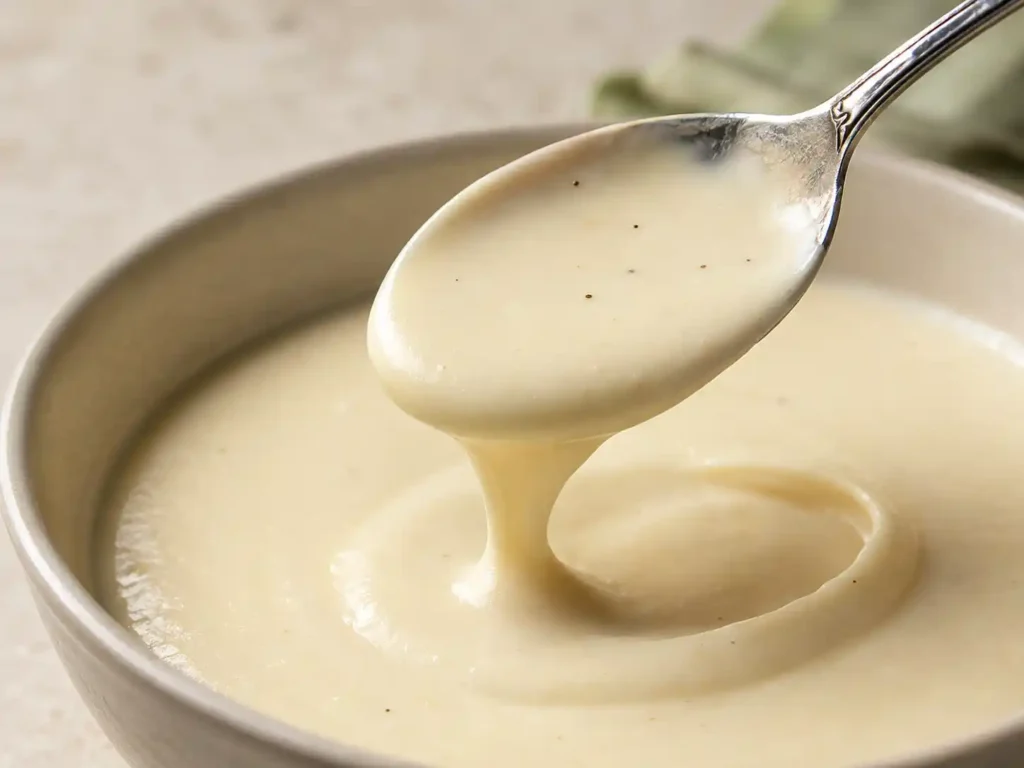
- Simmer the cream gently. Pour in the heavy cream and whisk until combined. Bring it to a gentle simmer, then cook for 3 to 5 minutes, whisking frequently. The cream should lightly coat the back of a spoon but remain fluid. Avoid a hard boil.
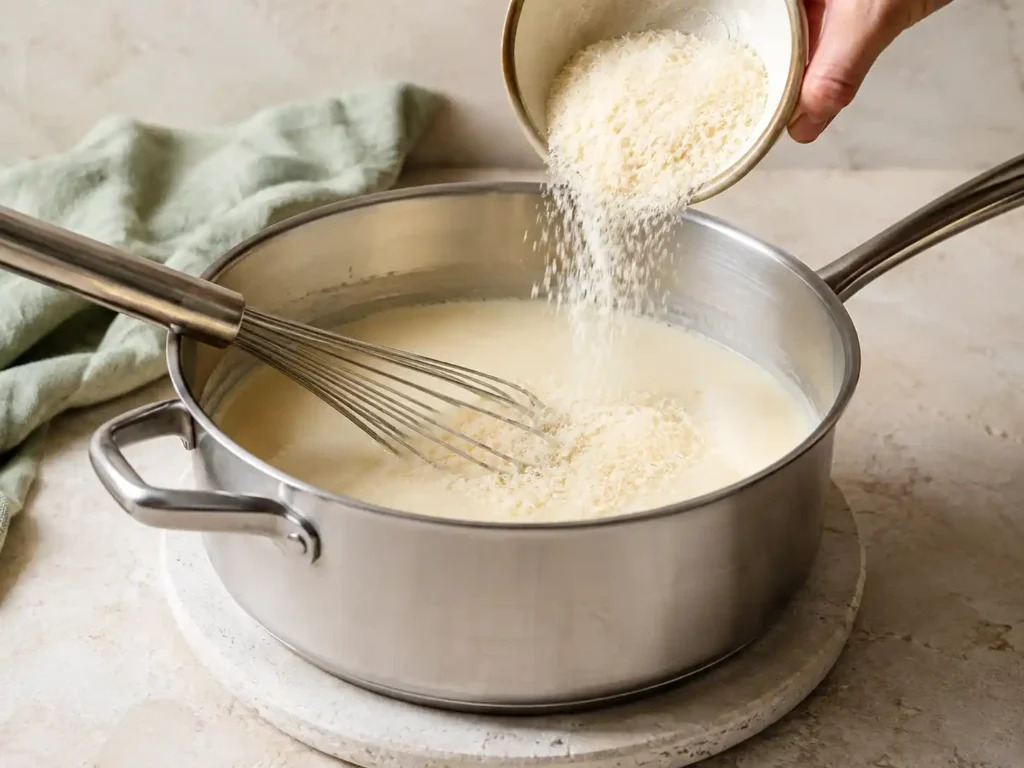
- Add the Parmesan away from direct heat. Remove the pan from the burner. Add the cheese in three or four additions, whisking until each addition melts before adding more. If the final bits do not melt, return the pan to the lowest heat for only a few seconds while whisking. Do not boil the sauce after adding the cheese.
- Season and serve. Stir in the pepper. Taste, then add salt only if necessary. For pasta, toss the sauce with about 12 ounces of hot cooked fettuccine. Add hot pasta water one tablespoon at a time if the coating is too thick. Serve promptly.
How to Keep Alfredo Sauce Smooth
Heat control matters more than aggressive stirring. Heavy cream can handle a gentle simmer before the cheese is added, but Parmesan is more likely to clump or release fat when it gets too hot. Taking the pan off the burner gives the cheese time to melt into the cream instead of cooking against the hot surface.
Cheese size also affects the result. Finely grated Parmesan melts faster and more evenly than thick shreds. Cheese grated from a wedge is preferred because some packaged varieties contain ingredients that reduce clumping in the bag but can interfere with a smooth sauce.
Alfredo Sauce Troubleshooting
| Problem | Likely cause | What to do now | How to prevent it |
|---|---|---|---|
| Grainy sauce | The cheese was too coarse, added too quickly, or overheated | Remove the pan from the heat and whisk in 1 teaspoon of warm cream or pasta water at a time. A badly overheated sauce may not become completely smooth again. | Finely grate the cheese and add it gradually away from direct heat. |
| Oily or separated sauce | The sauce became too hot after the cheese was added | Take the pan off the burner and whisk in a small amount of warm water. Stop once the sauce begins to come together. | Use gentle heat and do not boil after adding Parmesan. |
| Sauce is too thick | It reduced too far or cooled before serving | Add warm cream or hot pasta water one tablespoon at a time. | Stop cooking while the sauce is still slightly looser than the desired serving texture. |
| Sauce is too thin | The cream did not simmer long enough | Before adding cheese, simmer for another 1 to 2 minutes. After adding cheese, let the sauce stand briefly before using the lowest heat. | Look for a light coating on the back of a spoon before adding Parmesan. |
Want more practical sauce and weeknight dinner ideas? Save this recipe and join the ZikoRecipes newsletter so the next one is easy to find.
Alfredo Sauce Substitutions
| Substitution | Recommended? | Adjustment | Expected result |
|---|---|---|---|
| Half-and-half for heavy cream | Possible | Keep the heat gentle and allow slightly more time to thicken | A lighter, thinner sauce with a greater risk of separation |
| Whole milk for heavy cream | Not as a direct swap | Use a separate milk-and-roux recipe | A white Parmesan sauce rather than the flourless sauce here |
| Pre-grated Parmesan | Not preferred | Choose the finest available texture if it is the only option | It may melt less evenly or remain grainy |
| Black pepper for white pepper | Yes | Use the same starting amount | A slightly bolder look and flavor |
| No garlic | Yes | Omit it without another change | A simpler butter-and-Parmesan flavor |
How Much Alfredo Sauce Do You Need for Pasta?
This batch makes about 2 cups and is designed for approximately 12 ounces of dry fettuccine. Use 8 to 10 ounces if you like a generous amount of sauce, or up to 1 pound for a lighter coating. The exact coverage changes with the pasta shape and the amount of pasta water added.
Finish the pasta in the sauce instead of pouring sauce over individual bowls. Tossing distributes the coating more evenly and lets you add pasta water only where it is needed.
Ways to Use Alfredo Sauce
- Toss it with fettuccine, linguine, penne, or cheese tortellini.
- Add sliced cooked chicken or use it as inspiration for garlic Parmesan chicken pasta.
- Pair it with shrimp, or choose Cajun shrimp pasta when you want more seasoning.
- Fold in cooked broccoli, peas, mushrooms, or spinach just before serving.
- Use a small amount in a pasta bake, keeping in mind that the sauce thickens further in the oven.
If you are planning a full creamy pasta dinner, Marry Me chicken pasta offers another complete recipe rather than a stand-alone sauce.
Storage and Reheating
Transfer leftover Alfredo sauce to a shallow airtight container and refrigerate it within 2 hours. Use it within 3 to 4 days. Alfredo is best on the day it is made, so this safety window should not be confused with a promise that the texture will remain unchanged.
Reheat only the amount you plan to serve. Start over low heat and whisk in a small splash of cream, milk, or water to loosen the cold sauce. For food safety, USDA leftover guidance calls for leftovers to reach 165°F and for reheated sauces to be brought to a boil. Whisk continuously and remove the pan from the heat as soon as it reaches that point. The sauce may lose some smoothness during reheating.
Freezing is not recommended for best quality because cream-and-cheese sauces can separate after thawing.
Helpful Tools for This Recipe
- 3-quart heavy-bottom saucepan: Provides enough room for the cream to rise without crowding the pan.
- Fine grater or microplane: Produces small Parmesan pieces that melt more evenly.
- Whisk: Helps incorporate the cream and cheese smoothly.
- Digital kitchen scale: Makes the 5-ounce cheese measurement more consistent than cups alone.
- Pasta tongs: Useful for tossing long noodles directly with the sauce.
Estimated Nutrition
Estimated nutrition per serving: approximately 560 calories, 16 g protein, 4 g carbohydrates, 54 g fat, 34 g saturated fat, and 570 mg sodium. This estimate is based on four 1/2-cup servings of sauce only. It excludes pasta, optional add-ins, and added salt. Values vary by cream and Parmesan.
Homemade Alfredo Sauce
Ingredients
Equipment
Method
- Finely grate the Parmesan before heating the pan. Measure approximately 5 ounces by weight when possible and keep it near the stove.
- Place a 3-quart saucepan or 10-inch skillet over medium-low heat. Add the butter and let it melt without browning.
- If using garlic, add the finely grated clove and stir for 30 to 45 seconds, just until fragrant. Do not allow it to brown.
- Pour in the heavy cream and whisk until combined. Bring it to a gentle simmer and cook for 3 to 5 minutes, whisking frequently. The cream should lightly coat the back of a spoon while remaining fluid. Avoid a hard boil.
- Remove the pan from the burner. Add the finely grated Parmesan in 3 or 4 additions, whisking until each portion melts before adding the next.
- If the final pieces of cheese do not melt, return the pan to the lowest heat for only a few seconds while whisking. Do not boil the sauce after adding the Parmesan.
- Stir in the pepper. Taste the sauce, then add salt only if necessary.
- Serve immediately, or toss with approximately 12 ounces of hot cooked fettuccine. If the sauce is too thick, add hot pasta water 1 tablespoon at a time until it reaches the desired consistency.
Notes
Frequently Asked Questions
What is Alfredo sauce made of?
This American-style Alfredo sauce uses butter, heavy cream, freshly grated Parmesan, pepper, and optional garlic. Salt is added only after tasting because Parmesan is naturally salty.
Can I use milk instead of heavy cream in Alfredo sauce?
Milk is not a direct replacement in this flourless recipe. A milk-based sauce normally needs a separate roux method to develop enough body and stability.
Why is my Alfredo sauce grainy or separating?
The most common causes are coarse or packaged cheese, adding the Parmesan too quickly, and excessive heat. Remove the pan from direct heat before adding finely grated cheese in small additions.
How do I thin or thicken Alfredo sauce?
For a thick sauce, add warm cream or hot pasta water one tablespoon at a time. If the cream base is thin, simmer it a little longer before adding the Parmesan. Remember that the finished sauce thickens as it cools.
How long does homemade Alfredo sauce last in the fridge?
Refrigerate it within 2 hours and use it within 3 to 4 days. Reheat leftovers according to USDA temperature guidance and expect some change in texture.
Final Takeaway
A smooth Alfredo sauce depends on three practical details: finely grated Parmesan, gentle heat, and gradual mixing away from the burner. Prepare the cheese first, keep the cream at a controlled simmer, and serve the sauce while it is fresh and fluid.
For a different homemade sauce, try this roasted red pepper sauce. You can also explore more chicken dinner ideas to turn the sauce into a complete meal.