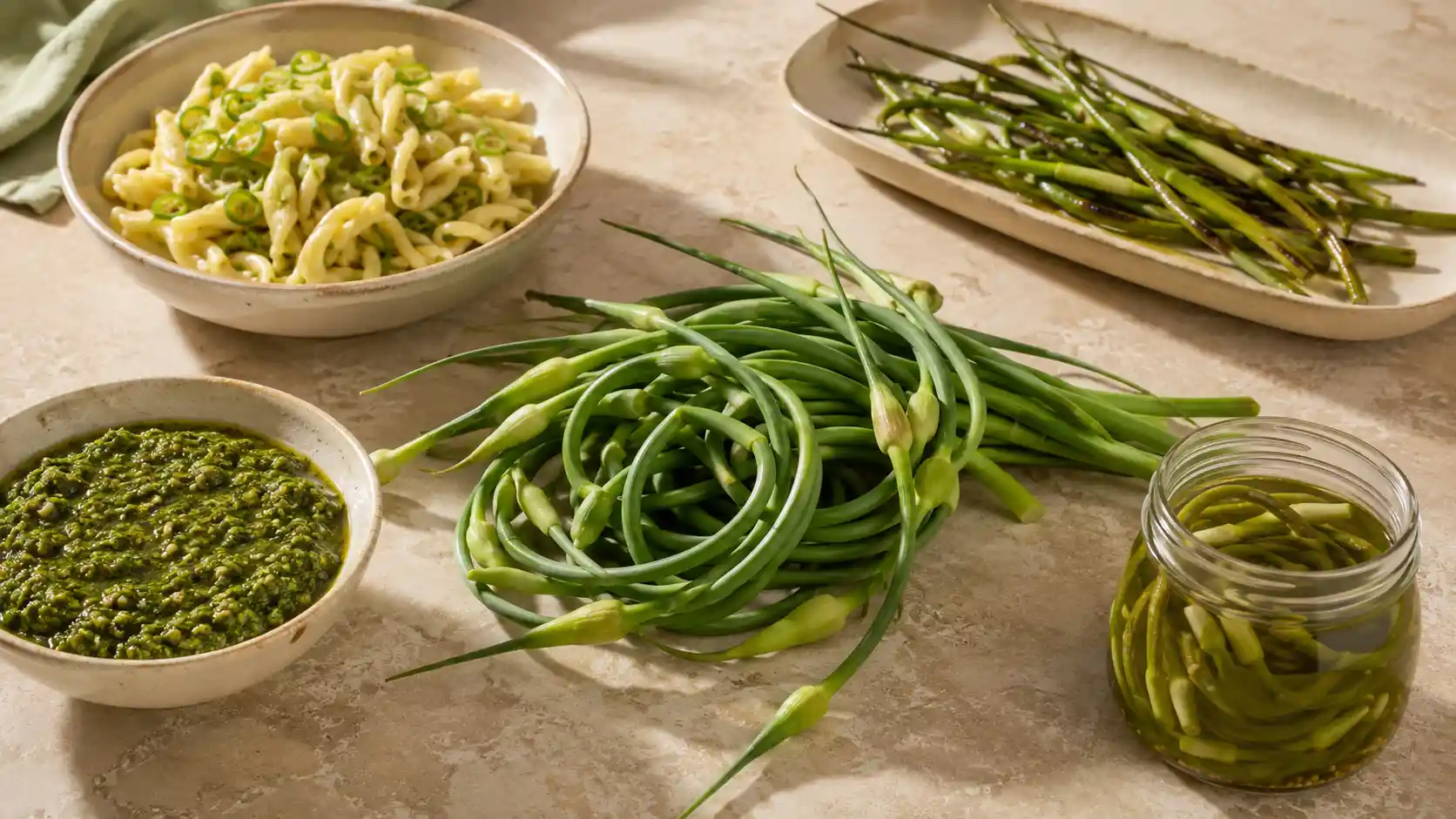
Garlic scapes appear for a short season, but there are plenty of practical ways to use them. These garlic scapes recipes include pesto, pasta, creamy dips, grilled sides, stir-fries, refrigerator pickles, and other simple ideas for summer meals.
If you have never cooked with scapes before, start by treating them like a cross between fresh garlic and a firm green vegetable. They can be sliced, sautéed, grilled, blended, roasted, or added to eggs and rice. This guide explains how to choose and prepare them before sharing 15 easy ways to use your bunch.
Quick answer: The easiest places to start are garlic scape pesto, grilled scapes, sautéed scapes with lemon, pasta, fried rice, or refrigerator pickles.
What Are Garlic Scapes?
Garlic scapes are the green flowering stalks produced by hardneck garlic plants. According to University of Minnesota Extension, the stalks can be removed and eaten shortly after they begin to curl.
Softneck garlic generally does not produce the same type of flowering stalk. This is one reason garlic scapes are a seasonal specialty rather than an ingredient found in every grocery store throughout the year.
What Do Garlic Scapes Taste Like?
Garlic scapes have a fresh garlic flavor with a green, herb-like quality. They are usually less intense than raw garlic cloves, although the strength can vary depending on their maturity and how they are prepared.
Raw scapes bring a noticeable garlic flavor to pesto, dips, dressings, and garnishes. Cooking softens their texture and makes the flavor less sharp.
Garlic Scapes vs. Green Garlic
Garlic scapes and green garlic are related, but they are not the same ingredient.
- Garlic scapes are the flowering stalks produced by hardneck garlic.
- Green garlic is a young garlic plant harvested before its bulb fully develops.
Both ingredients can add a fresh garlic flavor, but their shapes, textures, and best uses are different.
When Are Garlic Scapes Available?
Garlic scapes are normally available during late spring and early summer. The exact timing depends on the growing region, climate, and garlic variety.
Look for them at farmers markets, farm stands, community-supported agriculture boxes, specialty produce stores, and gardens where hardneck garlic is grown.
How to Choose and Prepare Garlic Scapes
Choose scapes that look firm, smooth, and consistently green. Avoid stalks with slimy areas, mold, extensive yellowing, or a strong unpleasant odor.
Younger scapes are generally easier to slice and cook. Older stalks may have firmer lower sections that need to be removed.
How to Wash and Trim Garlic Scapes
- Rinse the scapes under cool running water.
- Dry them thoroughly with a clean kitchen towel.
- Trim away the dry cut end.
- Bend or press the lower part of the stalk to check for tough sections.
- Remove any section that feels woody or unusually fibrous.
- Cut the remaining stalk according to the recipe.
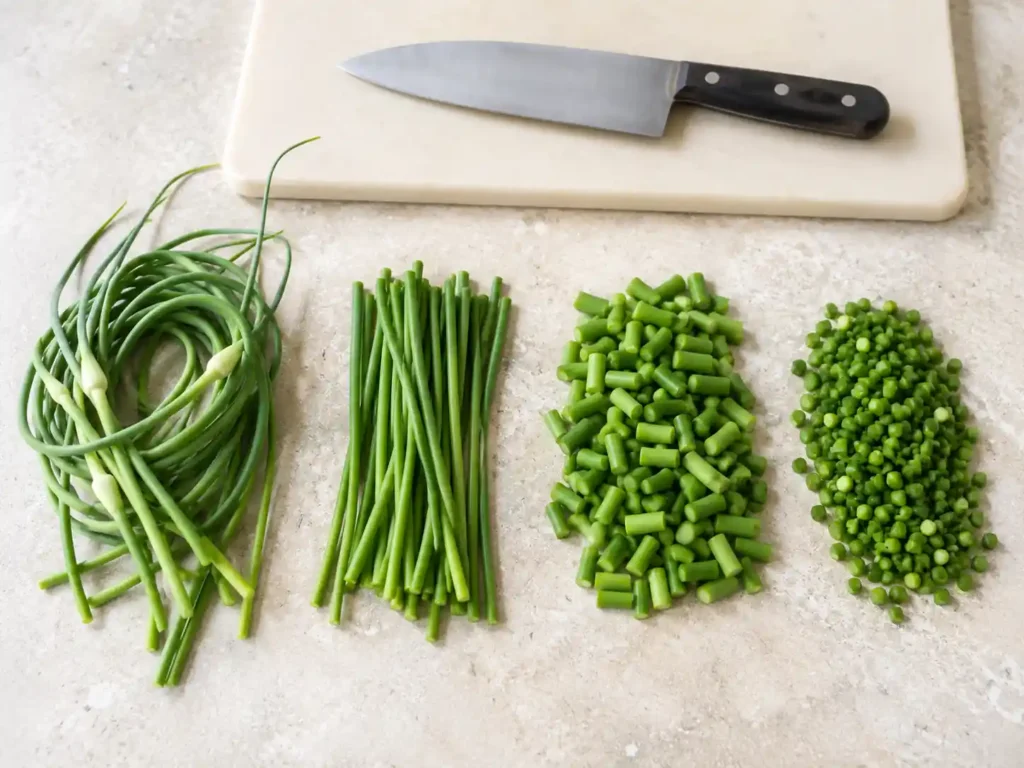
For pesto or dips, chop the scapes into short pieces before placing them in a food processor. For stir-fries and egg dishes, slice them into evenly sized sections so they cook at a similar rate.
Can You Eat the Garlic Scape Bud?
The tender stalk is the most consistently pleasant part to eat. Some cooks also use the developing bud when it is soft and fresh.
If the bud or upper section feels hard, dry, or fibrous, remove it. Texture is a better guide than appearance alone because scapes mature at different rates.
Raw vs. Cooked Garlic Scapes
Choose the preparation method according to the flavor and texture you want.
| Method | How to Prepare the Scapes | Expected Texture | Best Uses |
|---|---|---|---|
| Raw | Slice thinly or mince finely | Crisp with a stronger garlic flavor | Dressings, dips, salads, and garnishes |
| Blended | Cut into short pieces first | Smooth or lightly textured | Pesto, bean dips, and flavored butter |
| Sautéed | Cut into even segments | Tender with a light bite | Eggs, pasta, rice, and vegetables |
| Grilled | Leave whole or cut into long sections | Lightly charred and tender | Side dishes and summer platters |
| Pickled | Trim to fit the container | Crisp and tangy | Sandwiches, bowls, and appetizers |
15 Easy Garlic Scape Recipes
The ideas below cover sauces, dips, side dishes, pasta, rice, eggs, pickles, and baking. Adjust the amount of garlic scape according to the size and intensity of your bunch.
Sauces, Dips, and Spreads
1. Garlic Scape Pesto
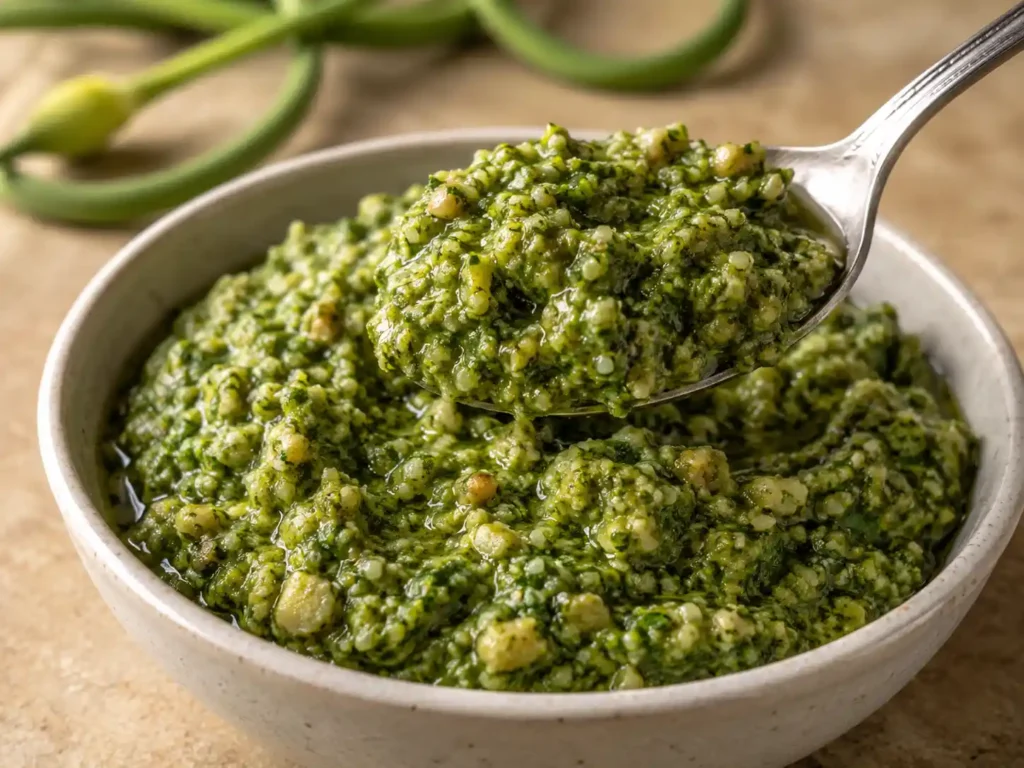
Blend chopped garlic scapes with a mild leafy herb, nuts or seeds, grated cheese, lemon juice, olive oil, salt, and pepper. Processing the scapes and nuts first helps break down the firmer ingredients before the oil is added.
Keep the pesto lightly textured and use it with pasta, roasted vegetables, grain bowls, sandwiches, or white beans. Readers who prefer a traditional version can also try this classic basil pesto recipe.
2. Creamy Garlic Scape Yogurt Dip
Finely mince or blend a small amount of garlic scape, then stir it into plain yogurt with lemon juice, salt, and pepper. Fresh herbs such as dill or parsley can help soften the garlic flavor.
Serve the dip with cucumber, carrots, crackers, toasted flatbread, or grilled vegetables.
3. Garlic Scape White Bean Dip
Blend garlic scapes with cooked white beans, tahini, lemon juice, olive oil, and seasonings. The beans create a creamy base that balances the fresh garlic flavor.
If the dip tastes too strong, add more beans or lemon gradually instead of adding extra oil all at once.
4. Garlic Scape Compound Butter
Mix finely chopped scapes into softened butter with salt, pepper, and fresh herbs. Shape the mixture into a log or transfer it to a small covered container before refrigerating it.
Use it on corn, roasted potatoes, warm bread, cooked vegetables, rice, or grilled chicken.
5. Lemon Garlic Scape Dressing
Blend finely chopped scapes with lemon juice, olive oil, a small amount of mustard, salt, and pepper. Taste before adding more scapes because their intensity can vary.
This dressing works well with leafy salads, cucumber salads, grain bowls, chickpeas, or roasted vegetables.
Grilled and Quick Side Dishes
6. Grilled Garlic Scapes
Coat whole scapes lightly with oil, then grill them until they soften and develop a little color. Turn them as needed so the thinner sections do not become overly dark.
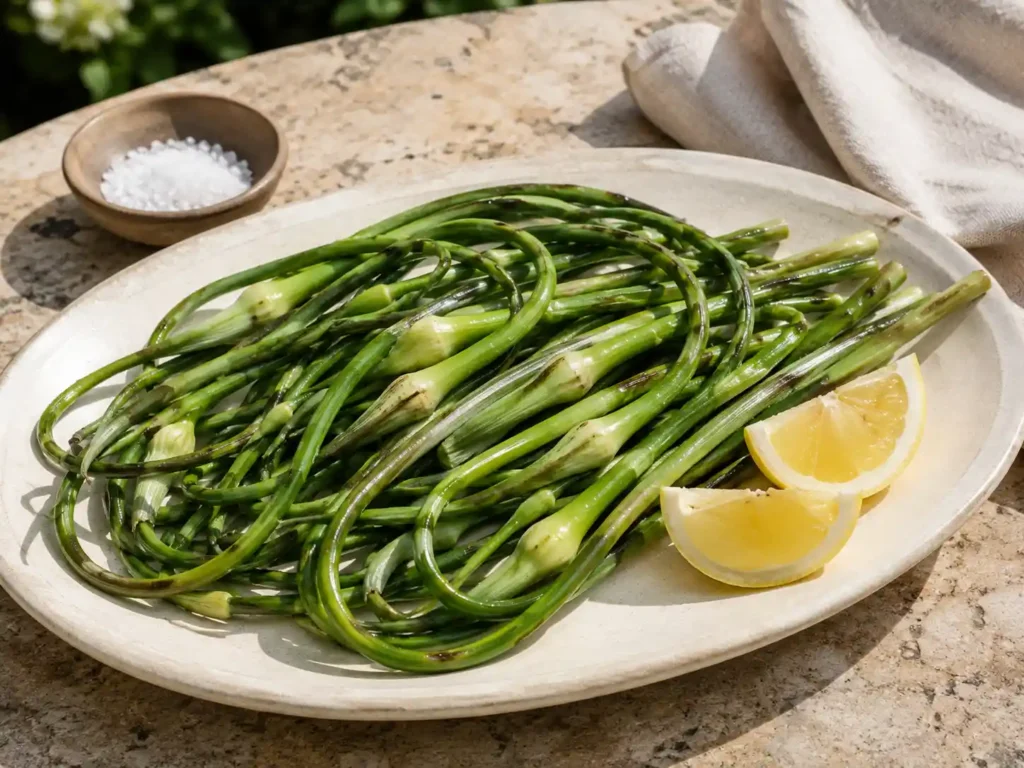
Finish with salt and fresh lemon juice. They make a simple addition to a collection of summer side dishes.
7. Sautéed Garlic Scapes with Lemon
Cut the scapes into short, even pieces and sauté them in a skillet with a small amount of oil or butter. Cook only until the pieces are tender enough for your preference.
Add lemon juice, black pepper, and a pinch of salt before serving them with eggs, rice, fish, or chicken.
8. Roasted Potatoes with Garlic Scapes
Roast seasoned potatoes until they are nearly tender, then add chopped scapes toward the later part of cooking. Adding them after the potatoes have started cooking helps prevent the thinner pieces from becoming too dark.
Serve the potatoes as a side for grilled vegetables, chicken, fish, or a summer buffet.
9. Vegetable Garlic Scape Stir-Fry
Slice the scapes into short pieces and add them to a skillet with vegetables such as bell peppers, carrots, mushrooms, green beans, or broccoli.
Add the scapes after vegetables that require longer cooking. Serve the mixture over rice or noodles, or add tofu, chicken, shrimp, or eggs.
Pasta, Rice, and Main Dish Ideas
10. Garlic Scape Pasta
Sauté sliced scapes, then combine them with hot pasta, olive oil, lemon, grated cheese, and a little pasta cooking water. Add peas, spinach, white beans, chicken, or shrimp when you want a more substantial meal.
For a cold summer option, use a small amount of garlic scape pesto in an easy Italian pasta salad.
11. Garlic Scape Fried Rice
Add chopped scapes to cooked rice with vegetables and eggs. Stir them in near the end so they retain some color and do not become overly soft.
Season the rice to taste and serve it as a quick lunch or as a side dish for chicken, shrimp, tofu, or vegetables.
12. Garlic Scape Frittata
Sauté chopped scapes before folding them into beaten eggs with cheese and vegetables. Cooking the scapes first softens their texture and distributes their flavor more evenly.
Serve the frittata warm or at room temperature with salad, roasted potatoes, or fresh fruit.
13. Creamy Garlic Scape Soup
Sauté garlic scapes with onion and a mild vegetable such as potatoes, zucchini, or cauliflower. Add broth, cook until the vegetables are tender, then blend until smooth.
Finish the soup with milk, cream, yogurt, or a dairy-free alternative according to the recipe you are using. Add the creamy ingredient gradually to control the consistency.
Pickles and Baking
14. Refrigerator Pickled Garlic Scapes
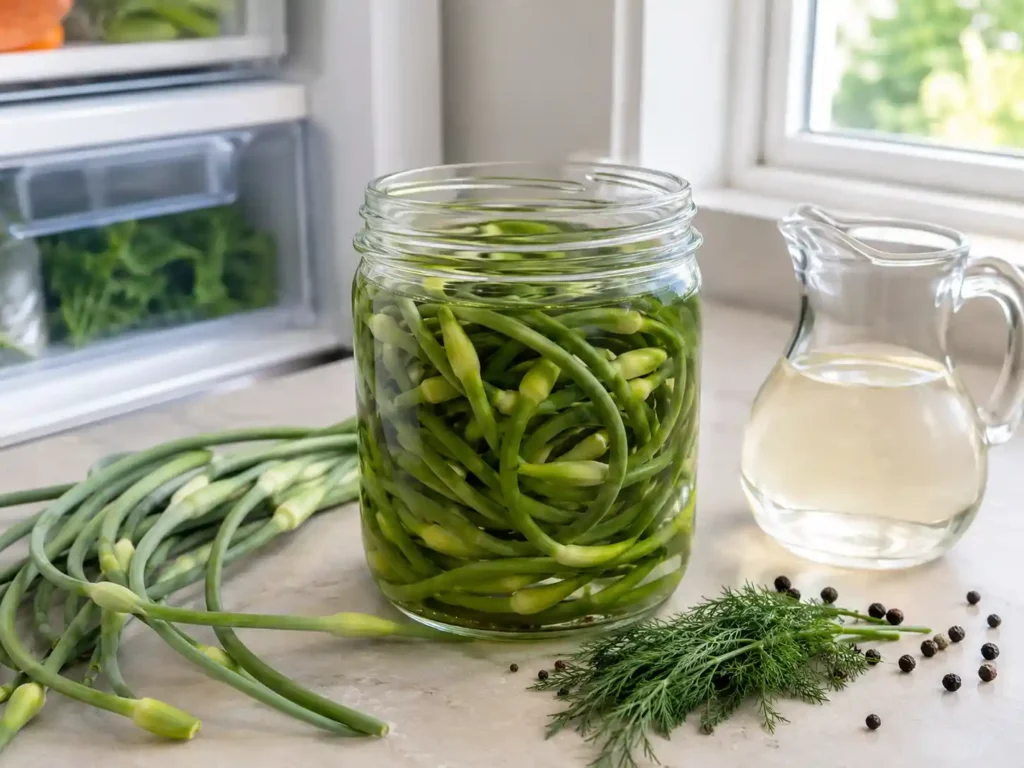
Trim the scapes to fit a clean jar or refrigerator-safe container, then cover them with a suitable vinegar-based refrigerator-pickle brine. Keep them refrigerated throughout storage.
Use the finished pickles with sandwiches, rice bowls, salads, cheese boards, or appetizer platters. This method can be paired with the guidance in these easy refrigerator pickles.
Important: This is a refrigerator-pickle idea, not a shelf-stable canning method. Do not store the jars at room temperature.
15. Garlic Scape Cheddar Biscuits
Finely chop the scapes and fold them into a trusted savory biscuit dough with shredded cheddar. Small, evenly cut pieces are easier to distribute throughout the dough.
Serve the biscuits with soup, salad, eggs, or a picnic spread. They also fit naturally into a menu of summer picnic food ideas.
A Flexible Garlic Scape Pesto Method
Because garlic scapes can vary in size, maturity, and intensity, a flexible method is more reliable than assuming every bunch needs the same proportions.
Choose Ingredients by Their Role
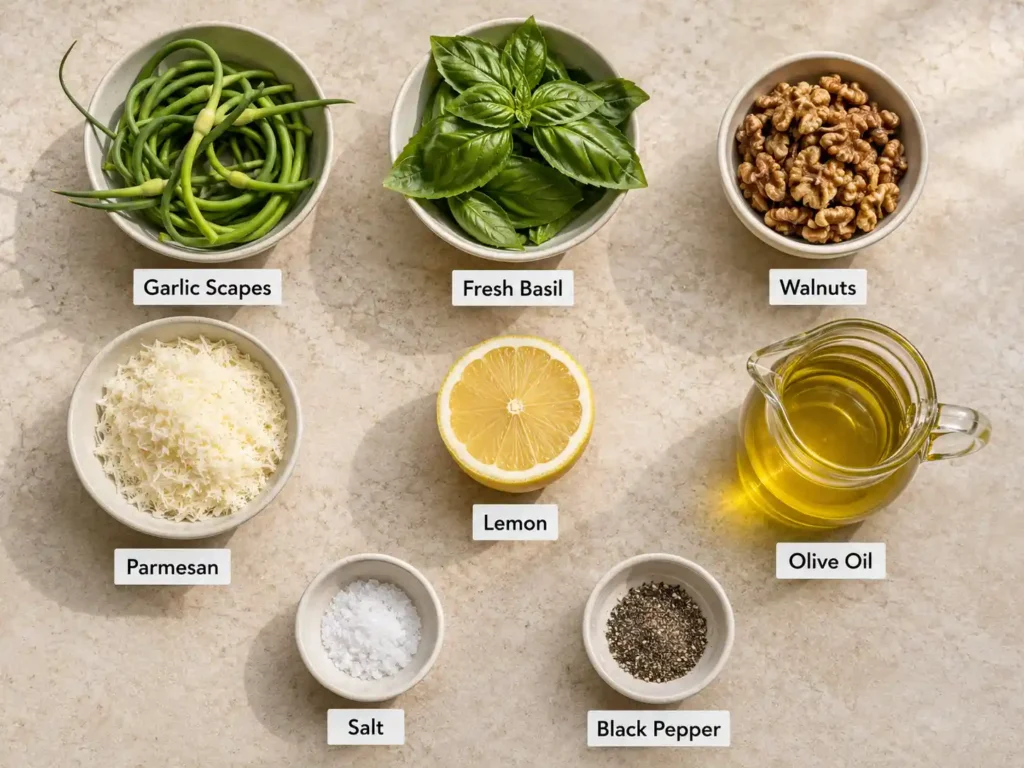
- Garlic scapes: provide the main garlic flavor.
- Basil, parsley, spinach, or another mild green: softens and balances the scapes.
- Nuts or seeds: add body and texture.
- Grated hard cheese: adds savory flavor and saltiness.
- Fresh lemon juice: adds brightness.
- Olive oil: binds the mixture and adjusts the texture.
- Salt and pepper: complete the seasoning.
How to Blend It
- Wash and dry the scapes thoroughly.
- Remove any woody or fibrous sections.
- Cut the scapes into short pieces.
- Process the scapes with the nuts or seeds first.
- Add the mild greens, cheese, lemon juice, salt, and pepper.
- Add olive oil gradually while processing.
- Stop when the pesto is blended but still has a little texture.
- Taste and adjust one ingredient at a time.
How to Fix the Texture or Flavor
If the pesto is too thick, add olive oil gradually. When serving it with pasta, a little pasta cooking water can also loosen the sauce.
If the flavor is too strong, blend in more basil, parsley, spinach, beans, nuts, or cheese. Lemon can brighten the mixture, but too much acidity may dominate the other ingredients, so add it gradually.
If the texture is stringy, process the scapes longer before adding the softer ingredients. Very mature or woody sections may need to be removed rather than blended.
How to Store Garlic Scapes and Pesto
Storing Fresh Garlic Scapes
Store unwashed garlic scapes in a produce bag or covered container in the refrigerator. Nebraska Extension notes that properly refrigerated scapes may keep for up to three weeks.
Actual storage life can vary. Use the scapes while they remain firm and fresh, and discard them if they become slimy, moldy, or unpleasant-smelling.
Refrigerating Garlic Scape Pesto
The National Center for Home Food Preservation recommends refrigerating fresh pesto for no more than three days or freezing it for longer storage.
Place homemade pesto in a clean covered container and return it to the refrigerator promptly after serving.
Freezing Garlic Scape Pesto
Divide the pesto among small freezer-safe containers so you can thaw only the amount you need. Label each container with the preparation date before freezing.
Thaw frozen pesto in the refrigerator rather than leaving it on the counter.
Important Garlic and Oil Safety
Fresh garlic or garlic-scape mixtures in oil should never be stored at room temperature. The National Center for Home Food Preservation warns that unrefrigerated garlic-in-oil mixtures can support the development of botulism.
Keep fresh pesto and similar mixtures refrigerated, and follow the shorter three-day pesto storage recommendation or freeze them.
Helpful Tools for Cooking Garlic Scapes
You do not need specialized equipment, but a few basic kitchen tools make preparation easier.
- Sharp chef’s knife: for trimming and cutting firm stalks.
- Stable cutting board: for preparing long or curled scapes safely.
- Food processor or mini chopper: for pesto, dips, and dressings.
- Flexible spatula: for scraping sauces from the processor bowl.
- Fine grater: for cheese and lemon zest.
- Grill tongs: for turning whole scapes.
- Wide-mouth refrigerator-safe jars: for refrigerator pickles.
- Freezer-safe containers: for portioning extra pesto.
Choose tools that fit the quantity you are preparing. A mini chopper may work better than a large processor when making a small batch.
What to Serve with Garlic Scapes
Garlic scapes can be served with many everyday summer meals. Their fresh garlic flavor pairs especially well with:
- Pasta and pasta salads
- Rice and grain bowls
- Eggs and frittatas
- Roasted or grilled vegetables
- White beans and chickpeas
- Chicken, fish, shrimp, or tofu
- Sandwiches and wraps
- Fresh bread and crackers
- Picnic and cookout platters
Grilled scapes can be served next to a grilled vegetable salad, while pesto, dips, pickles, and biscuits work well as part of a larger summer table.
Frequently Asked Questions
What are garlic scapes?
Garlic scapes are the green flowering stalks produced by hardneck garlic plants. They are harvested while young and tender and used as a fresh garlic-flavored ingredient.
What part of a garlic scape can you eat?
The tender green stalk is the main edible portion. A soft developing bud may also be used, but dry, woody, or fibrous sections should be removed.
Are garlic scapes the same as green garlic?
No. A garlic scape is the flowering stalk of a hardneck garlic plant. Green garlic is a young garlic plant harvested before the bulb fully develops.
Can you eat garlic scapes raw?
Yes. Tender scapes can be sliced thinly or minced and added to pesto, dressings, dips, salads, and garnishes. Raw scapes usually taste stronger than cooked scapes, so start with a modest amount.
Can you freeze garlic scape pesto?
Yes. Homemade pesto can be divided into freezer-safe containers and frozen. Refrigerate it promptly after preparation and thaw it in the refrigerator.
Make the Most of Garlic Scape Season
Garlic scapes can become much more than pesto. Grill them for an easy side, stir them into rice or eggs, blend them into dips, add them to pasta, or turn them into refrigerator pickles.
Start with the simplest method for your meal, remove any tough sections, and adjust the amount according to the intensity of your bunch. For more seasonal meal inspiration, explore these summer dinner ideas.
Get more seasonal recipe ideas: Join the ZikoRecipes newsletter for practical ways to use fresh ingredients in simple family meals.