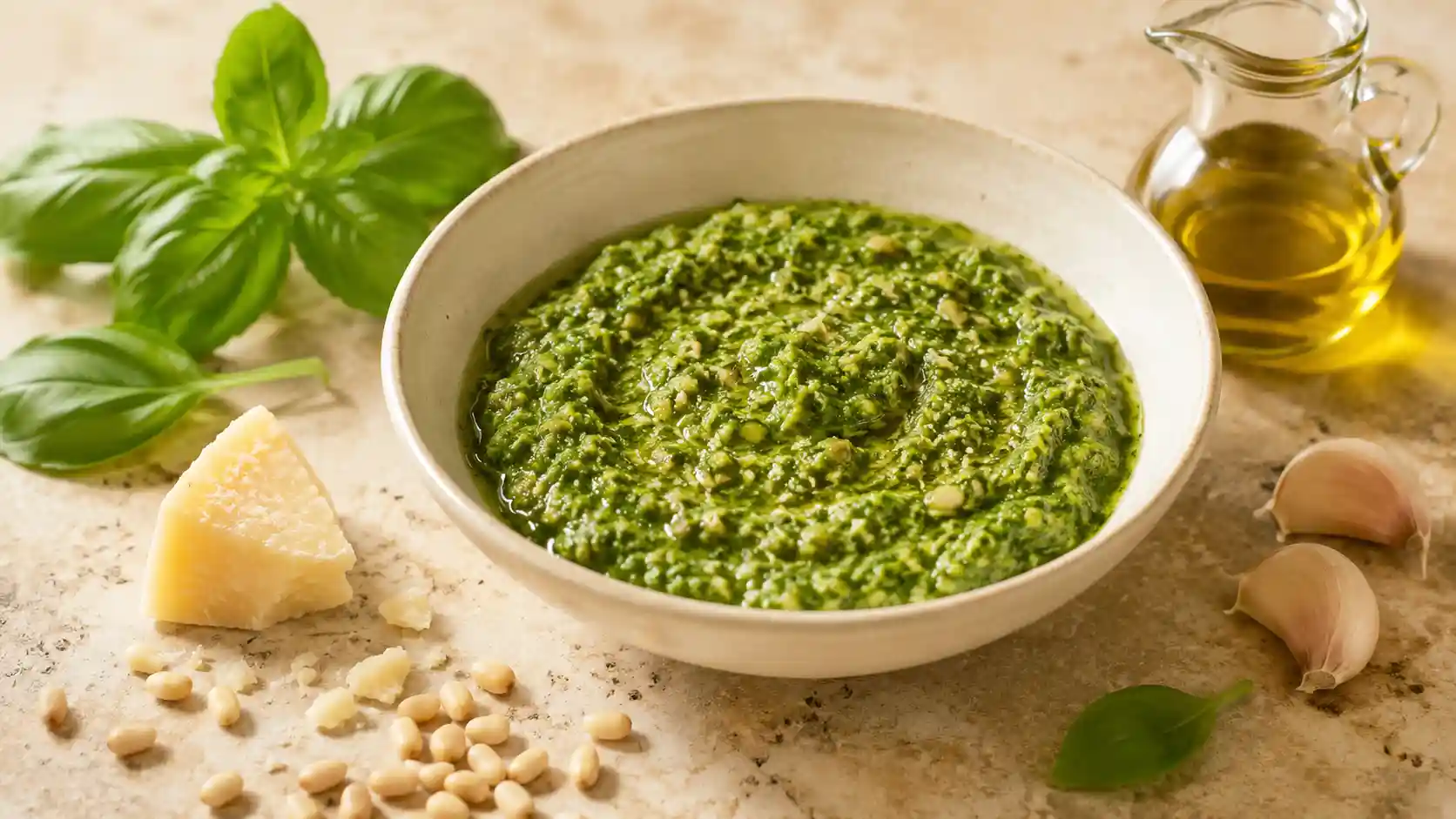
This easy basil pesto recipe blends fresh basil, pine nuts, Parmesan, garlic, and olive oil into a flavorful homemade sauce. You can make it in a food processor and use it with pasta, sandwiches, vegetables, grain bowls, chicken, fish, and toasted bread.
The key is to process the ingredients briefly, add the oil gradually, and taste before adding extra salt. Choosing a mild extra virgin olive oil also helps the basil and Parmesan remain the main flavors.
Why You’ll Love This Basil Pesto Recipe
- It uses a short list of familiar ingredients.
- The food processor method is simple and practical.
- You can adjust the garlic, salt, and consistency to your taste.
- The sauce works with pasta, vegetables, sandwiches, chicken, and fish.
- Several substitutions are available when pine nuts are difficult to find.
Basil Pesto Ingredients
Fresh Basil
Fresh basil provides the main flavor and color. Choose bright leaves without extensive bruising, dark spots, or wilting. Remove thick stems and dry the leaves well before placing them in the food processor.
Excess water can make the pesto thinner and may dilute its flavor.
Pine Nuts
Pine nuts add richness and help give pesto its familiar texture. Raw pine nuts produce a mild flavor. Lightly toasted pine nuts offer a more pronounced nutty flavor, but toasting is optional.
Parmesan Cheese
Freshly grated Parmesan adds savory flavor and helps thicken the sauce. Since Parmesan already contains salt, wait until the pesto has been blended before deciding whether it needs more seasoning.
Garlic
Raw garlic can quickly become the strongest flavor in pesto. Two small cloves provide a practical starting point, but you can reduce the amount if you prefer a milder sauce.
Extra-Virgin Olive Oil
Use an extra-virgin olive oil that tastes smooth rather than unusually bitter or peppery. A strongly flavored oil can overpower the basil.
Optional Lemon Juice
A small amount of fresh lemon juice can add brightness. It is a modern variation rather than an essential ingredient in traditional pesto, so it can be included or omitted according to taste.
Easy Basil Pesto Recipe Ingredients
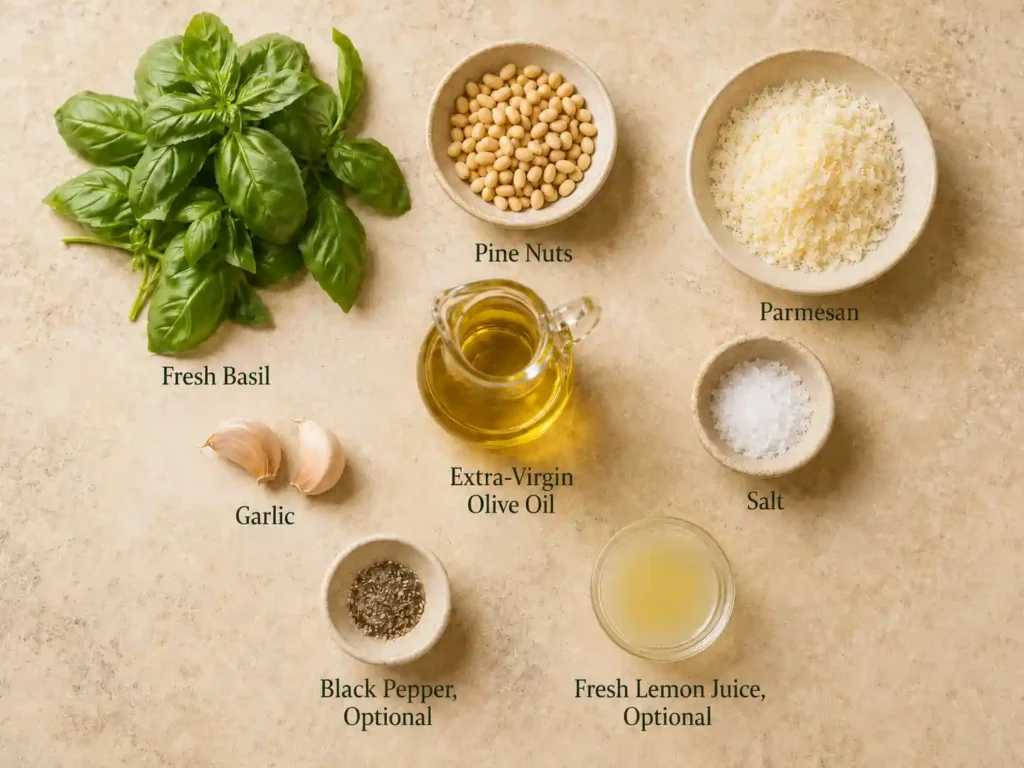
- 2 packed cups fresh basil leaves, thick stems removed
- 1/3 cup pine nuts
- 1/2 cup freshly grated Parmesan cheese
- 2 small garlic cloves, peeled
- 1/2 cup mild extra-virgin olive oil
- 1/4 teaspoon salt, plus more only if needed
- Freshly ground black pepper, optional
- 1 teaspoon fresh lemon juice, optional
Allergen note: This recipe contains pine nuts and dairy. Check all ingredient labels carefully when preparing it for someone with food allergies.
How to Make Basil Pesto
1. Prepare the Basil
Rinse the basil only if needed. Dry it thoroughly with a clean kitchen towel or salad spinner. Remove thick stems and any badly damaged leaves.
2. Process the Garlic and Pine Nuts
Place the garlic and pine nuts in the bowl of a food processor. Pulse several times until they are broken into small pieces.
Processing them before the basil helps distribute the garlic more evenly throughout the sauce.
3. Add the Basil
Add the basil leaves. Pulse in short bursts, stopping to scrape down the sides of the processor when necessary.
Avoid running the processor continuously. Short pulses give you more control over the texture and reduce unnecessary heat.
4. Add the Parmesan
Add the grated Parmesan and pulse briefly until it is evenly distributed.
5. Add the Olive Oil
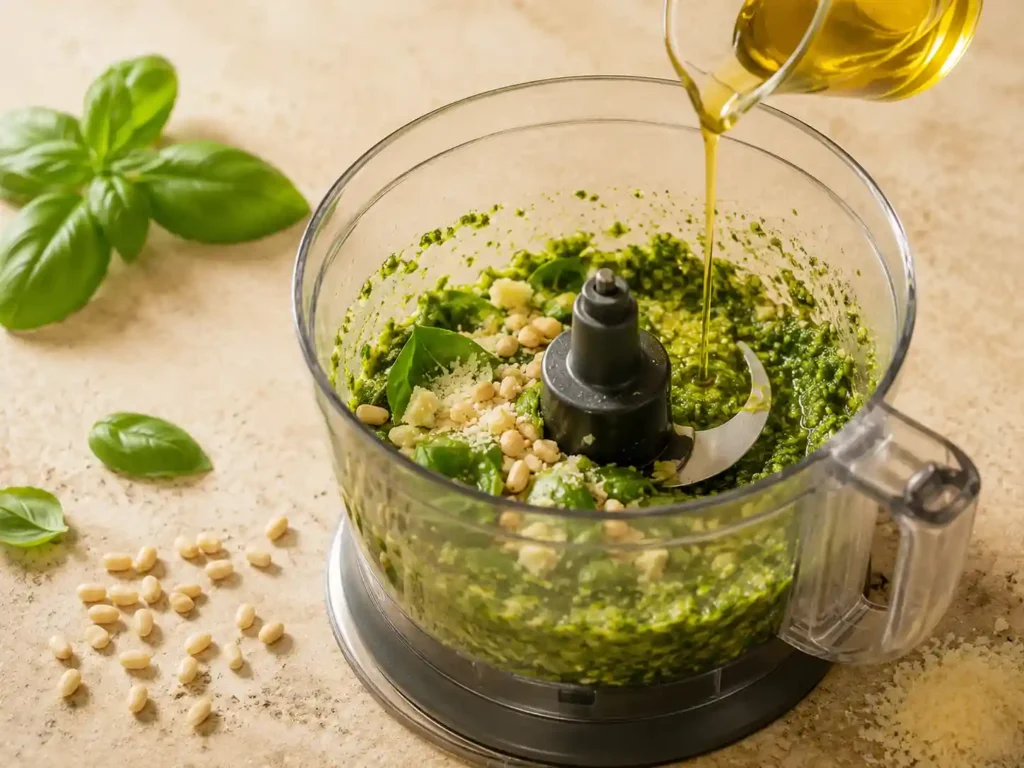
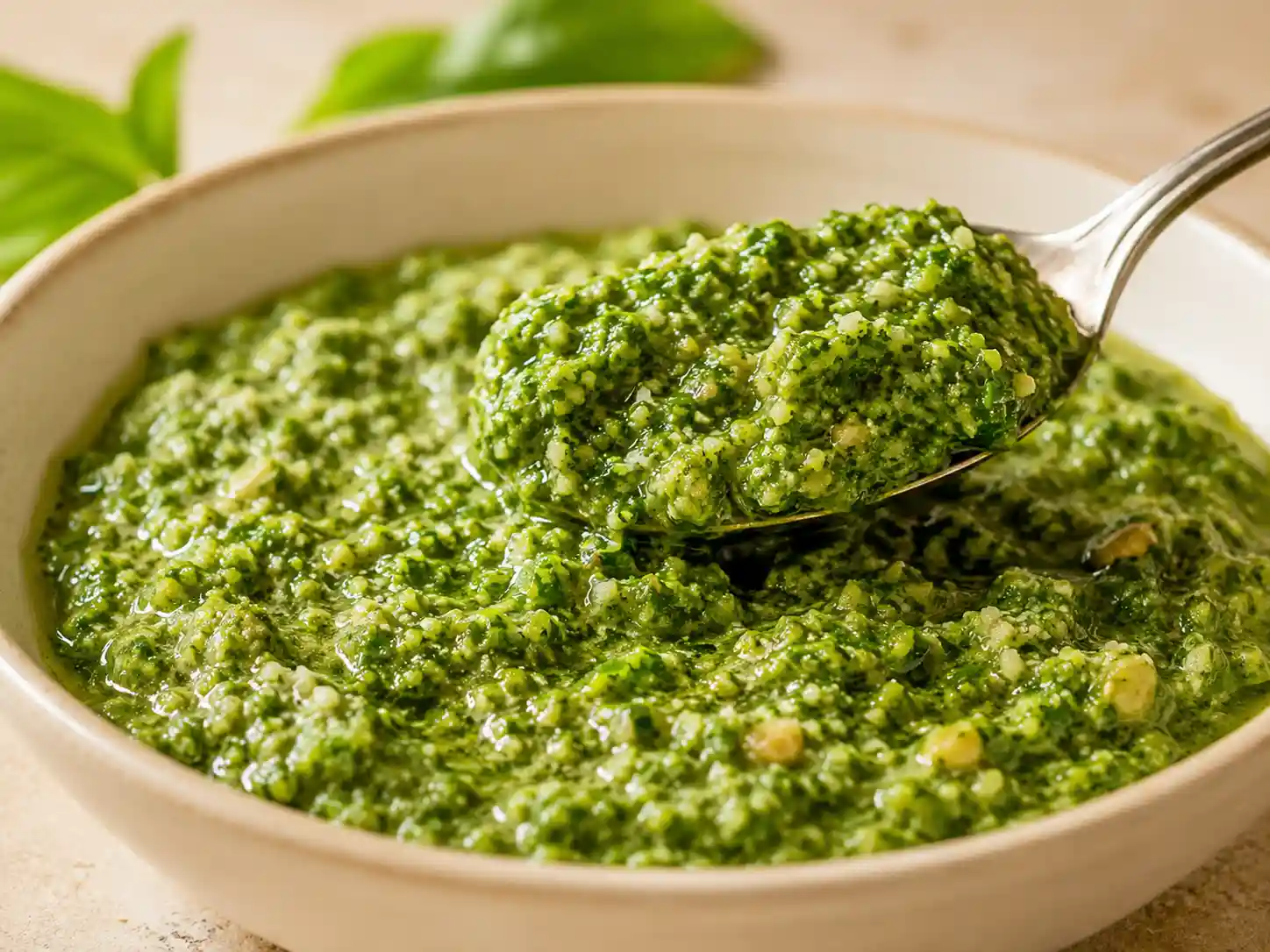
With the processor running at low speed, pour in the olive oil gradually. Stop once the pesto is blended but still has a little natural texture.
Scrape down the sides and pulse once or twice more only if needed.
6. Taste and Adjust
Taste the pesto before adding additional salt. Add black pepper if desired. Stir in the optional lemon juice, then taste again.
If the sauce seems too thick for your intended use, add a small amount of additional olive oil and mix briefly.
Tips for the Best Pesto Texture and Flavor
- Dry the basil well before processing it.
- Use short pulses instead of blending continuously.
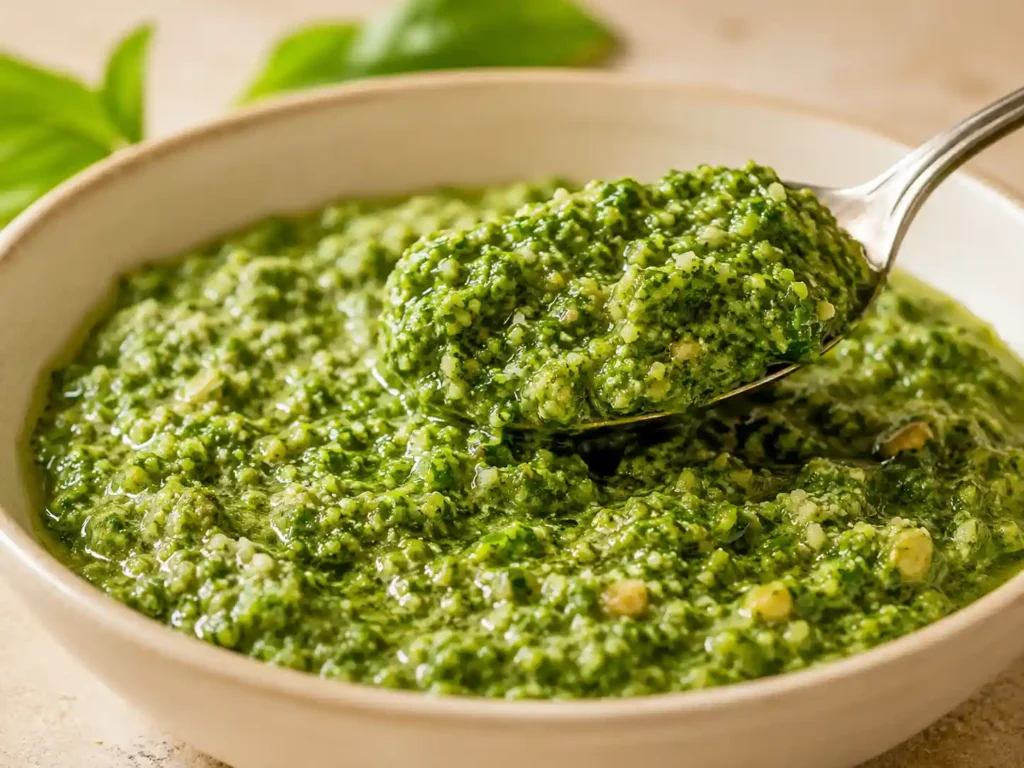
- Stop before the pesto becomes completely smooth.
- Add the olive oil gradually so you can control the consistency.
- Choose an olive oil with a flavor you already enjoy.
- Add more salt only after the Parmesan is incorporated.
- Begin with a moderate amount of garlic and adjust after tasting.
- Do not heat the pesto unnecessarily in the food processor.
How to Keep Homemade Pesto Green
Fresh basil begins to darken when it is cut and exposed to air. This oxidation often appears first on the surface of the pesto.
Transfer the pesto to a clean airtight container shortly after making it. Press food-safe wrap directly against the surface or cover the surface with a small amount of olive oil before closing the container.
Keep homemade pesto refrigerated. Color alone should not be used to determine whether leftovers are still suitable to eat. Consider the storage conditions, smell, appearance, and texture, and discard the pesto when there is any doubt.
Easy Basil Pesto Substitutions
What Can I Use Instead of Pine Nuts?
Walnuts or almonds can be used when pine nuts are unavailable. These substitutions produce a different flavor, so the result should be considered a variation rather than an identical replacement.
Can I Make Nut-Free Pesto?
Sunflower seeds or pepitas can provide texture without using pine nuts. Check the packaging for allergen and cross-contact information when preparing pesto for someone with an allergy.
Can I Replace the Parmesan?
Another firm, finely grated Italian-style cheese may work, but its saltiness and flavor can differ from Parmesan. Taste the pesto before adding extra salt.
Can I Leave Out the Lemon Juice?
Yes. The lemon juice is optional and can be omitted without changing the basic food processor method.
Ingredient Guide
| Ingredient | Purpose | Possible Variation | Important Note |
|---|---|---|---|
| Fresh basil | Provides the main flavor and color | No direct substitute recommended for a basil pesto recipe | Dry the leaves well |
| Pine nuts | Add richness and texture | Walnuts, almonds, sunflower seeds, or pepitas | Substitutions change the flavor |
| Parmesan | Adds savory flavor and body | Another firm Italian-style cheese | Taste before adding more salt |
| Garlic | Adds sharp, aromatic flavor | Reduce the amount for a milder sauce | Raw garlic becomes strong quickly |
| Extra-virgin olive oil | Blends and loosens the sauce | Use another mild extra-virgin olive oil | A strongly bitter oil can dominate the sauce |
| Lemon juice | Adds optional brightness | Omit it | It is optional, not a traditional requirement |
Basil Pesto Troubleshooting
| Problem | Possible Cause | How to Adjust It |
|---|---|---|
| Pesto is too thick | It needs more liquid for the intended use | Add a small amount of olive oil and mix briefly |
| Pesto is too thin | Too much oil was added | Add a little more basil, Parmesan, or pine nuts, then pulse briefly |
| Pesto tastes too bitter | The oil may be particularly bitter or the mixture may have been overprocessed | Use a milder oil next time and process only as long as needed |
| Pesto tastes too garlicky | Too much raw garlic was used | Blend in additional basil, Parmesan, pine nuts, or olive oil |
| Pesto is turning brown | The surface has been exposed to air | Transfer it to an airtight container and cover the surface directly |
| Basil flavor is weak | The basil may be old or the other ingredients may be overpowering it | Use fresh basil and a mild olive oil |
Ways to Use Basil Pesto
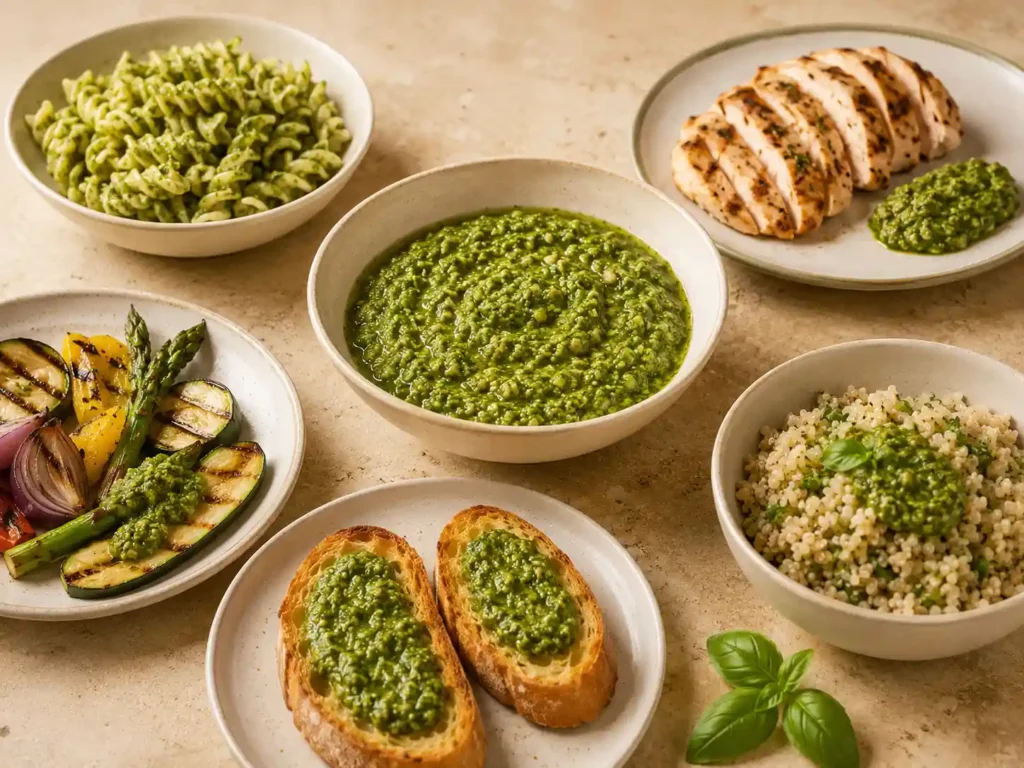
Basil pesto is often served with pasta, but it can be used in many other meals.
- Toss it with warm pasta just before serving.
- Stir it into cold pasta or serve it beside an easy Italian pasta salad.
- Spread a thin layer on sandwiches, wraps, or toasted bread.
- Spoon it over grilled chicken or fish.
- Serve it with roasted or grilled vegetables.
- Add a small spoonful to grain bowls.
- Use it as a finishing sauce for pizza.
- Serve it beside a grilled vegetable salad.
For an Italian-inspired dinner, pair it with this bruschetta chicken recipe. You can also browse these summer pasta salad recipes for additional meal ideas.
How to Store and Freeze Pesto
Transfer leftover pesto to a clean airtight container and refrigerate it promptly. Covering the surface directly can help reduce contact with air.
For longer storage, divide the pesto into small freezer-safe portions. Small portions allow you to thaw only what you need. Thaw frozen pesto in the refrigerator and stir it before serving.
Do not leave homemade pesto at room temperature longer than necessary. Discard it if you notice an unusual odor, visible mold, bubbling, or another clear sign of spoilage.
Helpful Tools for This Recipe
- Food processor: Useful for chopping and blending the ingredients evenly.
- Fine grater: Helps the Parmesan blend into the pesto more smoothly.
- Silicone spatula: Makes it easier to scrape down the processor bowl.
- Salad spinner: Helps remove water from rinsed basil leaves.
- Airtight container: Protects the pesto from unnecessary air exposure during refrigeration.
- Freezer portion tray: Useful for freezing the pesto in smaller amounts.
Easy Basil Pesto Recipe
Ingredients
Equipment
Method
- Rinse the basil leaves only if necessary. Dry them thoroughly with a salad spinner or clean kitchen towel, then remove the thick stems and any badly damaged leaves.
- Place the peeled garlic and pine nuts in the bowl of a food processor. Pulse several times until they are broken into small, evenly sized pieces.
- Add the dry basil leaves. Pulse in short bursts, stopping to scrape down the sides of the processor bowl as needed. Avoid processing continuously, which can generate unnecessary heat.
- Add the freshly grated Parmesan and pulse briefly until it is evenly incorporated.
- With the food processor running on low speed, gradually pour in the olive oil. Stop processing when the pesto is blended but still retains a little natural texture.
- Scrape down the bowl and pulse once or twice more only if necessary. Do not overprocess the pesto into a completely smooth paste.
- Add the salt, then taste the pesto before adding any additional seasoning. Add freshly ground black pepper and the optional lemon juice, if desired.
- For a thinner sauce, add a small amount of additional olive oil and pulse briefly until the pesto reaches the desired consistency.
- Use the pesto immediately or transfer it promptly to a clean airtight container. Cover the surface directly with food-safe wrap or a thin layer of olive oil, close the container, and refrigerate.
Notes
Frequently Asked Questions
Can I make basil pesto without pine nuts?
Yes. Walnuts, almonds, sunflower seeds, or pepitas can be used instead. Each substitution changes the flavor and texture slightly.
Why does homemade pesto turn brown?
The cut basil reacts with oxygen in the air. Covering the surface of the pesto and refrigerating it promptly can help limit this oxidation.
Can I use a blender instead of a food processor?
A blender can work, but you may need to stop frequently, scrape down the sides, and add the ingredients in smaller batches. Avoid blending longer than necessary.
Should pine nuts be toasted for pesto?
Toasting is optional. Raw pine nuts give the pesto a milder flavor, while lightly toasted pine nuts create a deeper nutty flavor.
Can homemade pesto be frozen?
Yes. Divide it into small freezer-safe portions so you can thaw only the amount needed for a meal.
More Homemade Sauces and Summer Recipes
Try another versatile sauce such as this roasted red pepper sauce or this creamy tahini sauce.
For seasonal meal inspiration, browse these summer dinner ideas.