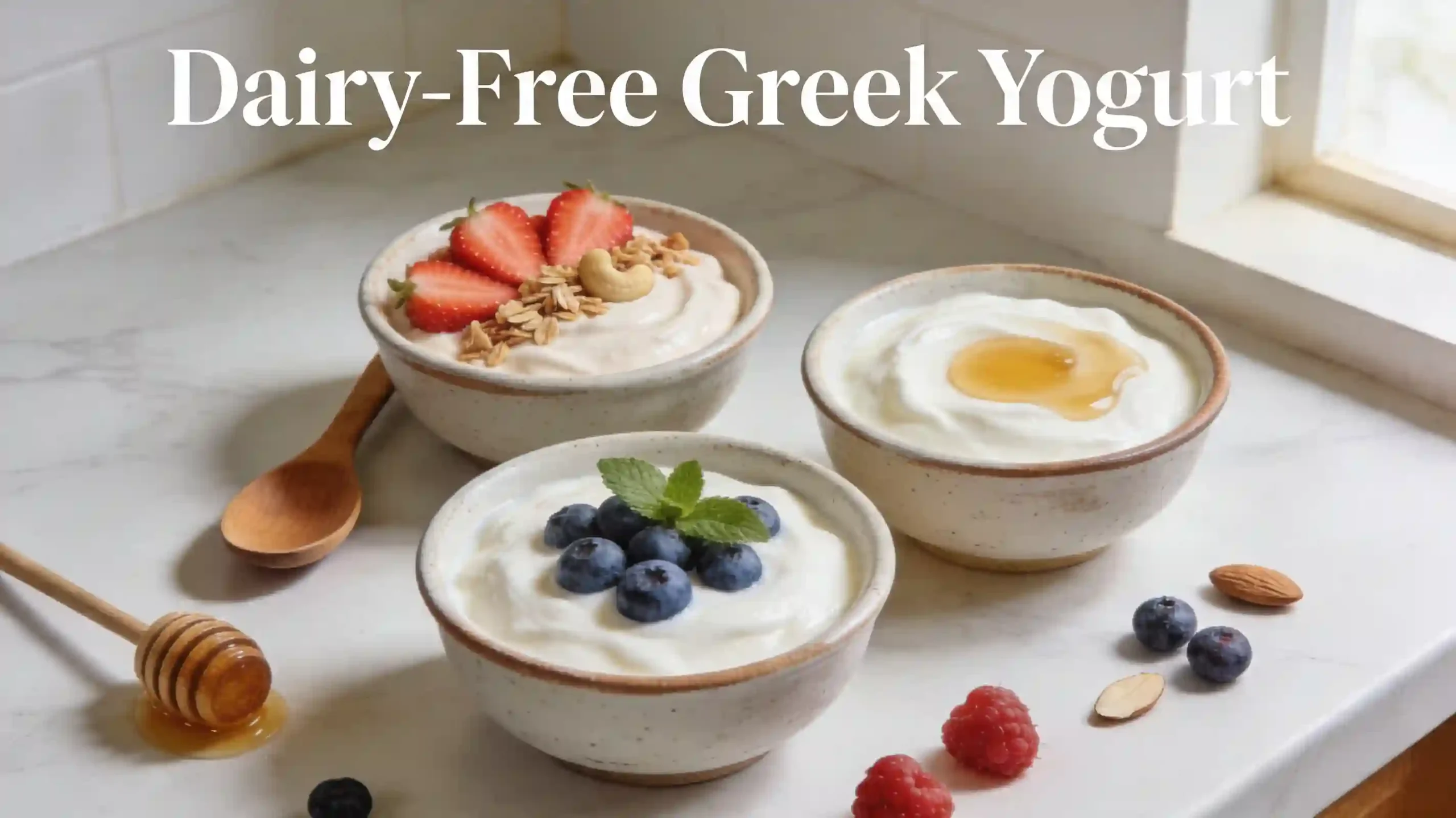
Quick answer: For protein, Kite Hill Greek-Style is the strongest pick at 11–13g. Silk Greek stands out for creaminess at about 10g. For cooking and a tangier flavor, Forager Project is a solid choice at about 6g. Lavva is the best clean-ingredient option. On a tighter budget, So Delicious offers the best value at 1–2g and can be strained. Check the full breakdown below and use the shopping checklist to choose the right fit.
Finding a dairy-free Greek-style yogurt that matches the thick, tangy profile of traditional Greek yogurt is possible—but products vary widely in protein, texture, and ingredient quality. This guide narrows the options to the best choices by use case (high‑protein, creamy texture, cooking, clean ingredients, and budget) and explains exactly what to check on the label before you buy.
This post may contain affiliate links. As an Amazon Associate, we earn from qualifying purchases.
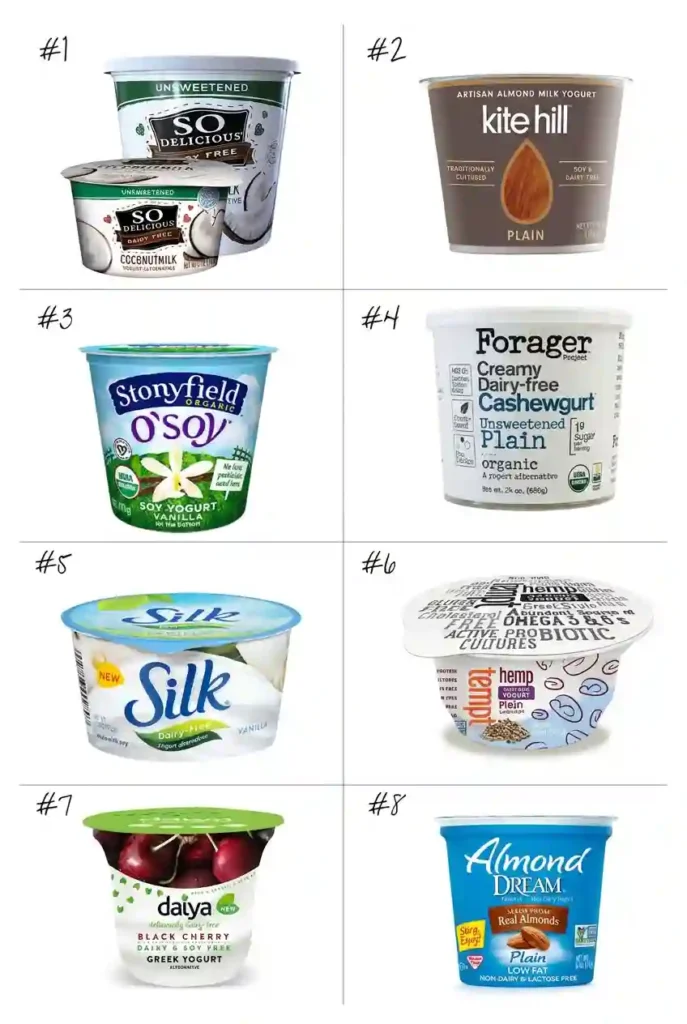
Top Dairy-Free Greek-Style Yogurt Picks (Quick Comparison)
Top Dairy Free Greek Style Yogurt Picks
A quick premium comparison of the best dairy-free Greek-style yogurts for protein, texture, cooking, and value.
| Brand | Base | Protein per Serving | Best for |
|---|---|---|---|
| Kite Hill Greek Style | Almond milk + pea protein | 11–13 g* | Highest protein; savory and baking substitute |
| Silk Greek | Coconut cream + faba bean protein | ~10 g* | Creamiest mouthfeel; parfaits and snacks |
| Forager Project Greek | Cashew milk | ~6 g* | Cooking and recipes that need tang |
| Culina | Coconut milk | ~3 g* | Rich desserts and creamy textures |
| Lavva Plant Based Yogurt | Pili nuts and plantains | ~6 g* | Minimal ingredients and clean label |
| So Delicious Coconutmilk Unsweetened | Coconut milk | 1–2 g* | Budget friendly; can be strained for Greek texture |
Kite Hill Greek Style
Silk Greek
Forager Project Greek
Culina
Lavva Plant Based Yogurt
So Delicious Coconutmilk Unsweetened
Best Dairy-Free Greek Yogurt Options by Use Case
Best for High Protein: Kite Hill Greek-Style
Why we recommend it: Kite Hill pairs almond milk with added pea protein to deliver one of the highest protein counts among dairy-free Greek-style yogurts (11–13 g per serving on plain varieties). That makes it the closest plant-based swap for people using Greek yogurt as a protein source.
- Texture: Thick and tangy, slightly less creamy than full-dairy Greek yogurt.
- Flavors: Plain, vanilla, fruit flavors—plain is best for cooking or savory recipes.
- Best uses: Post-workout snack, breakfast bowls, savory sauces and dressings.
- Tip: Check the ingredient list if you avoid pea protein or tree nuts.
Best for Creaminess: Silk Greek
Why we recommend it: Silk’s Greek-style line uses coconut cream and faba bean protein to reach ~10 g protein while delivering a rich, creamy mouthfeel that performs well in parfaits and as a sour cream substitute.
- Texture: Smooth and very creamy—excellent eaten plain.
- Flavors: Vanilla and plain work well; flavored varieties can be sweeter.
- Best uses: Parfaits, toppings, swaps for sour cream or creme fraiche.
- Tip: If you want less sweetness, choose plain and add fresh fruit or a drizzle of maple syrup.
Best for Cooking & Baking: Forager Project Greek
Why we recommend it: Forager Project’s cashew-based Greek-style yogurt has a tangy profile and stable texture that holds up well in heat. It’s a reliable plant-based choice for baked goods, cream sauces, and marinades where texture matters.
- Texture: Firm and slightly tangy—resists separation when heated.
- Flavors: Plain is tart and clean; flavors exist but plain is best for recipes.
- Best uses: Baked goods, creamy sauces, dips that require tang.
- Tip: If a recipe calls for Greek yogurt to activate baking soda or react with acids, use an unsweetened plain variety.
Best for Clean Ingredients: Lavva
Why we recommend it: Lavva uses whole-food bases (pili nuts and plantains) and keeps ingredient lists minimal—no gums or artificial flavors in many of its SKUs. If minimal processing and clean labels are your priority, Lavva is a sensible pick.
- Texture: Naturally thick thanks to the base ingredients; slightly different flavor profile (plantain sweetness).
- Flavors: Mildly tangy with natural sweetness; plain is worth trying first.
- Best uses: Clean-eating breakfasts, smoothies, and as a spoonable snack.
- Tip: Not everyone loves the plantain note—sample a small container before buying larger tubs.
Best Budget Option: So Delicious Coconutmilk (unsweetened)
Why we recommend it: So Delicious is often the most affordable plant-based yogurt found in many grocery stores. It’s not marketed as Greek-style, but the unsweetened plain version can be strained at home to concentrate solids and approximate a Greek texture.
- Texture: Thinner out of the tub; thickens after straining.
- Protein: Low (1–2 g), so add nuts, seeds, or protein powder if protein is needed.
- Best uses: Budget-friendly breakfasts, frozen desserts after stabilizing, recipes where protein is not the primary target.
- Tip: To make thicker: strain in cheesecloth for 4–6 hours in the fridge.
How to Choose the Right Dairy-Free Greek Yogurt
Shopping checklist (fast)
- Protein: Aim for 6–10 g if you want a meaningful protein contribution.
- Sugar: Choose plain/unsweetened for cooking and lower sugar intake.
- Ingredients: Prefer short lists and whole-food bases if you avoid gums or stabilizers.
- Allergens: Watch for tree nuts, soy, and legume-derived proteins (pea, faba bean).
- Probiotics: Look for ‘live active cultures’ on the label if gut health is a priority.
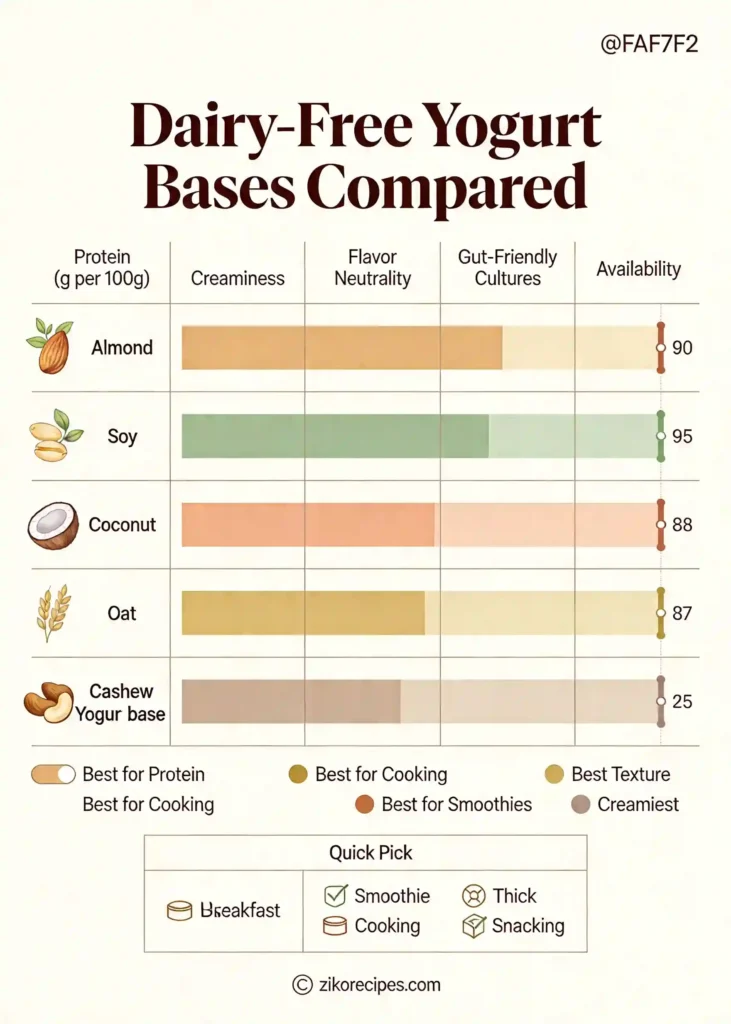
Plant base matters
Different bases affect taste and texture:
- Almond: Lighter, slightly nutty; often needs added protein for higher protein counts.
- Coconut: Rich and creamy; higher fat content, less protein without additions.
- Cashew: Neutral and creamy; performs well in cooking.
- Soy: Naturally higher in protein—but fewer new Greek-style lines use soy.
- Other (pili, plantain): Clean, whole-food options with unique flavors.
Protein vs. additives
Many plant-based Greek-style yogurts use pea, faba bean, or other plant proteins to boost grams per serving. Higher protein often means added isolated proteins—decide whether you prefer whole-food bases (fewer additives) or a higher-protein product for athletic or satiety needs.
Where to Buy & Price Expectations (U.S.)
- Most brands are available at major grocery chains (Whole Foods, Kroger, Safeway) and online retailers. Availability can vary by region.
- Price ranges (single-serve tubs): budget $1.50–$2.00, mid-range $2.00–$2.75, premium $2.75–$3.50. Larger tubs often offer better value.
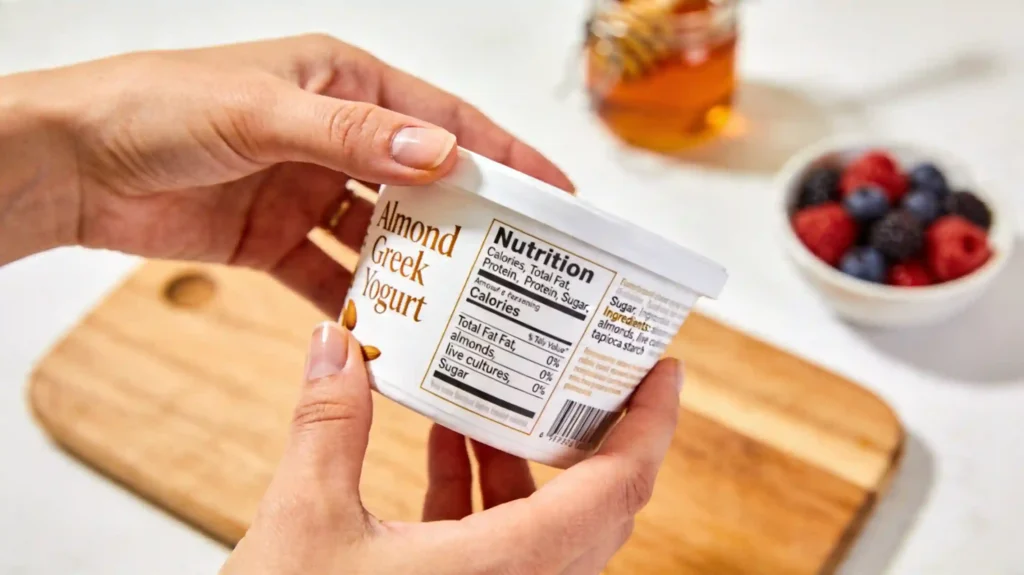
- How to read a Nutrition Facts label
How We Evaluated These Options
We did not perform hands-on lab testing. Our recommendations are based on: manufacturer nutrition labels and ingredient lists, official product pages, aggregated verified customer reviews on major retailers, and published product descriptions as of May 2023. Where applicable, we note that formulations can change and advise checking the current label before purchase.
Factors considered: protein per serving, sugar content, ingredient quality (presence of gums/additives), stated live cultures, flavor/texture descriptions from manufacturers and verified consumer feedback, and suitability for cooking/baking.
Common Questions
What probiotics are and what science says, It can be comparable in probiotics and calcium (if fortified), but most plant-based versions have less naturally occurring protein than dairy Greek yogurt unless manufacturers add plant proteins. Choose based on your dietary needs: if you rely on yogurt for protein, pick higher-protein plant varieties or add protein-rich toppings.
Yes. Start with an unsweetened plant yogurt and strain it through cheesecloth or a coffee filter in the fridge for several hours to reduce whey and concentrate solids. Almond, cashew, and coconut bases all work for homemade straining.
Unopened, most commercially produced dairy-free yogurts last 1–3 weeks in the refrigerator depending on brand and preservatives. Once opened, expect 5–7 days—check the package and watch for off smells or visible mold. When in doubt, follow the package date and your senses.
Yes. Use plain, unsweetened, thicker varieties for best results. They add moisture and acidity and can help with leavening activation in recipes calling for Greek yogurt. For recipes requiring high protein for structure, consider combining yogurt with eggs or a protein add-in if needed.
Shopping & Usage Tips
- Start with a small container of plain from two different brands to compare texture and flavor before you commit to larger tubs.
- If you want a thicker texture at home, strain plain varieties for 4–6 hours in the fridge.
- To boost protein without changing flavor much, stir in a scoop of unflavored protein powder or top with roasted nuts/seeds.
- When cooking, use plain unsweetened varieties to avoid unexpected sweetness in savory dishes.
Final Thoughts
There isn’t a single ‘best’ dairy-free Greek yogurt for everyone—your choice depends on whether protein, creaminess, clean ingredients, or price matters most. Kite Hill and Silk are strong all-around options (high protein and creaminess), Forager Project is reliable for cooking, Lavva is great for clean-label seekers, and So Delicious is a practical budget choice if you’re willing to strain it at home.
Want a starting plan: buy a small plain container of Kite Hill (or another higher-protein option) and a small plain container of Silk (for creaminess). Taste them plain, then try them in one recipe each (parfait and baked good) to decide which suits your daily needs.
Affiliate note: Prices and formulations change. Check product pages and nutrition labels for the most current information before buying.