Learn how to velvet beef for tender, juicy stir-fry slices using baking soda, cornstarch, or a two-step hybrid method. For 1 pound of thinly sliced beef, the most reliable approach is 1 teaspoon baking soda mixed with 2 tablespoons water, followed by rinsing and a light cornstarch marinade.
This guide explains the exact ratios, resting times, rinsing rules, and pre-cooking methods for flank steak, chuck, sirloin, skirt, or round. It also shows how to prevent beef from becoming tough, mushy, gray, or gummy.
Quick answer: To velvet beef, slice it thinly against the grain, coat 1 lb beef with 1 tsp baking soda mixed with 2 tbsp water, rest for 15 minutes, rinse well, and pat dry. Then coat with 1 tbsp cornstarch, 1 tbsp soy sauce, 1 tbsp oil, and optional egg white. Rest 30 minutes, then stir-fry quickly in a hot wok or skillet.
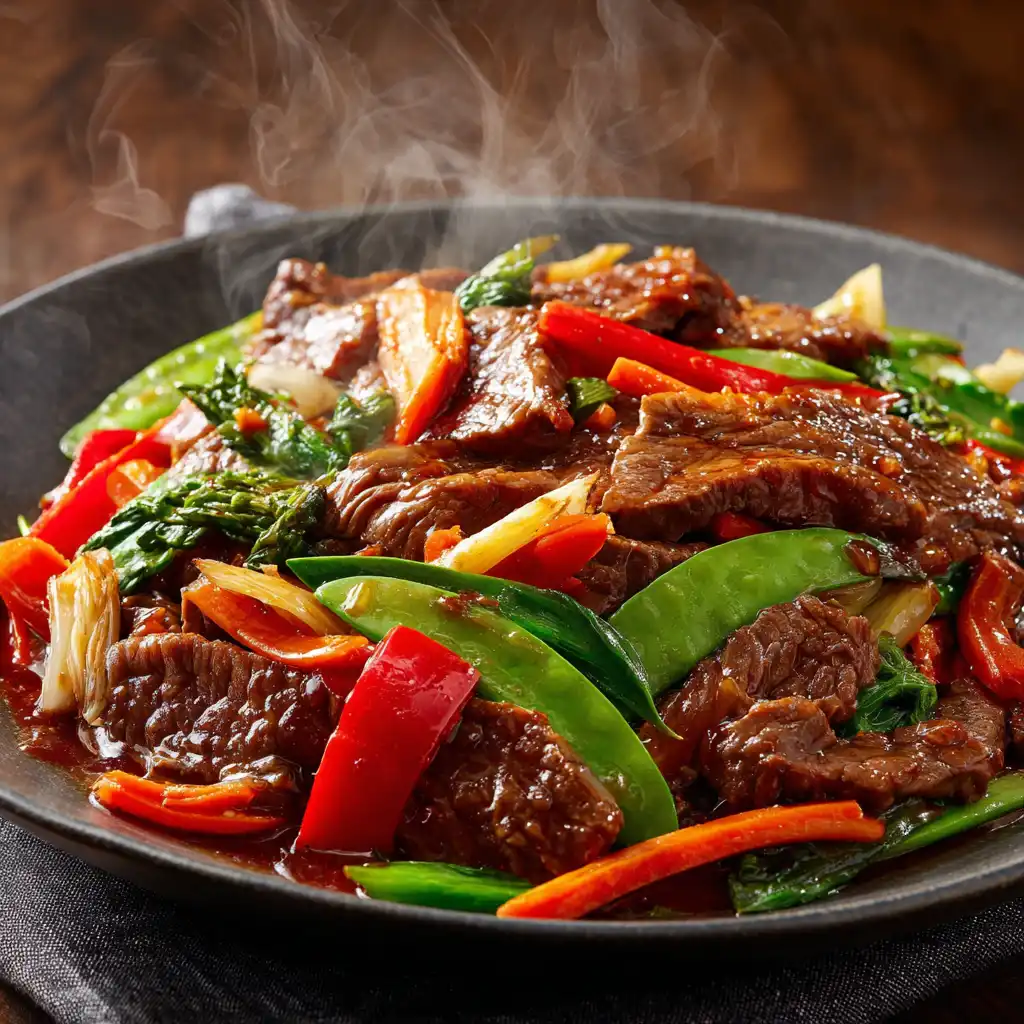
What Is Velveting Beef?
Velveting beef is a Chinese cooking technique that tenderizes and coats thin slices of beef before stir-frying. It usually uses baking soda, cornstarch, egg white, soy sauce, oil, water, or a combination of these ingredients. The goal is to keep the beef tender, juicy, and glossy during fast, high-heat cooking.
If you have ever wondered why Chinese takeout beef tastes softer than regular pan-fried beef, velveting is one of the main reasons. The coating protects the meat from direct heat, helps reduce moisture loss, and gives the beef a smoother texture that works especially well in stir-fries, noodle dishes, rice bowls, and saucy beef recipes.
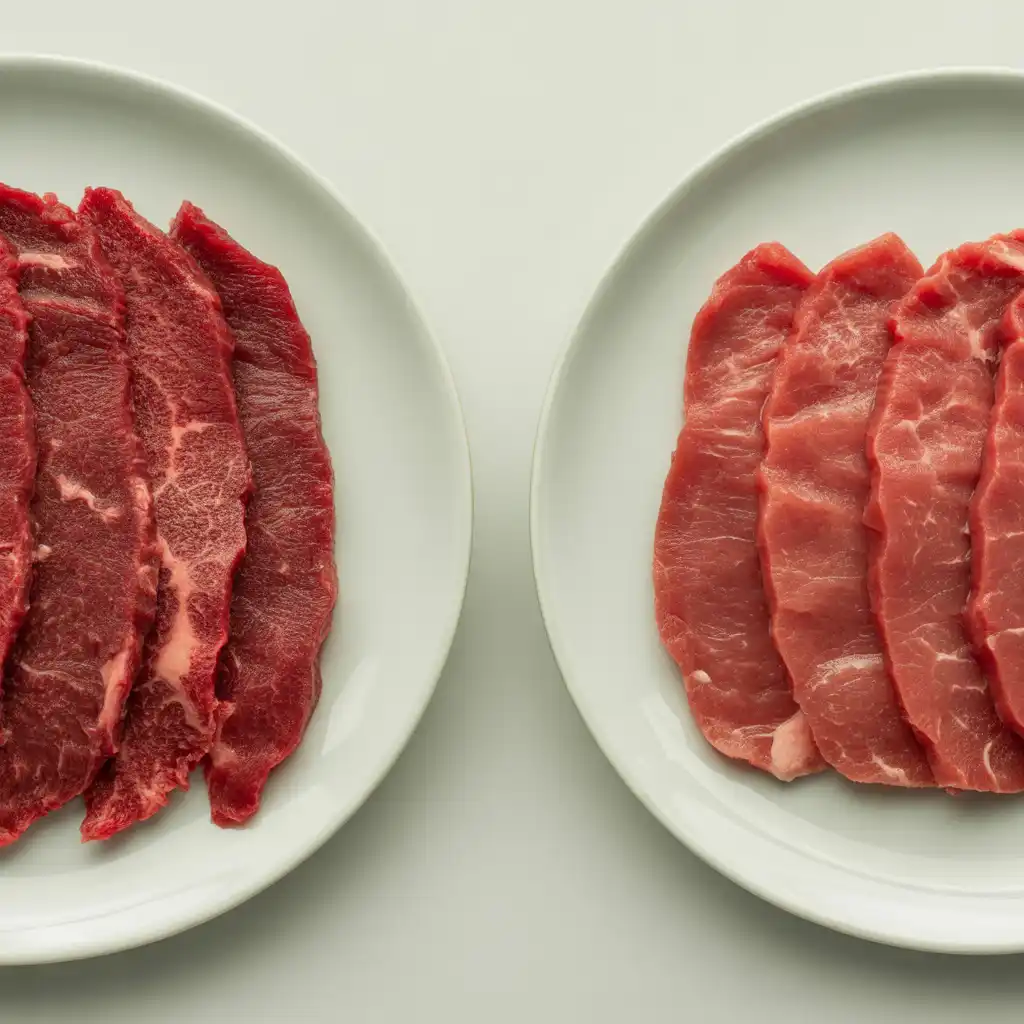
Velveting is most useful for lean or slightly tougher beef cuts. It can make flank steak, chuck, skirt steak, sirloin, and round steak taste much more tender when they are sliced thinly and cooked quickly.
The Best Way to Velvet Beef at Home
The most reliable method for home cooks is the hybrid method: use baking soda first for tenderness, rinse it off, then use a cornstarch marinade for a silky coating. Baking soda changes the surface of the beef so it stays softer, while cornstarch helps the sauce cling and gives the beef that glossy restaurant-style finish.
This hybrid method takes a little longer than using only baking soda or only cornstarch, but it gives the most balanced result. The beef becomes tender without tasting soapy, and the final texture is smooth without becoming gummy.
| Method | Best For | Ratio for 1 lb Beef | Rest Time | Rinse? |
|---|---|---|---|---|
| Baking soda | Tough cuts like flank, round, chuck, or skirt steak | 1 tsp baking soda + 2 tbsp water | 15 minutes | Yes |
| Cornstarch | Silky coating and better sauce cling | 1 tbsp cornstarch + soy sauce + oil | 30 minutes | No |
| Hybrid | Best restaurant-style stir-fry texture | Baking soda first, then cornstarch marinade | 45 minutes total | Rinse after baking soda only |
Why Velveting Beef Works
Velveting improves beef in three ways: it tenderizes the surface, reduces moisture loss during cooking, and creates a light coating that helps sauce cling to each slice.
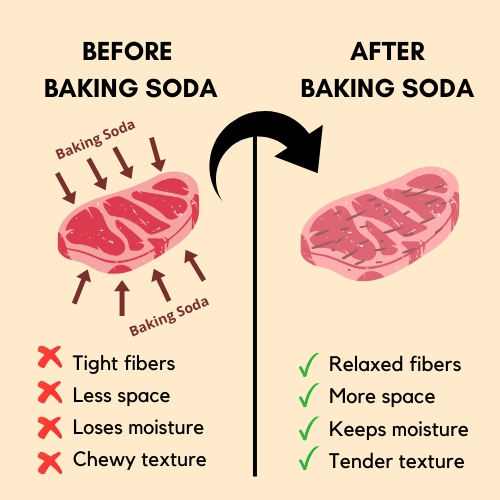
Baking soda raises the surface pH of the beef. This helps slow down how quickly the proteins tighten during cooking, which keeps the meat softer and juicier. It is powerful, so it should be measured carefully and rinsed off before the final marinade.
Cornstarch creates a thin protective layer around the beef. It does not tenderize as strongly as baking soda, but it helps the beef stay moist, glossy, and coated with sauce. This is why cornstarch is especially useful in dishes like beef and broccoli, Mongolian beef, black pepper beef, and other saucy stir-fries.
Egg white is optional. It gives the beef a smoother, silkier texture, but it is not required. If you want a simpler method, baking soda and cornstarch are enough.
Best Cuts of Beef for Velveting
The best cuts for velveting are lean or moderately tough cuts that benefit from slicing, marinating, and fast cooking. You do not need expensive steak for this method.
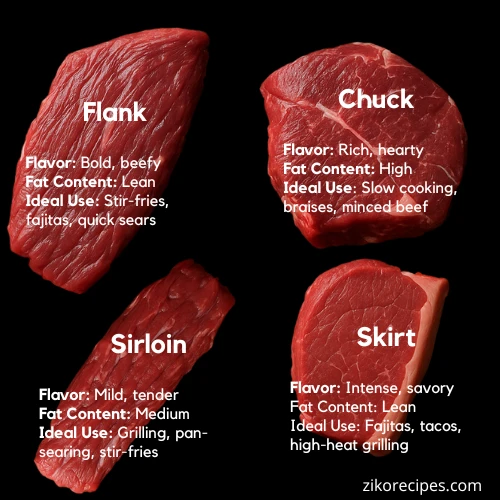
- Flank steak: one of the best choices for stir-fry because it has strong beef flavor and slices well against the grain.
- Chuck steak: budget-friendly and flavorful, but it benefits from careful slicing and baking soda tenderizing.
- Skirt steak: flavorful and quick-cooking, but it must be sliced thinly against the grain.
- Sirloin: leaner and easier to work with, especially for quick weeknight stir-fries.
- Round steak: affordable and lean, but it needs the most help from proper velveting.
Premium cuts like ribeye or filet mignon do not need velveting. They are already tender, and velveting can soften their natural texture too much. Save those cuts for searing or grilling, and use velveting for stir-fry cuts that need extra tenderness.
Baking Soda vs Cornstarch for Velveting Beef
Baking soda and cornstarch are both useful for velveting beef, but they are not interchangeable. Use baking soda when you want to tenderize tougher cuts, then rinse it off before marinating. Cornstarch comes next because it creates the silky coating that helps the beef stay glossy and hold sauce during stir-frying.
Baking Soda Method
The baking soda method is the fastest way to tenderize beef for stir-fry. It is especially useful for tougher cuts like flank, chuck, round, or skirt steak.
- Slice 1 lb beef thinly against the grain.
- Mix 1 tsp baking soda with 2 tbsp water.
- Toss the beef with the baking soda mixture until evenly coated.
- Let it rest for 15 minutes.
- Rinse very well under cold water.
- Pat completely dry before adding the final marinade.
Best for: tough beef, quick tenderizing, and budget-friendly cuts.
Watch out for: using too much baking soda or skipping the rinse. Both can cause a soapy or metallic taste.
Cornstarch Method
The cornstarch method creates a light coating that protects the beef and helps sauce cling. It gives beef a glossy, silky finish, but it does not tenderize tough cuts as strongly as baking soda.
- Slice the beef thinly against the grain.
- Mix cornstarch with soy sauce, oil, and a small amount of broth or water.
- Add optional egg white for a smoother texture.
- Coat the beef evenly.
- Rest for 30 minutes before cooking.
Best for: silky texture, sauce adhesion, and tender cuts that do not need heavy tenderizing.
Watch out for: using too much cornstarch, which can make the beef gummy or sticky.
Hybrid Method
The hybrid method gives the best all-around result for most home cooks. Use baking soda first to tenderize the beef, rinse and dry it, then add the cornstarch marinade for texture and sauce cling.
This is the method to use when you want beef that tastes closer to Chinese restaurant-style stir-fry: tender, glossy, juicy, and not chewy.
How to Velvet Beef for Stir-Fry
This method works for about 1 lb of beef and makes enough for 4 servings. Use it before adding the beef to stir-fries, noodle dishes, rice bowls, or saucy beef recipes.
Ingredients
- 1 lb flank steak, chuck steak, skirt steak, sirloin, or round steak, thinly sliced against the grain
- 1 tsp baking soda
- 2 tbsp water
- 1 tbsp cornstarch or potato starch
- 1 tbsp light soy sauce
- 1 tbsp low-sodium chicken broth or water
- 1 tbsp neutral oil, such as canola, sunflower, avocado, or peanut oil
- 1 large egg white, optional, for extra silkiness
- 1/8 tsp sugar, optional, for balance
- 1 tsp oyster sauce, optional, for deeper umami flavor
Equipment
Affiliate Disclosure: Some of the kitchen tools mentioned in this article may include affiliate links. As an Amazon Associate, I earn from qualifying purchases, at no extra cost to you.
- Sharp chef’s knife (paid link)
- Cutting board
- Mixing bowls (paid link)
- Fine-mesh strainer, optional, for rinsing
- Paper towels
- Wok or large skillet (paid link)
- Kitchen scale, optional, for precise measurements
- Instant-read thermometer, optional, for food safety
Helpful Tools for Better Velveted Beef
For the best texture, use a sharp chef’s knife for thin, even slices, a large wok or skillet for high-heat cooking, a digital kitchen scale for accurate ratios, and an instant-read thermometer for food safety.
Tools for better stir-fry: A high-heat carbon steel wok helps the beef sear instead of steam. A sharp Santoku knife or knife set makes it easier to cut thin, even slices against the grain. These are paid links.
Step 1: Slice the Beef Thinly
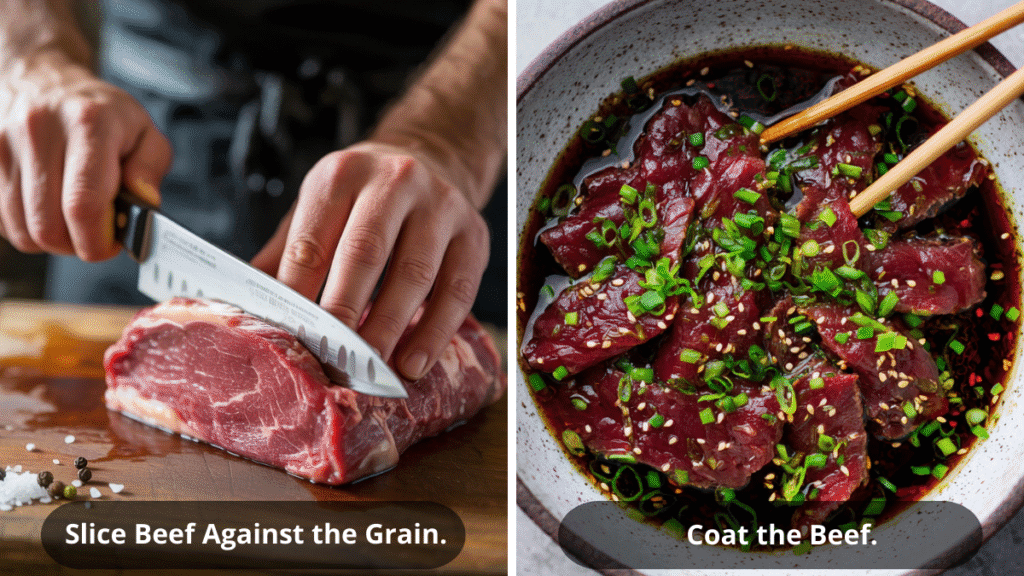
Partially freeze the beef for 25 to 30 minutes before slicing. This firms it up and makes it easier to cut thin, even pieces.
Look at the direction of the muscle fibers, then slice across them instead of along them. Cutting against the grain shortens the muscle fibers and makes the beef easier to chew.
Aim for slices about 1/8 inch thick. If the slices are too thick, the beef can stay chewy even after velveting. If they are too thin, they can overcook quickly.
Step 2: Tenderize with Baking Soda
In a bowl, mix 1 tsp baking soda with 2 tbsp water. Add the sliced beef and toss until every piece is lightly coated.
Let the beef rest for 15 minutes. Do not leave it much longer unless your beef is very tough. Too much time in baking soda can make the meat soft in an unpleasant way.
Step 3: Rinse and Dry the Beef
Rinse the beef well under cold water to remove the baking soda. This step is important. If you skip it, the beef may taste metallic or soapy after cooking.
After rinsing, pat the beef very dry with paper towels. The beef should not be wet before you add the cornstarch marinade. Excess water can weaken the coating and make the stir-fry watery.
Step 4: Add the Cornstarch Marinade
In a clean bowl, mix the cornstarch, soy sauce, broth or water, oil, optional egg white, optional sugar, and optional oyster sauce.
Add the rinsed and dried beef. Toss until every slice is lightly coated. The beef should look glossy, not clumpy. If the mixture feels too thick, add 1 tsp water. If it looks too wet, add 1/2 tsp cornstarch.
Cover and refrigerate for 30 minutes. This resting time helps the coating cling and gives the beef a smoother texture when cooked.
Step 5: Pre-Cook the Beef
Heat a wok or large skillet over medium-high to high heat. Add 1 to 2 tbsp neutral oil.
Add the beef in a single layer. Do not crowd the pan. Cook for 30 to 60 seconds per side, just until the beef is about 80% cooked. Remove it from the pan and set it aside.
Pre-cooking keeps the beef tender because it prevents the meat from sitting too long in the final sauce. This is especially useful for saucy takeout-style beef dishes. Remove the beef while it is still slightly underdone, then finish it briefly with the vegetables and sauce.
Step 6: Finish in Your Stir-Fry
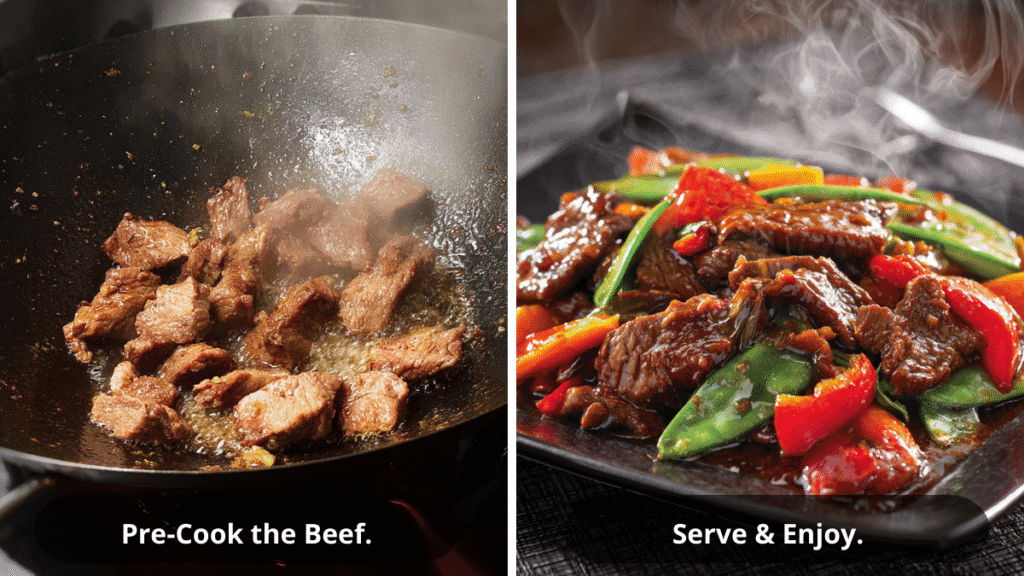
Cook your vegetables and sauce first, then return the beef to the pan at the end. Toss everything over high heat for 1 to 2 minutes, just until the beef is fully cooked and coated in sauce.
Do not simmer velveted beef for too long in sauce. Long cooking can undo the tender texture and make the coating thick or gummy.
Water Velveting vs Oil Velveting
There are two common ways to pre-cook coated beef before the final stir-fry: blanching it in hot water or briefly searing it in oil. Both methods help set the coating, but they give slightly different results.
Water velveting means briefly blanching the beef in hot water. This method gives a lighter texture and works well when you want a cleaner sauce or a less oily dish.
Oil velveting means briefly cooking the beef in hot oil. It gives richer flavor, better browning, and a more restaurant-style stir-fry finish.
For most home cooks, the easiest option is to use a small amount of oil in a hot wok or large skillet. You do not need to deep-fry the beef; a quick shallow sear is enough to set the coating and keep the slices tender.
How Long Should You Velvet Beef?
The timing depends on the method you use.
- Baking soda only: 15 minutes for thin slices, up to 30 minutes for tougher beef.
- Cornstarch marinade only: 30 minutes is usually enough.
- Hybrid method: 15 minutes with baking soda, then 30 minutes with the cornstarch marinade.
Do not leave beef in baking soda for hours. Longer is not better. Too much time can make the beef mushy and give it a strange texture.
Why Velveted Beef Turns Tough, Mushy, or Gray
If your velveted beef does not turn out right, the problem is usually slicing, timing, heat, or pan crowding.
- Tough beef: the slices were too thick, cut with the grain, cooked too long, or crowded in the pan.
- Mushy beef: too much baking soda was used, or the beef sat too long before rinsing.
- Metallic taste: baking soda was not rinsed off completely.
- Gray beef: the pan was not hot enough, or too much beef was added at once, causing steaming instead of searing.
- Gummy sauce: too much cornstarch was used, or the beef was cooked too long in the sauce.
- Watery stir-fry: the beef was not patted dry after rinsing, or the vegetables released too much moisture.
Can You Velvet Beef in Advance?
Yes, you can velvet beef in advance, but the best timing depends on the stage.
- After baking soda treatment: rinse, pat dry, then continue with the marinade the same day.
- After cornstarch marinade: refrigerate for up to 24 hours before cooking.
- After pre-cooking: use the beef as soon as possible for the best texture.
For the best result, slice and marinate the beef ahead of time, but pre-cook it right before finishing the stir-fry.
Food Safety Note for Velveted Beef
Velveting improves texture, but it does not replace safe cooking. For beef steaks, roasts, and chops, the USDA recommends cooking to 145°F with a 3-minute rest; ground beef should reach 160°F. Refrigerate leftovers within 2 hours and store cooked beef in an airtight container in the refrigerator.
For more details, see the USDA guide to safe minimum internal temperatures and its guide to leftovers and food safety.
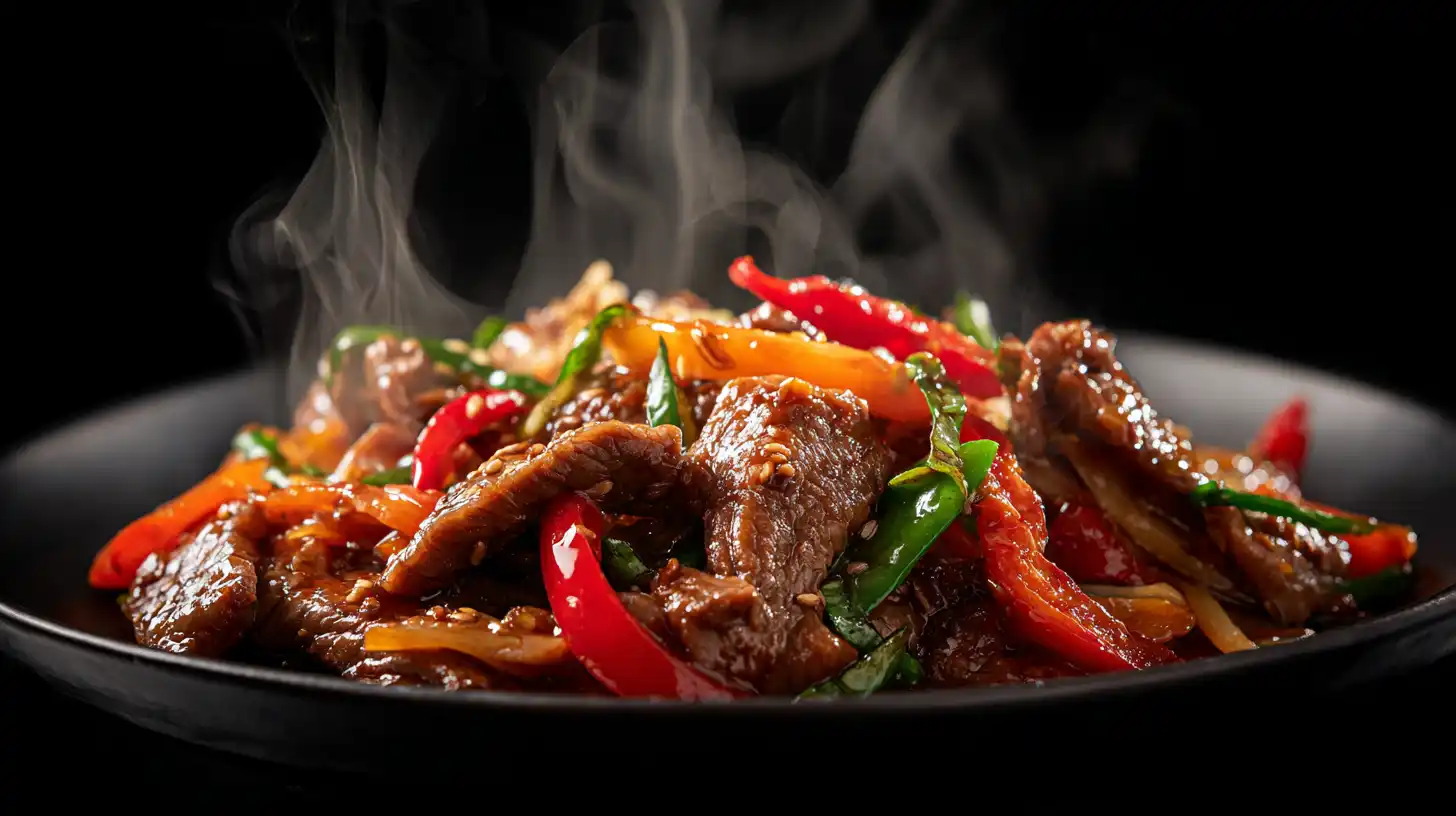

How to Velvet Beef for Stir-Fry
Ingredients
Equipment
Method
- Partially freeze the beef for 25 to 30 minutes, then slice it thinly against the grain.
- Mix the baking soda with water. Toss the mixture with the sliced beef and let it rest for 15 minutes.
- Rinse the beef very well under cold water, then pat it completely dry with paper towels.
- In a clean bowl, mix the cornstarch, soy sauce, broth or water, oil, optional egg white, optional sugar, and optional oyster sauce.
- Add the beef to the cornstarch marinade and toss until every slice is lightly coated. Rest in the refrigerator for 30 minutes.
- Heat a wok or large skillet over medium-high to high heat. Add 1 to 2 tablespoons of oil.
- Cook the beef in a single layer for 30 to 60 seconds per side, until it is about 80% cooked. Work in batches if needed so the beef sears instead of steaming.
- Remove the beef from the pan, then return it to your stir-fry at the end with vegetables and sauce. Toss for 1 to 2 minutes, until fully cooked.
Notes
Equipment Note:
Slicing the beef thinly against the grain is much easier with a sharp knife. I use this [Chef’s Knife from Amazon (paid link)]. For the cooking step, a true [Carbon Steel Wok (paid link)] will give you the best restaurant-style results.Best Recipes to Use Velveted Beef In
Once you know how to velvet beef, start with the Panda Express copycat recipes collection, then use the method in Panda Express Broccoli Beef, Mongolian Beef, or Beijing Beef.
For more wok-style dinner ideas, explore Shrimp Lo Mein and Chicken Lo Mein.
The key is to add the velveted beef near the end of cooking. Let the vegetables and sauce cook first, then return the beef to the pan just long enough to finish.
FAQ About Velveting Beef
To velvet beef, slice it thinly against the grain, coat it with baking soda or a cornstarch-based marinade, let it rest, then cook it quickly over high heat. For tough cuts, use baking soda first, rinse well, then add a cornstarch coating before stir-frying.
Use baking soda to tenderize tough beef and cornstarch to create a silky coating that helps sauce cling. For the best restaurant-style texture, use both: baking soda first, then cornstarch after rinsing.
For baking soda, 15 to 30 minutes is enough for thin beef slices. For cornstarch marinades, 30 minutes works well. Avoid leaving beef in baking soda too long because it can become mushy.
Rinse beef after using baking soda to remove excess alkalinity and prevent a metallic or soapy taste. Do not rinse after a cornstarch-only marinade, because the coating helps create the silky texture.
Yes. Egg white can add extra silkiness, but it is optional. Baking soda, cornstarch, soy sauce, oil, and water are enough for tender stir-fry beef.
Velveted beef turns mushy when too much baking soda is used or when the beef sits too long before rinsing. Use measured ratios and keep the baking soda rest time short.
Flank steak, chuck steak, skirt steak, sirloin, and round steak work well for velveting. The method is especially useful for lean or tougher cuts that need help staying tender in stir-fries.
Yes. You can marinate velveted beef in the refrigerator for up to 24 hours after the cornstarch coating step. For the best texture, pre-cook the beef right before finishing the stir-fry.