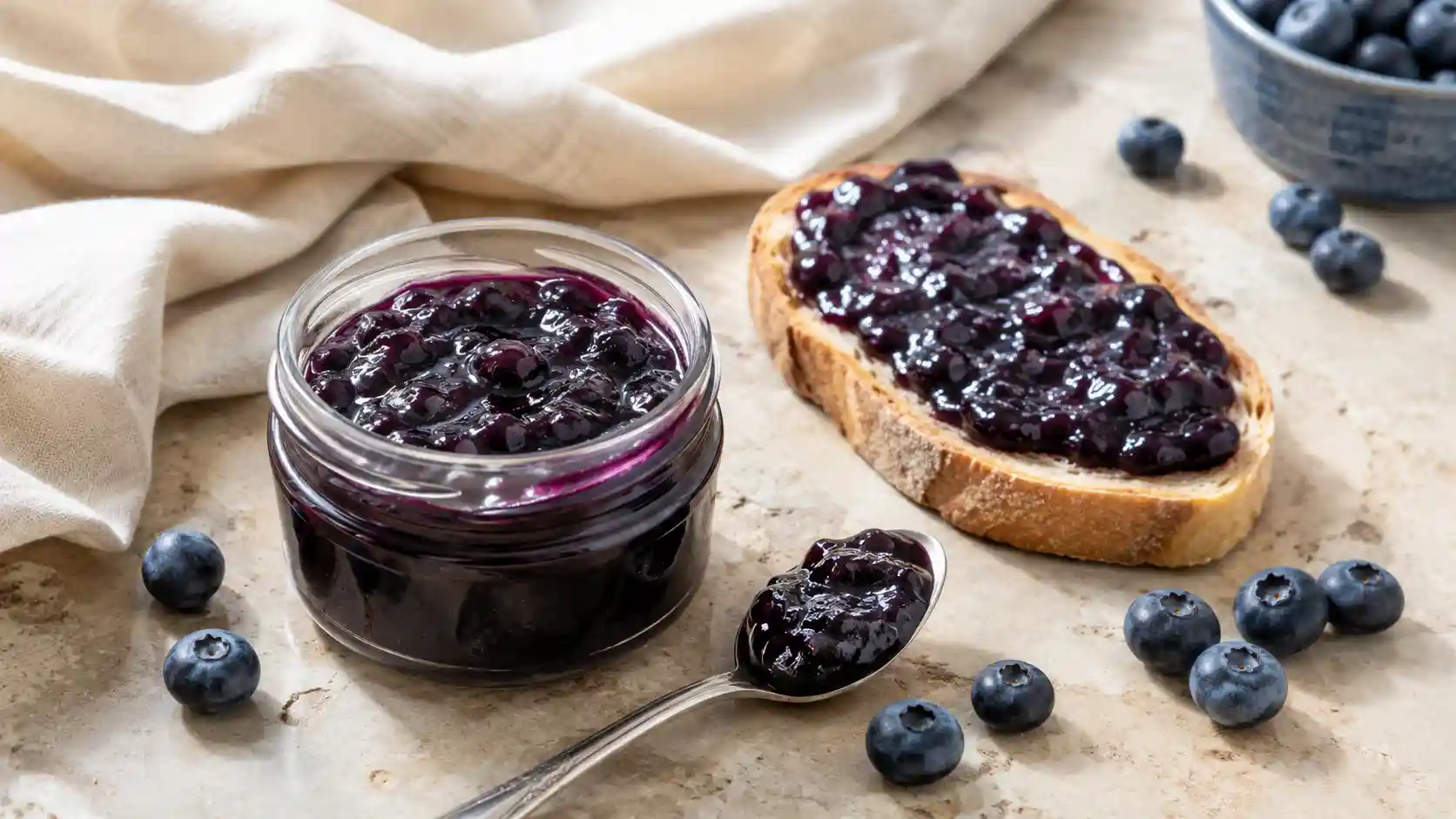
This easy blueberry jam recipe turns fresh or frozen blueberries, granulated sugar, and lemon juice into a soft, spreadable homemade jam. It cooks in one saucepan, requires no added pectin, and makes a manageable small batch for toast, pancakes, yogurt, and pastries.
This is a refrigerator jam rather than a shelf-stable canned preserve. Store it in the refrigerator after cooling and use it within three weeks.
Quick Blueberry Jam Recipe Facts
| Recipe detail | Information |
|---|---|
| Prep time | 5 minutes |
| Cook time | About 30 minutes |
| Total time | About 35 minutes |
| Yield | About 1 cup |
| Servings | 16 tablespoons |
| Pectin | No added pectin |
| Storage | Refrigerate for up to 3 weeks |
Why You’ll Love This Blueberry Jam
- It uses only three main ingredients.
- It works with fresh or frozen blueberries.
- It does not require commercial pectin.
- It makes a small batch that is easy to manage.
- It includes clear visual cues for checking the texture.
- It works as a topping, spread, or pastry filling.
The finished jam has a soft set rather than the very firm consistency of a commercial jelly. It will look slightly loose while hot and continue to thicken as it cools.
Blueberry Jam Ingredients
| Ingredient | Amount | Purpose |
|---|---|---|
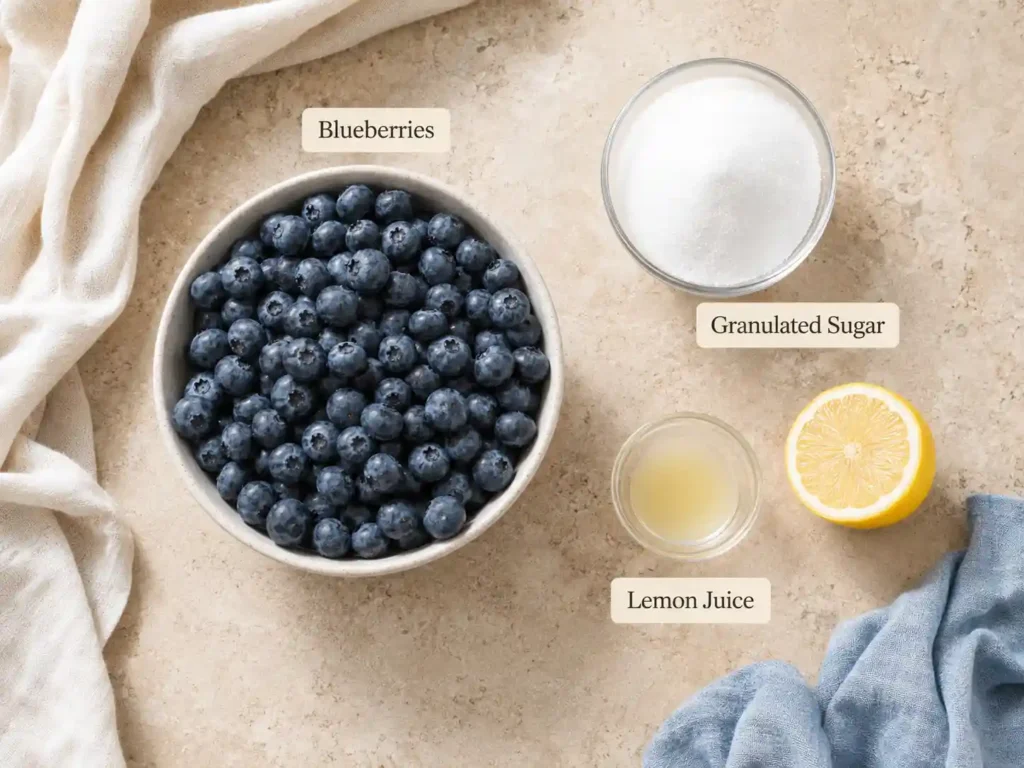
| Blueberries | 4 cups, about 592 g | Provide the fruit flavor, juice, color, and texture |
| Granulated sugar | 1 cup, about 200 g | Adds sweetness and supports a spreadable consistency |
| Lemon juice | 1 tablespoon, 15 ml | Balances the sweetness and supports the soft set |
Blueberries
You can use fresh or frozen blueberries. Fresh blueberries may cook down a little faster, while frozen berries can release more liquid and may need additional reduction.
Partially mashing the berries gives the jam a balanced texture with both smooth fruit and small blueberry pieces. Avoid blending the mixture completely unless you prefer a very smooth spread.
Granulated Sugar
Granulated sugar sweetens the fruit and helps the mixture develop a jam-like consistency as it cooks. Keep the listed quantity for the most predictable texture.
Reducing the sugar substantially can change the consistency and storage quality. This recipe has not been formulated for artificial sweeteners or liquid sugar substitutes.
Lemon Juice
Lemon juice brightens the blueberry flavor and keeps the jam from tasting overly sweet. It also adds acidity that supports the soft, spreadable texture.
Fresh or Frozen Blueberries
Both fresh and frozen blueberries can work in this recipe. Frozen berries do not always behave exactly like fresh fruit because they can release more liquid as they heat.
When using frozen blueberries, rely on the appearance and texture of the jam rather than adding a fixed number of extra minutes. Continue cooking until the bubbles look thicker and the jam passes the cold plate test.
Equipment You Will Need
- A medium heavy-bottomed saucepan
- A potato masher or sturdy spoon
- A heat-safe silicone or wooden spatula
- Measuring cups and spoons
- A small plate for testing the set
- A clean jar or airtight refrigerator container
Helpful Tools for This Recipe
A heavy-bottomed saucepan helps distribute heat more evenly and reduces the risk of scorching as the jam thickens. A potato masher makes it easy to control how many blueberry pieces remain in the finished spread.
A heat-safe spatula is also useful because it can scrape the bottom and corners of the pan. A small wide-mouth funnel may make transferring the finished jam into a clean jar easier, but it is optional.
How to Make Blueberry Jam
Step 1: Chill a Small Plate
Place a small plate in the freezer before you begin cooking. You will use it later to check whether the jam has thickened enough.
Step 2: Mash the Blueberries
Add 4 cups of blueberries to a medium heavy-bottomed saucepan. Use a potato masher to crush some of the fruit while leaving a few berries partially intact.
The berries do not need to be perfectly smooth. A mixture of crushed fruit and small blueberry pieces gives the finished jam a more interesting texture.
Step 3: Add Sugar and Lemon Juice
Add 1 cup of granulated sugar and 1 tablespoon of lemon juice. Stir until the berries are evenly coated and the sugar begins to mix with the fruit juices.
Step 4: Cook the Jam
Place the saucepan over medium heat. Cook while stirring regularly until the berries release their juice and the mixture reaches a controlled boil.
Continue cooking for about 30 minutes. Stir more frequently as the jam reduces because the thickening fruit can begin to stick to the bottom of the pan.
The exact cooking time can vary depending on the saucepan, heat level, berry moisture, and whether the fruit is fresh or frozen.
Step 5: Test the Set
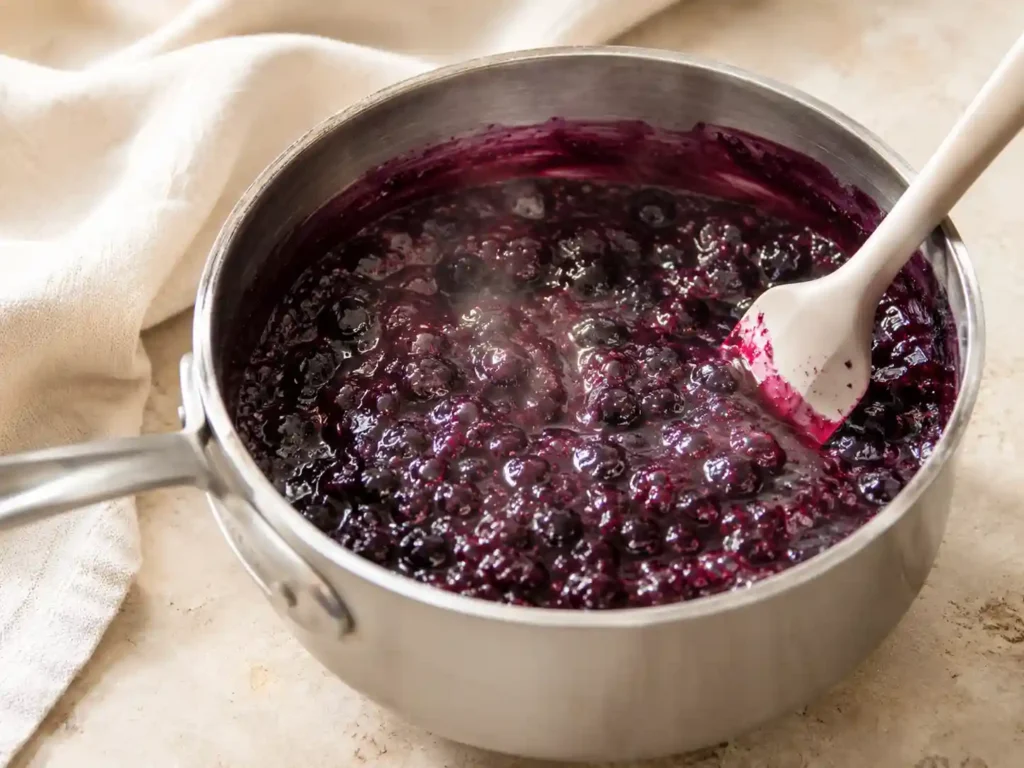
Remove the chilled plate from the freezer and place a small spoonful of jam on it. Let the jam sit briefly, then push it gently with a fingertip or spoon.
The jam is ready when it moves slowly and its surface wrinkles slightly. If it spreads across the plate like a thin syrup, continue cooking and test it again.
Step 6: Cool and Refrigerate
Remove the saucepan from the heat. Carefully transfer the hot jam to a clean, heat-safe jar or refrigerator container.
Allow it to cool until it is no longer steaming. Cover the container and place it in the refrigerator. The jam will continue to thicken as it cools completely.
How to Tell When Blueberry Jam Is Done
Cooking time provides a useful estimate, but visual and textural cues are more reliable. Look for the following signs:
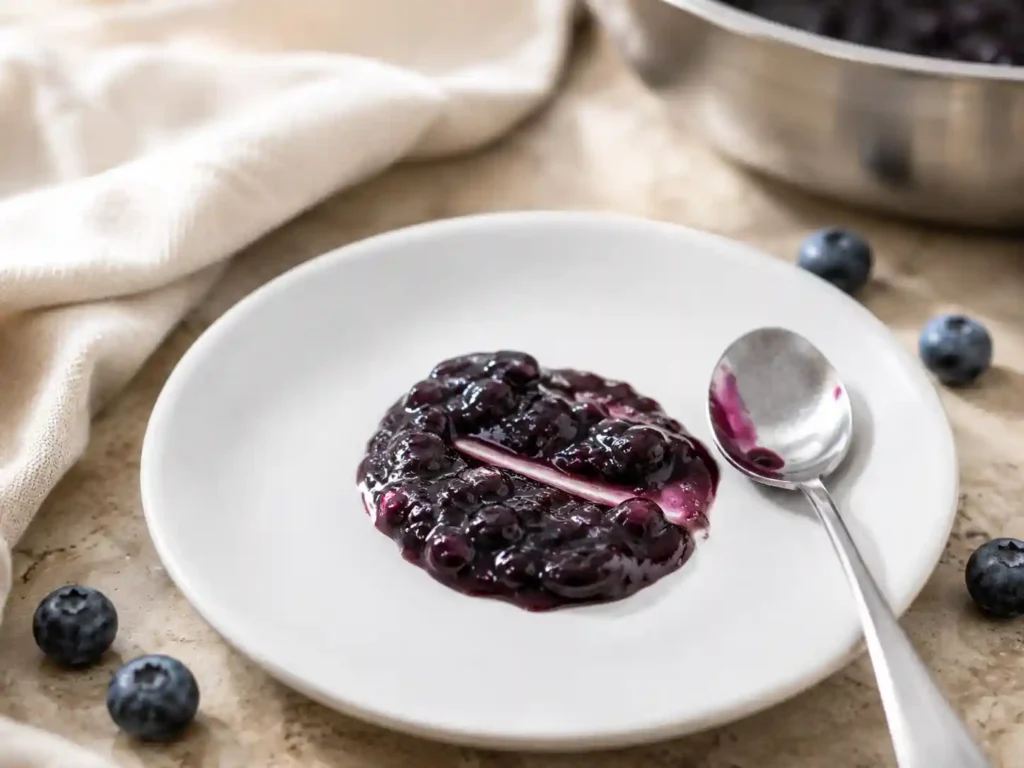
- The bubbles become thicker and slower.
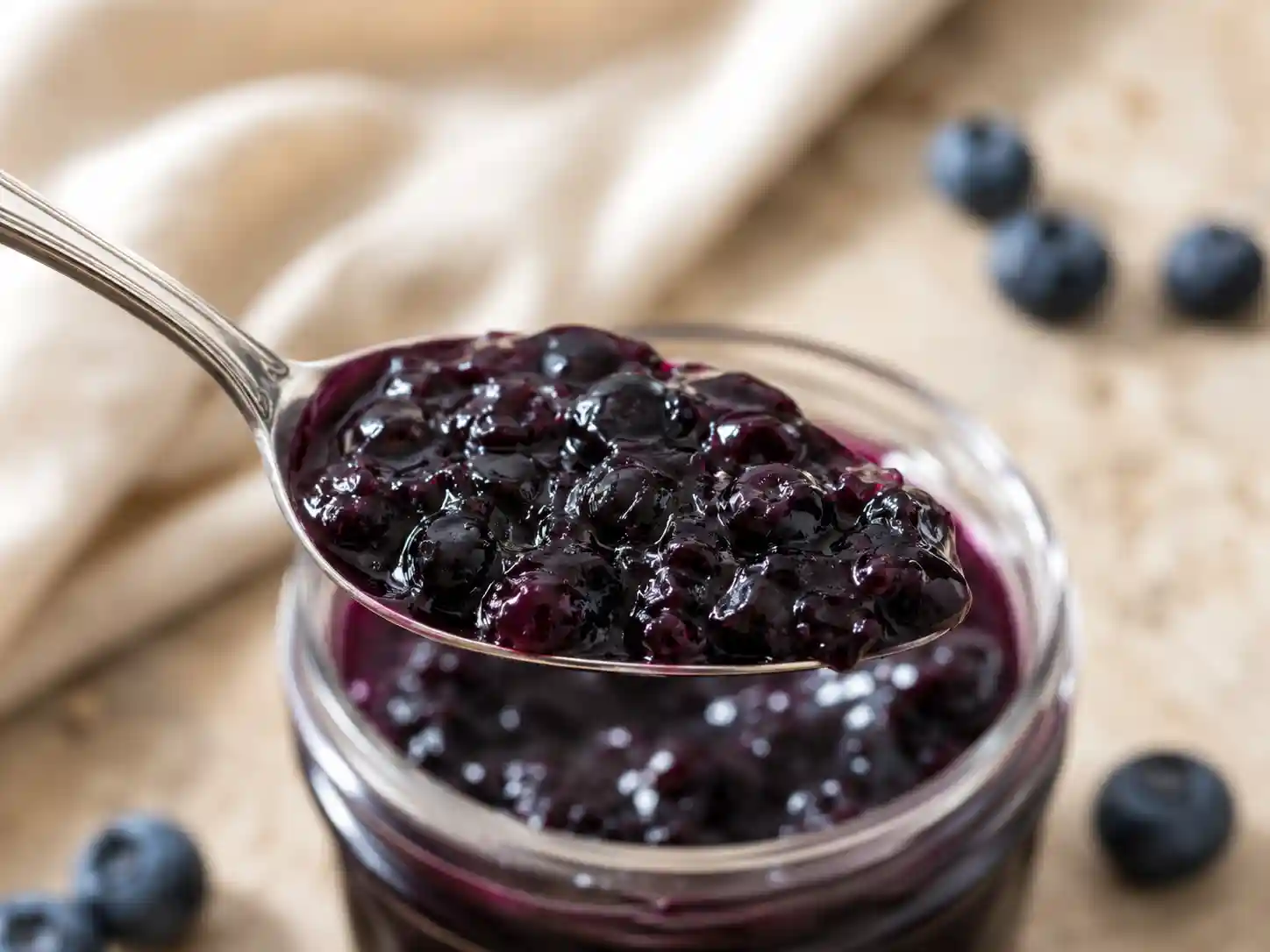
- The mixture looks glossy rather than watery.
- A spatula briefly leaves a visible path across the bottom of the pan.
- A spoonful placed on a chilled plate moves slowly.
- The cooled sample wrinkles slightly when pushed.
Do not wait for the jam to become completely firm in the saucepan. Jam that looks very thick while boiling may become overly stiff after cooling.
Why This Blueberry Jam Does Not Need Added Pectin
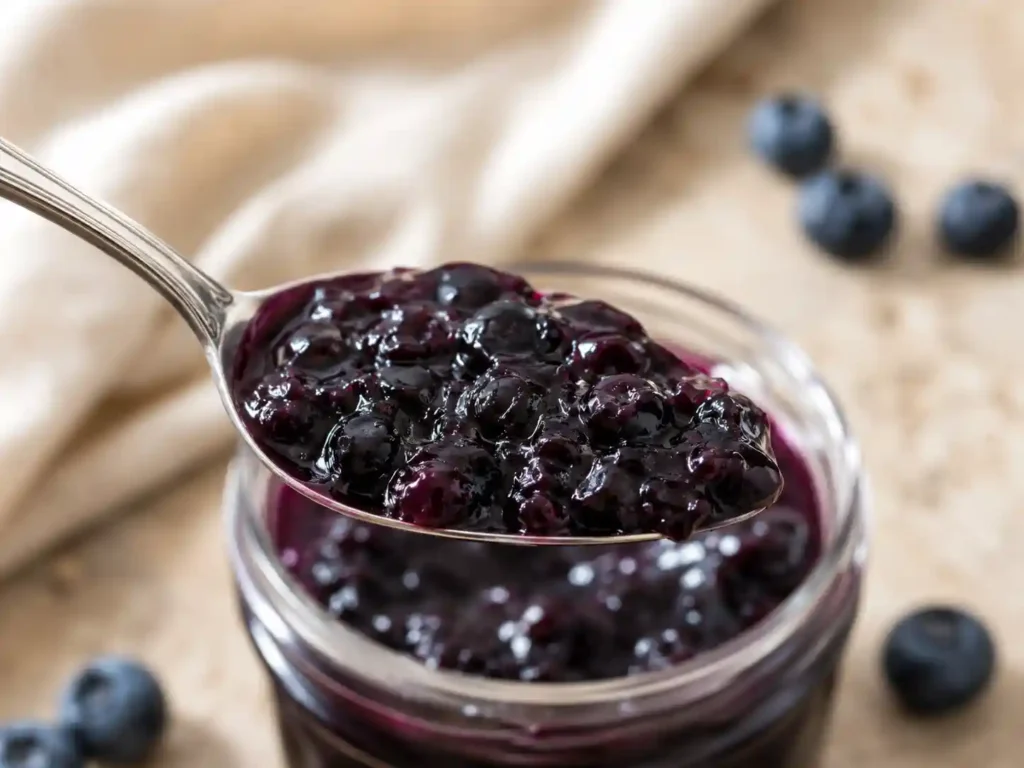
This small-batch recipe thickens through fruit reduction, sugar, acidity, and cooling. As the blueberry mixture cooks, excess water evaporates and the remaining fruit becomes more concentrated.
The recipe does not promise the firm set of a jelly made with commercial pectin. Instead, it produces a soft, spoonable jam that spreads easily after chilling.
Blueberry Jam Troubleshooting
| Problem | Likely cause | What to do |
|---|---|---|
| Jam is runny after cooling | It did not reduce enough | Return it to the saucepan and cook a little longer, then repeat the cold plate test |
| Jam is too thick | It cooked too long | Remove it from the heat earlier next time and begin testing sooner |
| Jam sticks to the pan | The heat is too high or the jam is not stirred often enough | Lower the heat slightly and scrape the bottom regularly |
| Fruit pieces are too large | Not enough berries were mashed | Mash more of the fruit during the early cooking stage |
| Jam does not wrinkle on the cold plate | The mixture is still too loose | Continue cooking and test again after further reduction |
The Jam Is Too Runny
Give the jam enough time to cool completely before deciding that it is too thin. A hot fruit mixture will always look looser than chilled jam.
If it remains watery after chilling, return it to the saucepan and cook it a little longer. Stir frequently and repeat the cold plate test before removing it from the heat.
The Jam Is Too Thick
Jam that is too thick was usually cooked beyond the ideal set point. Begin testing earlier during your next batch and remember that the mixture will continue to thicken in the refrigerator.
The Jam Is Sticking to the Pan
As water evaporates, the fruit mixture becomes more concentrated and can scorch more easily. Reduce the heat if necessary and scrape the bottom and corners of the saucepan regularly.
The Jam Did Not Set After Cooling
A soft set is expected with this no-pectin recipe. The jam should be spreadable rather than firm like a commercial jelly.
If it remains closer to syrup than jam, cook it again until the chilled sample moves slowly and wrinkles slightly.
Ways to Serve Homemade Blueberry Jam
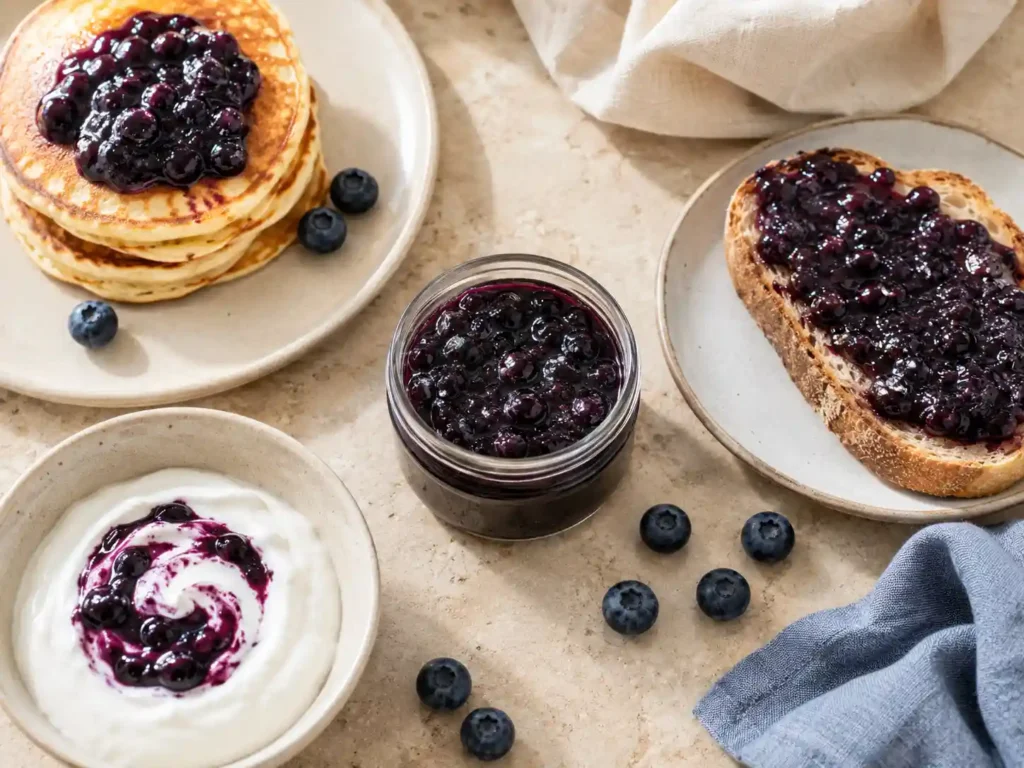
Spread blueberry jam over toast, English muffins, biscuits, or warm bread. It also makes a colorful topping for oatmeal, Greek yogurt, waffles, or pancakes from scratch.
For another breakfast pairing, serve it with Greek yogurt pancakes. The jam can also be spooned over cheesecake, frozen desserts, or vanilla ice cream.
If the jam has a thick, chilled consistency, try using it as a filling for homemade Pop-Tarts.
Storage and Food Safety
Transfer the cooled jam to a clean, covered container and store it in the refrigerator. For the best quality and safe handling, use it within three weeks and use a clean spoon each time you serve it.
This recipe is not shelf stable and should not be stored in a pantry. Filling a hot jar and closing the lid does not make the jam safely canned.
Discard the entire container if you notice mold, unusual bubbling, a fermented smell, an off odor, or another clear sign of spoilage. Do not remove only the affected portion.
For pantry storage, use a separately tested home-canning recipe with its exact ingredient proportions, jar size, processing method, and altitude instructions.
Easy Blueberry Jam Recipe (Small Batch, No Pectin)
Ingredients
Equipment
Method
- Place a small plate in the freezer before beginning. The chilled plate will be used to test the jam’s consistency.
- Add the blueberries to a medium heavy-bottomed saucepan.
- Use a potato masher or sturdy spoon to partially crush the berries, leaving some small blueberry pieces intact for texture.
- Add the granulated sugar and lemon juice. Stir until the berries are evenly coated and the sugar begins mixing with the fruit juices.
- Place the saucepan over medium heat. Cook while stirring regularly until the berries release their juice and the mixture reaches a controlled boil.
- Continue cooking for about 30 minutes. Stir more frequently as the mixture reduces and thickens, scraping the bottom and corners of the saucepan to prevent sticking or scorching.
- Remove the chilled plate from the freezer. Place a small spoonful of hot jam on the plate and let it sit briefly.
- Push the cooled sample gently with a fingertip or spoon. The jam is ready when it moves slowly and wrinkles slightly on the surface.
- If the sample spreads like a thin syrup, continue cooking the jam for a little longer, stirring frequently, and repeat the cold plate test.
- Remove the saucepan from the heat when the jam passes the cold plate test. The hot jam should still look slightly looser than its final chilled consistency.
- Carefully transfer the hot jam to a clean, heat-safe jar or airtight refrigerator container.
- Allow the jam to cool until it is no longer steaming. Cover the container and refrigerate. The jam will continue to thicken as it cools completely.
Notes
More Fruit and Breakfast Recipes
- Try another seasonal preserve with this strawberry rhubarb jam.
- Use more blueberries in these blueberry protein muffins.
- Turn your chilled jam into a filling for homemade Pop-Tarts.
Frequently Asked Questions
Can I make blueberry jam without pectin?
Yes. This recipe thickens through fruit reduction, sugar, acidity, and cooling rather than commercial pectin. Expect a soft, spreadable texture instead of a very firm jelly.
Can I use frozen blueberries for blueberry jam?
Yes. Frozen blueberries can be used, but they may release more liquid and require additional cooking. Judge the jam by its texture and the cold plate test rather than relying only on time.
How do I know when blueberry jam is set?
Place a spoonful on a chilled plate. The jam should move slowly and wrinkle slightly when pushed. It should still look a little loose while hot because it thickens more as it cools.
Why is my blueberry jam still runny?
The jam may need more reduction, or it may not have cooled completely. Chill it first. If it remains watery, return it to the saucepan, cook it longer, and repeat the cold plate test.
Can I can this blueberry jam for pantry storage?
No. This formula is intended for refrigerator storage and is not a tested canning recipe. Use an approved home-canning formula if you need a shelf-stable preserve.
Make a Jar of Homemade Blueberry Jam
This small-batch blueberry jam keeps the ingredient list simple and lets the fruit remain the main flavor. Use fresh or frozen berries, watch the texture as it cooks, and remember that the jam will continue to thicken after chilling.
After trying the recipe, leave a rating or comment to share how you served your homemade blueberry jam.