If fresh basil is growing faster than you can use it, this basil salt recipe turns a generous handful of leaves into a practical homemade seasoning. You only need fresh basil, kosher salt, a food processor, and a low oven.
The finished salt can season tomatoes, vegetables, potatoes, eggs, pasta, chicken, or fish. If you have enough basil for more than one recipe, try this easy homemade basil pesto as another way to use the leaves.
Quick answer: Basil salt is made by processing fresh basil with kosher salt, spreading the mixture in a thin layer, and drying it at a low temperature until no moisture remains. After cooling, the salt is processed once more and stored in a dry, airtight jar.
Basil Salt Recipe at a Glance
| Ingredients | Fresh basil and kosher salt |
|---|---|
| Preparation time | About 10 minutes |
| Oven-drying time | 45 to 60 minutes |
| Total time | About 55 to 70 minutes |
| Yield | About 1 cup |
| Method | Food processor and low oven |
The drying time is a range because oven accuracy, basil moisture, salt crystal size, and the thickness of the layer can all affect the result.
Why You Will Love This Basil Salt Recipe
- It uses only two ingredients.
- It gives extra fresh basil a practical purpose.
- The food processor does most of the chopping.
- The low oven helps remove moisture without intentionally cooking or browning the basil.
- You can use the finished salt in many savory dishes.
- A small jar takes up less space than a large bunch of fresh basil.
What Is Basil Salt?
Basil salt is a dry seasoning made by combining fresh basil leaves with salt. Processing the ingredients together distributes small pieces of basil throughout the salt. The mixture is then dried completely before storage.
Before drying, it should resemble damp green sand. Once dry, cooled, and processed again, it becomes a loose herb salt with a green-speckled appearance. It is different from simply stirring dried basil into table salt because the fresh leaves are processed directly with the salt before drying.
Basil Salt Ingredients
Fresh basil
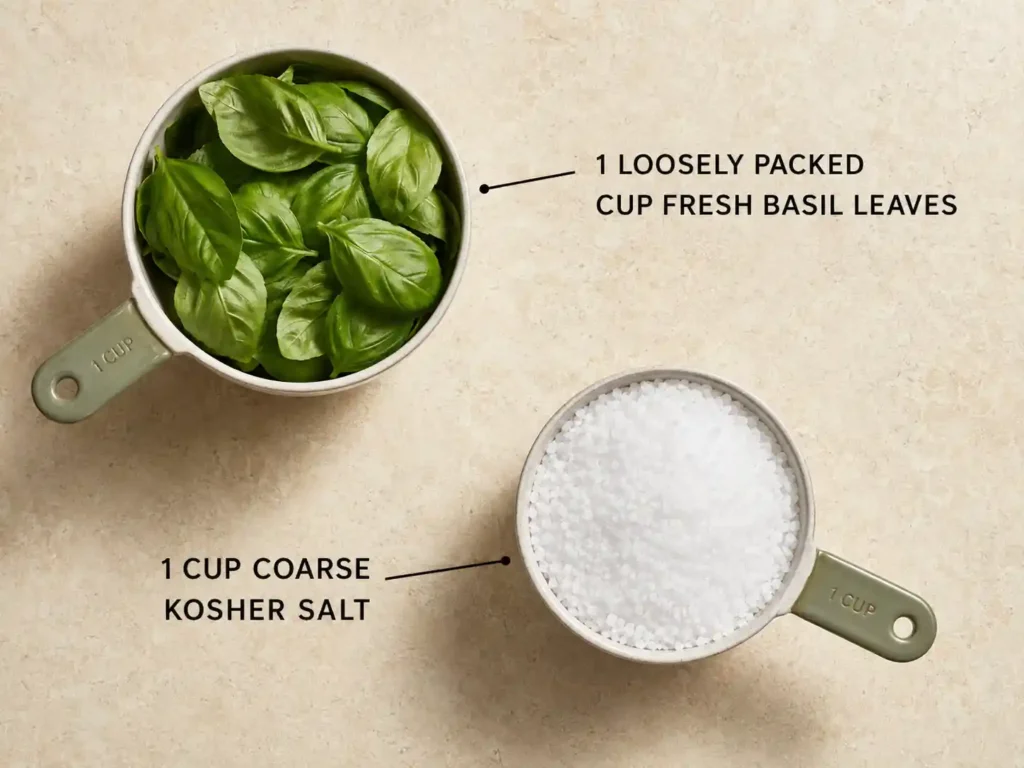
Use 1 loosely packed cup of fresh sweet basil or Genovese basil leaves. Remove thick stems and discard badly bruised, dark, or slimy leaves.
If the basil is visibly dirty, rinse it in cool water and dry it thoroughly with a salad spinner or clean kitchen towel. Excess surface water will extend the drying time and can leave damp areas in the mixture.
Coarse kosher salt
Use 1 cup of coarse kosher salt. Its larger crystals are easier to control in the food processor than fine table salt.
Do not replace the kosher salt cup for cup with fine table salt. Fine salt packs more densely into a measuring cup and can make the mixture much saltier. If you want to test another salt, weighing it is more dependable than assuming equal volumes will behave the same way.
| Salt type | Expected texture | Important note |
|---|---|---|
| Coarse kosher salt | Textured but easy to grind | Recommended for this recipe |
| Coarse sea salt | Crunchier finishing salt | May require additional processing |
| Fine sea salt | Fine finished texture | Do not substitute cup for cup without testing |
| Table salt | Very fine and dense | Not recommended for this formula |
How to Make Basil Salt
1. Prepare the basil
Remove the basil leaves from the thick stems. Rinse only when needed, then dry the leaves thoroughly. They should not feel wet when they go into the food processor.
2. Process the basil and salt
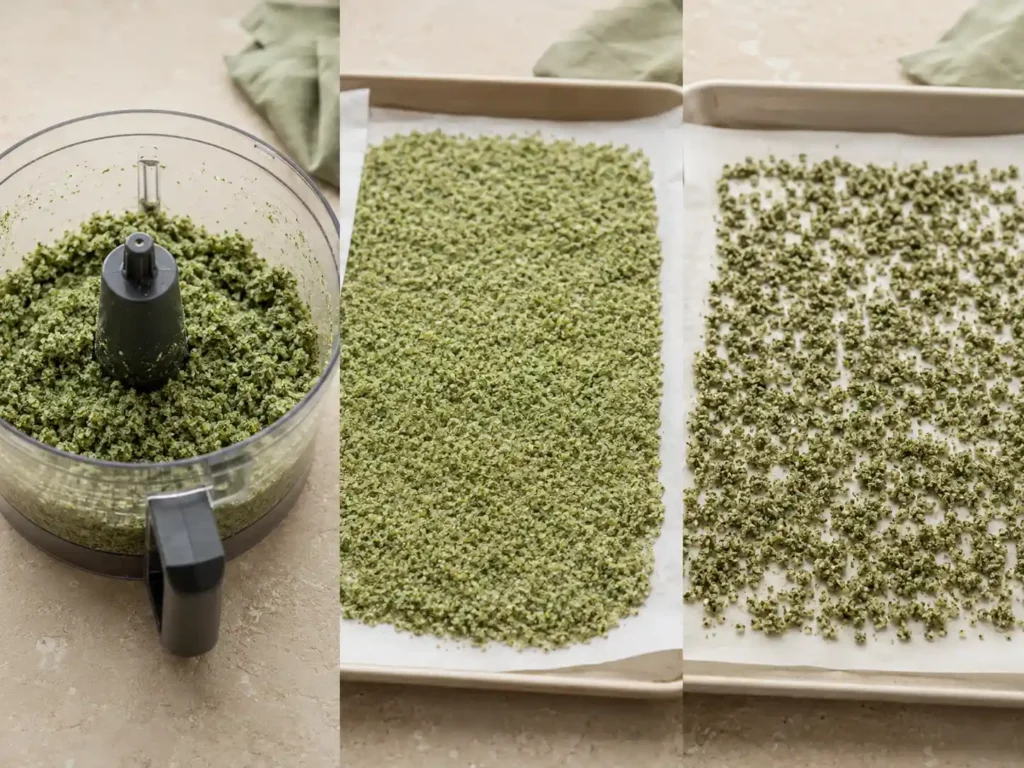
Place 1 loosely packed cup of basil leaves and 1 cup of coarse kosher salt in a food processor. Pulse until the basil is finely chopped and evenly distributed. Stop and scrape down the bowl if larger leaves collect along the sides.
The mixture should look green and slightly damp, with no large pieces of basil remaining.
3. Spread it into a thin layer
Line a rimmed baking sheet with parchment paper. Transfer the mixture to the sheet and use a spatula to spread it into a thin, even layer.
Break up thick piles before placing the sheet in the oven. A thin layer dries more consistently and makes it easier to identify remaining damp spots.
4. Dry it at a low temperature
Preheat the oven to 180°F. If your oven does not offer that temperature, use its lowest setting and begin checking the mixture early.
Dry the basil salt for 45 to 60 minutes. Stir and break up the mixture about every 20 minutes so the underside and center dry evenly. Begin checking at 45 minutes and remove it only when it feels dry and crumbly throughout.
5. Cool and process again
Let the basil salt cool completely on the baking sheet. Do not seal it in a container while it is warm because trapped warmth can create condensation.
Once cool, return the mixture to a clean, dry food processor. Pulse briefly to break up the dried pieces and create an even texture.
6. Transfer it to a dry jar
Spoon the finished basil salt into a clean, completely dry spice jar. Close the lid tightly and add the preparation date to the jar.
How to Tell When Basil Salt Is Fully Dry
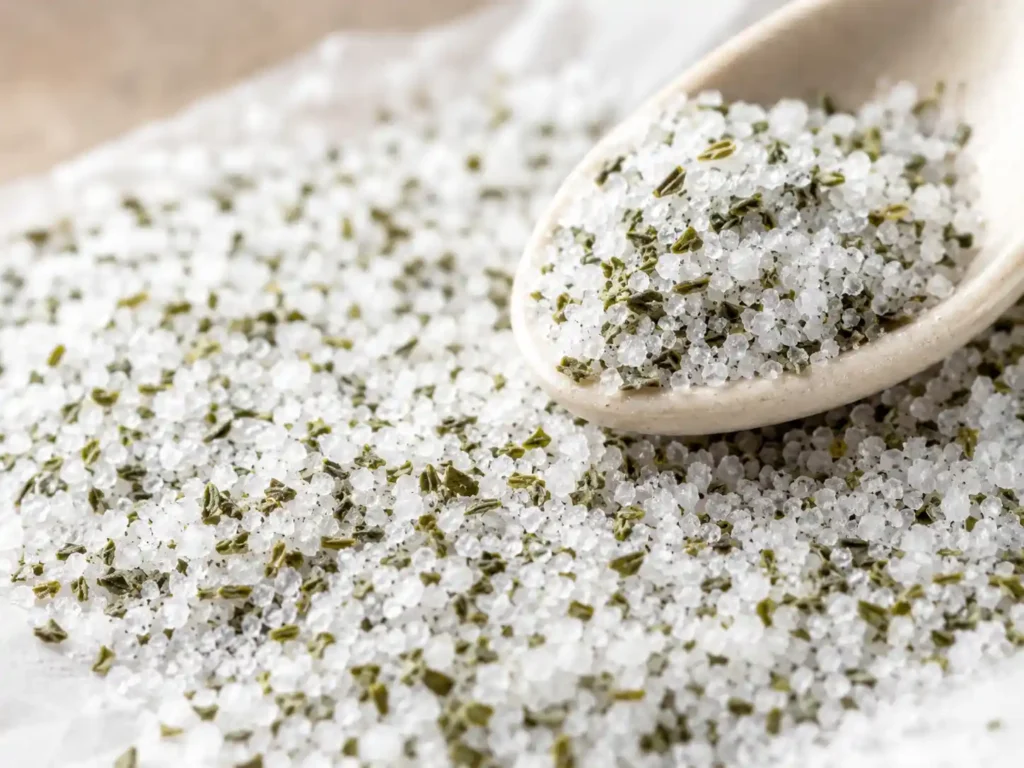
Use the condition of the mixture as the final test instead of relying only on the clock. Properly dried basil salt should:
- Feel dry rather than sticky.
- Break apart easily when stirred.
- Have no dark, soft, or damp patches.
- Lift cleanly from the parchment.
- Remain loose after it has cooled.
Homemade Basil Salt Recipe With Fresh Basil
Ingredients
Equipment
Method
- Preheat the oven to 180°F (82°C). Line a rimmed baking sheet with parchment paper.
- Remove the basil leaves from the thick stems. Rinse the leaves only when necessary, then dry them thoroughly with a salad spinner or clean kitchen towel. The leaves should not feel wet.
- Add the dry basil leaves and coarse kosher salt to a food processor.
- Pulse until the basil is finely chopped and evenly distributed throughout the salt. Stop and scrape down the bowl as needed. The mixture should resemble damp green sand with no large basil pieces remaining.
- Transfer the basil mixture to the prepared baking sheet. Use a spatula to spread it into a thin, even layer, breaking up any thick piles.
- Dry the basil salt for 45 to 60 minutes. Stir and break up the mixture about every 20 minutes so the center and underside dry evenly.
- Begin checking the salt after 45 minutes. Remove it from the oven only when it feels completely dry and crumbly, lifts cleanly from the parchment, and has no soft or damp patches.
- Let the basil salt cool completely on the baking sheet. Do not place it in a sealed container while it is warm.
- Return the cooled mixture to a clean, completely dry food processor. Pulse briefly to break up the dried pieces and create an even texture.
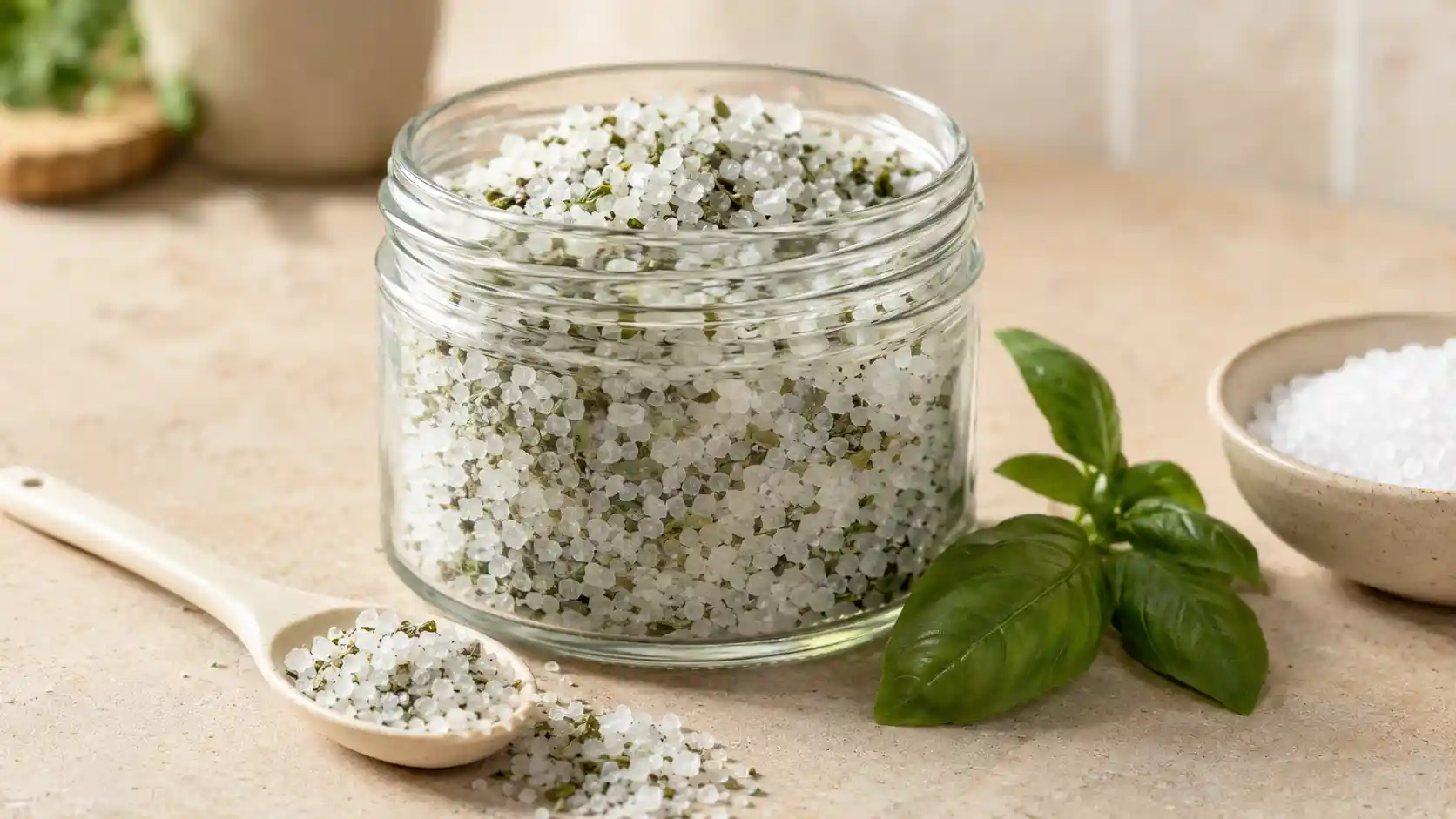
- Transfer the finished basil salt to a clean, dry, airtight spice jar. Seal tightly, label the jar, and add the preparation date.
Notes
Basil Salt Troubleshooting
| Problem | Likely cause | How to correct it |
|---|---|---|
| The salt is clumping | Moisture remains in the mixture | Spread it on the sheet and dry it again |
| The basil is browning | The oven is too hot | Lower the temperature and check more frequently |
| Some areas remain soft | The layer was too thick | Spread it more thinly and continue drying |
| Large basil pieces remain | The mixture needs more processing | Pulse again after it has cooled |
| Moisture appears inside the jar | The salt was stored warm or damp | Do not keep a damp batch sealed |
Ways to Use Basil Salt
Basil salt works best when it replaces some of the ordinary salt already used in a dish. Start with a small amount, taste, and add more only when needed.
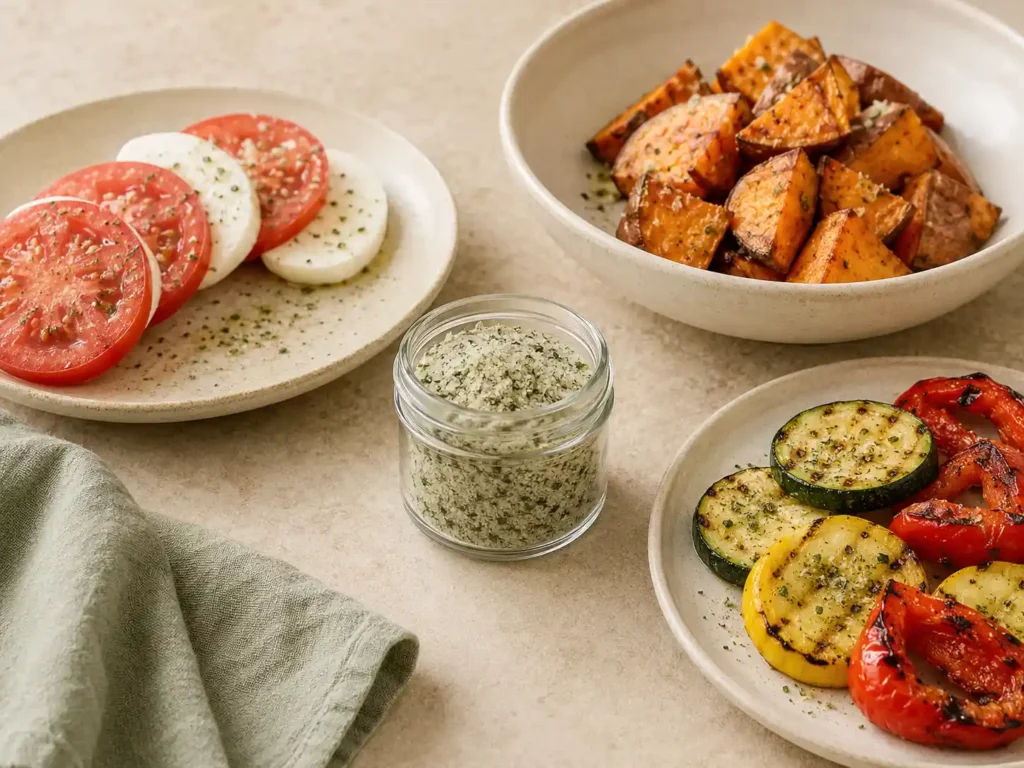
- Sprinkle a small amount over sliced tomatoes and fresh mozzarella.
- Season roasted potatoes or these crispy roasted sweet potatoes.
- Add it to grilled vegetables or a grilled vegetable salad.
- Use it lightly on eggs, popcorn, pasta, pizza, or toasted bread.
- Add a small amount to a fresh tomato corn salad.
- Use it to season chicken or fish before cooking.
- Try it with the tomato and basil flavors in this bruschetta chicken recipe.
How to Store Homemade Basil Salt
Store the salt in a clean, dry, airtight jar in a cool cabinet away from sunlight, steam, and direct heat. Do not keep it beside the stove or in another humid location.
Oregon State University Extension recommends keeping fully dried herbs in airtight containers in cool, dark, dry conditions. It also notes that dried herbs retain their best flavor for approximately six months to one year. Because homemade drying conditions vary and this recipe contains ground fresh basil, use the basil salt within three months for the best quality. Read the general dried herb storage guidance from Oregon State University Extension.
Discard the salt if you notice visible mold, persistent moisture, condensation, or an unusual odor. Do not taste a batch that shows signs of spoilage.
Helpful Tools for This Recipe
You do not need a special brand of equipment. These basic kitchen tools make the recipe easier:
- Food processor: Finely chops the basil and distributes it through the salt.
- Rimmed baking sheet: Keeps the salt contained while stirring.
- Parchment paper: Makes the dried mixture easier to lift from the sheet.
- Silicone spatula: Helps spread and stir the mixture.
- Salad spinner or clean towel: Removes water from rinsed basil.
- Airtight spice jar: Protects the finished salt from humidity.
- Kitchen scale: Useful when comparing different brands or types of salt.
Frequently Asked Questions
Can I make basil salt with dried basil?
This recipe is specifically formulated for fresh basil. Dried basil has a different concentration and contains much less moisture, so it should not be substituted using the same volume or oven method.
What type of salt is best for basil salt?
Coarse kosher salt works well because its crystals blend easily without becoming as dense as fine table salt. Coarse sea salt may also work, but it can require additional processing.
Do I need to wash the basil?
Wash the leaves if they are visibly dirty. Dry them thoroughly before processing. Added water makes the mixture take longer to dry and increases the chance of damp patches.
Can I use a blender instead of a food processor?
A blender can work, but you may need to stop more often and scrape down the container. Process in short pulses so you can control the texture.
How long can homemade basil salt be stored?
For best quality, use it within three months and keep it in a dry, airtight container away from heat and humidity. Discard it sooner if moisture, mold, condensation, or an unusual odor develops.
More Fresh Herb and Summer Recipes
Use another bunch of fresh basil in this homemade basil pesto recipe. You can also explore these garlic scape recipes for more garden produce ideas or browse the complete collection of easy summer dinner ideas.