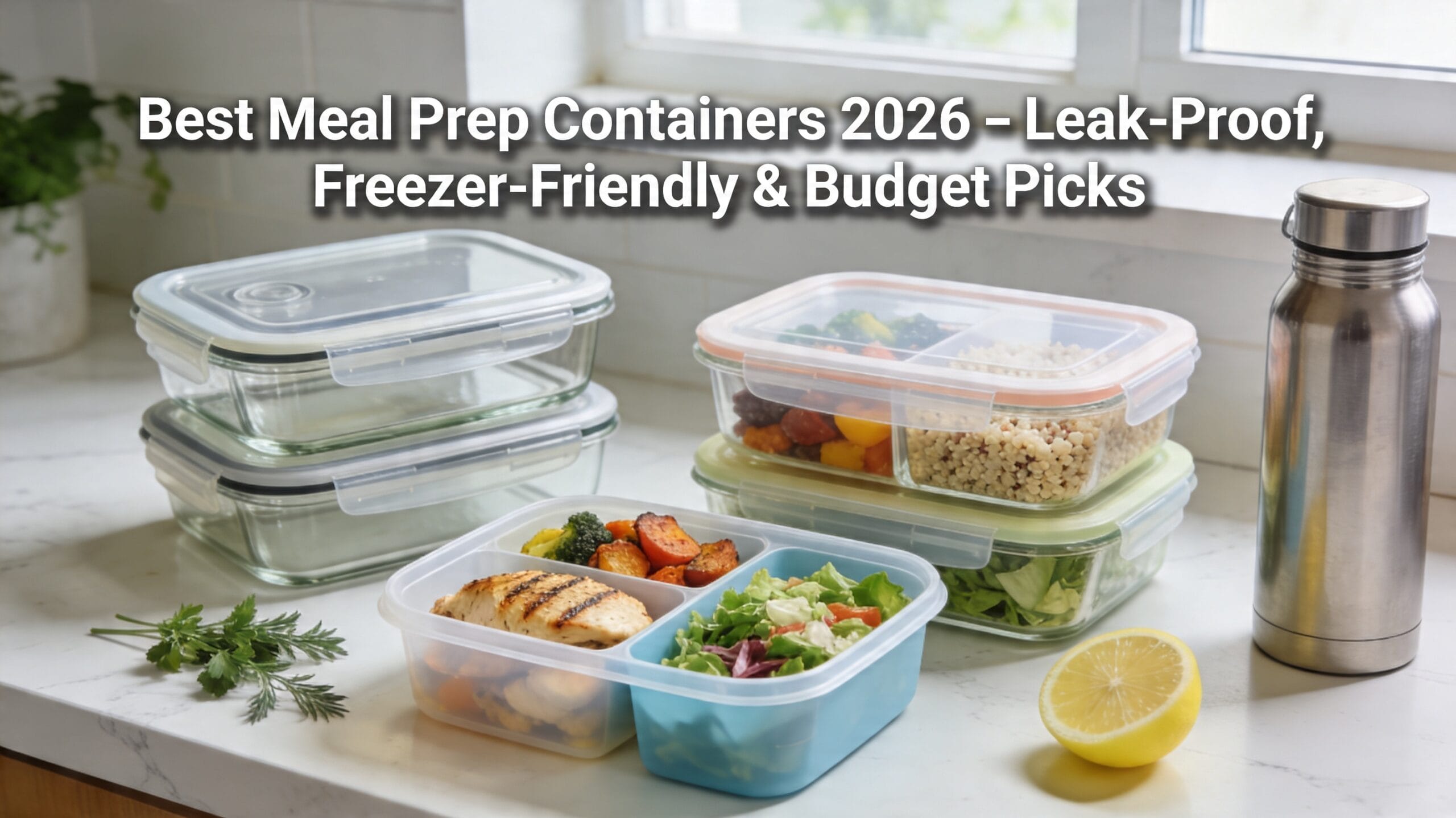
Choosing the right meal prep containers saves time, reduces waste, and makes weekday eating predictable. Below you’ll find curated options that cover common needs—reheating at work, freezer-safe batch cooking, portion control for weight management, and durable picks for active lifestyles.
We selected these recommendations by comparing manufacturer specs, verified purchaser reviews, and longevity reports. Each top pick includes quick pros/cons, best-use guidance, and a one-line recommendation so you can buy with confidence.
This article may contain affiliate links. When you purchase through links on our site, we may earn an affiliate commission. Affiliate earnings do not affect our recommendations.
Top Picks at a Glance
| Category | Top Choice | Why We Recommend |
|---|---|---|
| Best Overall | Pyrex Simply Store Glass Containers | Durable glass, oven/microwave safe, long lifespan. Best for regular reheating and stain resistance. Quick tip: buy a mixed-size set (1.5–4 cups) for versatility. |
| Best Budget | Rubbermaid Brilliance Food Storage | Affordable, clear, and leak-resistant plastic with good seal design. Best for commuters who want low weight without sacrificing leak protection. |
| Best Compartmentalized | Bentgo Prep 3-Compartment Containers | Built-in portion control, dishwasher-safe, BPA-free. Great for balanced lunches and eliminating extra containers. |
| Best Stainless Steel | LunchBots Stainless Steel Containers | Plastic-free, highly durable, and recyclable. Best for plastic-sensitive users who don’t need microwave reheating. |
| Best for Soup & Liquids | Zojirushi Stainless Steel Food Jar | Excellent temperature retention and widely reported as leak-resistant in user reviews. Ideal for soups, stews, and hot breakfasts on the go. |
Quick buying tip: For most home cooks, start with a mixed glass set (two small, four medium, two large) and add a few compartment or insulated jars as needed.
How to Choose the Right Containers (Fast)
One-line checklist
- Do you reheat at work? Choose microwave-safe glass or BPA-free plastic, and only heat food in containers clearly labeled for microwave use, following FDA microwave safety guidance.
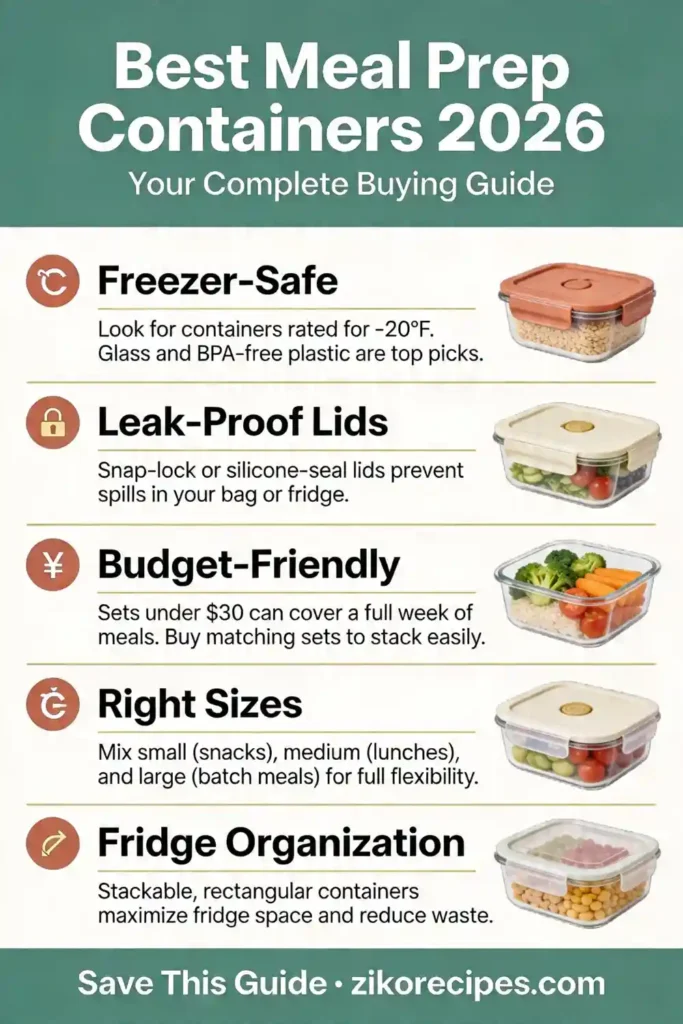
- Need leak-proof lunches? Prioritize silicone gaskets and snap-lock lids.
- Freezer meals? Pick containers with freezer-safe ratings and expansion room.
- On-the-go/active? Go lightweight: stainless steel or high-quality plastic.
Material pros & cons (short)
- Glass — Pros: non-porous, oven/microwave safe, long-lasting. Cons: heavier, can break.
- Plastic — Pros: lightweight, affordable. Cons: may stain/retain odors; choose food-grade BPA-free options.
- Stainless steel — Pros: durable, non-toxic, great for temperature retention. Cons: not microwave-safe.
- Silicone — Pros: collapsible, flexible. Cons: may trap odors; best for storage rather than reheating in all cases.
Best Meal Prep Containers by Use Case
Best Meal Prep Containers for Daily Office Lunches
Prioritize leak-proof lids and microwave-safe materials. Good picks: Pyrex Simply Store (glass), Rubbermaid Brilliance (plastic), and bentos with silicone gaskets.
- Look for: airtight snap-lock lids, compact stackability, and clear sides to identify contents quickly.
- Pack tip: place dressings in a separate small container to keep salads crisp.
Best Meal Prep Containers for Batch Cooking and Freezer Meals
Choose freezer-safe containers with straight sides (easier stacking) and leave a 1/2″ headspace for expansion when freezing liquids.
- Good picks: tempered glass sets for freezer-to-oven use, silicone Stasher bags for flat freezing and space-saving storage.
- Labeling: use freezer tape and permanent marker with date and contents to avoid waste.
Portion Control Meal Prep Containers
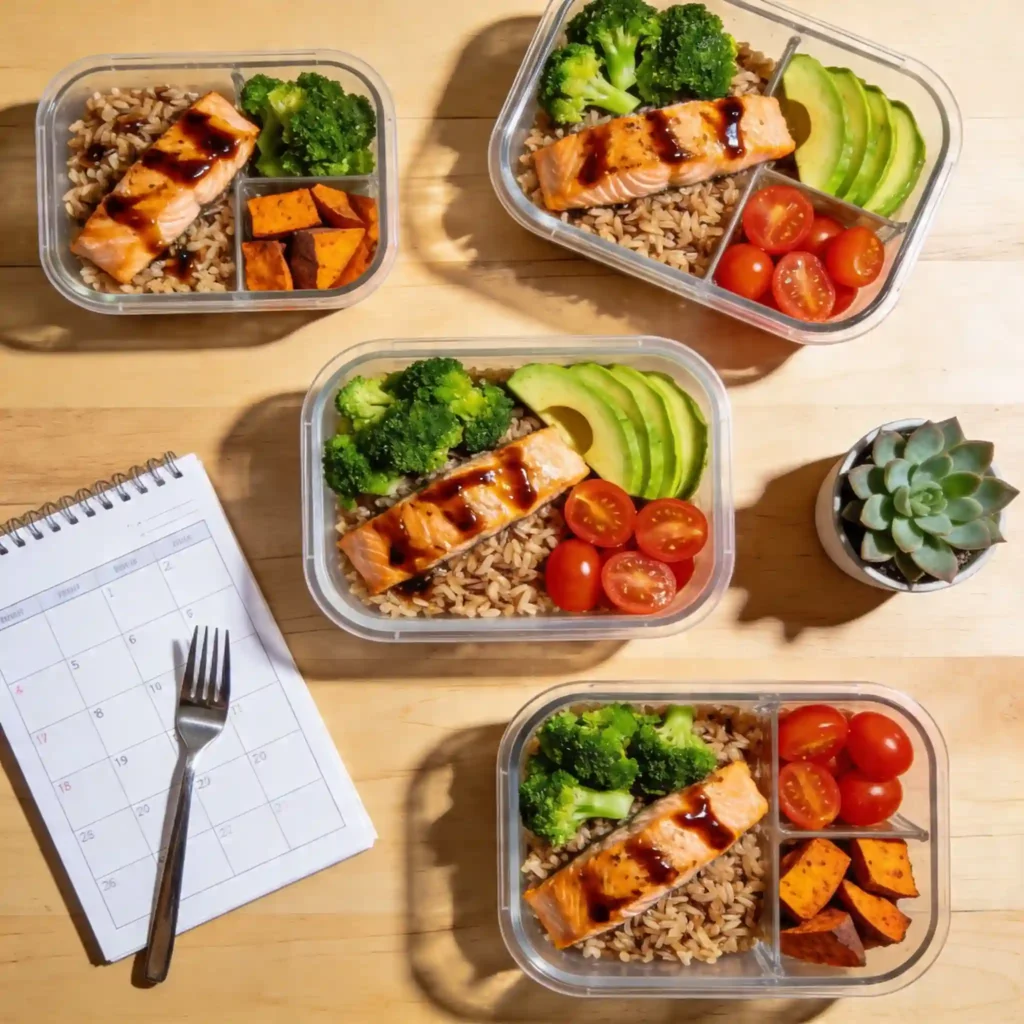
Use compartment containers (3-compartment) and measured containers with volume markings. A common starter plan: two 1.5-cup containers for snacks/sides, four 3-cup for lunches, and two 5-cup for bulk prep.
Meal Prep Containers for Travel and Active Lifestyles
Prioritize lightweight, durable options. Collapsible silicone and insulated jars are good space-savers. Choose stainless steel if you need temperature control without a microwave.
Meal Prep Container Size Guide
- 1–2 cups: dressings, snacks, sauces
- 3–4 cups: most single-serve lunches (protein + sides)
- 5+ cups: family meals, bulk prep, casseroles
Starter kit recommendation: 2 x 1.5-cup, 4 x 3-cup, 2 x 5-cup (mix of glass and 1–2 compartment boxes).
Meal Prep Container Cleaning Safety and Longevity
Cleaning Tips
- Dishwasher-safe items: place lids on the top rack to prolong gasket life.
- Remove odors: baking soda paste or vinegar soak; sun-drying helps fade tomato stains.
- Replace lids if gasket cracks — lids typically wear out before containers.
Meal Prep Container Safety and Handling
- For plastic, verify “BPA-free” and microwave-safe labeling.
- Avoid extreme temperature shocks: don’t move glass from oven to freezer immediately.
- To cool hot food safely, divide it into smaller containers so it chills below 40°F (4°C) within two hours, in line with USDA food safety guidance.
When to Replace Meal Prep Containers
Replace when lids no longer seal, plastic is deeply scratched or warped, or stainless steel shows significant corrosion. High-quality glass and stainless options often outlast cheap plastics and provide better long-term value.
How We Evaluated These Picks
Our selection is based on manufacturer specifications (material, temperature ratings), aggregated verified purchaser reviews, and long-term ownership reports. We prioritized safety (food-grade materials), seal integrity, durability, and overall value for typical US home cooks. Where possible we note commonly reported drawbacks from verified user feedback.
Buyer’s Quick-Reference Comparison
| Product | Microwave | Freezer | Dishwasher | Best For |
|---|---|---|---|---|
| Pyrex Simply Store | Yes (glass) | Yes | Yes | Reheating & longevity |
| Rubbermaid Brilliance | Yes (lid off) | Yes | Yes | Commuters & budget |
| Bentgo Prep | Yes | Limited | Yes | Portion control |
| LunchBots | No | Yes | Yes | Plastic-free users |
| Zojirushi Food Jar | No (insulated) | No | Hand wash recommended | Hot liquids & long temps |
Frequently Asked Questions
Glass is non-porous, less likely to stain or retain odors, and can be used in ovens and microwaves. Plastic is lighter and less likely to break. For many people, a mixed collection (glass for reheating, plastic for travel) offers the best balance.
Cooked foods stored in airtight containers in the refrigerator typically stay safe for 3–4 days. For longer storage, freeze meals and consume within 2–3 months for best quality. Always refrigerate within two hours of cooking and keep your fridge below 40°F (4°C).
Glass and stainless steel tolerate hot food better than some plastics, but avoid extreme temperature changes (for example, don’t move piping-hot glass directly into the freezer). For plastics, allow food to cool slightly before sealing to reduce warping and stress on the lid seal.
Scrub with a baking-soda paste or soak overnight in a 1:1 vinegar-water solution. Sun exposure can naturally reduce tomato stains. For persistent smells, try dryer sheets or a short baking-soda soak.
Glass and stainless steel are often the best long-term choices for environmentally conscious shoppers because they last longer and can reduce replacement frequency. Reusable plastic and silicone can also work well when used for years rather than treated as disposable. As a general rule, the EPA’s reducing and reusing guidance supports choosing durable, reusable products first.
Final Verdict
There is no single “best” container for everyone. For flexibility and long-term value, start with a mixed glass set and add specialized items, compartment boxes for portion control and insulated jars for soups, based on your routine. If you commute, prioritize leak-proof lids; if you batch-cook, choose freezer-safe designs with straight sides for better stacking.
Shop our recommended picks above to match your primary needs: reheating, travel, freezer storage, or plastic-free durability. And remember: proper care (replace lids when worn, avoid extreme temperature shocks) extends the life of even budget-friendly containers.
Want a simple starter bundle? Try 2 small (1–2 cup) glass containers, 4 medium (3–4 cup) glass containers, and 2 compartment boxes for lunches. This combo covers most meal-prep scenarios without excess duplicates.
Build Your Meal Prep Setup
The right containers are only one part of easier weekly prep. Explore these guides to cook smarter, portion better, and save time.
Affiliate disclosure reminder: purchasing through our links may earn us a commission at no extra cost to you.
Subscribe to ZikoRecipes for weekly meal-prep plans, quick recipes, and exclusive discounts on kitchen essentials.