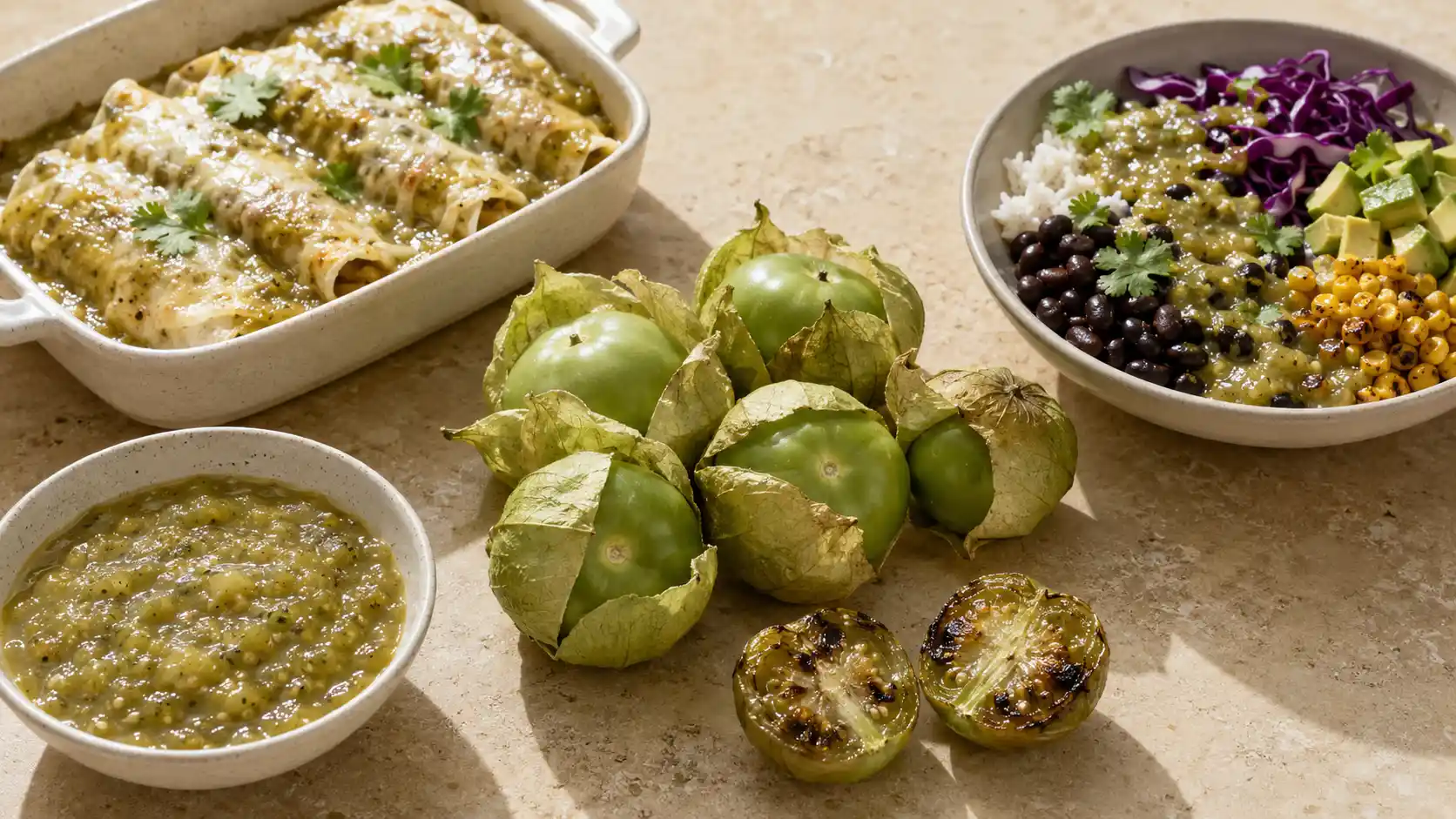
If you brought home a bag of fresh tomatillos or harvested more than expected, these tomatillo recipes will help you use them in much more than one bowl of salsa. Their bright, tangy flavor works in sauces, enchiladas, tacos, soups, breakfast dishes, salads, and easy dinner bowls.
This guide includes 15 practical ideas, from a taqueria-style green sauce to chicken pozole, chilaquiles, black bean bowls, and a roasted corn salad. You will also learn how to choose, clean, roast, and freeze tomatillos before deciding which recipe to try first.
Choose a Tomatillo Recipe at a Glance
| If you want | Start with | Main method | Heat level |
|---|---|---|---|
| A quick dip | Tomatillo-avocado salsa | Raw or roasted | Mild to medium |
| A taco sauce | Tomatillo salsa verde | Roasted or simmered | Adjustable |
| A baked dinner | Chicken enchiladas verdes | Roasted and baked | Adjustable |
| A comforting soup | Chicken pozole verde | Roasted and simmered | Adjustable |
| A meatless meal | Tomatillo black bean bowl | Roasted and assembled | Mild |
What Are Tomatillos?
Tomatillos are small, firm fruits that grow inside papery husks. They may look like small green tomatoes after the husk is removed, but they have their own texture and flavor. A fresh tomatillo tastes tart, bright, and slightly fruity rather than hot or peppery.
The USDA SNAP-Ed Seasonal Produce Guide identifies summer as tomatillo season and recommends removing the husk and rinsing the fruit before cooking. The guide also lists salsa, salads, dressings, and omelets among their uses.
Tomatillos vs. Green Tomatoes
A green tomato is an unripe tomato, while a tomatillo develops inside a husk. The two ingredients also differ in moisture, acidity, and texture. Although one may work in place of the other in some flexible preparations, the finished flavor will not be identical. For a recipe built around tomatillos, use the real ingredient whenever possible.
What Do Tomatillos Taste Like?
Raw tomatillos are crisp, firm, and noticeably tart. Cooking softens the fruit and rounds out some of that sharpness. Roasting also adds browned flavor, while simmering produces a softer and cleaner-tasting base for sauces. Tomatillos are not naturally spicy. The heat in salsa verde or chile verde comes from jalapeno, serrano, poblano, or another added chile.
How to Buy, Clean, and Cook Tomatillos
How to Choose Fresh Tomatillos
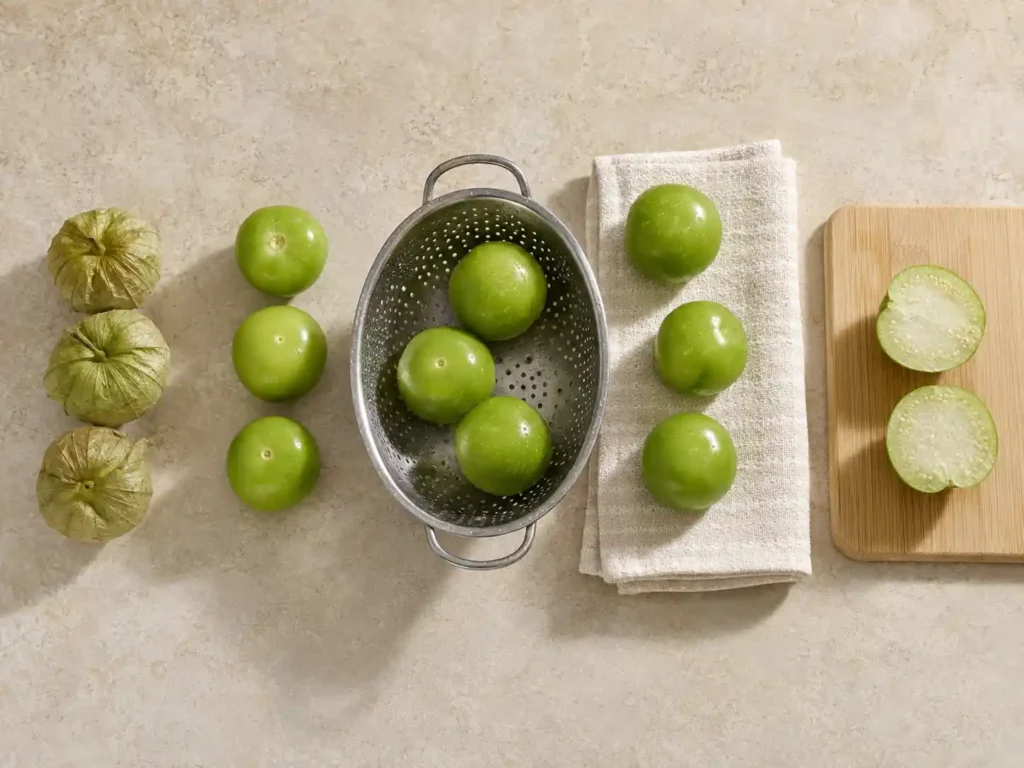
Choose tomatillos that feel firm and look fresh beneath their husks. A deep green color works especially well when you want the familiar tart flavor associated with salsa verde. Skip fruit with large soft spots, leaking areas, or obvious damage.
Do not worry if the papery husk has started to loosen around a full-size fruit. Focus on the condition of the tomatillo inside. Keep the husks in place until you are ready to clean and use the fruit.
How to Clean Tomatillos
- Pull away and discard the papery husk.
- Rinse the tomatillo under cool water to remove the sticky coating.
- Rub stubborn areas gently with your fingers while rinsing.
- Pat the fruit dry, especially when you plan to roast or grill it.
Tomatillos do not need to be peeled after the husk is removed. Depending on the recipe, they can be left whole, halved, quartered, or chopped.
Which Cooking Method Should You Use?
| Method | Result | Good for |
|---|---|---|
| Raw | Crisp and very bright | Fresh salsa, chopped salad, relish |
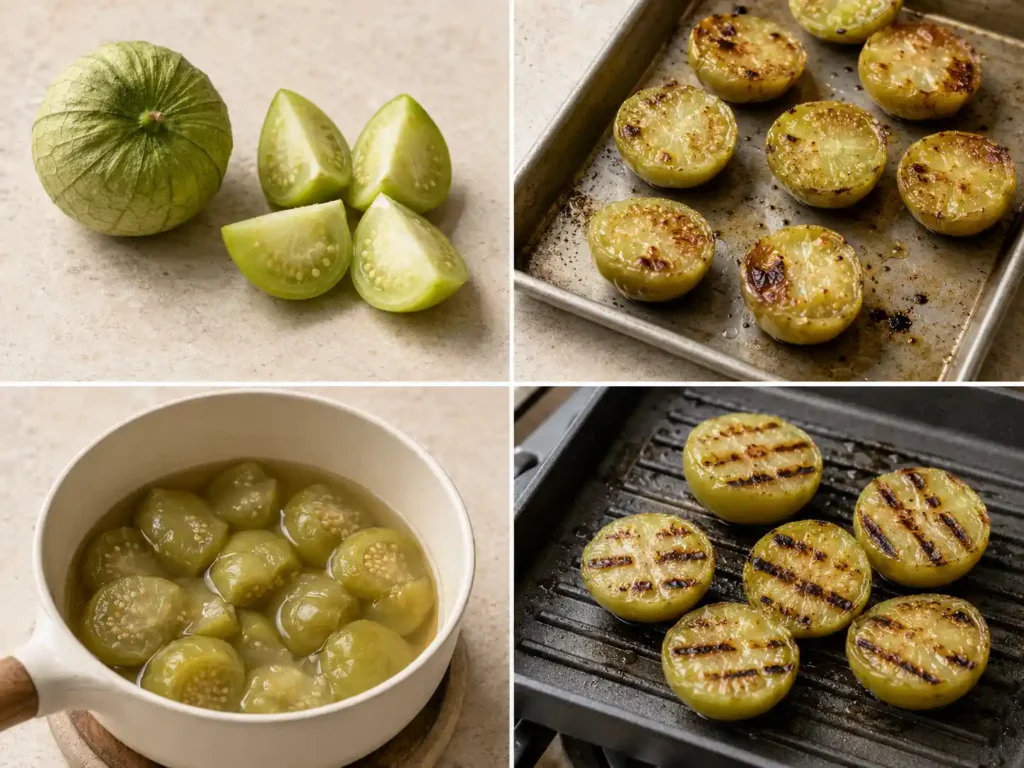
| Roasted or broiled | Soft with browned, deeper flavor | Salsa, enchilada sauce, soup bases |
| Simmered | Tender with a clean, tangy profile | Pourable green sauces and stews |
| Grilled | Soft with smoky, charred notes | Summer salsa, tacos, bowls, salads |
Tomatillo Recipes for Salsas, Sauces, and Dips
1. Taqueria-Style Tomatillo Salsa Verde
Best for: tacos, quesadillas, eggs, bowls, and grilled dinners.
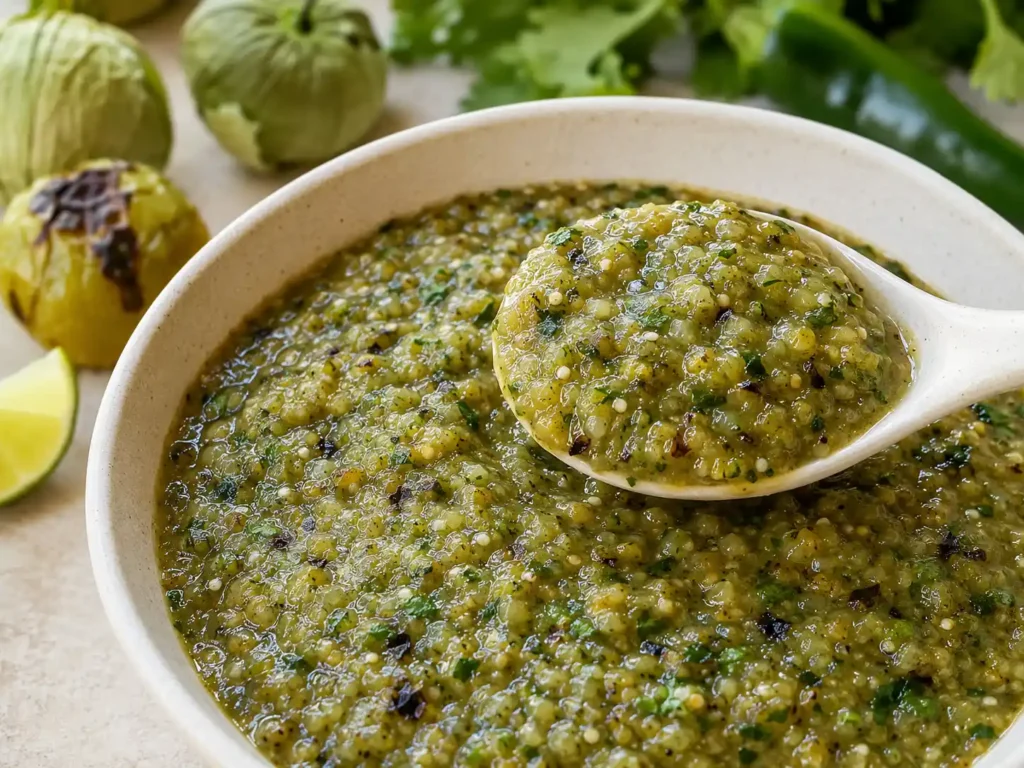
Start by roasting or simmering cleaned tomatillos with white onion, garlic, and your preferred green chile. Blend the softened ingredients with cilantro, lime juice, and salt until the salsa reaches the texture you like. Leave it slightly coarse for dipping or blend it longer for a thinner taco sauce.
Jalapeno generally keeps the flavor gentler, while serrano gives the sauce a sharper kick. Add chile gradually because it is easier to increase the heat than to remove it. For a complete ZikoRecipes version with a smooth, pourable texture, follow the green variation in this Mexican hot sauce recipe.
2. Homemade Green Enchilada Sauce
Best for: enchiladas, baked casseroles, burritos, rice, and chicken.
Green enchilada sauce begins with tomatillos and green chiles, but it is cooked and seasoned as a sauce rather than served as a fresh dip. Roast or simmer the produce, blend it with aromatics, then return it to a saucepan with enough broth to create a smooth, spoonable consistency.
The finished sauce should coat tortillas without feeling as thick as a dip. Taste before adding extra lime because tomatillos already contribute acidity. Use the measurements and complete method in this homemade green enchilada sauce when you are ready to prepare a full batch.
3. Tomatillo-Avocado Salsa
Best for: tortilla chips, chicken tacos, grain bowls, and grilled vegetables.
Tomatillo-avocado salsa combines the tang of tomatillos with the smooth texture of ripe avocado. Use raw tomatillos for a crisp, lively flavor or roast them first for a softer, deeper result. If you roast them, let them cool before adding the avocado.
Blend the tomatillos with avocado, cilantro, onion, lime, salt, and a small amount of chile. Add water only as needed so the salsa stays creamy rather than watery. Taste at the end and adjust the salt, lime, or chile in small amounts. Because avocado changes color after it is cut, this salsa looks most appealing when prepared close to serving.
4. Roasted Tomatillo Cilantro Dressing
Best for: taco salads, black bean bowls, grilled corn, and roasted vegetables.
For a pourable dressing, blend cooled roasted tomatillos with cilantro, lime juice, garlic, olive oil, and salt. Add a spoonful of water at a time until the dressing is thin enough to drizzle but still flavorful. A small amount of jalapeno can provide heat without turning the dressing into a hot sauce.
The tomatillos supply the bright base, so there is no need to overload the dressing with extra acid. Serve it beside the salad and let each person add the amount they prefer. For more bowls and topping combinations that would work with this dressing, browse these taco salad recipes.
5. Roasted Tomatillo Guacamole
Best for: a thick dip, taco topping, or appetizer plate.
Roasted tomatillos give guacamole a bright, lightly smoky edge. Roast the cleaned fruit until softened and browned in spots, then cool it completely. Mash ripe avocado in a bowl and fold in finely chopped or lightly mashed tomatillos, onion, cilantro, lime juice, and salt.
Keep the mixture chunky so it remains distinct from tomatillo-avocado salsa. Begin with a modest amount of tomatillo, taste, and add more if you want extra tang. Serve with tortilla chips, warm corn tortillas, or sliced vegetables.
Easy Tomatillo Recipes for Dinner
6. Chicken Enchiladas Verdes
Best for: a comforting baked family dinner.
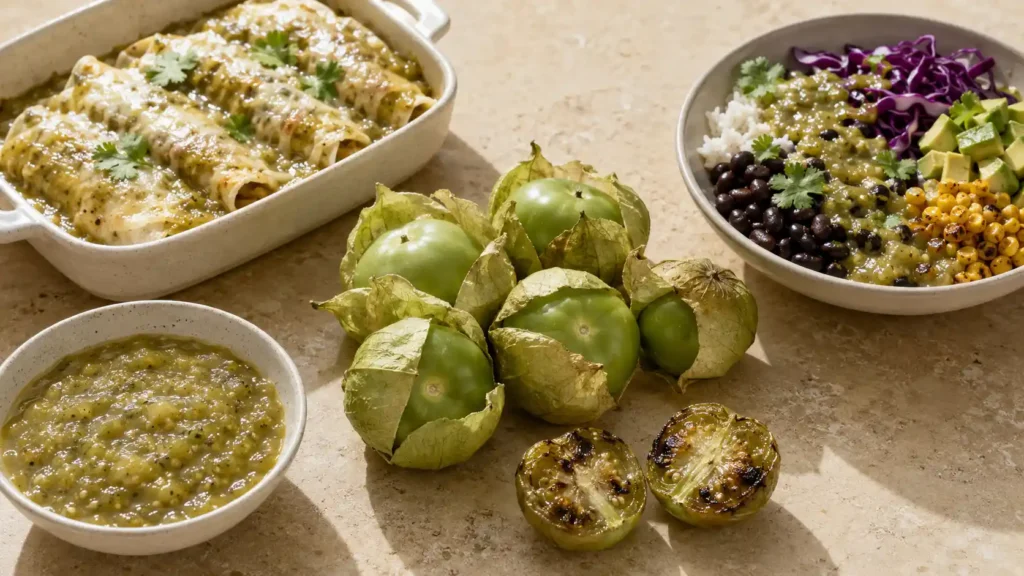
Chicken enchiladas verdes turn roasted tomatillo sauce into a complete meal. Fill softened corn tortillas with cooked shredded chicken, arrange them snugly in a baking dish, and cover them with green enchilada sauce. Add cheese if desired, then bake until the filling is hot and the sauce is bubbling around the edges.
Keep extra sauce available for serving because the tortillas absorb some moisture as they bake. A crisp cabbage salad, black beans, or plain rice can balance the rich, saucy filling. Use properly cooked chicken and reheat the assembled enchiladas thoroughly before serving.
7. Salsa Verde Chicken Tacos
Best for: taco night or an easy use for cooked chicken.
Warm shredded cooked chicken in a skillet with enough tomatillo salsa verde to coat it. Let the sauce cling to the chicken rather than adding so much that the tortillas become soggy. Spoon the filling into warm corn or flour tortillas.
Finish the tacos with simple toppings such as shredded cabbage, diced onion, cilantro, avocado, or a squeeze of lime. Keep crunchy and creamy toppings separate until serving. If you prefer the same flavors over lettuce instead of tortillas, this chicken taco salad offers a related meal idea.
8. Chicken Chile Verde
Best for: a saucy chicken dinner served with rice or tortillas.
Build the green base by roasting tomatillos, poblano, onion, garlic, and a smaller hot chile if desired. Blend the roasted vegetables with enough broth to create a sauce. Brown chicken pieces in a heavy pot, add the green sauce, and simmer gently until the chicken is safely cooked and tender.
Keep the seasoning focused so the tomatillo and roasted chile flavors remain clear. If the sauce tastes too sharp early in cooking, give it time to simmer before changing it. Finish with cilantro and lime only after tasting. Serve with rice, beans, or warm tortillas to catch the sauce.
9. Chicken Pozole Verde
Best for: a hearty soup with plenty of fresh garnishes.
Chicken pozole verde combines hominy and cooked chicken with a green broth made from roasted tomatillos and chiles. Blend the roasted produce with onion, garlic, cilantro, and some broth. Add the mixture to a soup pot with drained hominy and chicken, then simmer until the flavors come together.
Serve the soup with garnishes in separate bowls so everyone can customize a portion. Shredded cabbage, sliced radish, diced onion, cilantro, avocado, and lime all provide fresh contrast. Add crunchy tortilla strips only at the table so they stay crisp.
10. Tomatillo Chicken and Rice Skillet
Best for: a one-pan dinner with a tangy green sauce.
Brown seasoned chicken in a deep skillet, then set it aside while you soften onion and garlic. Stir in rinsed rice, tomatillo sauce, and the amount of broth required for the type of rice you are using. Return the chicken to the pan, cover, and cook until the rice is tender and the chicken reaches a safe internal temperature.
Let the skillet rest briefly before fluffing the rice. This helps the moisture settle and keeps the grains from becoming pasty. Finish with cilantro, lime, or sliced avocado. If the sauce is already salty, use unsalted broth and adjust the seasoning at the end.
11. Chili-Lime Shrimp Tacos with Tomatillo Salsa
Best for: a fresh seafood dinner with bright flavor.
Season peeled shrimp with chili powder, lime zest, garlic, salt, and a small amount of oil. Cook the shrimp in a hot skillet just until the flesh turns opaque, then remove it promptly to help preserve its texture. Serve in warm tortillas with a spoonful of roasted tomatillo salsa.
Shredded cabbage and avocado add crunch and creaminess without hiding the salsa. Keep the filling simple so the chili-lime shrimp and tomatillos remain the focus. For a rice-based variation using a different fresh topping, try this chili lime shrimp bowl.
Tomatillo Breakfasts, Bowls, and Side Dishes
12. Chilaquiles Verdes with Eggs
Best for: brunch or breakfast-for-dinner.
Warm tomatillo salsa in a wide skillet until it is hot and gently bubbling. Add sturdy tortilla chips just before serving and fold them through the sauce briefly. The goal is to coat the chips while leaving some crisp edges.
Top the chilaquiles with cooked eggs and finish with onion, cilantro, avocado, cheese, or crema as desired. Serve immediately because the chips continue to soften as they sit. Put extra salsa at the table for anyone who prefers a softer, saucier portion.
13. Tomatillo Breakfast Tacos
Best for: an easy savory breakfast.
Scramble eggs gently and warm the tortillas separately. Spoon the eggs into each tortilla, then add tomatillo salsa a little at a time. The salsa provides brightness and moisture, so the tacos need only a few additional toppings.
Try sliced avocado, black beans, crumbled cheese, cilantro, or diced onion. For a milder breakfast, use a salsa made with less chile. For a stronger contrast, add pickled onion or extra lime at the table. Serve while the eggs and tortillas are warm.
14. Roasted Tomatillo Black Bean Bowls
Best for: a meatless lunch or dinner bowl.
Build each bowl with rice, warm black beans, roasted corn, shredded cabbage, and a generous spoonful of roasted tomatillo salsa. Add avocado for creaminess and cilantro or green onion for a fresh finish. Keep the components in separate sections for a colorful presentation, then mix them while eating.
This format makes it easy to adjust the heat for different diners. Use mild salsa in the main bowl and offer sliced chile or hot sauce separately. Tortilla strips can add crunch, but add them immediately before serving so they do not soften.
15. Roasted Tomatillo and Corn Salad
Best for: cookouts, taco night, or a fresh summer side.
Roast halved tomatillos until softened and browned in spots, then let them cool. Char fresh or thawed corn in a hot skillet. Chop the cooled tomatillos and toss them gently with the corn, red onion, cilantro, lime juice, and salt.
Keep the salad chunky rather than stirring until the tomatillos break down. Avocado or crumbled cheese can be added just before serving if desired. For another dinner built around charred corn, see this street corn chicken rice bowl.

How to Roast Tomatillos for Recipes
- Prepare the fruit. Remove the husks, rinse away the sticky coating, and pat the tomatillos dry.
- Cut as needed. Leave small tomatillos whole or halve larger ones for more contact with the pan.
- Arrange in one layer. Place them on a rimmed baking sheet with onion, garlic, or chiles if the recipe calls for those ingredients.
- Roast or broil until softened. Look for browned or blistered areas and a softer texture. Turn them when needed for more even color.
- Use the flavorful juices. The liquid released on the pan can add flavor to a blended sauce, so do not discard it automatically.
Let roasted tomatillos cool before blending them with avocado or mixing them into a cold dish. For a warm sauce or soup, they can move directly from the pan to the blender, following normal precautions for blending hot ingredients.
How to Store and Freeze Tomatillos
The USDA SNAP-Ed guide says tomatillos can be stored at room temperature for up to one week. Keep them unwashed and in their husks until you are ready to use them. Discard fruit that develops mold, leaking areas, or extensive softness.
For longer storage, Oregon State University Extension advises removing the husks, rinsing off the sticky residue, and drying the fruit before freezing. Tomatillos may be frozen whole, sliced, chopped, or diced. Whole or sliced pieces can first be frozen on a tray and then transferred to freezer bags or containers.
Frozen tomatillos soften after thawing, so use them in cooked salsa, enchilada sauce, soup, or chile verde rather than a recipe that depends on a crisp raw texture.
Food preservation note: If you plan to can tomatillos or tomatillo salsa for shelf storage, follow a complete, tested recipe from a university extension service or the National Center for Home Food Preservation. Do not improvise the acid level, jar size, processing method, or processing time.
Helpful Tools for This Guide
- Rimmed baking sheet: keeps tomatillos and their juices contained while roasting.
- Blender or food processor: creates salsa, enchilada sauce, dressing, or a soup base.
- Heavy skillet: useful for charring corn, cooking shrimp, or preparing a chicken and rice dinner.
- Tongs: make it easier to turn tomatillos and chiles under the broiler or on a grill.
- Freezer-safe containers or bags: help portion extra tomatillos for later cooked recipes.
Choose the tools you already own whenever possible. A standard blender, sturdy pan, and sharp knife are enough for most of these ideas.
Frequently Asked Questions About Tomatillo Recipes
Do you have to cook tomatillos before eating them?
No. Tomatillos can be eaten raw after the husk is removed and the sticky coating is rinsed away. Raw tomatillos are firm and tart, which works well in chopped salsa, relish, and salad. Cooking softens their texture and rounds out their acidity.
Do you remove the husk from tomatillos?
Yes. The papery husk is discarded before the fruit is eaten or cooked. Rinse the exposed tomatillo under cool water to remove its sticky surface, then dry it before roasting or grilling.
Are tomatillos spicy?
No. Tomatillos have a tart, bright flavor but do not supply chile heat. Jalapeno, serrano, poblano, and other peppers determine how spicy a tomatillo salsa, sauce, or soup becomes.
Can green tomatoes replace tomatillos?
They can work in some flexible recipes, but they are not identical. Green tomatoes have a different moisture level, texture, and flavor. A substitution may require adjustments to the liquid and acidity, so tomatillos remain the most reliable choice for a recipe designed around them.
Can you freeze fresh tomatillos?
Yes. Remove the husks, rinse and dry the fruit, then freeze it whole or cut into pieces. After thawing, use the softer tomatillos in cooked sauces, soups, stews, or other recipes where crisp texture is not required.
Which Tomatillo Recipe Should You Try First?
If tomatillos are new to you, begin with salsa verde or green enchilada sauce. Both recipes show how roasting or simmering changes the fruit and give you a versatile sauce for several meals. After that, try chicken enchiladas, a black bean bowl, chilaquiles, or the roasted corn salad.
Save this collection of tomatillo recipes for summer produce season, and choose one sauce, one dinner, and one meatless idea to make the most of your next batch.