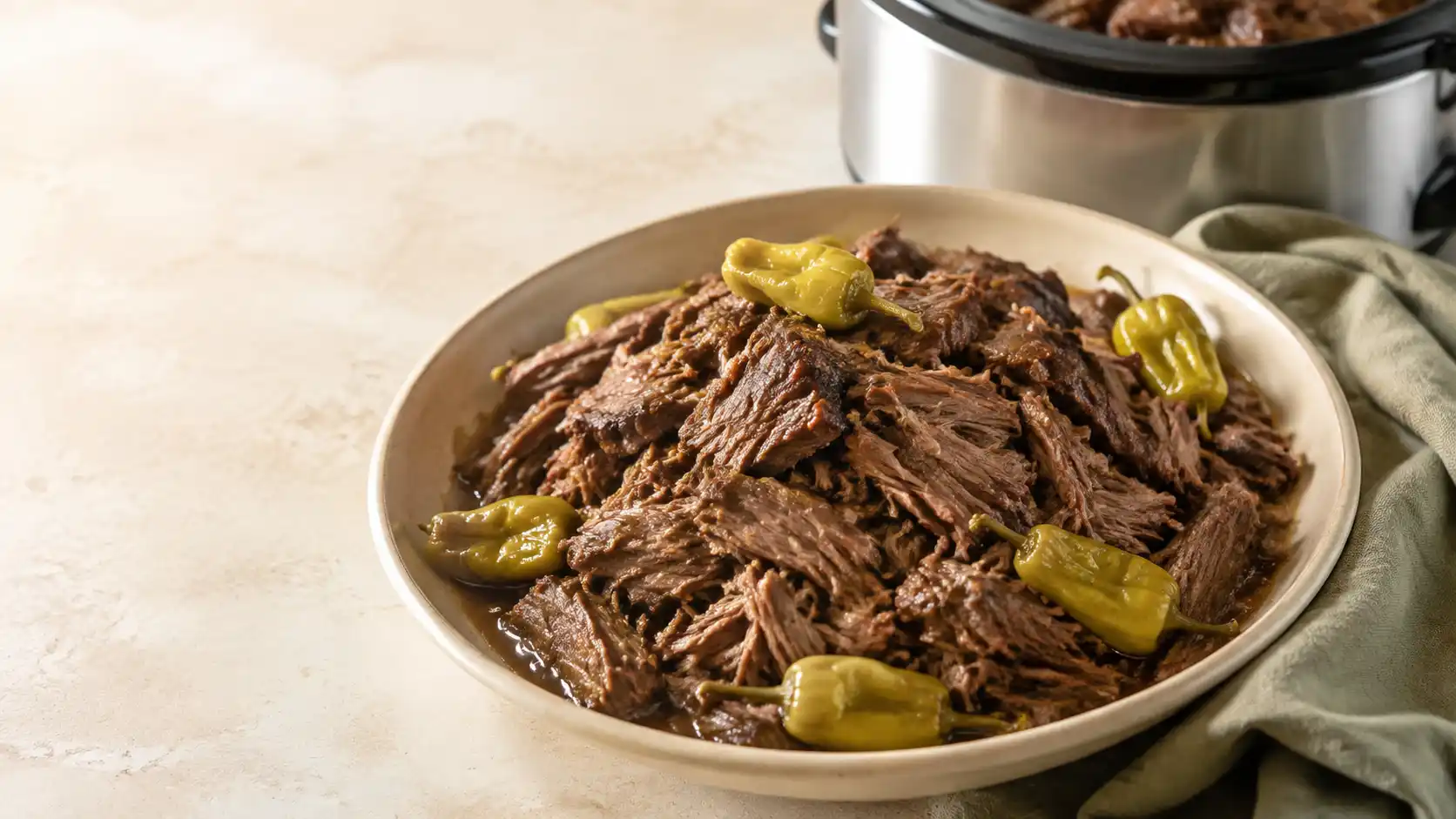
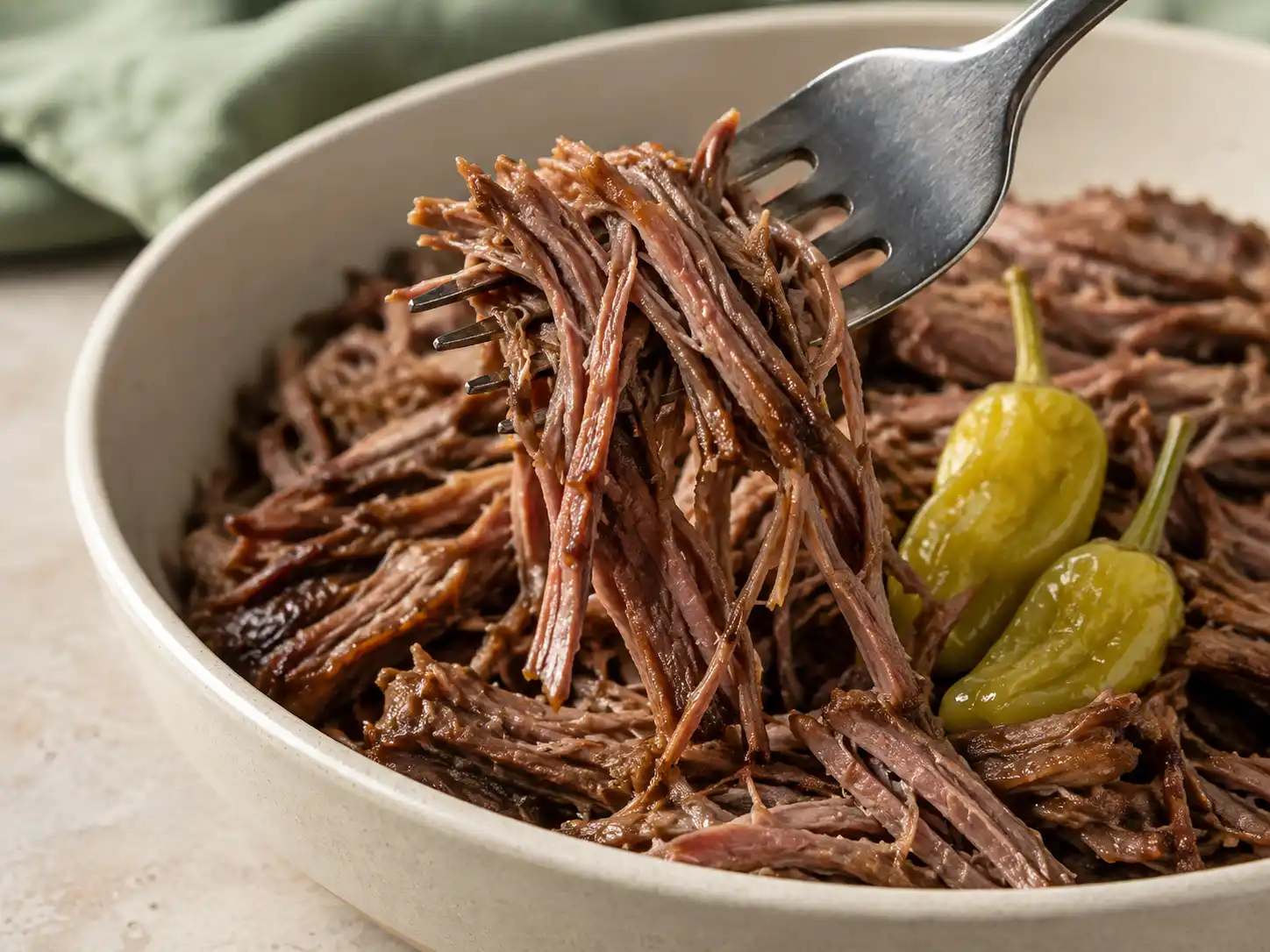
This Mississippi pot roast Crockpot recipe turns five familiar ingredients into tender shredded beef with tangy pepperoncini and savory cooking juices. The hands-on work is short: layer everything in the slow cooker, cook on LOW, and shred the roast when a fork slides in easily.
The method also addresses the questions that matter most with this dish. You will learn how much pepperoncini brine to use, why extra water is unnecessary, how to prevent an overly salty result, and how to tell the difference between a safely cooked roast and one that is truly ready to shred. For more simple options, browse these easy dump-and-go Crockpot meals.
Quick Answer
Mississippi pot roast is made by slow-cooking chuck roast with ranch seasoning, au jus mix, unsalted butter, and pepperoncini. Cook the roast on LOW for about 8 hours, then check it with a thermometer and a fork. It must reach at least 145°F and rest for 3 minutes for safety, but it should also separate easily before you shred it.
At a Glance
| Detail | Recipe information |
|---|---|
| Main cut | Boneless beef chuck roast |
| Roast weight | 3 1/2 to 4 pounds |
| Slow cooker | 5 to 6 quarts, depending on shape and manufacturer guidance |
| Core ingredients | 5 purchased ingredients |
| Prep time | 10 minutes |
| Cook time | About 8 hours on LOW, with extra time if needed |
| Yield | 8 servings |
| Doneness | At least 145°F plus a 3-minute rest, and easy to separate with a fork |
What Is Mississippi Pot Roast?
Mississippi pot roast is a slow cooker beef dish widely credited to Robin Chapman of Ripley, Mississippi. Unlike a traditional pot roast built around broth, root vegetables, and herbs, this version gets its signature flavor from ranch seasoning, au jus mix, butter, and jarred pepperoncini.
The pepperoncini contribute tang rather than intense heat. Chuck roast provides the richness and connective tissue needed for a shreddable texture after a long, gentle cook. The two seasoning mixes are convenient, but their salt content varies, which is why this recipe uses unsalted butter and does not add salt at the beginning.
Why This Five-Ingredient Method Works
- Chuck roast suits long cooking. Its marbling and connective tissue soften over time, giving the beef a better chance of becoming easy to shred.
- LOW allows time for the texture to change. The roast is not done just because the thermometer reaches the minimum safe temperature. It also needs to become fork-tender.
- No extra water dilutes the cooking juices. The beef, butter, and covered cooker create moisture as the roast cooks.
- Unsalted butter leaves more control. Ranch and au jus mixes already contain seasoning, so added salt is unnecessary at the start.
- Optional brine adjusts the tang. A small amount from the pepperoncini jar can brighten the flavor without making it a required sixth purchase.
Helpful Tools
You do not need specialized equipment, but a few basic tools make the process easier:
- a 5- to 6-quart slow cooker that fits the roast without crowding;
- an instant-read food thermometer;
- two sturdy forks or shredding tools;
- a slotted spoon for serving;
- shallow airtight containers for cooling and storing leftovers.
If you are choosing an appliance, this guide to a slow cooker for pot roast meal prep can help you compare the practical features to check. Follow your appliance manual for the recommended meat size and fill level.
Mississippi Pot Roast Crockpot Ingredients
Yield: 8 servings
Prep time: 10 minutes
Cook time: About 8 hours on LOW, plus additional time if the roast is not yet fork-tender
Total time: About 8 hours 10 minutes
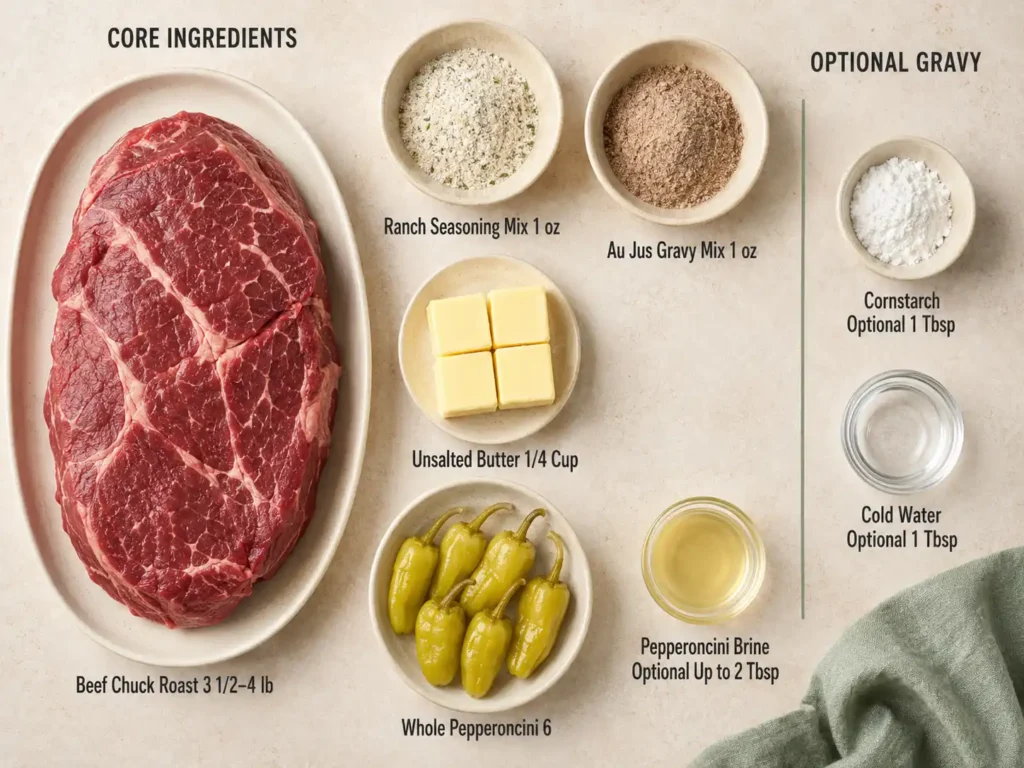
Five Core Ingredients
- 1 boneless beef chuck roast, 3 1/2 to 4 pounds, fully thawed and patted dry
- 1 packet dry ranch seasoning mix, 1 ounce
- 1 packet dry au jus gravy mix, 1 ounce
- 1/4 cup unsalted butter, cut into 4 pieces
- 6 whole pepperoncini peppers, plus up to 2 tablespoons brine from the same jar, optional
Optional for Thicker Gravy
- 1 tablespoon cornstarch
- 1 tablespoon cold water
Allergen note: Seasoning mixes vary by brand and formula. Check both package labels for sodium and allergen information before cooking. Do not assume that one brand has the same ingredients as another.
How to Make Mississippi Pot Roast in a Crockpot
- Prepare the slow cooker. Use a cooker that fits the roast comfortably and follow the manufacturer’s guidance for meat size and fill level. Start cooking immediately after assembly rather than using a delayed start with raw beef.
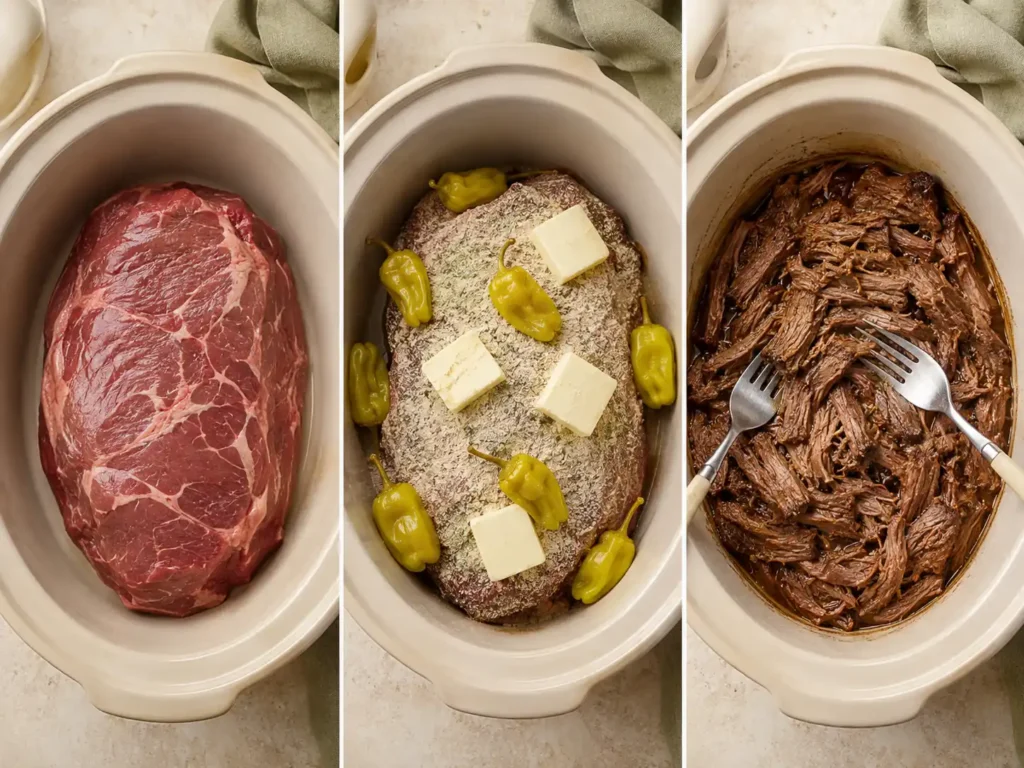
- Add the roast. Place the fully thawed, patted-dry chuck roast in the slow cooker.
- Layer the seasonings. Sprinkle the ranch seasoning and au jus mix evenly over the top. Add the butter pieces and arrange the pepperoncini on and around the roast. For more tang, add up to 2 tablespoons of brine from the same jar.
- Cook on LOW. Cover and cook for about 8 hours. Keep the lid closed as much as possible. Begin checking at 8 hours, understanding that the roast may need more time depending on its shape and the appliance.
- Check safety and texture. Insert a food thermometer into the thickest part, avoiding large pockets of fat. The roast must reach at least 145°F. Transfer it to a clean platter and let it rest for 3 minutes. It should also separate easily when you press and twist with a fork. If it remains firm, return it to the cooker and continue cooking until fork-tender.
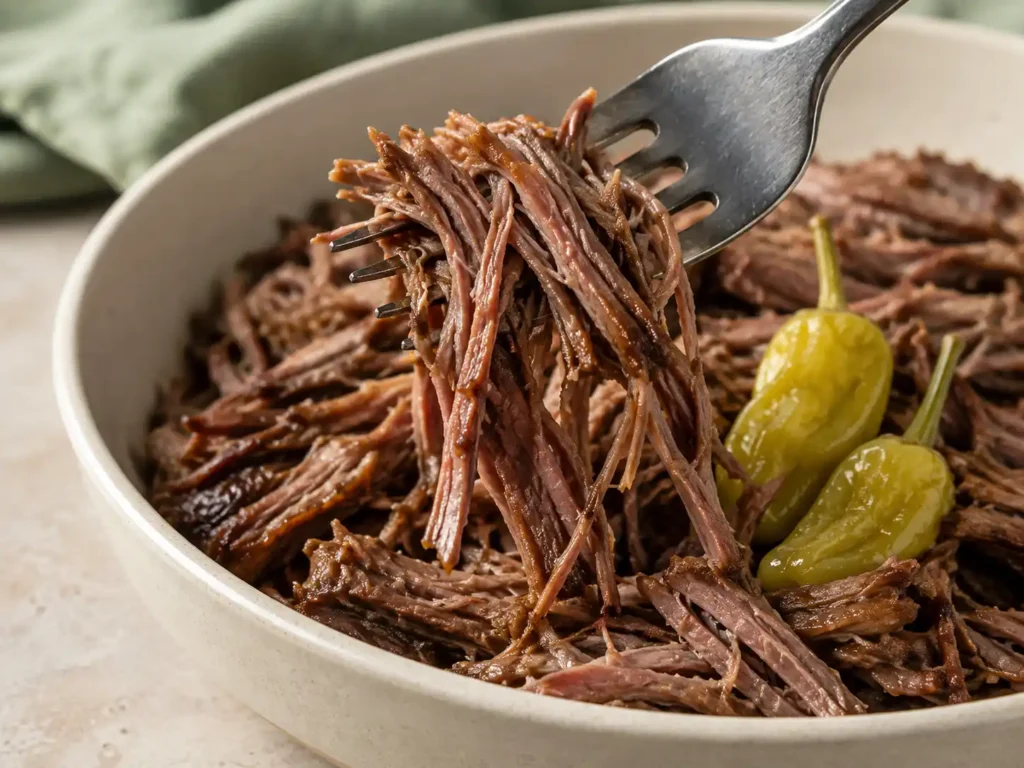
- Shred the beef. Remove large visible pieces of fat, then pull the roast apart with two forks. Return the shredded beef to the cooker and stir in only enough of the juices to coat it.
- Taste before adjusting. The seasoning packets may provide all the salt the dish needs. Do not add more automatically.
Optional Gravy Step
If you prefer thicker cooking juices, mix the cornstarch and cold water until smooth. Whisk the slurry into the hot juices after removing the beef, then cover and heat briefly until the liquid thickens. Return the shredded beef after the gravy reaches the consistency you like.
Do You Need to Add Liquid?
No water or broth is required for this formula. The covered cooker holds moisture while the roast and butter release liquid. Adding a large amount of broth can weaken the concentrated flavor and leave a thinner sauce.
The optional pepperoncini brine is different because it is used as seasoning. Start with none for the mildest version or add up to 2 tablespoons for a tangier finish. Since brine and seasoning packets both contain salt, more is not automatically better.
How to Prevent an Overly Salty Pot Roast
| Possible salt source | What to do | Why it helps |
|---|---|---|
| Added salt | Do not add it before cooking | The ranch and au jus mixes are already seasoned |
| Butter | Use unsalted butter | It avoids another source of salt |
| Pepperoncini brine | Keep it optional and limit it to 2 tablespoons | You can add tang without a large amount of brine |
| Packet variation | Compare package labels | Sodium levels differ between formulas |
| Roast size | Use the stated 3 1/2- to 4-pound range | A smaller roast changes the ratio of meat to seasoning |
If the finished beef tastes saltier than you prefer, use a slotted spoon so less cooking liquid reaches the plate. Serve it with an unsalted side such as plain rice or simply seasoned mashed potatoes. These steps dilute the salt across the meal, but they do not remove it from the roast.
Troubleshooting Mississippi Pot Roast
| Problem | Likely cause | Practical fix |
|---|---|---|
| The roast is tough | It has not cooked long enough for shredding, or the cut is too lean | Continue cooking on LOW and check again when a fork meets less resistance |
| The roast is too salty | Packet formula, extra salt, salted butter, or too much brine | Serve with less cooking liquid and an unsalted side; use unsalted butter and limited brine next time |
| The juices look greasy | The chuck and butter released fat | Skim the surface with a spoon or use a fat separator before returning juices to the beef |
| The gravy is thin | The roast released more liquid than expected | Use the optional cornstarch slurry after removing the beef |
| The flavor needs more tang | The pepperoncini were mild and no brine was added | Stir a small amount of reserved brine into an individual serving, then adjust carefully |
| The beef dries during reheating | It was stored or heated without enough cooking liquid | Store some juices with the meat and cover it while reheating |
Want more practical slow cooker recipes and troubleshooting tips? Use the newsletter form on this page to receive new recipe ideas.
What to Serve With Mississippi Pot Roast
Mashed potatoes, egg noodles, and rice all absorb the savory cooking juices. Simple green beans, broccoli, or a crisp salad can balance the richness. You can also serve the beef with Crock Pot potatoes.
For a larger dinner plan, browse these complete Crockpot meal ideas. If you want another beef dinner for a different night, save this Crockpot beef and noodles recipe.
Storage, Freezing, and Reheating
- Refrigerate promptly: Divide the beef and juices among shallow containers and refrigerate within 2 hours. Reduce that limit to 1 hour when the food is exposed to temperatures above 90°F.
- Refrigerator: Keep cooked beef leftovers for 3 to 4 days at 40°F or below.
- Freezer: Freeze within the refrigerator window if you need longer storage. FoodSafety.gov lists 2 to 6 months as a quality range for cooked meat leftovers.
- Reheating: Reheat on the stovetop, in the microwave, or in an oven until the center reaches 165°F. Cover the beef and include a little reserved cooking liquid to retain moisture.
- Avoid slow-cooker reheating: Do not use a slow cooker to bring refrigerated leftovers from cold to serving temperature. It can take too long to move through unsafe temperatures.
These storage limits follow the current FoodSafety.gov cold storage chart. For cooking and reheating temperatures, consult the safe minimum temperature chart.
Estimated Nutrition
Estimated per serving, based on 8 servings: approximately 500 calories, 40 g protein, 35 g fat, and 5 g carbohydrates. These are rounded estimates, not guaranteed values. Actual nutrition depends on the roast’s trimming, the seasoning brands, the portion of cooking juices consumed, and the final serving size. Sodium needs verification before publishing because the packet formulas are not specified.
Mississippi Pot Roast Crockpot Recipe (5 Ingredients)
Ingredients
Equipment
Method
- Use a 5- to 6-quart slow cooker that fits the roast comfortably, following the manufacturer’s recommendations for meat size and fill level. Assemble the recipe only when you are ready to begin cooking rather than using a delayed start with raw beef.
- Place the fully thawed and patted-dry chuck roast in the slow cooker.
- Sprinkle the ranch seasoning mix and au jus gravy mix evenly over the roast. Place the pieces of unsalted butter on top and arrange the pepperoncini peppers on and around the beef. For extra tang, add up to 2 tablespoons (30 ml) of pepperoncini brine. Do not add water or broth.
- Cover and cook on LOW for about 8 hours. Keep the lid closed as much as possible. Begin checking the roast at the 8-hour mark, keeping in mind that a thick or unusually shaped roast may require additional cooking time.
- Insert an instant-read thermometer into the thickest part of the roast while avoiding large pockets of fat. The beef must reach at least 145°F (63°C). Transfer it to a clean platter and allow it to rest for at least 3 minutes.
- Check the texture with a fork. The roast should separate easily when pressed and twisted. If it still feels firm or resistant, return it to the slow cooker and continue cooking on LOW until fork-tender.
- Remove and discard large visible pieces of fat. Shred the tender roast using two sturdy forks, then return the beef to the slow cooker. Stir in only enough of the cooking juices to coat the shredded meat.
- Taste the finished beef before making any seasoning adjustments. Ranch seasoning, au jus mix, and pepperoncini brine can already provide substantial sodium, so do not automatically add extra salt.
- For optional thicker gravy, first transfer the shredded beef out of the cooker. Stir together the cornstarch and cold water until completely smooth, then whisk the slurry into the hot cooking juices. Cover and heat briefly until thickened to your preferred consistency, then return the shredded beef to the gravy.
Notes
Mississippi Pot Roast FAQs
Why is it called Mississippi pot roast?
The recipe is widely credited to Robin Chapman of Ripley, Mississippi. It spread through home recipe sharing and became known online as Mississippi pot roast.
Does Mississippi pot roast need liquid in the slow cooker?
This version does not need added water or broth. The optional 2 tablespoons of pepperoncini brine are for tang, not to create the main cooking liquid.
Can I cook Mississippi pot roast on HIGH?
Some published versions use HIGH, but this formula is written for LOW because chuck roast benefits from a longer cooking window. If timing is tight, choose another recipe instead of assuming that a shorter setting will give the same texture.
Why is my Mississippi pot roast still tough?
A tough roast usually needs more cooking time or contains too little marbling for easy shredding. Continue cooking on LOW until a fork presses in and twists with little resistance. The 145°F minimum confirms safety after a 3-minute rest, but it does not guarantee shreddable texture.
How do I make Mississippi pot roast less salty?
Use unsalted butter, skip added salt, compare seasoning labels, and keep the pepperoncini brine optional. A 3 1/2- to 4-pound roast also keeps the seasoning ratio within the range used for this recipe.
Final Takeaway
Use a well-marbled chuck roast, cook it on LOW, and let fork-tender texture guide the finish. Unsalted butter and limited brine help manage the seasoning, while careful cooling and reheating keep the leftovers safer. For more dinners that can cook through the day, explore these all-day Crockpot recipes.