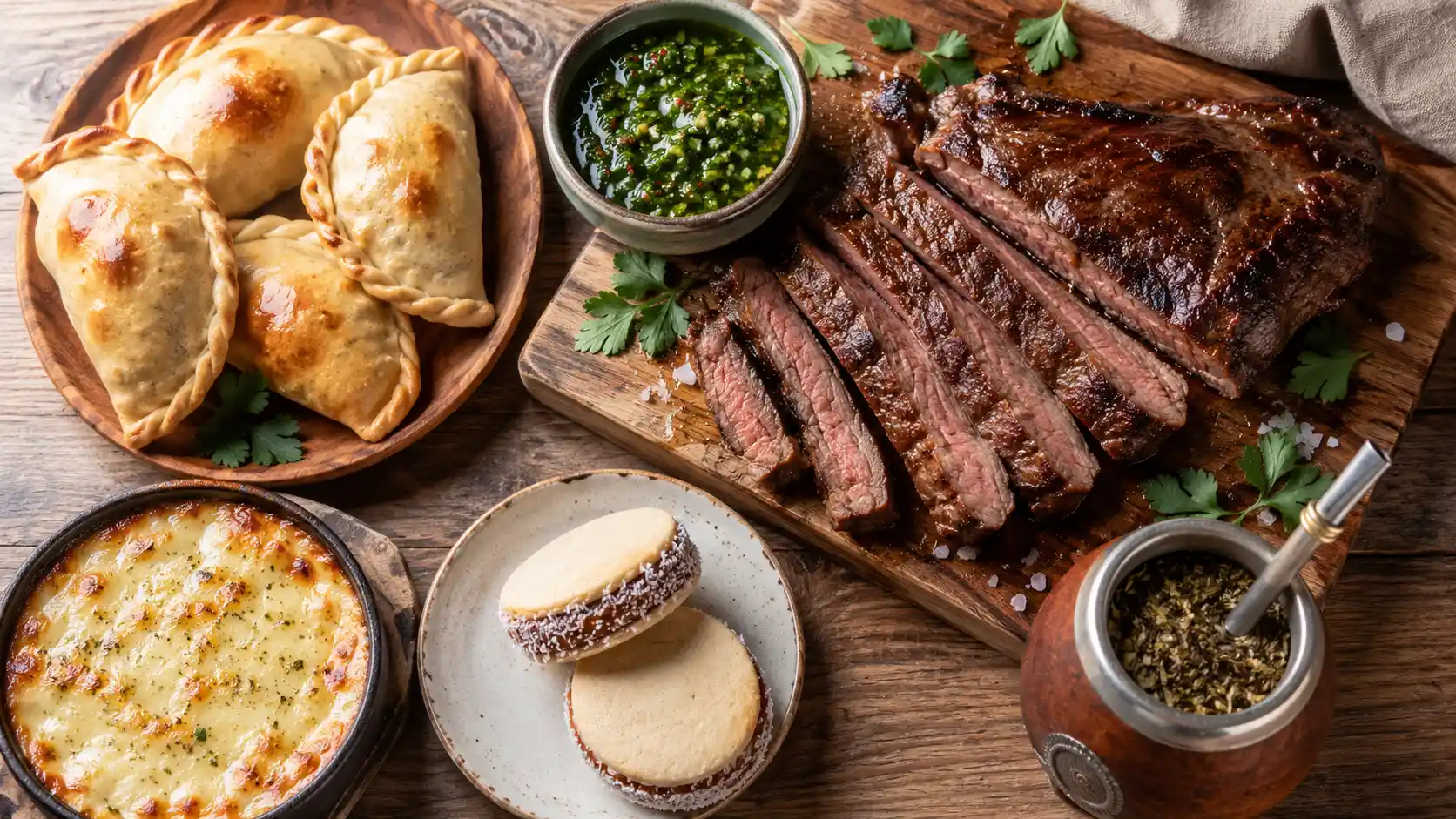
Argentinian food often brings smoky grilled beef to mind, but the country’s cuisine offers much more than food from the parrilla. Argentine cooks also prepare filled pastries, Italian-influenced comfort foods, hearty regional stews, bakery favorites, milk-based sweets, and social drinks such as mate. Spanish and Italian traditions strongly influence the cuisine, while Creole, Indigenous, Andean, and regional foodways add even more variety.
This guide introduces 21 traditional Argentinian foods, from asado and empanadas to milanesa, alfajores, dulce de leche, and yerba mate. You will learn what each food contains, how people commonly enjoy it, and which dishes offer practical starting points for a home cook. When a traditional preparation does not meet ZikoRecipes guidelines, this guide clearly separates the original dish from a suitable adaptation.
Quick Answer: Argentinian food combines grilled meats, filled pastries, Italian-influenced pizza and pasta, regional corn and squash dishes, rich desserts, and drinks such as yerba mate. Asado and empanadas rank among its most recognizable traditions, while milanesa, pizza, ñoquis, alfajores, dulce de leche, and helado show the cuisine’s broader range.
Argentinian Foods at a Glance
| Food | Category | Main Components | Flavor or Texture | Typical Context |
|---|---|---|---|---|
| Asado | Grilled meal | Beef and other grill items | Smoky and savory | Social gatherings |
| Provoleta | Starter | Provolone cheese | Golden outside, melted inside | Before or with asado |
| Chimichurri | Condiment | Parsley, garlic, oil, vinegar | Fresh, garlicky, tangy | With grilled foods |
| Empanadas | Filled pastry | Dough and savory filling | Tender, crisp, or flaky | Meals, snacks, gatherings |
| Choripán | Sandwich | Grilled sausage and bread | Smoky and savory | Outdoor meals and events |
| Sandwich de milanesa | Sandwich | Breaded cutlet and bread | Crisp and filling | Casual lunch |
| Fugazzeta | Pizza | Dough, onions, cheese | Soft, rich, and cheesy | Shared casual meal |
| Fainá | Chickpea flatbread | Chickpea flour | Tender and lightly nutty | Often eaten with pizza |
| Milanesa | Main dish | Breaded beef or chicken | Crisp outside, tender inside | Family meal |
| Milanesa napolitana | Main dish | Milanesa, tomato sauce, cheese | Savory and cheesy | Lunch or dinner |
| Locro | Stew | Corn, squash, beans, protein | Thick and hearty | Cool weather and celebrations |
| Humita | Corn dish | Fresh corn and seasonings | Soft and creamy | Regional meal |
| Carbonada criolla | Stew | Beef, squash, vegetables | Hearty and savory | Family meal |
| Ñoquis | Pasta | Potato and flour | Soft and tender | Lunch or dinner |
| Medialunas | Pastry | Enriched pastry dough | Soft and lightly sweet | Breakfast or snack |
| Pastafrola | Tart | Pastry and fruit paste | Crumbly and jammy | Snack or dessert |
| Dulce de leche | Sweet spread | Milk and sugar | Thick and caramel-like | Desserts and pastries |
| Alfajores | Cookie | Cookies and dulce de leche | Soft, crumbly, and sweet | Snack or dessert |
| Flan with dulce de leche | Dessert | Custard, caramel, dulce de leche | Silky and rich | After a meal |
| Argentine helado | Frozen dessert | Milk, cream, flavorings | Dense and creamy | Dessert or treat |
| Yerba mate | Drink | Yerba leaves and water | Earthy and herbal | Daily and social occasions |
What Is Argentinian Food?
Argentina’s geography, immigration history, agricultural traditions, and regional foodways all shape its cuisine. Italian influence appears clearly in pizza, pasta, ñoquis, and helado. Spanish traditions also contributed to the country’s pastries, stews, and filled dough recipes.
Regional cooking adds another layer. Cooks in northern and Andean areas frequently use corn, squash, beans, potatoes, and other local ingredients. The Pampas, by contrast, have strong connections to cattle and grilled beef. Buenos Aires has developed its own pizzeria, café, and bakery culture, while provinces, cities, and individual households continue to preserve their own recipe variations.
Sharing also plays an important role in Argentine food culture. An asado can bring family and friends together for several hours, while empanadas, pizza, pastries, and mate often encourage communal eating and conversation. This social dimension explains why a simple ingredient list cannot capture the full meaning of Argentinian food.
Famous Argentinian Grilled Foods
1. Asado
Asado describes both a cooking method and the gathering that surrounds it. The cook prepares beef and other foods over a parrilla, or grill, and usually works with hot coals or wood rather than intense direct flames. Each cook, region, and occasion may feature a different selection of cuts and accompaniments.
The social ritual matters as much as the meal. Family members and friends often gather around several stages of cooking, shared side dishes, and long conversations. For that reason, the phrase “communal grilled meal” describes asado more accurately than the name of one steak recipe.
2. Provoleta
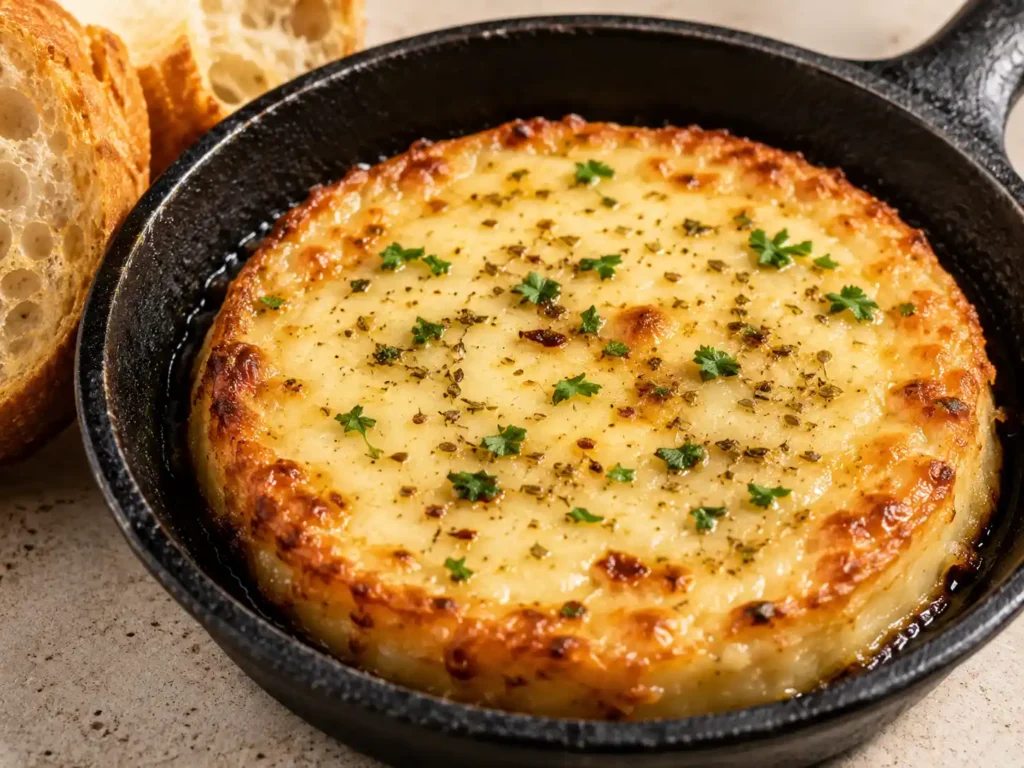
To prepare provoleta, the cook heats a thick piece of provolone-style cheese until the surface develops a golden crust and the center softens. A grill or small heat-safe pan can handle the job, depending on the recipe and available equipment.
Cooks often season the cheese with oregano or other simple flavorings and bring it to the table while it remains hot. Many meals featuring the parrilla begin with provoleta before the main grilled foods arrive.
3. Chimichurri
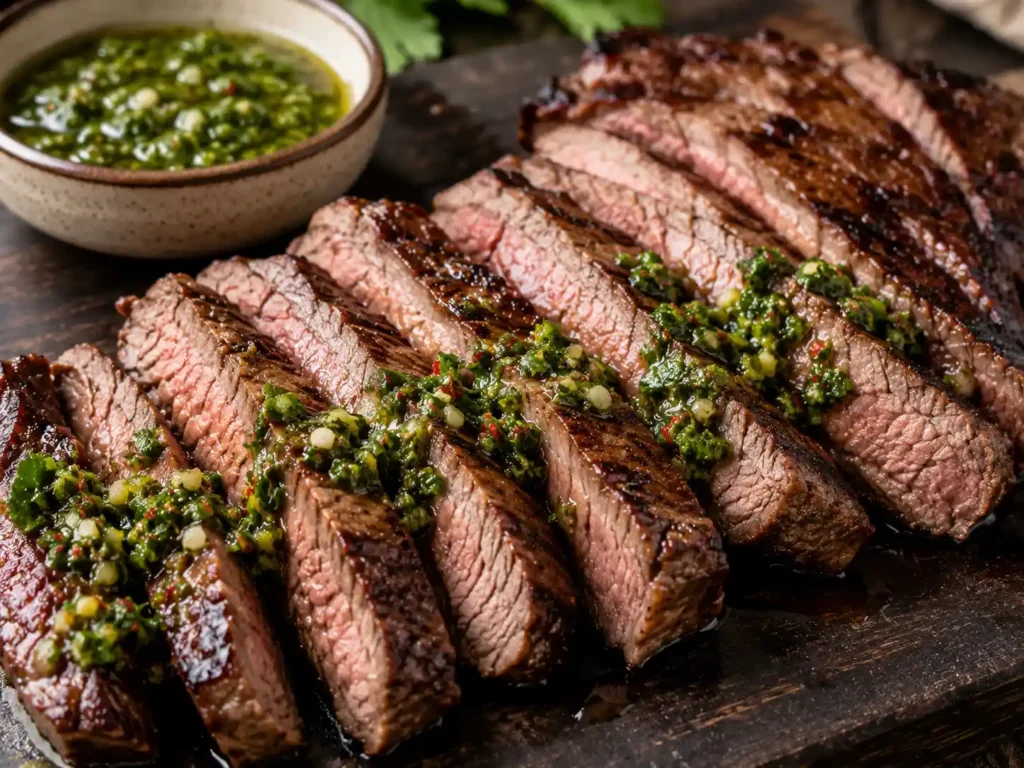
Cooks usually combine parsley, garlic, oil, vinegar, and seasonings to make chimichurri. Some people chop the ingredients very finely, while others keep the condiment more textured. Each household may adjust the herbs and proportions.
People most often spoon chimichurri over grilled beef, chicken, vegetables, or bread. Some cooks also use it during food preparation, but its role depends on the recipe, so the term “marinade” does not apply to every version.
Argentinian Street Foods and Savory Snacks
4. Empanadas
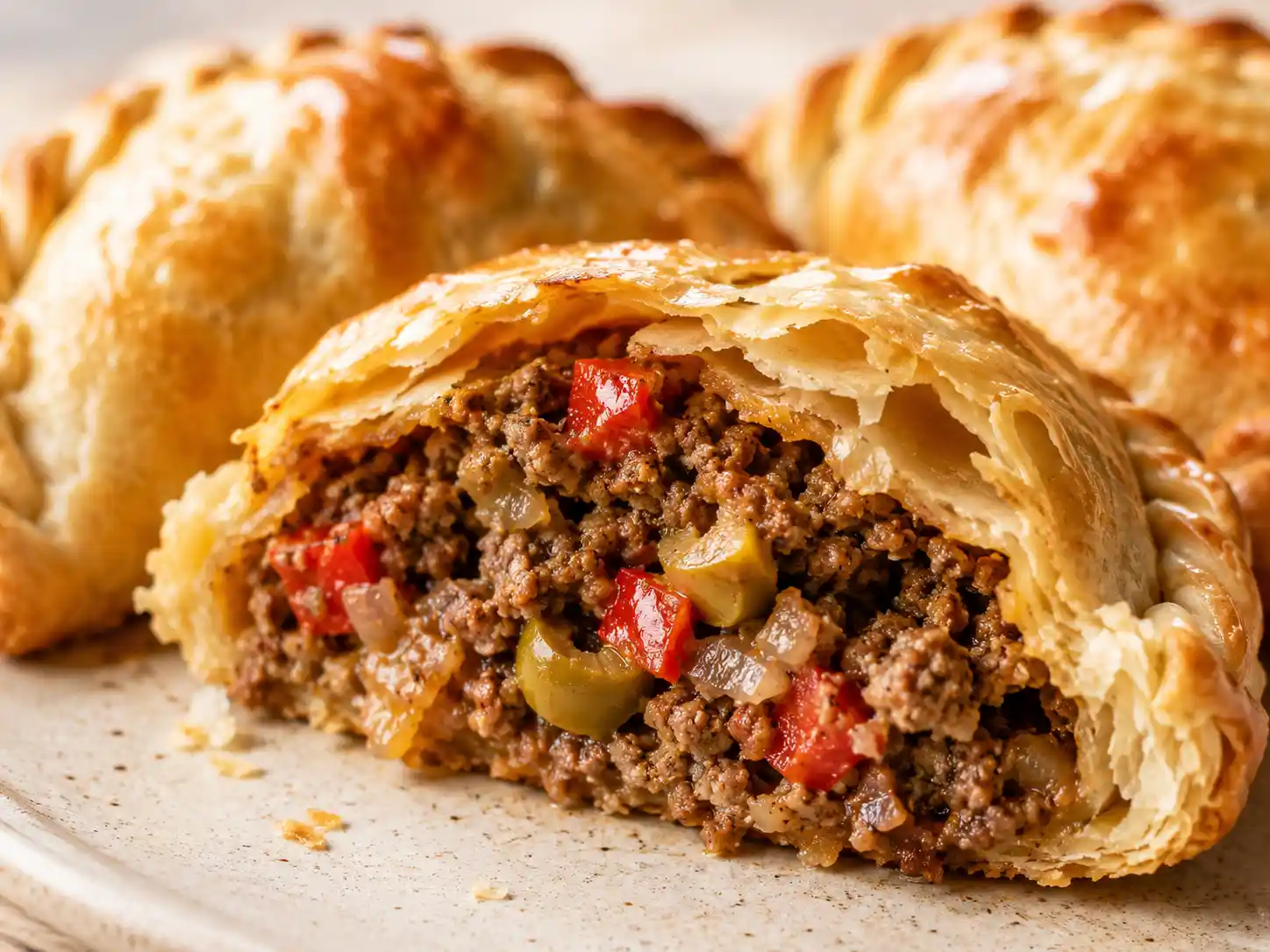
Argentinian cooks fill folded pastry dough with beef, chicken, cheese, corn, vegetables, and other savory mixtures. They may bake or fry the pastries, while each province brings its own approach to the dough, size, shape, seasoning, and filling.
These differences form an essential part of the dish. For example, cooks in Tucumán may prepare empanadas differently from cooks in Salta, Mendoza, or another province. It therefore makes more sense to view empanadas as a family of regional preparations rather than search for one universal formula.
5. Choripán
Choripán combines grilled sausage with crusty bread. Its name joins the Spanish words for sausage and bread, and people often enjoy the sandwich at outdoor grilling events, sporting occasions, and informal gatherings.
For a ZikoRecipes-compatible home adaptation, choose a beef, chicken, or plant-based sausage and label the substitution clearly. Add chimichurri or another fresh condiment immediately before serving.
6. Sandwich de Milanesa
A sandwich de milanesa places a breaded beef or chicken cutlet inside a roll or another sturdy bread. The cook may add lettuce, tomato, mayonnaise, or other simple toppings according to household preferences or the style of the establishment.
The sandwich provides enough substance for a complete lunch and shows how Argentinians enjoy milanesa beyond a plated dinner. The crisp coating, tender cutlet, fresh toppings, and bread create a satisfying mix of textures.
7. Fugazzeta
Fugazzeta combines Argentine pizza dough with generous amounts of cheese and sliced onion. It closely relates to onion-topped fugazza and usually features a thicker, softer base than a thin Italian pizza.
Pizzerias and home cooks assemble it in different ways. Some enclose cheese between two layers of dough, while others emphasize the onions and cheese on top. Fugazzeta shows how Argentine cooks adapted Italian baking traditions to local tastes.
8. Fainá
Fainá uses chickpea flour to create a thin flatbread with a tender center and lightly browned surface. Italian culinary influence brought the preparation to Argentina, where it became closely connected to pizzeria culture.
People can eat fainá on its own, but many place a piece directly on top of a pizza slice. Its mild, earthy chickpea flavor balances rich cheese and bread dough.
Everyday Argentinian Main Dishes
9. Milanesa
To make milanesa, the cook coats a thin beef or chicken cutlet in breadcrumbs and cooks it until the outside turns crisp. European breaded cutlet traditions influenced the dish, but Argentine home cooks and casual restaurants have firmly incorporated it into everyday meals.
Common sides include mashed potatoes, fries, salad, or simple vegetables. Chicken milanesa also offers US home cooks a familiar and accessible introduction to Argentine-inspired cooking.
10. Milanesa Napolitana
Milanesa napolitana starts with a cooked breaded cutlet. The cook then adds tomato sauce and cheese before heating the dish until the cheese melts. Despite its name, Argentina’s own restaurant and comfort-food culture shaped this preparation.
A ZikoRecipes-compatible adaptation can use beef or chicken with tomato sauce and cheese. Present this combination as a suitable adaptation rather than the only established version.
11. Locro
Locro offers a thick, substantial combination of corn or hominy, squash, beans, and a source of protein. Cooks in Argentina’s northwestern and Andean regions have particularly strong connections to this stew, although ingredients differ across recipes.
People often prepare locro during cool weather and patriotic celebrations. A ZikoRecipes recipe could use beef, chicken, or a meatless combination while preserving the important roles of corn, squash, and beans.
12. Humita
Humita belongs to several South American corn traditions, including those of northern Argentina. Cooks process fresh corn and combine it with aromatics and seasonings to create a soft mixture with gentle natural sweetness.
Regional methods may enclose the mixture in corn husks or cook it in another form. Some cooks add cheese, onion, peppers, or other ingredients, so no single ingredient list represents every version.
13. Carbonada Criolla
Carbonada criolla combines beef, squash, broth, and assorted vegetables in a hearty stew. Some home cooks also add corn, potatoes, sweet potatoes, or fruit to create a balance of savory and gently sweet flavors.
Each household can use a different ingredient combination. Tender meat, vegetables, broth, and squash give the stew its defining character rather than one fixed formula.
14. Ñoquis
Ñoquis bring the soft dumpling format of Italian gnocchi into Argentine cooking. Many cooks make them with potatoes and flour, although recipes can feature different ingredients and sauces.
The dish provides one of the clearest examples of Italian influence within everyday Argentine food culture. Families may pair ñoquis with tomato sauce, creamy sauces, or other household favorites.
Argentinian Breakfasts and Bakery Favorites
15. Medialunas
Argentinians commonly enjoy medialunas at breakfast or during an afternoon café break. These crescent-shaped pastries often taste softer and sweeter than a classic French croissant, although each bakery creates its own texture and level of sweetness.
Some bakers use butter, while others choose another type of enriched dough. People often pair medialunas with coffee or mate and may eat them plain or add a sweet spread.
16. Pastafrola
Pastafrola combines a tender pastry crust, a thick fruit-paste filling, and a decorative lattice top. Many bakers use dulce de membrillo, or quince paste, although other fillings also appear.
Quince paste offers a firm, sliceable texture and concentrated fruit flavor. The lattice crust gives pastafrola its recognizable appearance and keeps the colorful filling visible after baking.
Traditional Argentinian Desserts and Sweets
17. Dulce de Leche
Dulce de leche offers a thick consistency, caramel-like color, and rich milk flavor. Argentine cooks and bakers use it as a spread, cake filling, cookie filling, ice cream flavor, and topping for many desserts.
Several countries share stories about its historical origin, and researchers continue to debate those accounts. It is therefore safer to describe dulce de leche as a deeply established part of Argentine food culture rather than assign it to one inventor. Anyone preparing it at home should follow a properly verified method.
18. Alfajores
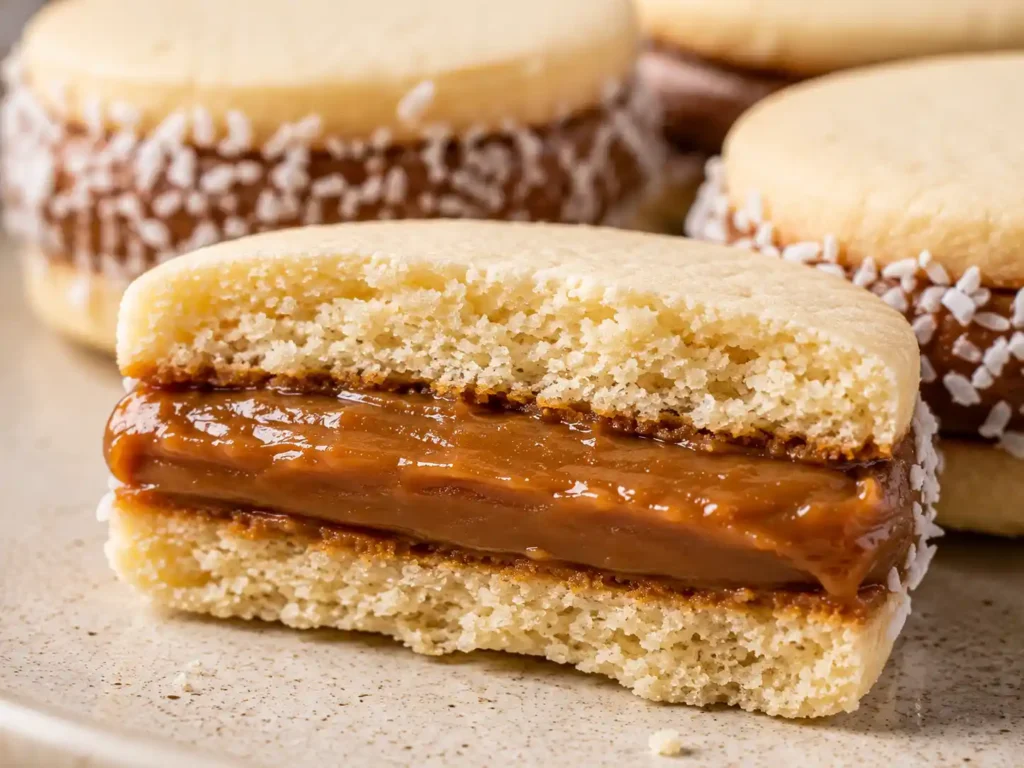
Alfajores place a layer of dulce de leche between two cookies. Depending on the style, bakers may create soft, cake-like cookies or more delicate and crumbly layers. They may also coat the cookies in chocolate, dust them with sugar, or press coconut around the filling.
Regional bakeries and commercial producers create many different varieties. Two cookie layers and a generous sweet filling connect many Argentine alfajores.
19. Flan with Dulce de Leche
This dessert combines smooth caramel custard with thick dulce de leche. The soft flan and dense milk-based spread provide a rich contrast in both texture and sweetness.
Restaurants and households serve the combination in different ways. Some place dulce de leche beside the flan so each person can choose the amount they prefer.
20. Argentine Helado
Italian gelato traditions strongly influenced Argentine helado. Heladerías create dense, smooth frozen desserts with concentrated fruit, chocolate, nut, and milk-based flavors.
Dulce de leche remains closely connected to Argentine ice cream culture, and shops often offer several versions of the flavor. However, the experience of visiting a heladería matters just as much as any individual choice.
Traditional Non-Alcoholic Argentinian Drinks
21. Yerba Mate

To prepare yerba mate, a person places dried yerba leaves inside a vessel that people also call a mate. They then add hot water and sip the infusion through a filtered metal straw known as a bombilla.
Sharing mate often turns the drink into a social ritual. One person may prepare and refill the vessel before passing it to others, although customs and personal preferences vary. Use hot water rather than vigorously boiling water because excessive heat can create a harsher infusion.
Also worth knowing: Submarino combines hot milk with a piece of chocolate. The drinker stirs the mixture as the chocolate melts, creating a simple non-alcoholic option for anyone who prefers a sweet milk drink to an herbal infusion.
Which Argentinian Foods Are Practical to Make at Home?
Your cooking experience will determine the best place to begin. Chimichurri requires no specialized cooking technique, while a suitable heat-safe pan can handle provoleta. Chicken milanesa uses familiar breading methods, and fainá relies on a relatively short ingredient list.
Home cooks can also make empanadas and alfajores, but shaping, filling, sealing, and baking individual portions takes more time. Pastafrola suits bakers who already feel comfortable handling pastry dough.
Asado requires more planning because its character depends on fire management, timing, meat selection, and the social structure of the meal. Readers who want to strengthen their general grilling skills can review this guide to how to grill kabobs. The techniques do not replace a traditional parrilla, but they can help readers manage food on an outdoor grill.
Empanadas can also form part of a broader appetizer menu. For complementary ideas that do not claim Argentine origins, explore these easy finger foods for parties or these make-ahead finger foods for a crowd.
Get approachable international recipes, seasonal dishes, and family-friendly meal ideas sent to your inbox.
A Simple Argentinian-Inspired Menu
The following menu draws inspiration from the foods in this guide. It does not represent one universal Argentine meal.
- Starter: Provoleta with bread
- Condiment: Fresh chimichurri
- Main course: Grilled beef or chicken
- Side: Empanadas or fainá
- Dessert: Alfajores or flan with dulce de leche
- Drink: Yerba mate or submarino
For a family-friendly grilled option, consult the general cooking guidance in these chicken kabobs on the grill. Readers who prefer beef can review these steak kabobs on the grill. These recipes do not represent traditional Argentine dishes, so treat them as related grilling resources rather than replacements for asado.
Helpful Tools for Exploring Argentinian Food
You do not need a large collection of specialized equipment to explore these foods. Choose tools according to the dishes you genuinely plan to prepare.
- Sturdy outdoor grill: Handles grilled beef, chicken, vegetables, and suitable cheeses.
- Long grill-safe tongs: Help you move food while keeping your hands away from the heat.
- Instant-read thermometer: Helps you check the internal temperature of beef or chicken.
- Cast-iron skillet: Browns cutlets and handles grilled-style cheese indoors.
- Rolling pin: Helps shape empanada dough, pastafrola, and other pastries.
- Rimmed baking sheets: Hold empanadas and cookies during baking.
- Cooling rack: Allows pastries and cookies to cool without trapping moisture underneath.
- Small serving bowls: Hold chimichurri and other condiments.
- Mate vessel and bombilla: Provide the traditional-style equipment for drinking yerba mate.
Add brand names, prices, ratings, and affiliate links only after independently reviewing and verifying the specific products.
Frequently Asked Questions
What is the most famous food in Argentina?
Asado ranks among Argentina’s most recognizable culinary traditions. It combines cooking over a parrilla with a longer social gathering, so it represents more than one cut of beef or one fixed recipe. People also strongly associate empanadas, milanesa, dulce de leche, and mate with Argentine food culture.
What foods do people commonly eat in Argentina?
Common choices include milanesa, empanadas, pizza, pasta, ñoquis, sandwiches, grilled foods, pastries, and family stews. Region, household, season, budget, and occasion all influence what people eat, so no single menu represents the entire country.
Why does Argentinian food have so much Italian influence?
Large-scale Italian immigration created a lasting influence on Argentina’s food culture. Pizza, pasta, ñoquis, bakery foods, café traditions, and gelato-style helado provide some of the clearest examples of Italian formats and techniques adapted to local preferences.
Is Argentinian food spicy?
Many well-known Argentine foods emphasize savory seasoning, grilled flavor, garlic, herbs, and rich textures rather than intense chili heat. However, each region and recipe follows its own approach, and some condiments or individual preparations may bring more heat.
Which Argentinian dishes are easiest to make at home?
Chimichurri, chicken milanesa, provoleta, and fainá provide practical starting points for many home cooks. Empanadas, alfajores, and pastafrola also use approachable ingredients, but they usually require more shaping or pastry work.
Explore More Shareable Food Ideas
Argentinian food includes grilled gatherings, everyday comfort dishes, regional corn and squash recipes, bakery traditions, milk-based desserts, and social drinks. Exploring several categories creates a fuller picture than focusing on steak alone.
Start with a preparation that matches your equipment and experience, such as chimichurri, chicken milanesa, or provoleta. You can then progress to shaped pastries, regional stews, or a larger grilled meal shared with family and friends.