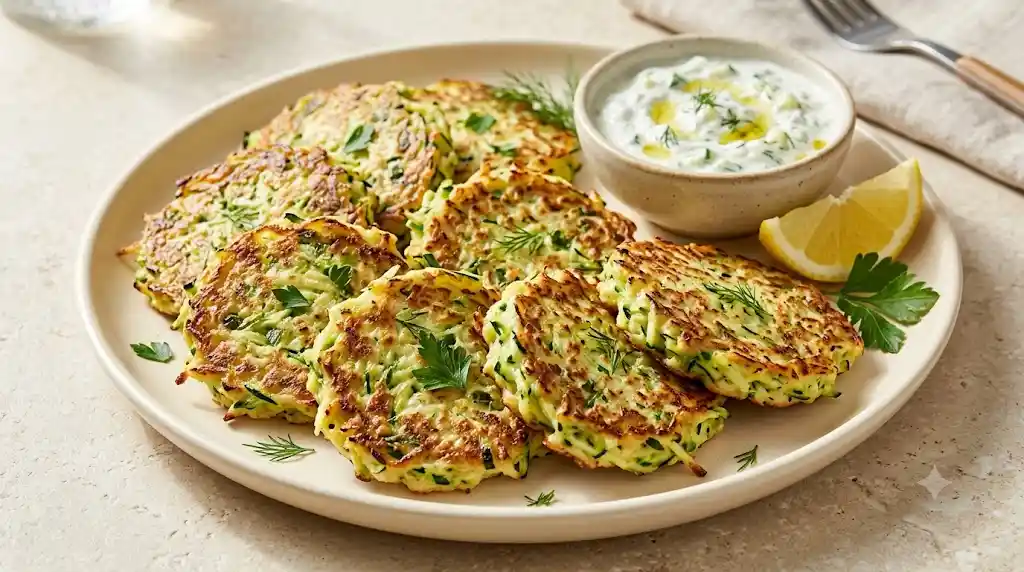
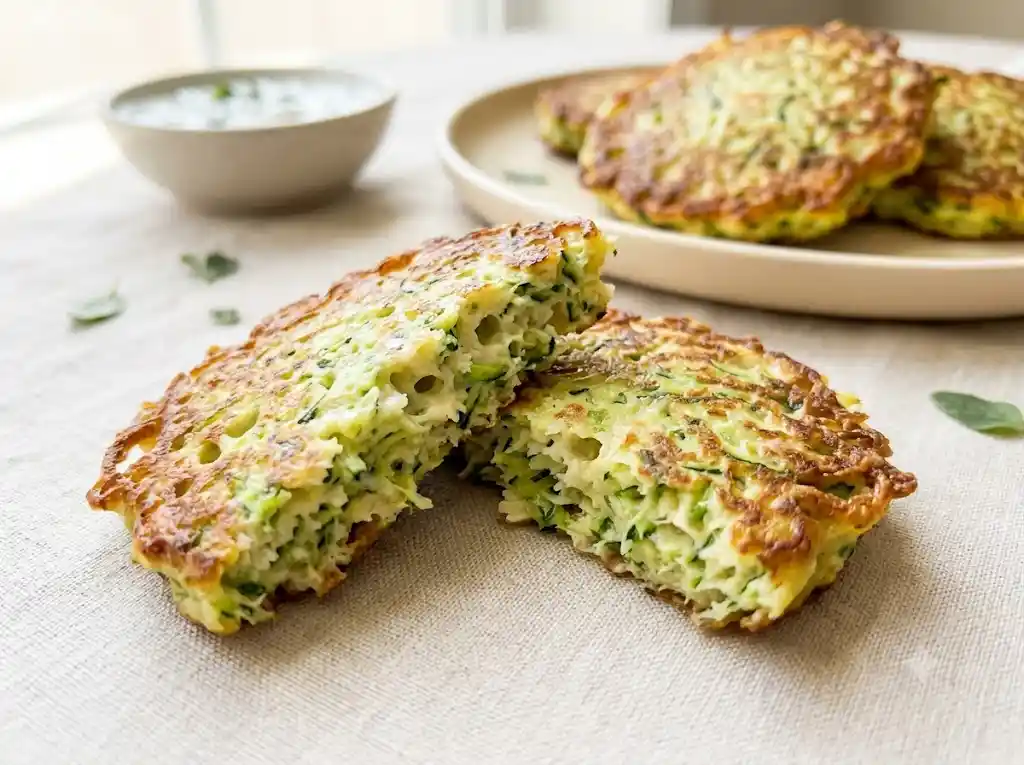
These easy zucchini fritters have crisp golden edges, tender centers, and plenty of fresh zucchini flavor. They are cooked in a skillet and held together with egg, a modest amount of flour, and finely grated Parmesan.
The most important step is removing excess water from the shredded zucchini. This recipe shows you how to drain and squeeze it, check the consistency with one test fritter, and correct the batter before cooking the remaining batch.
Quick answer: For zucchini fritters that hold together, salt and thoroughly squeeze the shredded zucchini, add only enough flour to bind it, and shape the mixture into small patties about 1/2 inch thick. Cook them in a preheated skillet without overcrowding the pan.
| At a Glance | Details |
|---|---|
| Prep time | 25 minutes |
| Cook time | 15 minutes |
| Total time | 40 minutes |
| Yield | 8 fritters |
| Servings | 4 servings |
| Cooking method | Skillet |
| Texture | Golden edges with a tender, fully set center |
Why You’ll Love These Zucchini Fritters
- They use one pound of fresh zucchini.
- The batter contains just enough flour to hold the fritters together.
- A test-fritter method helps you adjust the consistency before cooking the full batch.
- The small, thin patties cook more evenly than thick fritters.
- They can be served as an appetizer, side dish, or light lunch.
For more ideas using summer squash, browse these easy zucchini recipes.
Ingredients You’ll Need
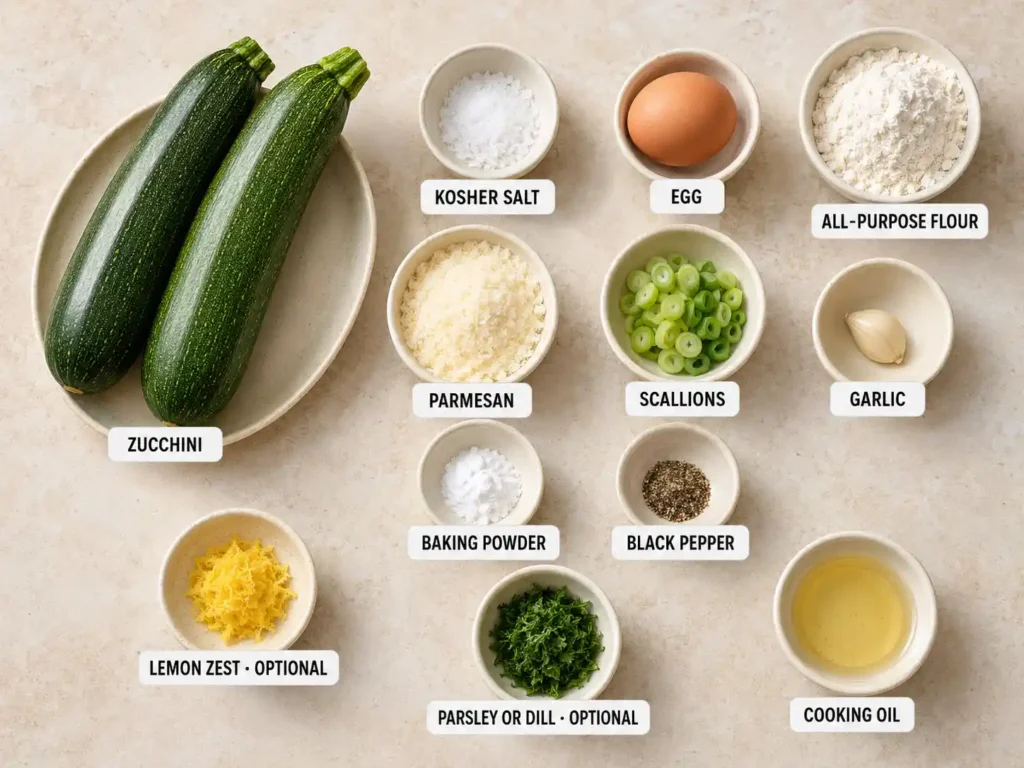
Zucchini
Use 1 pound, or 454 grams, of zucchini. This is usually about two medium zucchini, but weighing them is more reliable than counting them. Grate the zucchini on the large holes of a box grater.
Egg
One large egg helps bind the shredded zucchini, flour, and cheese. Beat it before adding the remaining ingredients so it disperses evenly through the mixture.
All-Purpose Flour
One-third cup of all-purpose flour provides structure without overwhelming the zucchini. The amount of water left in the shredded zucchini can vary, so the test fritter will show whether the batter needs one additional tablespoon.
Parmesan
Use finely grated Parmesan rather than large shreds. It distributes more evenly through the batter and adds savory flavor as the fritters brown.
Scallions and Garlic
Scallions and garlic add flavor without requiring a separate sauce or seasoning blend. Slice the scallions thinly and grate or mince the garlic finely.
Optional Herbs and Lemon Zest
Fresh parsley or dill and a small amount of lemon zest can brighten the fritters. They are optional and may be omitted without changing the main structure of the recipe.
Cooking Oil
Use a neutral cooking oil or olive oil. Start with two tablespoons and add a small amount between batches only when the skillet looks dry.
Zucchini Fritters Ingredients
- 1 lb / 454 g zucchini, about 2 medium zucchini
- 1 teaspoon kosher salt, divided
- 1 large egg
- 1/3 cup / about 40 g all-purpose flour
- 1/3 cup finely grated Parmesan cheese
- 2 scallions, thinly sliced
- 1 large garlic clove, finely grated or minced
- 1/2 teaspoon baking powder
- 1/4 teaspoon ground black pepper
- 1 teaspoon finely grated lemon zest, optional
- 2 tablespoons chopped fresh parsley or dill, optional
- 2 tablespoons neutral oil or olive oil, plus more if needed
Helpful Tools for This Recipe
You do not need specialized equipment, but a few basic kitchen tools make the moisture-removal and cooking steps easier.
| Tool | How It Helps |
|---|---|
| Box grater | Creates even zucchini shreds that cook consistently. |
| Colander | Allows liquid to drain away after the zucchini is salted. |
| Thin kitchen towel or cheesecloth | Makes it easier to squeeze moisture from the zucchini. |
| 1/4-cup measure | Produces fritters of a consistent size. |
| Large skillet | Provides enough space to cook without crowding the fritters. |
| Thin spatula | Slides under the fritters more easily when they are ready to turn. |
| Wire rack | Allows air to circulate around the cooked fritters instead of trapping steam underneath them. |
How to Remove Water From Zucchini
Zucchini contains enough water to loosen the batter if it is mixed directly with the other ingredients. Salting, draining, and squeezing the shreds helps control that moisture.
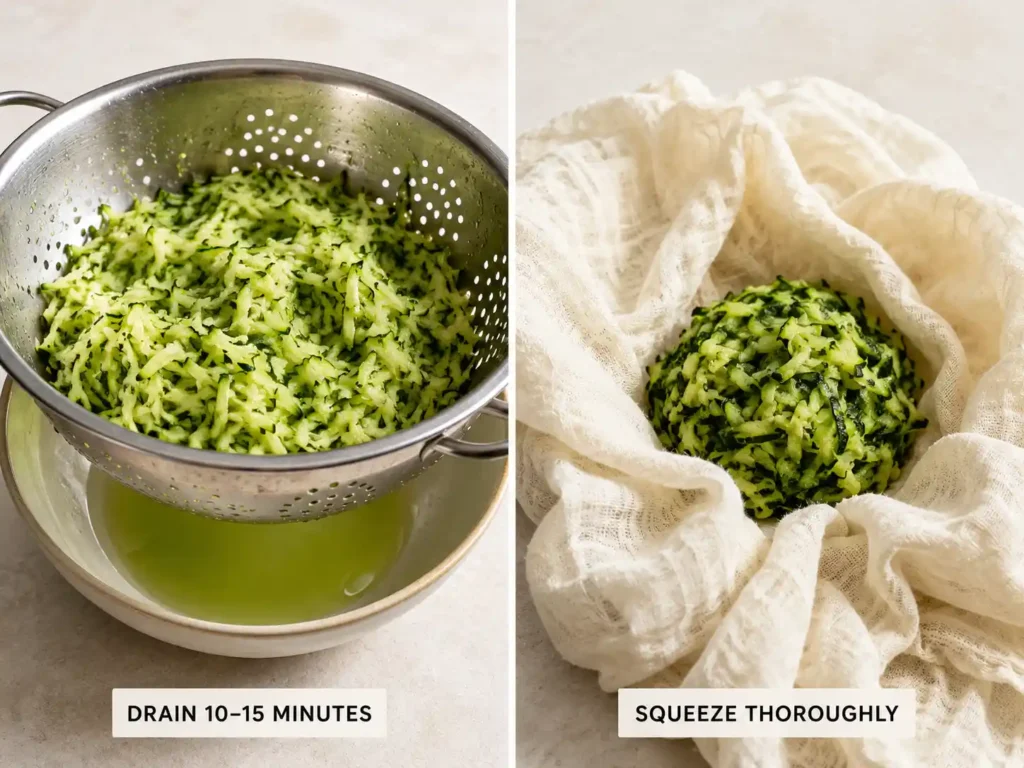
Salt and Drain the Zucchini
Place the grated zucchini in a colander and toss it with 3/4 teaspoon of the kosher salt. Let it rest for 10 to 15 minutes over a bowl or the sink.
The salt draws some of the water toward the surface. The zucchini will soften and lose some of its original volume as it rests.
Squeeze the Zucchini
Transfer the zucchini to the center of a clean, thin kitchen towel or a piece of cheesecloth. Gather the edges, twist the bundle closed, and squeeze firmly over the sink.
The zucchini is ready when the shreds form moist clumps but no longer release a steady stream of liquid when squeezed. They do not need to feel completely dry.
| What You Notice | What It Means | What to Do |
|---|---|---|
| The zucchini still drips when pressed | It contains excess water | Squeeze the bundle again before mixing the batter. |
| The shreds are moist but no longer drip | The zucchini is ready | Loosen the clumps and add them to the batter. |
| The mixed batter releases water while standing | The zucchini retained moisture or the batter sat too long | Cook a test fritter and add 1 tablespoon of flour only if it spreads or breaks. |
How to Make Zucchini Fritters
1. Prepare the Zucchini
Grate the zucchini, toss it with 3/4 teaspoon of the salt, and let it drain for 10 to 15 minutes. Squeeze it firmly in a thin kitchen towel, then loosen the compressed shreds with your fingers.
2. Mix the Wet Ingredients
In a large mixing bowl, whisk the egg with the remaining 1/4 teaspoon salt, black pepper, garlic, scallions, and the optional herbs and lemon zest.
3. Finish the Batter
Add the squeezed zucchini, Parmesan, flour, and baking powder. Fold the mixture just until the ingredients are evenly distributed and no dry pockets of flour remain.
The mixture should be moist and scoopable rather than runny. Avoid leaving it at room temperature for an extended period because the salted zucchini can continue releasing moisture.
4. Preheat the Skillet
Heat one tablespoon of oil in a large skillet over medium heat. Allow the oil and skillet to heat before adding the batter. The oil should move easily across the surface but should not smoke.
5. Cook One Test Fritter
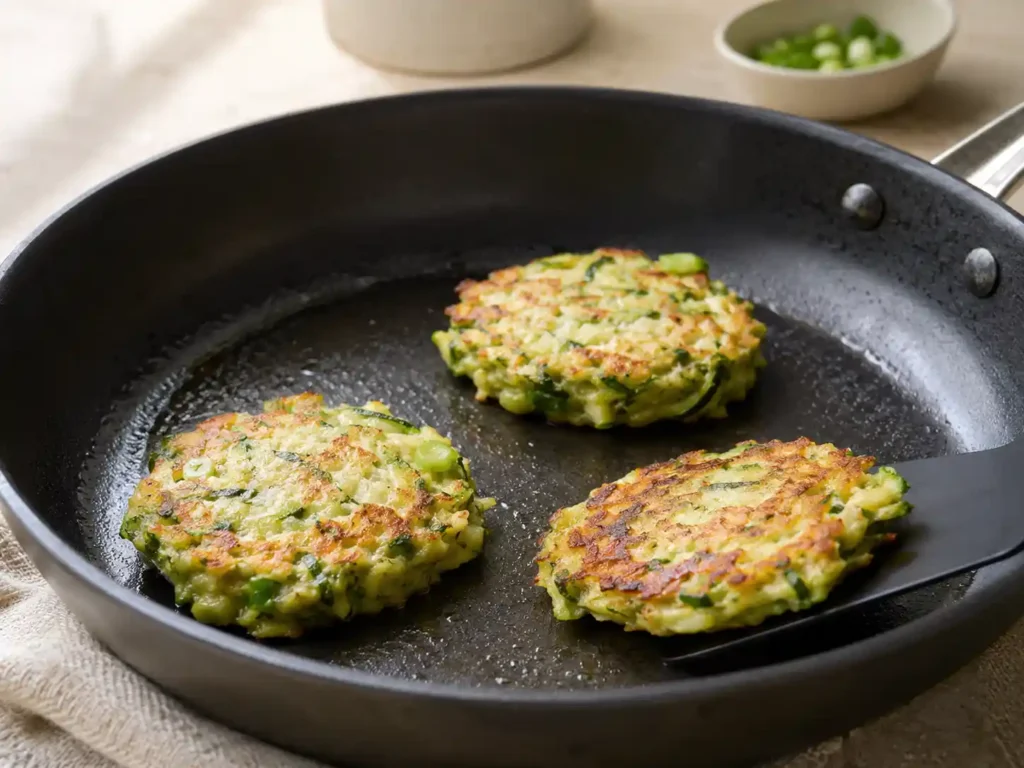
Scoop 1/4 cup of the mixture into the skillet. Flatten it into a round patty approximately 3 inches wide and 1/2 inch thick.
Cook for about 3 to 4 minutes without moving it. When the edges look set and the bottom is golden, slide a thin spatula underneath and turn it. Cook for another 2 to 3 minutes, until the second side is golden and the center is hot and fully set.
6. Adjust the Batter When Needed
If the test fritter spreads or breaks after the first side has browned, fold one additional tablespoon of flour into the remaining mixture. Do not add several tablespoons at once because excess flour can make the fritters heavy.
If the exterior becomes dark before the center is set, reduce the heat slightly and flatten the remaining fritters a little more.
7. Cook the Remaining Fritters
Cook the remaining fritters in batches, leaving space between them. Add the second tablespoon of oil as needed between batches.
Transfer each cooked batch to a wire rack. Avoid stacking the hot fritters because trapped steam can soften their surfaces.
How to Tell When Zucchini Fritters Are Done
A finished zucchini fritter should have:
- Golden brown surfaces
- Edges that look set rather than wet
- Enough structure to lift with a spatula
- A hot, tender center with no visibly wet batter
- An approximate thickness of 1/2 inch
Cooking time can vary with the fritter thickness, skillet material, burner strength, and amount of moisture remaining in the zucchini. Use the visual cues together with the suggested cooking range.
Zucchini Fritter Troubleshooting
| Problem | Likely Cause | How to Fix It |
|---|---|---|
| The fritters fall apart | Excess moisture, oversized patties, or turning too early | Make smaller fritters, wait until the first side is set, or add 1 tablespoon of flour after testing. |
| The center is wet or very soft | The fritters are too thick or the heat is too high | Flatten the next batch and reduce the heat slightly so the center has time to set. |
| The outside becomes dark too quickly | The skillet is too hot | Reduce the burner to medium-low and allow the skillet to cool briefly. |
| The fritters look pale and oily | The skillet was not hot enough when the batter was added | Allow the skillet and oil to preheat before cooking the next batch. |
| The texture is heavy or floury | Too much flour was added | Add extra flour only one tablespoon at a time and only after cooking a test fritter. |
| The cooked fritters lose their crisp edges | They were stacked while hot | Place them in a single layer on a wire rack so steam can escape. |
Variations and Substitutions
Fresh Herbs
Use parsley for a mild flavor or dill for a more distinctive herb flavor. Avoid adding large amounts of wet ingredients because they can loosen the batter.
Lemon Zest
One teaspoon of finely grated lemon zest adds brightness without adding extra liquid. It may be omitted.
Pecorino
Finely grated Pecorino can replace the Parmesan. Because Pecorino may taste saltier, reduce the added salt if necessary.
Summer Squash
Yellow summer squash can replace some or all of the zucchini. Its moisture level may differ, so squeeze it thoroughly and use a test fritter before adjusting the flour.
Gluten-Free Flour
A cup-for-cup gluten-free flour blend may behave differently from all-purpose flour. The substitution has not been validated for this exact formula, so assess the consistency with one test fritter before cooking the entire batch.
What to Serve With Zucchini Fritters
Serve the fritters warm as an appetizer, vegetable side dish, or light lunch. They pair especially well with cool sauces, fresh salads, and grilled dishes.
- Dip them in homemade tzatziki sauce.
- Pair them with a refreshing cucumber tomato salad.
- Serve them beside grilled chicken kabobs.
- Add them to a menu featuring these summer side dishes.
Storage and Reheating
Refrigerating Leftovers
Allow the fritters to stop steaming, then place them in a covered container and refrigerate them within two hours of cooking. Store them in the refrigerator for up to three to four days.
For easier reheating, arrange parchment paper between layers so the fritters do not stick together.
Reheating in the Oven
Arrange the fritters in a single layer on a baking sheet. Reheat them in a 375°F oven until hot, usually about 8 to 10 minutes. Turn them halfway through when practical.
Reheating in an Air Fryer
Place the fritters in a single layer and reheat at 350°F for approximately 3 to 5 minutes, checking early because air fryer models differ.
Reheating in a Skillet
Warm the fritters in a lightly oiled skillet over medium-low heat for a few minutes on each side. This method works well for a small number of fritters.
Reheating Safely
Reheat refrigerated leftovers until they are hot throughout. USDA guidance recommends reheating leftovers to an internal temperature of 165°F.
Can You Freeze Zucchini Fritters?
The exact texture of this formula after freezing has not been validated. Freezing cooked fritters may soften their original texture, so refrigeration is the preferred storage method when they will be eaten within a few days.
Zucchini Fritters
Ingredients
Equipment
Method
- Grate the zucchini on the large holes of a box grater.
- Place the grated zucchini in a colander and toss it with 3/4 teaspoon of the kosher salt. Let it drain over a bowl or the sink for 10 to 15 minutes.
- Transfer the zucchini to a clean, thin kitchen towel or cheesecloth. Gather and twist the towel closed, then squeeze firmly over the sink until the zucchini no longer releases a steady stream of liquid.
- Open the towel and loosen the compressed zucchini shreds with your fingers. The zucchini should remain moist but should not drip when pressed.
- In a large mixing bowl, whisk the egg with the remaining 1/4 teaspoon salt, black pepper, garlic, scallions, and the optional lemon zest and herbs.
- Add the squeezed zucchini, Parmesan, 1/3 cup flour, and baking powder. Fold just until evenly combined and no dry flour remains. The mixture should be moist and scoopable rather than runny.
- Heat 1 tablespoon of oil in a large skillet over medium heat. Let the skillet and oil preheat until the oil moves easily across the surface without smoking.
- Scoop 1/4 cup of the mixture into the skillet and flatten it into a round patty approximately 3 inches wide and 1/2 inch thick.
- Cook the test fritter without moving it for 3 to 4 minutes, until the edges are set and the underside is golden brown.
- Turn the fritter with a thin spatula and cook for another 2 to 3 minutes, until the second side is golden and the center is hot and fully set.
- If the test fritter spreads or breaks after its first side has browned, fold 1 additional tablespoon of flour into the remaining batter. Do not add extra flour unless needed.
- Cook the remaining fritters in batches, leaving space between them and keeping each patty about 1/2 inch thick. Add the remaining oil as needed between batches.
- If the surfaces darken before the centers are set, reduce the heat slightly and flatten the remaining fritters a little more.
- Transfer the cooked fritters to a wire rack in a single layer. Do not stack them while hot. Serve warm.
Notes
More Ways to Use Zucchini
Use extra zucchini in a savory meal, quick bread, or chocolate dessert:
Frequently Asked Questions
Why are my zucchini fritters falling apart?
The zucchini may still contain too much water, the patties may be too large, or the first side may not have cooked long enough before turning. Thoroughly squeeze the zucchini, make fritters about three inches wide, and wait until the edges are set before sliding the spatula underneath.
Do you have to squeeze zucchini for fritters?
Squeezing is strongly recommended for this recipe. Removing excess water helps keep the batter scoopable and makes the fritters easier to brown and turn.
Can I make zucchini fritters ahead of time?
Yes. Cook and refrigerate them in a covered container, then reheat them in the oven, air fryer, or skillet. Their edges are usually crispest shortly after the initial cooking.
Can I bake these zucchini fritters instead?
This formula is written for skillet cooking. Baking changes the heat exposure, browning, and moisture loss, so it would require separately validated oven instructions rather than a direct conversion.
What can I serve with zucchini fritters?
Serve them with tzatziki or another cool yogurt-based dip, cucumber salad, grilled chicken, or a selection of summer side dishes. They can also be made slightly smaller for an appetizer platter.