If you want a tangy, lightly sweet topping for sandwiches, pizza, salads, and bowls, these pickled banana peppers are easy to make at home. Thin pepper rings are covered with a hot vinegar brine, cooled, and stored in the refrigerator until the flavor develops.
This is a refrigerator pickle recipe, not a shelf-stable canning method. The jars must remain refrigerated. For more cold-pickling ideas, visit our guide to refrigerator pickles.
Quick Answer
To make pickled banana peppers, slice 3 cups of fresh peppers into thin rings and cover them with a hot brine made from 5% acidity vinegar, water, sugar, and salt. Refrigerate the peppers once the jar has cooled enough to handle. Let the flavor develop for 1 to 2 days and use the peppers within 2 weeks.
Why You’ll Like These Pickled Banana Peppers
This straightforward recipe uses a short list of ingredients and does not require canning equipment. It is especially useful when you have fresh banana peppers and want an easy way to serve them with several different meals.
- Uses five basic ingredients
- Requires no water-bath canning equipment
- Has a tangy, lightly sweet flavor
- Works with mild or hotter banana pepper varieties
- Can be used on sandwiches, pizza, tacos, salads, and bowls
- Provides a practical way to use a small harvest of fresh peppers
Pickled Banana Peppers at a Glance
| Detail | What to Expect |
|---|---|
| Method | Quick refrigerator pickling |
| Flavor | Tangy and lightly sweet |
| Best cut | Thin, even rings |
| Ready to eat | Best after 1 to 2 days |
| Storage | Refrigerator only |
| Storage window | Use within 2 weeks |
Ingredients You’ll Need
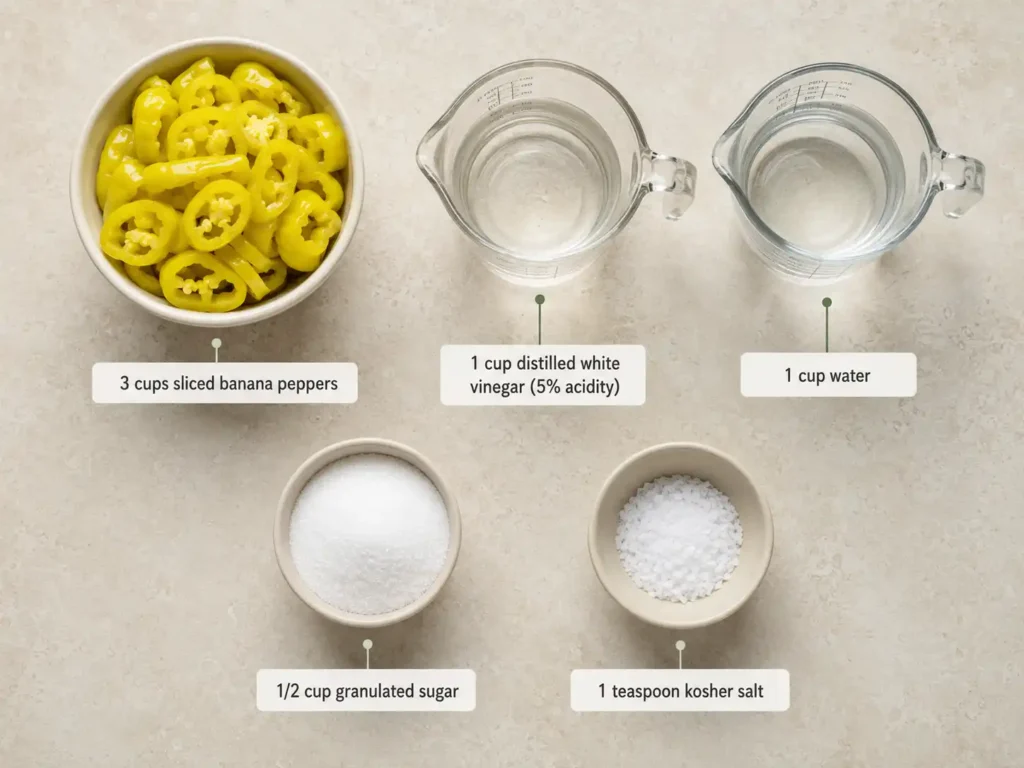
Banana Peppers
Choose fresh, firm banana peppers without soft areas or visible damage. Sweet banana peppers provide a mild result, while hotter varieties produce more noticeable heat. Because individual peppers can vary, taste a very small piece before deciding how much heat you want in the jar.
Distilled White Vinegar
Use distilled white vinegar with 5% acidity clearly printed on the label. Do not use a vinegar with an unknown or lower acidity. White vinegar also helps preserve the bright appearance of the pepper rings and gives the brine a clean, sharp flavor.
Water, Sugar, and Salt
Water balances the vinegar, while sugar provides the lightly sweet flavor expected from this recipe. Kosher salt rounds out the brine. Measure each ingredient carefully and do not dilute the vinegar with additional water.
Recipe Amounts
- 3 cups thinly sliced banana peppers
- 1 cup distilled white vinegar with 5% acidity
- 1 cup water
- 1/2 cup granulated sugar
- 1 teaspoon kosher salt
Helpful Tools for This Recipe
You do not need specialized canning equipment, but a few basic kitchen tools make preparation easier.
- Clean, heat-safe glass jars with lids
- Nonreactive saucepan, such as stainless steel or enamel-coated cookware
- Sharp knife
- Stable cutting board
- Measuring cups and spoons
- Jar funnel, optional
- Mandoline with a hand guard, optional
A knife works well for a small batch. If you use a mandoline, always use its hand guard and keep your fingers away from the blade.
How to Make Pickled Banana Peppers
1. Prepare the Peppers
Wash the banana peppers under cool running water and dry them. Trim away the stem ends, then cut the peppers into thin, even rings. Remove loose seeds if desired.
If you are working with a hotter variety, consider wearing food-safe gloves and avoid touching your face or eyes while preparing the peppers.
2. Pack the Jars
Place the sliced peppers in one or more clean, heat-safe glass jars. Pack them snugly without crushing them. Leave approximately 1/2 inch of open space at the top of each jar.
3. Make the Brine
Combine the vinegar, water, sugar, and salt in a nonreactive saucepan. Bring the mixture just to a boil, stirring until the sugar and salt have completely dissolved. Remove the saucepan from the heat.
4. Cover the Peppers
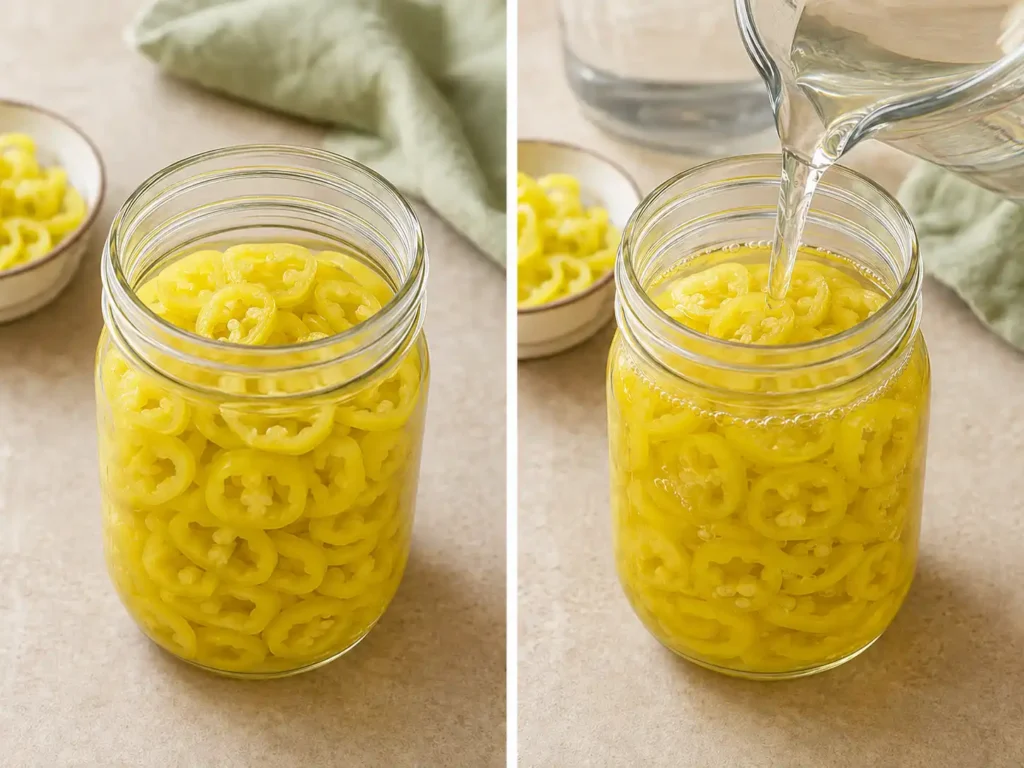
Carefully pour the hot brine over the pepper rings. Use enough brine to cover the peppers completely while maintaining the headspace at the top. Gently tap the jar or move a clean utensil around the inside edge to release trapped air bubbles.
5. Cool and Refrigerate
Allow the jar to cool briefly until it is safe to handle. Close it with a clean lid and refrigerate promptly. These peppers must remain refrigerated and should never be stored in a pantry.
6. Wait Before Serving
The peppers begin absorbing flavor as they cool, but the taste is better developed after 1 to 2 days in the refrigerator. Keep the rings covered with brine between servings.
Tips for Crisp, Flavorful Pepper Rings
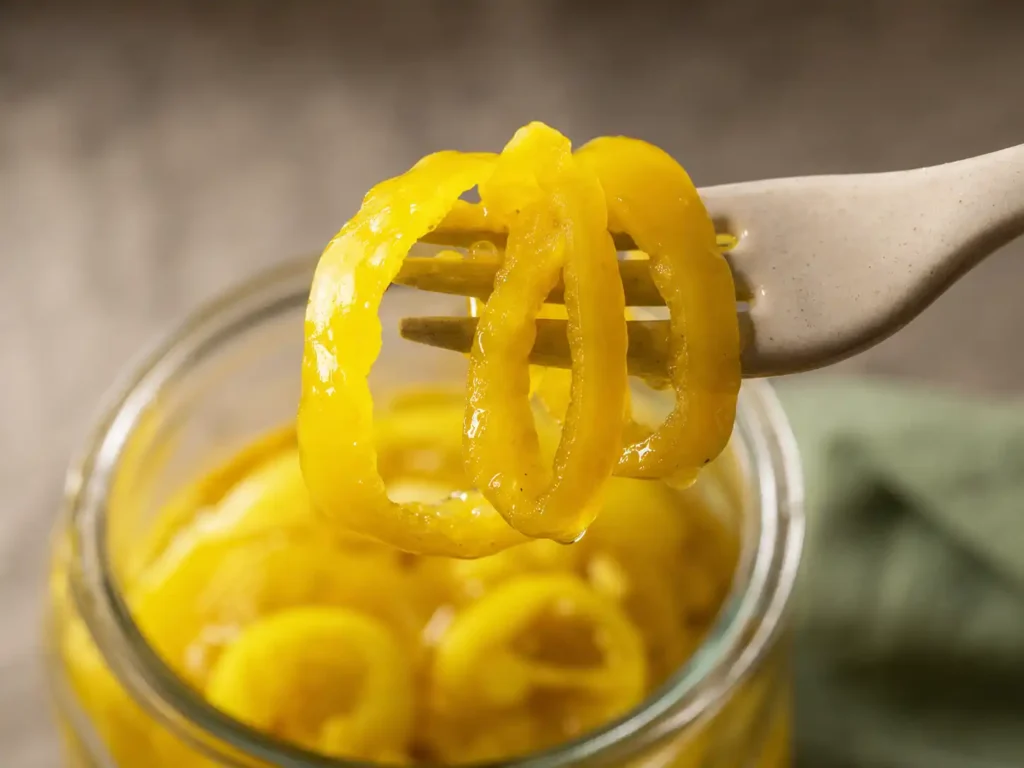
- Start with fresh, firm peppers instead of soft or wilted ones.
- Cut the rings to a similar thickness so they pickle evenly.
- Heat the brine, but do not simmer the pepper rings in it.
- Pack the peppers snugly without crushing them.
- Keep the rings under the brine during storage.
- Use a clean fork or spoon every time you remove peppers from the jar.
- Give the peppers 1 to 2 days to develop their flavor before judging the result.
The final texture depends on the freshness and variety of the peppers as well as the thickness of the slices. The rings should remain pleasantly firm, but an exact level of crispness cannot be guaranteed without testing the specific peppers used.
Easy Flavor Variations
The base recipe has a simple sweet-and-tangy profile. If you want additional flavor, one of the following ingredients can be added in a restrained amount:
- Mustard seed for a mild earthy note
- Celery seed for a classic pickle flavor
- A peeled garlic clove for a savory note
- Whole black peppercorns for gentle warmth
These additions have not been independently tested by ZikoRecipes. Keep the vinegar and water quantities unchanged, and avoid combining so many spices that they overpower the banana peppers.
Should You Remove the Seeds?
You can leave the seeds in or remove the loose ones for a cleaner-looking jar. Removing only the seeds does not guarantee milder peppers because much of a pepper’s heat is associated with the pale inner membrane. Heat can also vary considerably from one banana pepper to another.
If you are uncertain about the variety, handle the peppers carefully and sample a small piece before pickling the full batch.
Pickled Banana Pepper Troubleshooting
| Problem | Likely Cause | What to Do |
|---|---|---|
| Peppers are too soft | Peppers were not fresh or were exposed to too much heat | Use firmer peppers and pour the brine over them instead of simmering them |
| Rings float above the brine | The jar is loosely packed or has trapped air | Move the rings gently with a clean utensil and keep them submerged |
| Flavor is too strong on the first day | The brine has not had time to balance | Wait until the second day and taste again |
| Brine contains spice particles | Ground spices or loose seasonings were used | Use whole seeds and whole peppercorns for a cleaner-looking brine |
How to Use Pickled Banana Peppers
These pepper rings provide acidity, light sweetness, and optional heat. Drain the amount you need before adding it to a dish so the extra brine does not make the food watery.
- Add them to pizza after baking or during the final minutes in the oven.
- Layer them into sandwiches and wraps.
- Use them as a topping for tacos.
- Add a few rings to an easy Italian pasta salad.
- Serve them with these taco salad recipes.
- Add them to a burger bowl for extra tang.
- Chop them and stir them into grain bowls or cold pasta dishes.
Storage and Food Safety
These pickled banana peppers must stay refrigerated. A clean or sterilized jar alone does not make refrigerator pickles safe for room-temperature storage.
- Store the closed jar in the refrigerator.
- Keep the pepper rings covered with brine.
- Use a clean utensil for every serving.
- Use the peppers within 2 weeks.
- Discard the contents if you see mold or notice an abnormal odor, unexpected gas, or another clear sign of spoilage.
The conservative two-week storage window and the recommendation to allow 1 to 2 days for flavor development follow the general quick refrigerator pickle guidance from NC State Extension.
Want more practical seasonal recipes? Join the ZikoRecipes newsletter and get new kitchen ideas delivered to your inbox.
Refrigerator Pickling vs Canning
Refrigerator pickling and shelf-stable canning are different processes. This recipe is designed only for refrigeration and should not be converted into a pantry-storage recipe.
| Detail | Refrigerator Pickling | Shelf-Stable Canning |
|---|---|---|
| Storage | Refrigerated at all times | Room-temperature storage after correct processing |
| Method | Hot brine followed by refrigeration | Tested formula and approved heat processing |
| Equipment | Clean heat-safe jars and a saucepan | Proper canning jars and processing equipment |
| Altitude | No pantry-processing time used | Processing time may require altitude adjustment |
If you want to preserve peppers for shelf-stable storage, follow a complete tested recipe from the National Center for Home Food Preservation. Do not adapt the quantities or processing method from this refrigerator recipe.
Nutrition Notes
Nutrition varies according to serving size and the amount of brine that remains on the pepper rings. Because the full jar of brine is not normally consumed, calculating sugar and sodium from the entire batch can produce misleading values. Any nutrition values added to the recipe card should be labeled as estimated and calculated only after the final yield and serving size have been confirmed.
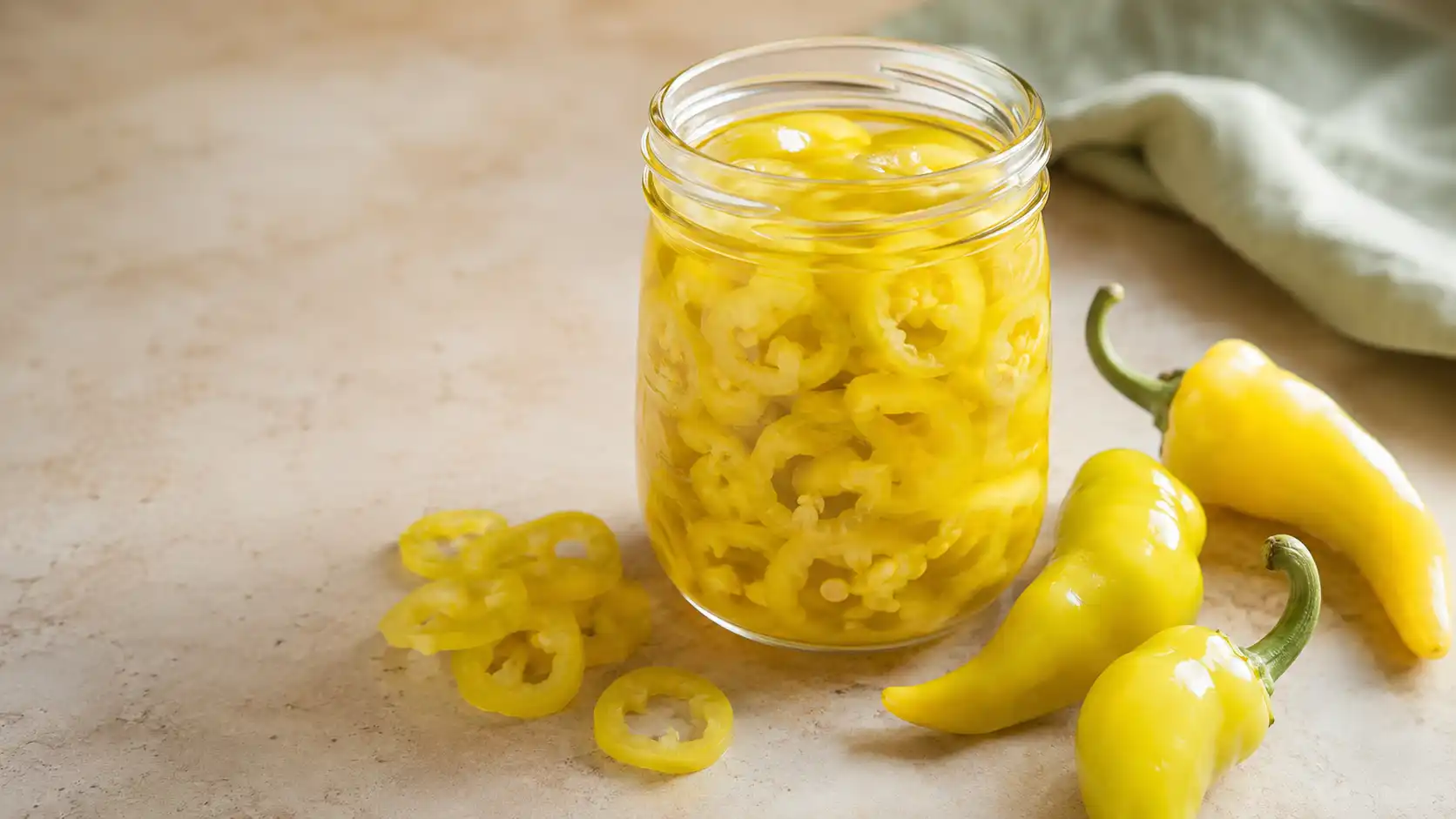
Easy Pickled Banana Peppers (Refrigerator Recipe)
Ingredients
Equipment
Method
- Wash the banana peppers under cool running water and dry them thoroughly. Trim off the stem ends, then slice the peppers into thin, even rings. Remove any loose seeds if desired.
- Place the sliced peppers in one or more clean, heat-safe glass jars. Pack them snugly without crushing them, leaving approximately 1/2 inch of open space at the top.
- Combine the distilled white vinegar, water, granulated sugar, and kosher salt in a nonreactive saucepan.
- Bring the brine just to a boil over medium heat, stirring until the sugar and salt have dissolved completely. Remove the saucepan from the heat.
- Carefully pour the hot brine over the sliced peppers until they are completely covered, while preserving approximately 1/2 inch of headspace.
- Gently tap the jar or move a clean utensil around the inside edge to release trapped air bubbles. Make sure the pepper rings remain beneath the brine.
- Allow the jar to cool briefly until it is safe to handle. Close it with a clean lid and refrigerate promptly.
- Let the peppers pickle in the refrigerator for 1 to 2 days before serving for the best-developed flavor. Keep the peppers refrigerated and covered with brine between servings.
Notes
Frequently Asked Questions
Do pickled banana peppers need to be refrigerated?
Yes. This is a refrigerator pickle recipe, so the jar must stay refrigerated throughout storage. It is not suitable for pantry storage.
How long do refrigerator pickled banana peppers last?
Use these peppers within 2 weeks. Keep them refrigerated, submerged in brine, and remove each serving with a clean utensil.
When are pickled banana peppers ready to eat?
You can taste them after they have cooled, but the flavor develops more fully after 1 to 2 days in the refrigerator.
Should I remove the seeds?
Removing loose seeds is optional and can make the jar look neater. It does not guarantee milder peppers because heat also comes from the inner membrane and varies by pepper variety.
Can I use this recipe for shelf-stable canning?
No. This formula is intended only for refrigerator storage. Use a complete, tested preservation recipe if you want shelf-stable jars.
Final Thoughts
These pickled banana peppers are an easy way to add a tangy, lightly sweet bite to sandwiches, pizza, salads, wraps, and bowls. Once the peppers have rested for a day or two, keep the jar nearby whenever a meal needs a quick boost of acidity.
For another refrigerator project, try our homemade dill pickle recipe. You can also explore our roasted red pepper sauce for another way to use peppers. Save or rate this recipe after you make it so other readers can learn from your results.