⏱️ Quick Answer: This pistachio macarons recipe makes crisp almond shells with chewy centers and a smooth pistachio white chocolate filling. While many tutorials use the French method, this recipe uses the Italian meringue method. Boiling the sugar syrup creates a much more stable batter, which prevents hollow shells, guarantees neat “feet,” and gives you a reliable bakery-style finish every time.
When I test macarons, I look for full shells, clean edges, and real pistachio flavor. This version keeps each step clear from mixing to maturing. If you enjoy pistachio desserts, you may also like this pistachio cream recipe.
Amazon Disclosure: As an Amazon Associate, I earn from qualifying purchases. This means I may earn a small commission if you buy through my links, at no extra cost to you.
Why You’ll Love This Pistachio Macarons Recipe
- It uses the Italian meringue method, so the shells bake with firm structure and neat feet.
- The filling blends white chocolate, cream, and salted pistachio butter for a smooth, nutty center.
- The flavor feels bakery-style, yet the steps stay clear for home baking.
- The macarons rest overnight, which gives them a soft, chewy bite inside.
- They look elegant for holidays, birthdays, showers, or dessert boxes.
Ingredients Needed for Pistachio Macarons
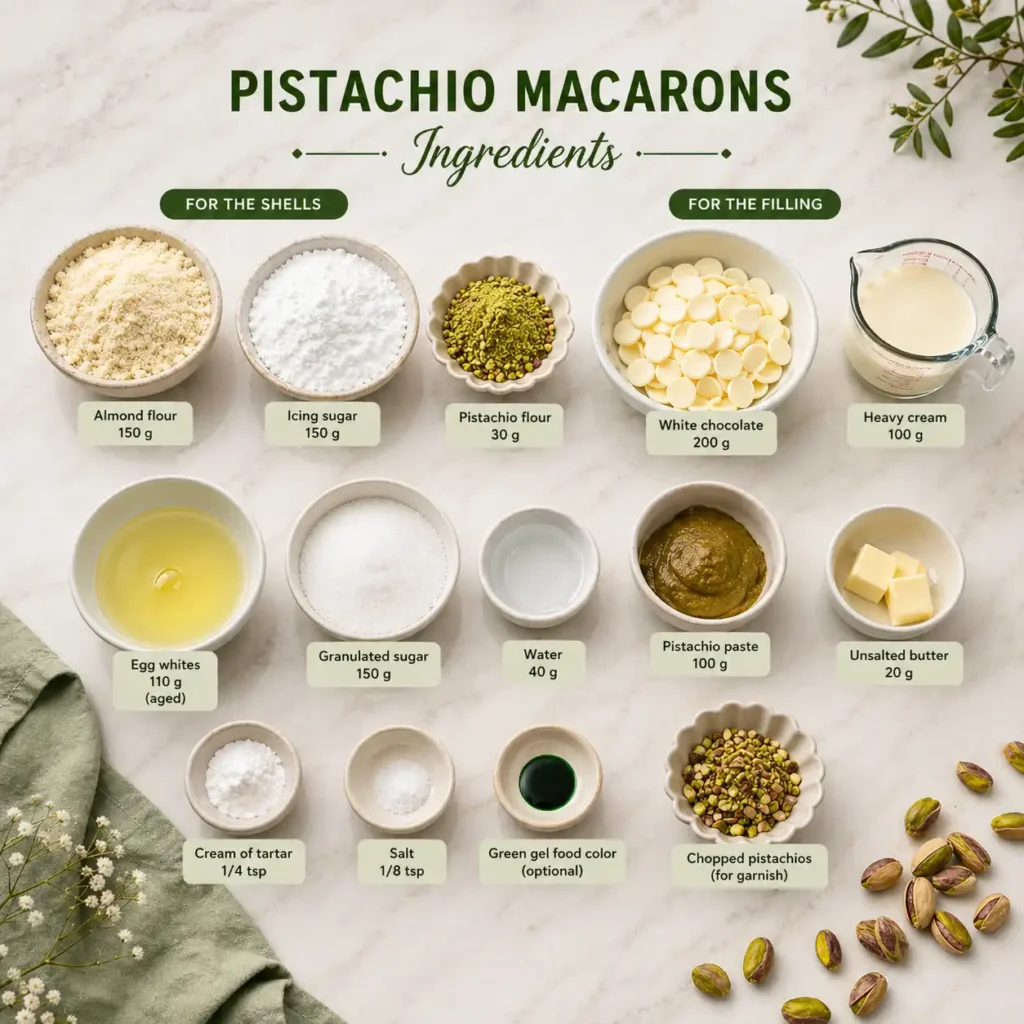
These pistachio macarons use a classic shell base and a rich pistachio white chocolate filling. Since macarons depend on exact ratios, weigh every ingredient in grams. Cups can change the texture, but a scale keeps the batter steady from batch to batch.
For the Pistachio Macaron Shells
- 200 g egg whites, divided into two 100 g portions
- Pinch of salt, to support the meringue
- 275 g granulated sugar
- 70 g water
- 275 g ground almonds, finely ground
- 275 g powdered sugar
- Gel food coloring, optional, for a soft green shade
- Vinegar, for wiping the bowl and whisk
For the Pistachio White Chocolate Filling
- 300 g white chocolate, at least 28% cocoa solids
- 100 g salted pistachio butter
- 200 g heavy cream
Tools You Need for Homemade Pistachio Macarons
- Kitchen scale
- Food processor
- Fine mesh sieve
- Stand mixer or hand mixer
- Piping bags
- Round piping tip
- Baking sheets
- Parchment paper or silicone mat
- Oven thermometer
A kitchen scale is the most important tool here. Macarons react to small changes in moisture, sugar, and dry ingredients. Also, an oven thermometer helps you check the real oven heat, since many ovens run hotter or cooler than the setting.
How to Make Pistachio Macarons
Before you start, set aside enough time for resting and chilling. The shells need time to dry before baking, and the filled macarons taste better after 24 hours in the fridge. Also, handle egg whites with care and keep eggs cold before use. The FDA advises storing eggs at 40°F or below for safe handling.
1. Prepare the Baking Trays for Macaron Shells
💡 Pro Tip: Wipe your mixing bowl and whisk with a paper towel dipped in vinegar before you start. Even a small trace of grease can stop the egg whites from whipping into a stable meringue.
Line your baking sheets with parchment paper or silicone mats. If you use a macaron guide, slide it under the parchment so each shell has the same size.
Next, wipe the mixing bowl and whisk with a little vinegar. This removes any grease, which helps the egg whites whip into a stable meringue.
2. Make the Almond Mixture for Pistachio Macarons
Add the ground almonds and powdered sugar to a food processor. Pulse the mixture 10 to 15 times, just until it looks finer. Do not overprocess it, since almonds can release oil.
Sift the dry mixture into a large bowl. Discard any large bits left in the sieve. Then add 100 g egg whites and stir until you have a thick paste. Add gel food coloring now, if using it. Cover the bowl so the paste does not dry out.
3. Add Hot Syrup to the Egg Whites
Place the granulated sugar and water in a small saucepan. Heat over medium heat. Do not stir once the pan is on the stove, because stirring can cause sugar crystals.
Clip a candy thermometer to the pan. When the syrup reaches 112°C, start whipping the remaining 100 g egg whites with a pinch of salt.
4. Make the Italian Meringue for Stable Macaron Shells
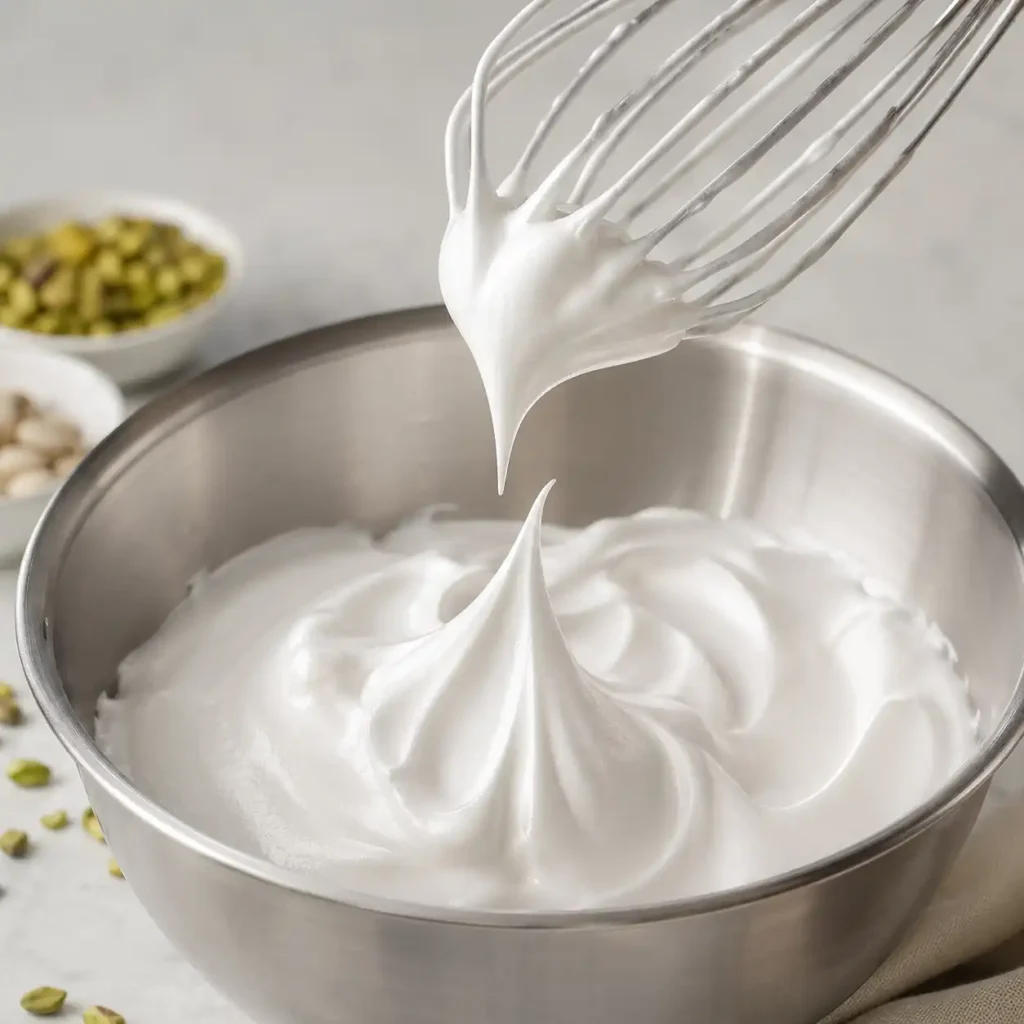
Keep heating the syrup until it reaches 118°C. With the mixer running, pour the syrup slowly down the side of the bowl. Avoid pouring it straight onto the whisk, since hot syrup can splash.
Continue mixing until the bowl feels close to room temperature. The meringue should look glossy and form stiff peaks. It should stand tall when you lift the whisk.
5. Fold the Pistachio Macaron Batter to Ribbon Stage
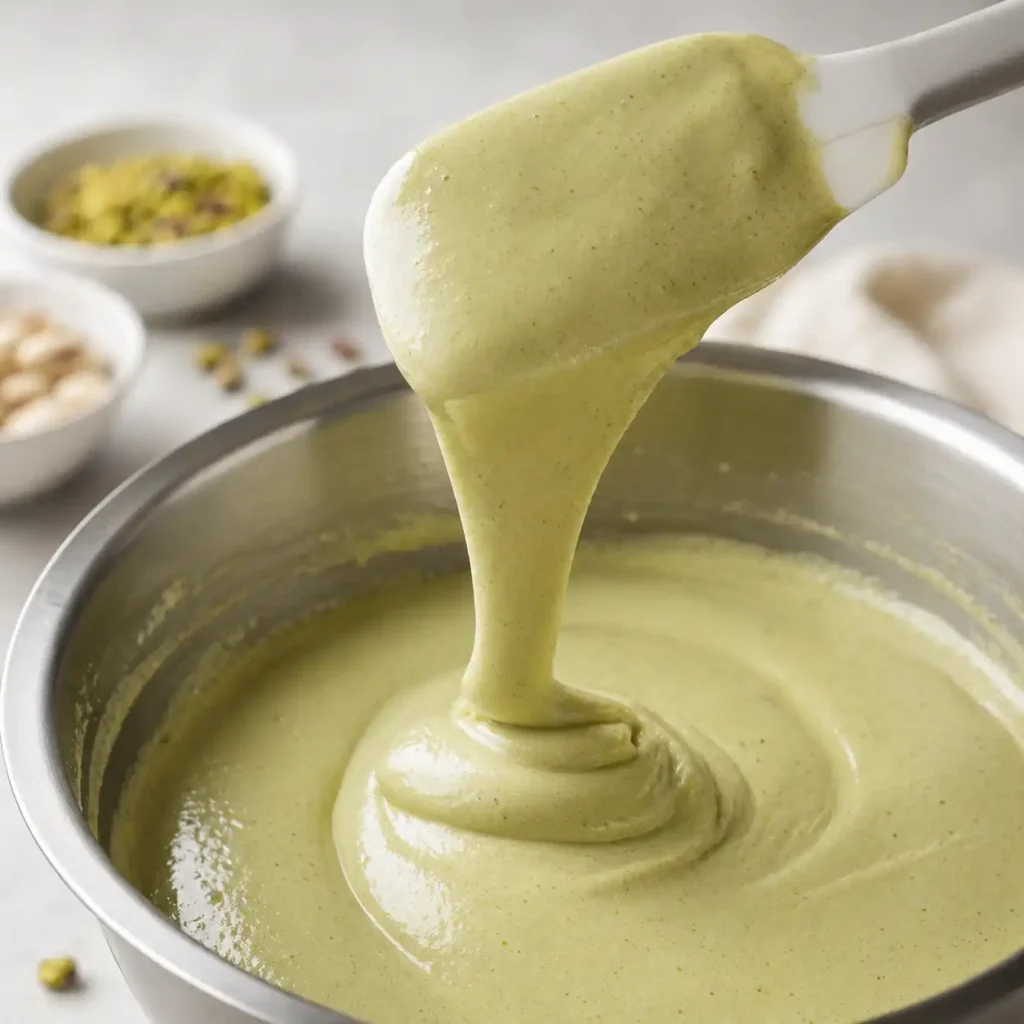
🛑 Warning: Stop folding when the batter flows like thick lava and falls from the spatula in a slow ribbon. If it stays stiff, fold a little more. If it runs like liquid, it has been overmixed.
Add part of the meringue to the almond paste and fold with a rubber spatula. Then add the rest in stages. Scrape around the bowl and through the center.
Stop when the batter reaches the ribbon stage. It should fall from the spatula in a thick ribbon and settle back into itself within about 10 seconds. If it sits in stiff clumps, fold a little more. If it runs like liquid, it is overmixed.
6. Pipe the Pistachio Macaron Shells
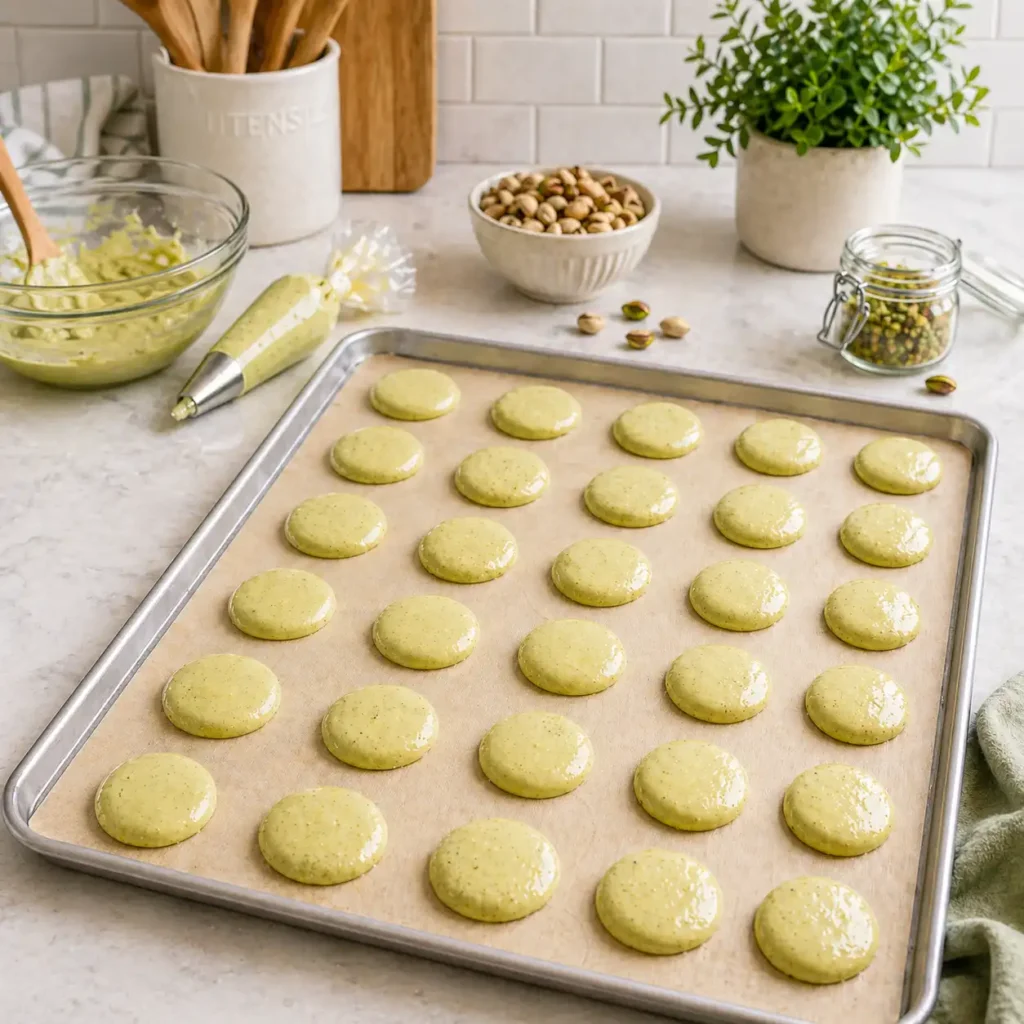
Spoon the batter into a piping bag fitted with a round tip. Hold the bag straight up over the tray and pipe even rounds.
Tap each tray on the counter at least three times. This releases trapped air. Use a toothpick to pop visible bubbles on top.
7. Rest the Macaron Shells Before Baking
Let the piped shells sit at room temperature until the tops feel dry. When you touch one gently, batter should not stick to your finger.
Resting time changes with humidity. In a dry kitchen, it may take 20 to 40 minutes. In a humid kitchen, it can take longer.
8. Bake the Pistachio Macarons
Preheat a fan oven to 150°C. Bake one tray at a time for 18 to 20 minutes.
The shells are ready when they hold their shape and do not wobble at the feet when touched lightly. Let them cool fully on the tray before removing them. Warm shells can tear or stick.
9. Make the pistachio filling
Place chopped white chocolate and salted pistachio butter in a heatproof bowl.
Warm the heavy cream until it just begins to simmer. Pour it over the chocolate and pistachio butter. Cover the bowl for 1 to 2 minutes, then stir until smooth.
Chill the filling for a few hours, or overnight, until thick. Before piping, whip it briefly until lighter and fluffy. Do not overwhip, or the texture may turn grainy.
10. Assemble the Pistachio Macarons
Pair shells by size. Pipe filling onto half of them, then place a matching shell on top. Press gently so the filling reaches the edge without spilling out.
Place the filled macarons in an airtight container. Chill them for at least 24 hours before serving. This rest softens the center and gives the shells their classic chewy bite.
If you love the rich, nutty flavor of this macaron filling, you have to try making your own homemade pistachio cream. It takes only a few minutes to blend and tastes incredible drizzled over pancakes or served right alongside these macarons on a dessert board.
Troubleshooting Pistachio Macarons
Macarons can look perfect one day and fail the next. However, most problems come from a few clear causes: weak meringue, wrong batter texture, oven heat, or not enough resting time. Use the guide below to spot the issue and fix it in your next batch.
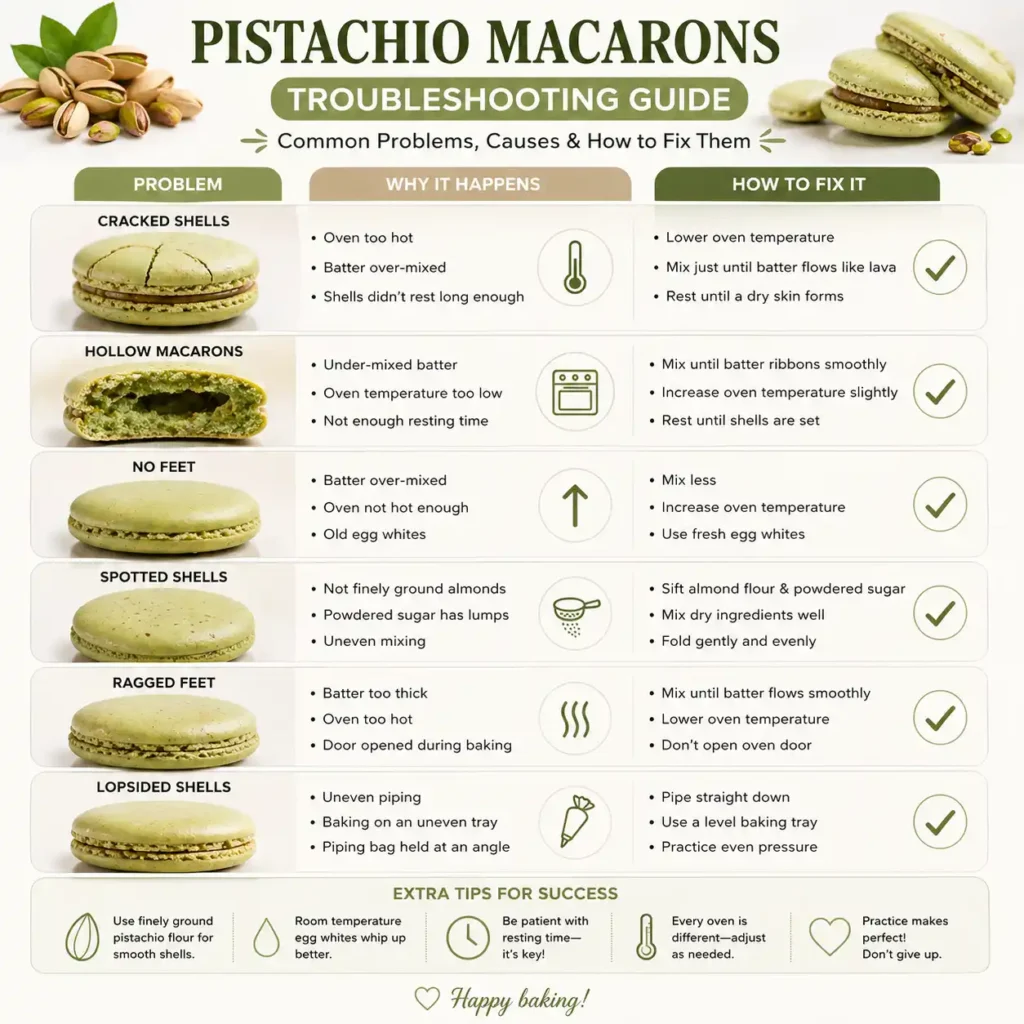
Why Are My Pistachio Macarons Hollow?
Hollow macarons often come from overwhipped meringue, overmixed batter, or oven heat that is too high.
The shell rises fast, but the inside does not set with it. As a result, a gap forms under the top.
To fix it:
- Stop whipping when the meringue forms stiff, glossy peaks.
- Fold the batter only until it flows in a slow ribbon.
- Bake one test tray first.
- Check your oven with an oven thermometer.
- Let the shells cool fully before judging the texture.
Also, do not skip the 24-hour chill after filling. Maturing helps the filling soften the inside and can reduce the hollow feel.
Why Did My Macaron Shells Crack?
Cracked tops usually mean the shells did not dry long enough before baking. Steam builds inside, then breaks through the surface.
Other causes include large air bubbles, hot oven heat, or batter that was too thick.
To fix it:
- Rest the piped shells until the tops feel dry to the touch.
- Tap each tray on the counter several times.
- Pop visible bubbles with a toothpick.
- Sift the dry mixture well.
- Lower the oven heat slightly if cracks keep happening.
If your kitchen is humid, the shells may need more time to form a skin. Do not bake by the clock alone. Bake when the surface feels ready.
Why Didn’t My Pistachio Macarons Develop Feet?
Macaron feet form when the top dries, then the batter rises from the base during baking. If there are no feet, the shells may not have rested enough.
The meringue may also be weak, or the batter may be too loose.
To fix it:
- Whip the meringue until it is glossy and firm.
- Fold slowly once the batter starts to loosen.
- Rest the shells until they lose their shine.
- Use a steady oven temperature.
- Avoid opening the oven door too early.
If the shells spread flat, the batter was likely overmixed. Next time, stop folding sooner.
Why Are My Macaron Shells Lopsided?
Lopsided shells often come from uneven piping, warped pans, or strong oven airflow.
With a fan oven, air can push the shells before they set. Also, if the piping bag is tilted, the batter lands unevenly.
To fix it:
- Hold the piping bag straight over the tray.
- Pipe from the center without moving the tip around.
- Use flat, sturdy baking sheets.
- Turn the tray only near the end of baking if needed.
- Try one tray at a time for better heat control.
A silicone mat can help with shape, but parchment may give cleaner lift in some ovens.
Why Are My Pistachio Macaron Shells Wrinkled or Bumpy?
Wrinkled shells can come from oily almond flour, too much food coloring, or undermixed batter. Bumpy shells usually mean the dry ingredients were not sifted enough.
Pistachio ingredients can add extra oil, so the shell mixture needs care.
To fix it:
- Pulse the almonds and powdered sugar only briefly.
- Sift the dry mix and remove large pieces.
- Use gel color, not liquid color.
- Avoid adding pistachio butter to the shell batter.
- Fold until the batter smooths out and flows slowly.
The pistachio flavor in this recipe comes from the filling, which keeps the shells more stable.
Why Are My Macarons Sticking to the Mat?
Sticky macarons are usually underbaked or removed too soon. They need time to finish setting as they cool.
To fix it:
- Bake until the shells do not wiggle at the feet.
- Let them cool fully on the tray.
- Peel the mat or parchment away from the shell, not the shell away from the mat.
- Add 1 to 2 minutes to the next tray if the centers stay wet.
- Use parchment if silicone mats keep trapping moisture.
If the tops brown before the centers bake, your oven may run too hot. Lower the heat a little and bake longer.
Why Is My Pistachio Filling Too Soft?
In this recipe, the filling is a whipped pistachio white chocolate ganache, not a classic buttercream. However, it can still become too soft if it is warm, under-chilled, or overwhipped.
To fix it:
- Chill the filling until thick before whipping.
- Whip only until it looks lighter and pipeable.
- If it loosens, chill it for 15 to 20 minutes.
- If it feels too thick, let it sit at room temperature briefly.
- Do not add warm cream after the filling has set.
The filling should hold its shape on a spoon, but it should not feel stiff or dry.
How to Fill and Mature Pistachio Macarons
Filling the macarons is more than the final step. It is where the texture starts to change. After chilling, the filling softens the inside of the shells, so each bite becomes crisp, tender, and chewy.
Match the Macaron Shells by Size
Place the cooled shells on your work surface. Pair each shell with one that matches its size and shape. This gives the finished macarons a cleaner look.
Turn half of the shells upside down. These will hold the filling.
Pipe the Pistachio Filling Evenly
Add the whipped pistachio filling to a piping bag with a round tip. Pipe a small mound in the center of each upside-down shell.
Do not pipe too much. The filling should spread close to the edge when you add the top shell, but it should not spill out.
Sandwich the Pistachio Macarons Gently
Place the matching shell on top. Press down with light, even pressure. Stop when the filling reaches the edge.
If a shell cracks, set it aside for tasting. Do not use cracked shells for the best-looking macarons.
Chill for the best texture
Transfer the filled macarons to an airtight container. Chill them for at least 24 hours.
This resting time is called maturing. During this step, the filling adds moisture to the shells. As a result, the center turns soft and chewy while the outside keeps a light bite.
Bring to room temperature before serving
Take the macarons out of the fridge 15 to 20 minutes before serving. Cold macarons can taste firm, and the pistachio flavor may feel muted. Room temperature gives the filling a creamier texture.
For a pistachio dessert board, serve these macarons with a spoonable pistachio spread.
Serving and Storage Tips for Pistachio Macarons
Serve pistachio macarons slightly cool, not straight from the fridge. Let them sit at room temperature for 15 to 20 minutes first. This makes the filling softer and brings out the pistachio flavor.
For a clean dessert plate, arrange the macarons in a single layer and add a few chopped pistachios nearby. You can also serve them with coffee, mint tea, or a small bowl of fresh berries.
Store filled macarons in an airtight container in the refrigerator for up to 5 days. Since the filling contains cream, do not leave them at room temperature for long periods. The USDA advises refrigerating perishable foods within 2 hours.
To freeze them, place the filled macarons in a single layer until firm. Then transfer them to a freezer-safe container with parchment between layers. Freeze for up to 1 month for best taste and texture.
Thaw frozen macarons in the refrigerator overnight. Then let them sit at room temperature before serving. Do not reheat macarons, since heat can melt the filling and soften the shells too much.
For a full pistachio dessert spread, pair them with this pistachio cream recipe.
Helpful Notes
Use grams for every batch. Macarons are sensitive, so small changes in egg whites, sugar, or almond flour can change the batter fast.
Do not add pistachio butter to the shells. It can make the batter oily and lead to wrinkled tops. Instead, keep the pistachio flavor in the filling, where it stays smooth and rich.
Use gel food coloring only if you want a soft green shade. Liquid color can loosen the batter, so add color to the almond paste before you fold in the meringue.
Resting time depends on your kitchen. If the tops still feel tacky, give them more time before baking. The shells should feel dry when touched lightly.
Do one test tray first. If the shells crack, lower the heat slightly or rest the next tray longer. If they spread too much, the batter was likely folded too far.
Nutritional Information
Each fully assembled bakery-style pistachio macaron contains approximately 133 calories, with 16g of carbohydrates and 2g of protein. Because we use a rich white chocolate and cream ganache filling rather than a simple buttercream, they are incredibly satisfying—you only need one or two to hit that sweet craving.
(Note: Full nutrition facts are listed at the bottom of the recipe card below).
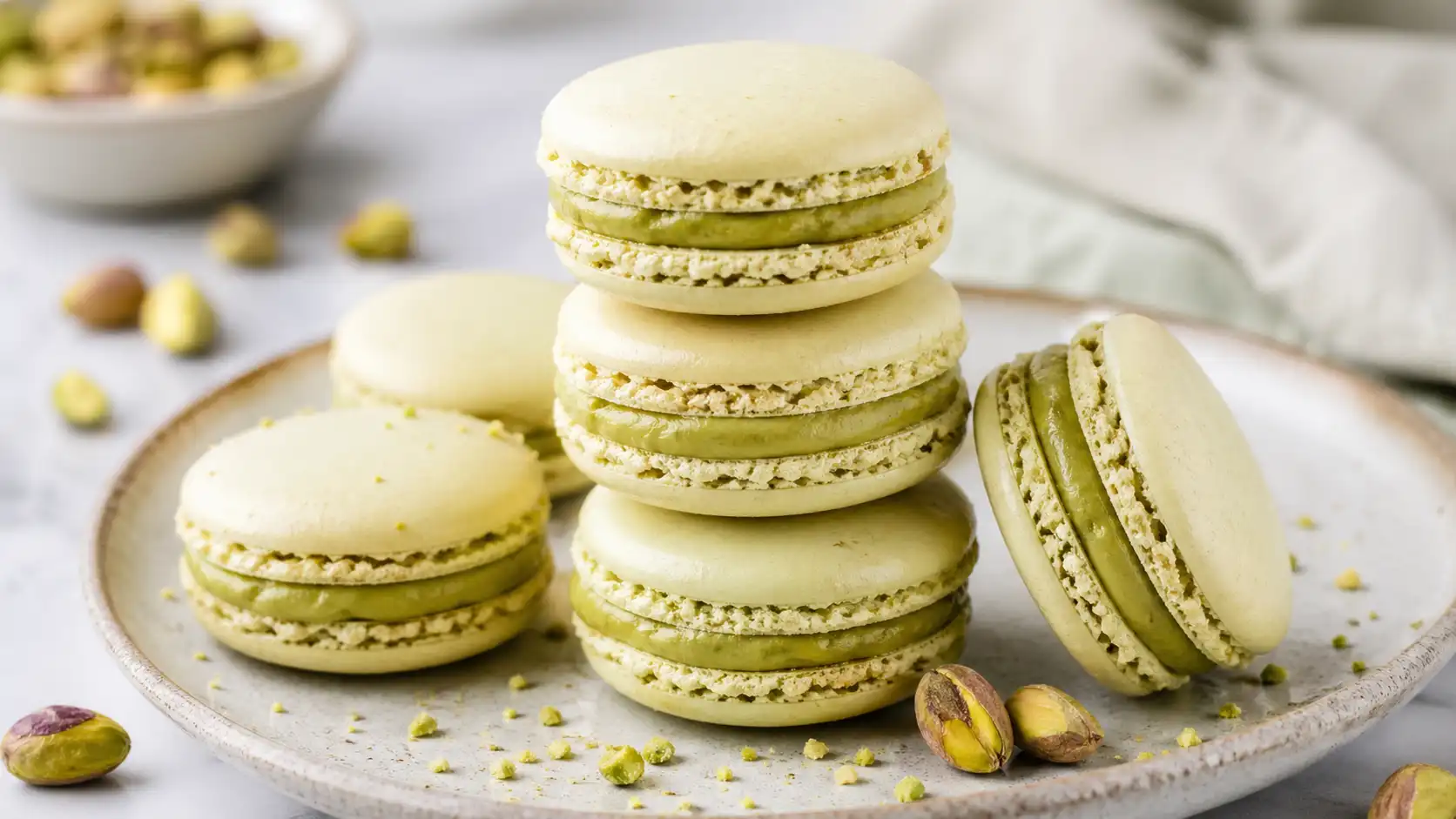
Pistachio Macarons Recipe
Ingredients
Equipment
Method
- Line baking sheets with parchment paper or silicone mats. If using a macaron guide, slide it under the parchment so each shell is the same size.
- Wipe the mixing bowl and whisk with a little vinegar to remove grease. This helps the egg whites whip into a stable meringue.
- Add the ground almonds and powdered sugar to a food processor. Pulse 10 to 15 times, just until finer. Do not overprocess, or the almonds may release oil.
- Sift the dry mixture into a large bowl and discard any large pieces left in the sieve.
- Add 100 g egg whites to the dry mixture and stir until a thick almond paste forms. Add gel food coloring now, if using. Cover the bowl so the paste does not dry out.
- Place the granulated sugar and water in a small saucepan. Heat over medium heat without stirring once the pan is on the stove.
- Clip a candy thermometer to the pan. When the syrup reaches 112°C, start whipping the remaining 100 g egg whites with a pinch of salt.
- Continue heating the syrup until it reaches 118°C. With the mixer running, pour the syrup slowly down the side of the bowl, avoiding the whisk.
- Keep mixing until the bowl feels close to room temperature. The meringue should be glossy and form stiff peaks.
- Add part of the meringue to the almond paste and fold with a rubber spatula. Add the rest in stages, scraping around the bowl and through the center.
- Stop folding when the batter reaches the ribbon stage. It should fall from the spatula in a thick ribbon and settle back into itself within about 10 seconds.
- Spoon the batter into a piping bag fitted with a round tip. Hold the bag straight over the tray and pipe even rounds.
- Tap each tray on the counter at least three times to release trapped air. Pop visible bubbles with a toothpick.
- Let the piped shells rest at room temperature until the tops feel dry and no batter sticks to your finger. This may take 20 to 40 minutes, or longer in a humid kitchen.
- Preheat a fan oven to 150°C. Bake one tray at a time for 18 to 20 minutes.
- The shells are ready when they hold their shape and do not wobble at the feet when touched lightly. Let them cool completely on the tray before removing.
- Place the chopped white chocolate and salted pistachio butter in a heatproof bowl.
- Warm the heavy cream until it just begins to simmer. Pour it over the chocolate and pistachio butter. Cover for 1 to 2 minutes, then stir until smooth.
- Chill the filling for a few hours, or overnight, until thick. Before piping, whip it briefly until lighter and fluffy. Do not overwhip.
- Pair the cooled shells by size. Pipe filling onto half of them, then place a matching shell on top. Press gently until the filling reaches the edge.
- Place the filled macarons in an airtight container and chill for at least 24 hours before serving. Let them sit at room temperature for 15 to 20 minutes before eating.
Notes
- Serving Size: 1 assembled macaron
- Calories: 133 kcal
- Fat: 7 g
- Saturated Fat: 2 g
- Carbohydrates: 16 g
- Sugar: 15 g
- Protein: 2 g
- Sodium: 14 mg
- Use grams for every batch because macarons are sensitive to small changes in moisture, sugar, and almond flour.
- Do not add pistachio butter to the shells. It can make the batter oily and may cause wrinkled tops. Keep the pistachio flavor in the filling for a smoother result.
- Use gel food coloring only if you want a soft green shade. Liquid coloring can loosen the batter.
- Resting time depends on your kitchen. If the tops still feel tacky, let the shells rest longer before baking.
- Bake one test tray first. If the shells crack, lower the heat slightly or rest the next tray longer. If they spread too much, the batter was likely overmixed.
- Store filled macarons in an airtight container in the refrigerator for up to 5 days. Freeze for up to 1 month, then thaw in the refrigerator overnight.
Conclusion
These pistachio macarons are worth the care they need. The Italian meringue gives the shells strength, while the pistachio white chocolate filling adds a smooth, nutty center. After a 24-hour chill, the texture turns soft inside with a light bite outside.
Serve them for holidays, parties, gift boxes, or a weekend baking project.
If you try this recipe, leave a comment and a star rating. You can also share it on Pinterest or Facebook. What did you try: green shells, natural color, or a new filling flavor?
Frequently Asked Questions
Macarons are not hard because of the ingredients. They are hard because the batter changes quickly. For best results, weigh the ingredients, whip the meringue until glossy, and stop folding when the batter reaches the ribbon stage. Also, bake one test tray first if your oven runs hot.
Yes, but use it in the filling, not the shells. Pistachio paste or pistachio butter can add too much oil to macaron batter, which may cause wrinkled tops or weak shells. In this recipe, the shells use ground almonds, while the pistachio flavor comes from the filling.
Yes. Food coloring is optional. Without it, the shells may look beige or pale green, but the taste will stay the same. Use gel color if you want a green shade, since liquid color can loosen the batter.
Macarons are French sandwich cookies made with almond flour, egg whites, and sugar. They have smooth tops, small feet, and a creamy filling. Macaroons are usually coconut cookies. They are denser, chewier, and often shaped like small mounds.
Rest them until the tops feel dry and no batter sticks to your finger. This can take 20 to 40 minutes in a dry kitchen. However, in a humid kitchen, it can take longer. Do not bake them while the tops still feel tacky.
Filled macarons last up to 5 days in an airtight container in the fridge. For the best texture, let them mature for 24 hours before serving. You can also freeze them for up to 1 month. Thaw them in the fridge, then bring them to room temperature.
Looking for more bite-sized treats to fill your cookie jar? These delicate Earl Grey Cookies pair perfectly with a cup of tea, just like macarons. If you need something quicker, my thick and chewy Peanut Butter Cookies or these simple Vegan Chocolate Chip Cookies come together in a fraction of the time!
A homemade pistachio macaron filled with white chocolate ganache contains about 133 calories. Standard bakery macarons range from 80 to 150 calories depending on the size and whether the filling is a light jam or a heavy butter-based cream.
More Bakery-Style Desserts to Try
Macarons are the perfect elegant treat, but if you’re baking for a special occasion, you might also want a show-stopping centerpiece. My Lemon Olive Oil Cake offers a beautifully moist, sophisticated crumb, while this adorable Bento Cake or a classic Heart Cake are fantastic options for gifting and small celebrations.
I love pistachios & of course I think the pistachio macarons are the most delicious..I was taught by a French pastry chef NEVER use a fan forced oven so I don’t. He said they have a tendency to make your macarons lopsided. I never wanted that so I just turn the fan off. Really delicious recipe!! I loved them.