These Greek Yogurt Muffins are soft, moist, and lightly sweet, with a tender crumb and a bakery-style dome. Greek yogurt adds moisture, mild tang, and extra protein compared with a basic muffin batter, making these muffins a practical breakfast, snack, or meal prep option.
This recipe is simple enough for beginner bakers but still gives you muffins that feel bakery-worthy. The key is using thick plain Greek yogurt, mixing the batter gently, filling the muffin cups generously, and starting with a short burst of high heat to help the muffins rise tall.
What Makes Greek Yogurt Muffins So Moist?
Greek yogurt muffins are moist, tender, and slightly tangy because thick Greek yogurt adds creaminess to the batter while helping create a softer crumb. For the best bakery-style texture, use plain Greek yogurt, avoid overmixing, fill the muffin cups generously, and start baking with a short burst of high heat.
Jump to: Ingredients | How to Make | Bakery-Style Tips | Variations | Storage | FAQ
Greek Yogurt Muffins at a Glance
- Best for: breakfast, snack, lunchbox treats, brunch, or meal prep.
- Texture: moist, fluffy, and tender with a lightly domed top.
- Flavor: lightly sweet with a subtle Greek yogurt tang.
- Main ingredient: plain Greek yogurt.
- Skill level: beginner-friendly.
- Customizable: add blueberries, chocolate chips, lemon zest, nuts, or warm spices.
Why You’ll Love These Greek Yogurt Muffins
Greek yogurt muffins are a great choice when you want homemade muffins that taste soft and satisfying without feeling too heavy. They work well for busy mornings, school lunches, afternoon snacks, or weekend baking.
- Moist and tender: Greek yogurt helps keep the crumb soft and prevents the muffins from drying out too quickly.
- Easy to customize: Use the base recipe with berries, chocolate chips, nuts, lemon zest, cinnamon, or your favorite mix-ins.
- Great for meal prep: Bake a batch once and enjoy them throughout the week.
- Bakery-style look: A higher starting oven temperature helps create taller muffin tops.
- Simple ingredients: You can make them with common baking staples and plain Greek yogurt.
What Does Greek Yogurt Do in Muffins?
Greek yogurt adds moisture, tenderness, mild tang, and extra protein to muffins. Its acidity also works with baking soda to help the batter rise and create a softer crumb.
Because Greek yogurt is thicker than regular yogurt, it helps create a rich muffin batter without making the texture too wet. For the best result, use plain Greek yogurt instead of flavored yogurt so you can control the sweetness and flavor of the muffins.
Key Ingredients and Substitutions
Here are the main ingredients that make these Greek yogurt muffins soft, fluffy, and flavorful.
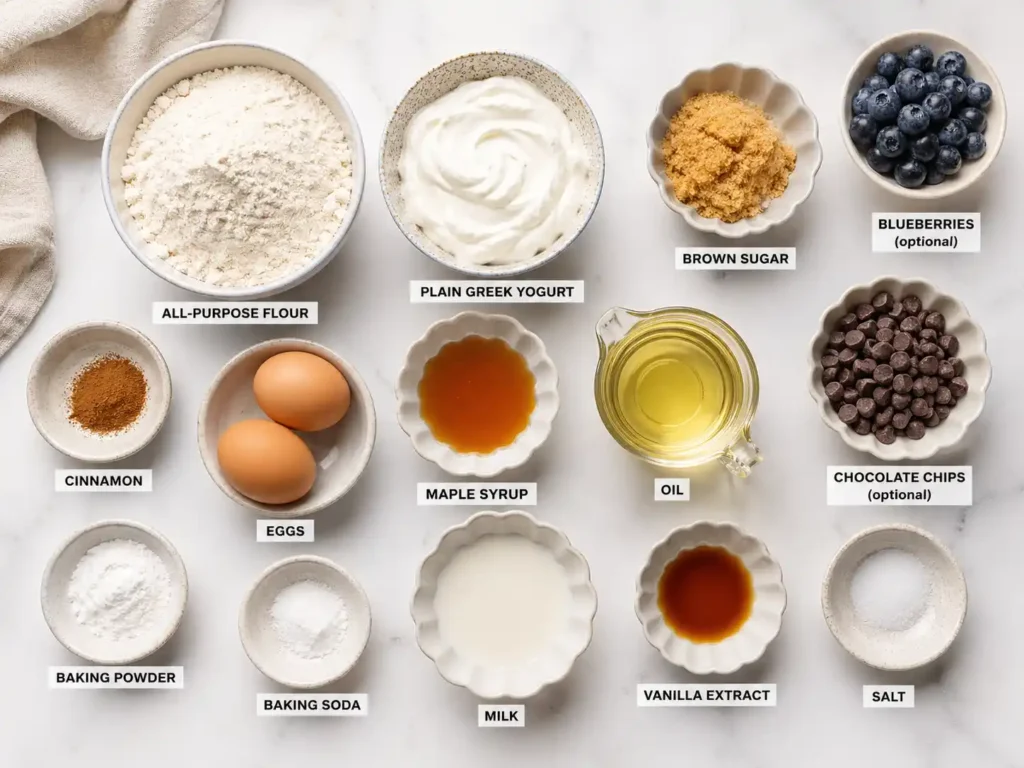
- All-purpose flour: Gives the muffins a classic soft texture. You can replace up to half with white whole wheat flour for a more whole-grain version, but using all whole wheat flour may make the muffins denser.
- Baking powder and baking soda: These help the muffins rise. Make sure both are fresh for the best dome and texture.
- Salt: Balances the sweetness and brings out the flavor.
- Cinnamon: Adds warmth. You can omit it or replace it with nutmeg, cardamom, or pumpkin pie spice.
- Plain Greek yogurt: The key ingredient for moisture, tenderness, and mild tang. For the softest muffins, use 2% or whole milk Greek yogurt.
- Maple syrup: Adds sweetness. Honey can also work, but it may slightly change the flavor.
- Eggs: Help structure the muffins and keep them soft.
- Milk: Helps loosen the batter. Dairy milk, almond milk, oat milk, or soy milk can work.
- Neutral oil: Keeps the muffins moist. Avocado oil, light olive oil, melted coconut oil, or melted butter can be used.
- Vanilla extract: Adds bakery-style flavor.
- Mix-ins: Blueberries, chocolate chips, chopped nuts, lemon zest, or dried fruit all work well.
Best Greek Yogurt for Muffins
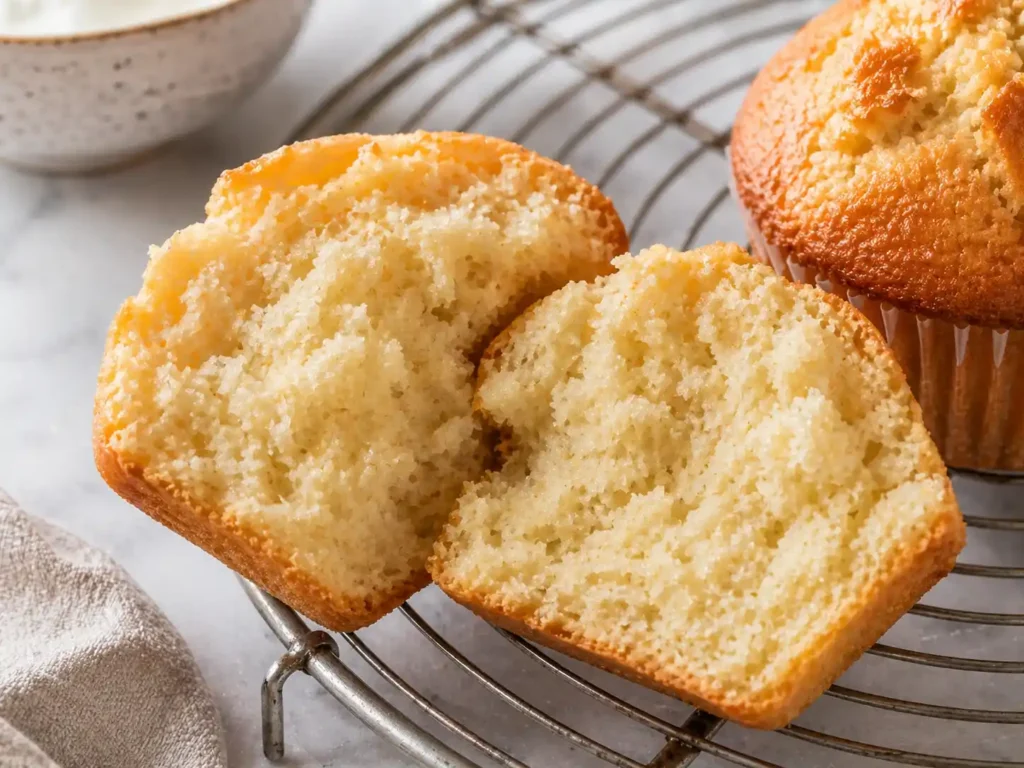
Plain Greek yogurt works best for muffins. For the softest and richest texture, use 2% or whole milk Greek yogurt. Nonfat Greek yogurt can work too, but the muffins may taste slightly less rich and can dry out faster if overbaked.
Avoid sweetened or flavored Greek yogurt unless you are intentionally adjusting the recipe, because it can change the sweetness, flavor, and moisture level of the muffins.
How to Make Greek Yogurt Muffins
1. Mix the dry ingredients
In a large bowl, whisk together the flour, baking powder, baking soda, salt, and cinnamon. This helps distribute the leavening evenly so the muffins rise properly.
2. Whisk the wet ingredients
In a separate bowl, whisk the Greek yogurt, eggs, maple syrup, milk, oil, and vanilla until smooth. Room-temperature ingredients mix more evenly, but the recipe can still work if your ingredients are cold.
3. Combine gently
Add the dry ingredients to the wet ingredients and fold just until no dry streaks remain. Do not overmix. A few small lumps are normal for muffin batter.
4. Add your mix-ins
Fold in blueberries, chocolate chips, chopped nuts, or lemon zest. If using frozen berries, add them straight from the freezer and fold gently so they do not streak the batter too much.
5. Fill and bake
Fill the muffin cups generously for taller muffin tops. Bake at a higher temperature for the first few minutes, then reduce the heat until the muffins are golden and a toothpick inserted into the center comes out with moist crumbs.
Tips for Perfect Bakery-Style Greek Yogurt Muffins
- Do not overmix the batter: Mix only until the flour disappears. Overmixing develops gluten and can make muffins dense or chewy.
- Spoon and level the flour: Do not scoop flour directly from the bag. Too much flour can make muffins dry.
- Use thick Greek yogurt: Thin yogurt can make the batter too wet and may affect the rise.
- Fill the liners high: For bakery-style tops, fill the muffin cups close to the top instead of halfway.
- Use a hot oven start: Starting at a higher temperature helps the muffins rise quickly and form a dome.
- Check early: Muffins are done when the tops spring back lightly and a toothpick comes out with moist crumbs, not wet batter.
- Cool before storing: Let the muffins cool completely before placing them in a container to avoid excess moisture and sogginess.
How to Get Tall Muffin Tops
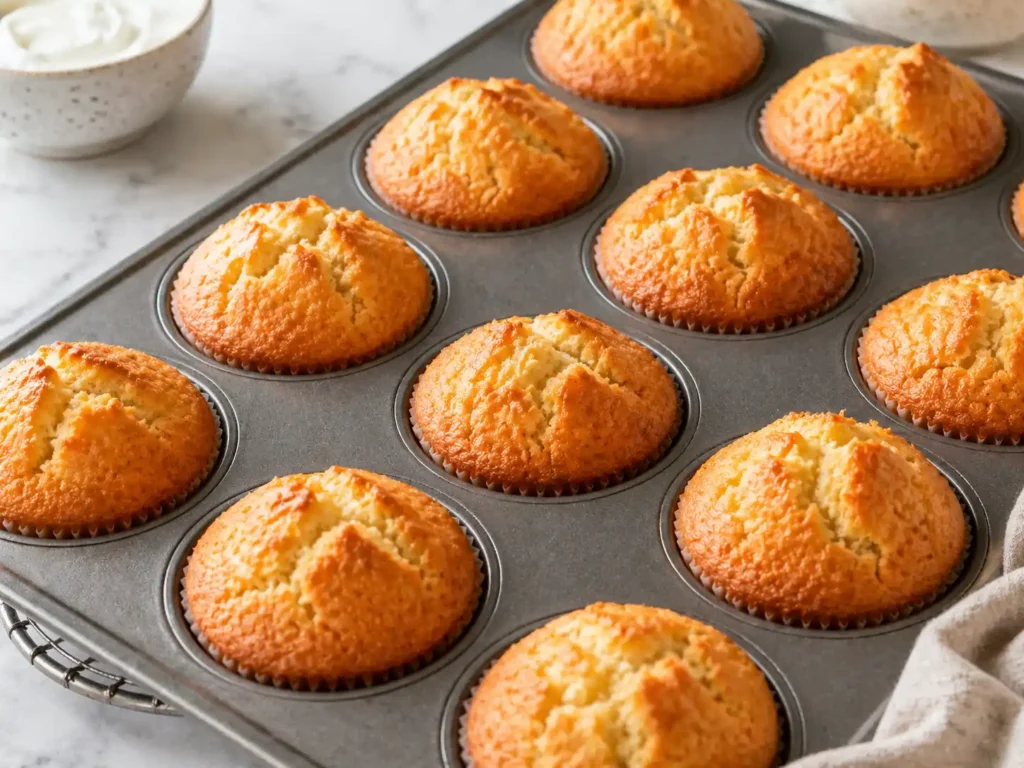
For tall, bakery-style muffin tops, fill the muffin cups almost to the top and start baking at a higher oven temperature for the first few minutes. The initial heat helps the batter rise quickly, then the lower temperature finishes baking the centers without drying them out.
Also make sure your baking powder and baking soda are fresh. Old leavening can prevent the muffins from rising properly.
Greek Yogurt Muffin Variations
This base recipe is easy to customize. Try one of these simple variations:
- Blueberry Greek Yogurt Muffins: Fold in fresh or frozen blueberries. Add lemon zest for a brighter flavor.
- Chocolate Chip Greek Yogurt Muffins: Add mini or regular chocolate chips for a sweeter snack-style muffin.
- Lemon Greek Yogurt Muffins: Add fresh lemon zest and a small splash of lemon juice for a fresh citrus flavor.
- Banana Greek Yogurt Muffins: Add mashed ripe banana, but reduce the liquid slightly if the batter becomes too wet.
- Nutty Greek Yogurt Muffins: Fold in chopped walnuts, pecans, or almonds for crunch.
- Warm Spice Muffins: Add cinnamon, nutmeg, or pumpkin pie spice for a cozy flavor.
- Streusel-Topped Muffins: Add a simple crumb topping before baking for a more bakery-style finish.
Helpful Tools
You do not need special equipment, but a few basic baking tools make this recipe easier and more consistent:
- 12-cup muffin pan
- Paper liners or silicone liners
- Large mixing bowl
- Whisk and spatula
- Cookie scoop for evenly portioned muffins
- Wire cooling rack
Tip: If you use affiliate links on your site, this is a natural place to link to your favorite muffin pan, liners, cookie scoop, and cooling rack without disrupting the reader experience.
Troubleshooting Greek Yogurt Muffins
Why are my muffins dense?
Dense muffins usually happen when the batter is overmixed or when too much flour is added. Spoon and level the flour, then fold the batter gently until the dry ingredients just disappear.
Why did my muffins turn out dry?
Dry muffins are usually overbaked or made with too much flour. Start checking early and remove them from the oven when a toothpick comes out with moist crumbs.
Why didn’t my muffins rise?
Flat muffins can happen if the baking powder or baking soda is old, the oven is not hot enough at the start, or the muffin cups are not filled high enough.
Why are my muffins gummy?
Gummy muffins may be underbaked or too wet from substitutions. Bake until the centers spring back lightly when touched and avoid adding too much fruit or extra liquid.
Why did my fruit sink?
Fruit can sink if the batter is too thin or the fruit pieces are too large. For berries, toss them with a small spoonful of flour before folding them into the batter.
Storage and Freezing Instructions
Room temperature
Let the muffins cool completely, then store them in an airtight container at room temperature for up to 3 days. Place a paper towel in the container to help absorb excess moisture.
Refrigerator
For longer storage, refrigerate the muffins in an airtight container for up to 5–7 days. Warm them briefly before serving for the best texture.
Freezer
To freeze, let the muffins cool completely. Place them in a single layer on a baking sheet and freeze until firm, then transfer them to a freezer-safe bag or container. Freeze for up to 3 months.
How to reheat
Thaw frozen muffins at room temperature, or warm them in the microwave for 20–30 seconds. You can also reheat them in a 300°F oven for 5–10 minutes.
What to Serve with Greek Yogurt Muffins
Greek yogurt muffins are easy to serve as a quick breakfast or snack. Pair them with fresh fruit, a smoothie, scrambled eggs, coffee, tea, or a bowl of yogurt for a more filling meal.
For more easy breakfast ideas, you may also like:
- High Protein Overnight Oats
- Blueberry Protein Muffins
- 3 Ingredient Banana Muffins
- Protein Waffle Recipe
- 4 Ingredient Banana Bread
Frequently Asked Questions
Here are the most common questions about making soft, moist Greek yogurt muffins with a tender crumb and bakery-style tops.
What does Greek yogurt do in muffins?
Greek yogurt makes muffins moist, tender, and slightly tangy. It also adds extra protein and works with baking soda to help create a softer crumb.
Can I use regular yogurt instead of Greek yogurt?
Yes, but regular yogurt is thinner than Greek yogurt. If you use regular yogurt, reduce the milk slightly or drain the yogurt first so the batter does not become too wet.
Can I use nonfat Greek yogurt?
Yes, nonfat Greek yogurt can work, but 2% or whole milk Greek yogurt usually gives a softer and richer muffin. If using nonfat yogurt, avoid overbaking because the muffins may dry out faster.
Should Greek yogurt muffin batter be thick?
Yes. Greek yogurt muffin batter should be thick and scoopable, not runny. A thicker batter helps the muffins rise higher and hold their shape in the oven.
Can I use frozen fruit in these muffins?
Yes. Frozen fruit works well and does not need to be thawed first. Fold it in gently and avoid overmixing so the batter does not become streaky.
How do I know when the muffins are done?
The muffins are done when the tops are lightly golden, the centers spring back when touched, and a toothpick inserted into the center comes out with moist crumbs but no wet batter.
Can I freeze Greek yogurt muffins?
Yes. Cool the muffins completely, freeze them in a single layer until firm, then transfer them to a freezer-safe bag or container for up to 3 months.
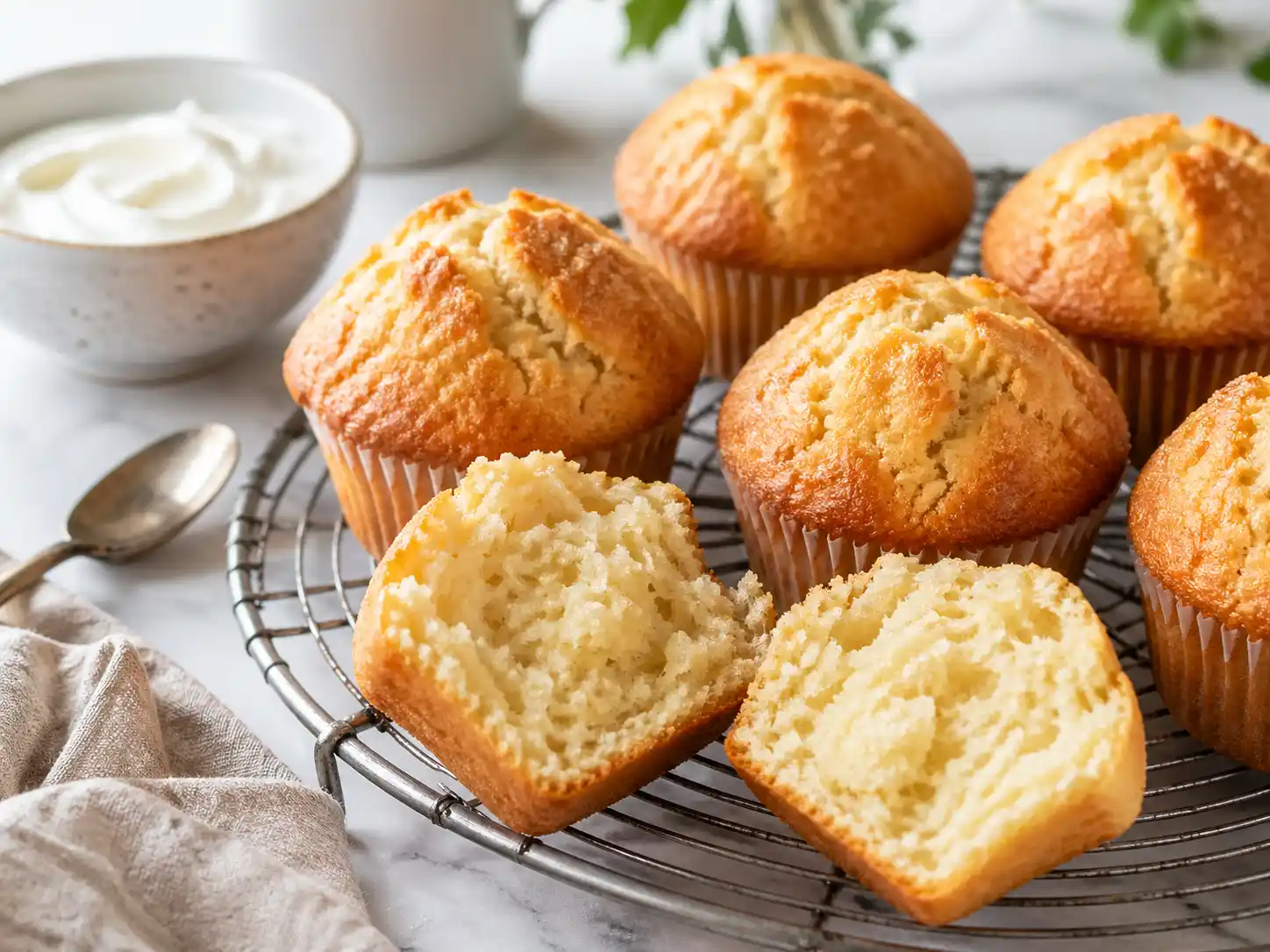

Greek Yogurt Muffins
Ingredients
Equipment
Method
- Preheat the oven to 425°F (220°C). Line a 12-cup muffin pan with paper liners or silicone liners, or lightly grease the cups.
- In a large mixing bowl, whisk together the flour, baking powder, baking soda, salt, and cinnamon until evenly combined.
- In a separate bowl, whisk the Greek yogurt, eggs, maple syrup, milk, oil, and vanilla extract until smooth.
- Add the dry ingredients to the wet ingredients. Fold gently with a spatula just until no dry streaks remain. Do not overmix; a few small lumps are normal.
- Fold in your chosen mix-ins, such as blueberries, chocolate chips, chopped nuts, dried fruit, or lemon zest. If using frozen berries, add them straight from the freezer.
- Divide the batter evenly among the muffin cups, filling each cup close to the top for taller bakery-style muffin tops.
- Bake at 425°F (220°C) for 5 minutes. Without opening the oven door, reduce the oven temperature to 350°F (175°C) and bake for another 12 to 14 minutes, or until the tops are lightly golden and a toothpick inserted into the center comes out with moist crumbs.
- Let the muffins cool in the pan for 5 minutes, then transfer them to a wire cooling rack to cool completely before storing.
Notes
- For the softest muffins, use thick plain 2% or whole milk Greek yogurt. Nonfat Greek yogurt can work, but the muffins may be slightly less rich and can dry out faster if overbaked.
- Do not overmix the batter. Mix only until the flour disappears to keep the muffins tender.
- For tall muffin tops, fill the muffin cups generously and begin baking at a higher oven temperature before lowering the heat.
- To store, cool completely and keep in an airtight container at room temperature for up to 3 days, refrigerate for up to 5 to 7 days, or freeze for up to 3 months.
- To reheat frozen muffins, thaw at room temperature or microwave for 20 to 30 seconds. They can also be warmed in a 300°F (150°C) oven for 5 to 10 minutes.
Final Thoughts
Greek yogurt muffins are a simple way to make homemade muffins softer, more moist, and a little higher in protein than many basic muffin recipes. Keep the base plain, add your favorite mix-ins, and use the bakery-style baking method when you want taller tops. Once cooled, they store well for busy mornings and freeze nicely for quick snacks later.