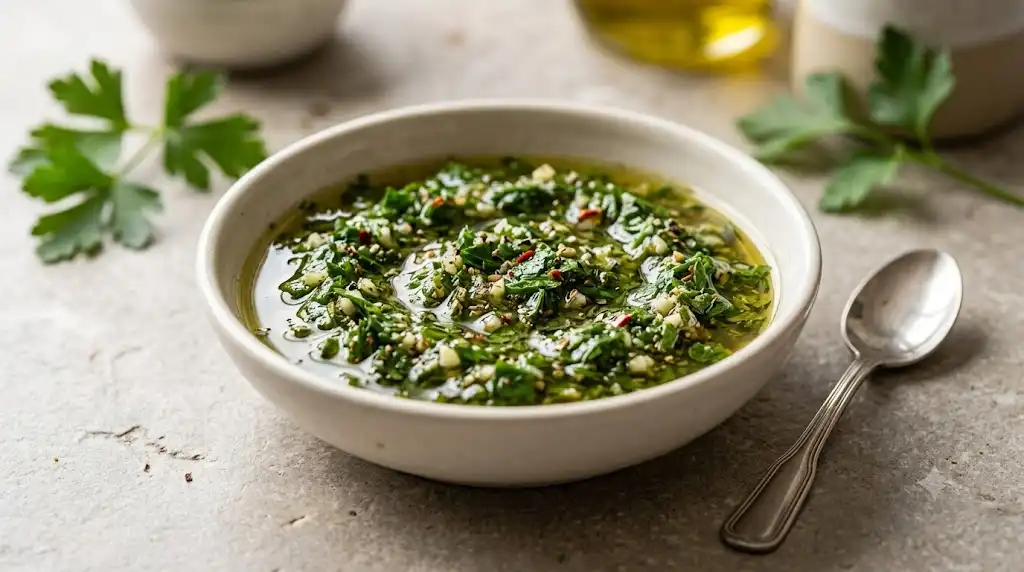
Fresh parsley, garlic, oregano, vinegar, and olive oil come together in this bright, spoonable chimichurri sauce. It is a no-cook sauce with a coarse texture, visible pieces of herbs, and optional heat from red pepper flakes.
You can chop everything by hand for maximum texture control or use a food processor with short pulses. The most important step is to stir in the olive oil after chopping so the sauce stays glossy and loose instead of becoming a smooth green paste.
Quick Answer
Chimichurri is a no-cook, parsley-based sauce made with garlic, oregano, oil, vinegar, seasonings, and optional chile. The finished sauce should be coarse, bright, and easy to spoon. The herbs should remain visible instead of being blended into a creamy puree.
What Is Chimichurri Sauce?
Chimichurri is associated with Argentine and Uruguayan cooking. Green versions commonly combine parsley, garlic, oregano, oil, vinegar, and chile, although regional and family recipes can vary.
This version centers on flat-leaf parsley and does not include cilantro. It is designed as a finishing sauce for grilled foods, vegetables, potatoes, and grain bowls rather than as a thick dip or fully blended dressing.
For more background on the cuisine and dishes commonly served with this sauce, explore our guide to Argentinian food.
Why This Recipe Works
- The parsley is thoroughly dried. Removing excess water helps prevent a thin or watery sauce.
- The oregano is hydrated first. Warm water softens the dried oregano and helps distribute it throughout the sauce.
- The garlic is finely minced. Small pieces spread the garlic flavor more evenly and avoid large, harsh bites.
- The oil is stirred in by hand. This preserves a coarse texture and avoids creating a creamy emulsion.
- The acidity is adjustable. The base amount of vinegar goes in first, while an additional tablespoon remains optional until after tasting.
- The heat is optional. Red pepper flakes can be adjusted or omitted.
Ingredients and What They Do
Flat-Leaf Parsley
Flat-leaf parsley provides the green color, herbaceous flavor, and body of the sauce. Wash it before measuring, then dry it thoroughly. Tender stems may be included along with the leaves.
Garlic
Garlic gives the sauce its savory bite. Mince it very finely so it mixes evenly with the parsley instead of leaving large pieces in individual spoonfuls.
Dried Oregano
Dried oregano adds another layer of herbal flavor. Hydrating it in warm water before adding the remaining ingredients helps soften the dried leaves.
Red Pepper Flakes
Red pepper flakes add adjustable heat and small flecks of color. They are optional and may be omitted for a sauce without noticeable heat.
Distilled White Vinegar
Distilled white vinegar with 5% acidity balances the richness of the oil and gives the sauce its bright flavor. Begin with the base quantity, then taste the sauce before adding the optional final tablespoon.
Olive Oil
A mild-tasting olive oil carries the flavors and gives the chimichurri a glossy, spoonable consistency. Add it after the herbs have been chopped or processed.
Salt and Black Pepper
Salt and black pepper bring the ingredients together. Taste the sauce after a brief rest before adding any extra salt.
Chimichurri Sauce Ingredients
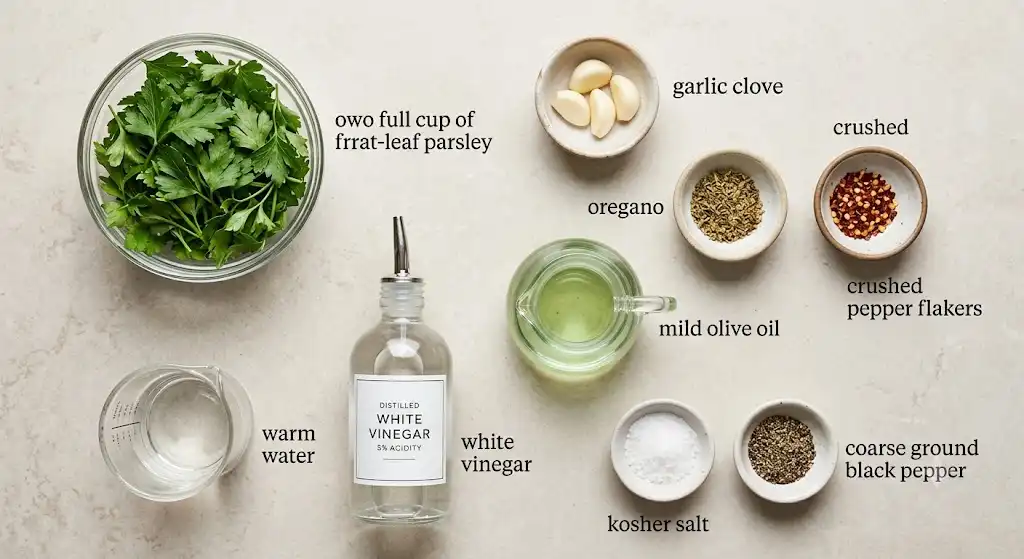
- 1 packed cup flat-leaf parsley leaves and tender stems, washed and thoroughly dried
- 4 garlic cloves, very finely minced
- 2 teaspoons dried oregano
- 1/2 teaspoon red pepper flakes, optional
- 2 tablespoons warm water
- 2 tablespoons distilled white vinegar with 5% acidity
- 1 additional tablespoon distilled white vinegar, optional after tasting
- 1/2 cup mild-tasting olive oil
- 1/2 teaspoon kosher salt, plus more only after tasting
- 1/4 teaspoon black pepper
How to Make Chimichurri Sauce
Method 1: Chop It by Hand
- Place the dried oregano and optional red pepper flakes in a mixing bowl. Add the warm water and let the mixture hydrate for about five minutes.
- Add the finely minced garlic, 2 tablespoons of distilled white vinegar, and the kosher salt. Stir to combine.
- Finely chop the thoroughly dried parsley. The pieces should be small but still recognizable as chopped herbs.
- Add the chopped parsley and black pepper to the bowl. Stir until the seasonings are evenly distributed.
- Pour in the olive oil. Stir gently with a spoon until the herbs are evenly coated and the sauce looks glossy. Do not whisk it into a creamy emulsion.
- Let the sauce rest briefly, then taste it. Add the optional final tablespoon of vinegar only when more acidity is wanted.
- Serve the chimichurri or refrigerate it promptly in a clean, covered container.
Method 2: Use a Food Processor
- Combine the dried oregano, optional red pepper flakes, and warm water. Allow the mixture to hydrate for about five minutes.
- Place the parsley, garlic, hydrated oregano mixture, 2 tablespoons of distilled white vinegar, salt, and black pepper in a small food processor.
- Pulse in short bursts. Stop when the parsley and garlic are finely chopped but still visibly separate. Do not run the processor continuously.
- Transfer the chopped mixture to a bowl.
- Stir in the olive oil by hand until the herbs are coated and the sauce is glossy and spoonable.
- Let the sauce rest briefly before tasting. Add the optional tablespoon of vinegar only if more acidity is needed.
- Serve or refrigerate promptly in a clean, covered container.
What the Finished Sauce Should Look Like
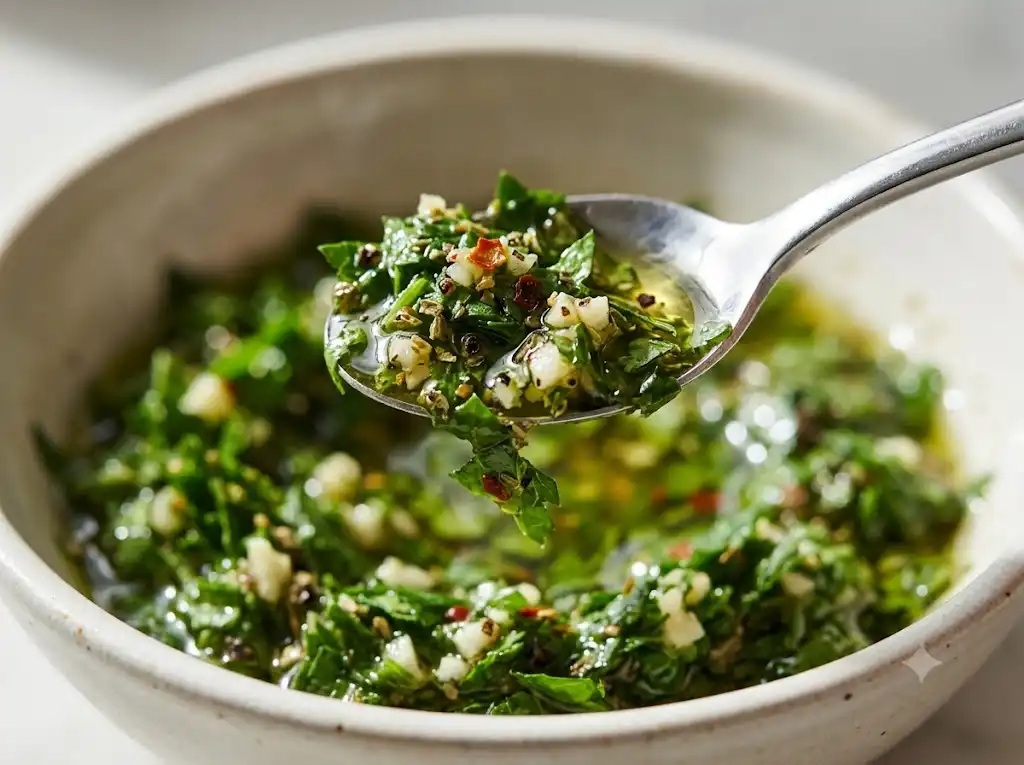
The finished sauce should be loose enough to fall easily from a spoon. Small parsley pieces, finely minced garlic, oregano, black pepper, and optional red pepper flakes should remain visible.
The oil should coat the ingredients without turning pale or creamy. A small amount of separation is normal in a stirred sauce that has not been emulsified. Stir the chimichurri before serving so the herbs and seasonings are evenly distributed again.
The flavor should be herbaceous, garlicky, and bright. The vinegar should balance the oil without overwhelming the parsley and oregano.
Reliable Adjustments
- For less heat: Omit the optional red pepper flakes.
- For more acidity: Add the optional final tablespoon of distilled white vinegar only after the sauce has rested and been tasted.
- For controlled texture: Chop the parsley by hand or use only short food processor pulses.
- For a parsley-forward flavor: Keep flat-leaf parsley as the primary herb. Cilantro is intentionally omitted from this version.
- For a smoother preparation process: Wash and dry the parsley before beginning so no excess water enters the sauce.
Chimichurri Troubleshooting
Why Is My Chimichurri Bitter?
Check whether the olive oil was processed at high speed or whether the oil itself has a noticeably bitter flavor. Stirring the oil into the chopped herbs by hand reduces unnecessary processing. More than one factor can contribute to bitterness, so processing is not always the only cause.
Why Is My Chimichurri Too Acidic?
Give the sauce a brief rest before making adjustments. Add the optional final tablespoon of vinegar only after tasting the base mixture. Do not add unlisted corrective ingredients without first testing the revised formula.
Why Does My Chimichurri Look Too Oily?
Stir the sauce before serving so the chopped parsley is redistributed through the oil. Confirm that the full packed cup of parsley was measured before changing the formula.
Why Did It Turn Into a Paste?
The parsley was likely processed for too long. Use brief pulses and stop while individual herb pieces remain visible. For greater control, use the hand-chopped method.
Why Is My Chimichurri Watery?
Excess water usually enters the sauce with wet parsley. Wash the parsley in advance, dry it thoroughly, and make sure no rinse water remains before chopping.
What to Serve With Chimichurri
Chimichurri works best as a finishing sauce. Spoon it over cooked food shortly before serving rather than exposing the fresh herbs to extended cooking.
| Food | Suggested Use |
|---|---|
| Steak or beef kabobs | Spoon the sauce over the cooked meat shortly before serving. |
| Grilled chicken | Use it as a fresh finishing sauce after the chicken is cooked. |
| Grilled shrimp | Add the chimichurri after the shrimp comes off the grill. |
| Grilled vegetables | Drizzle it over the vegetables while they are still warm. |
| Potatoes | Spoon it over roasted or boiled potatoes. |
| Rice or grain bowls | Add it just before serving for fresh herb and garlic flavor. |
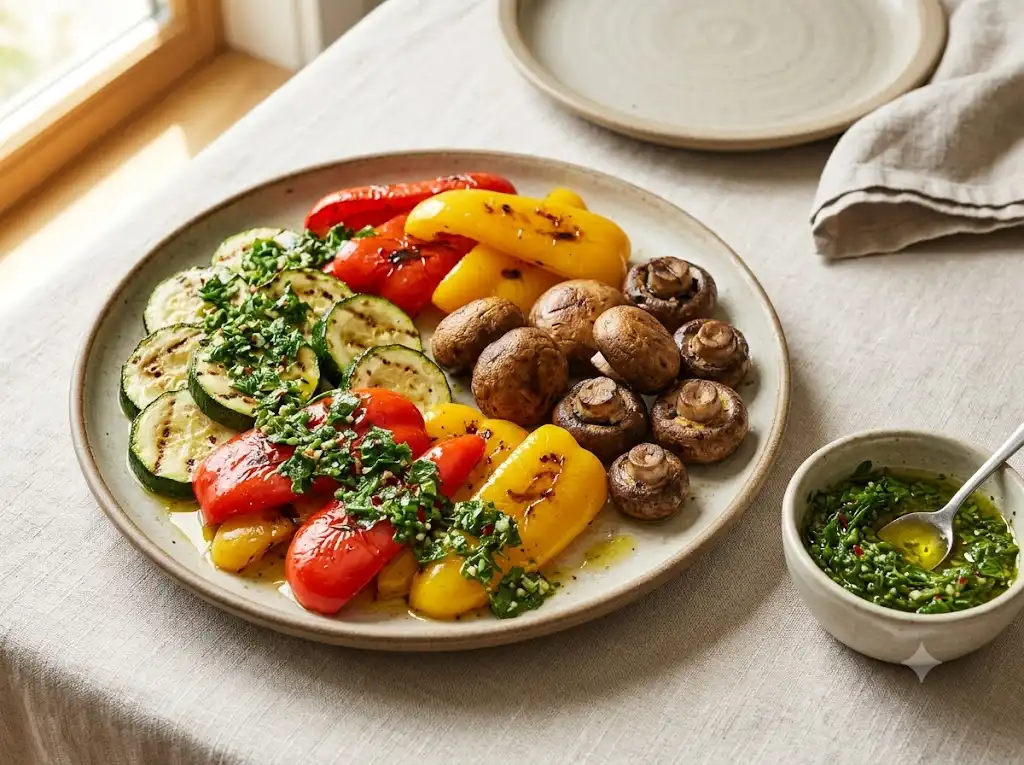
Try it with steak kabobs on the grill, chicken kabobs on the grill, shrimp kabobs on the grill, or vegetable kabobs on the grill.
For side dish ideas that can help complete the meal, see our guide to what to serve with kabobs.
Storage, Freezing, and Food Safety
This sauce contains fresh garlic and oil, so it must be refrigerated promptly in a clean, covered container. Keep it at 40°F or below and use it within four days. This guidance follows the National Center for Home Food Preservation recommendations for homemade garlic-in-oil mixtures.
Do not store homemade chimichurri at room temperature. Fresh herbs or garlic held in oil without a validated preservation process can create a food-safety risk. For more information, review the official FoodSafety.gov guidance on botulism and herb-infused oils.
The vinegar in this recipe is included for flavor and does not make the sauce shelf-stable. Do not use this recipe for home canning or room-temperature storage.
Freezing may be used when longer storage is needed. The exact freezer storage period and the sauce’s quality after thawing must be verified before publishing.
Helpful Tools for This Recipe
- A sharp chef’s knife for finely chopping the parsley and garlic
- A stable cutting board
- A small mixing bowl
- Measuring spoons and a liquid measuring cup
- A spoon for mixing in the oil
- A small food processor for the optional shortcut method
- A clean, covered refrigerator container
- A freezer-safe container if the sauce will be frozen
Easy Chimichurri Sauce Recipe
Ingredients
Equipment
Method
- Place the dried oregano and optional red pepper flakes in a small mixing bowl. Add the warm water and let the mixture hydrate for about 5 minutes.
- Add the finely minced garlic, 2 tablespoons of distilled white vinegar, kosher salt, and black pepper. Stir to combine.
- Finely chop the thoroughly dried parsley. Keep the pieces small but still visibly recognizable as chopped herbs.
- Add the parsley to the bowl and stir until the garlic, oregano, and seasonings are evenly distributed.
- Pour in the olive oil and stir gently with a spoon until the herbs are evenly coated and the sauce looks glossy. Do not whisk it into a creamy emulsion.
- Let the sauce rest briefly, then taste it. Add the optional final tablespoon of vinegar only when more acidity is desired.
- Serve immediately or refrigerate promptly in a clean, covered container.
- Combine the dried oregano, optional red pepper flakes, and warm water. Let the mixture hydrate for about 5 minutes.
- Place the parsley, garlic, hydrated oregano mixture, 2 tablespoons of distilled white vinegar, kosher salt, and black pepper in a small food processor.
- Pulse in short bursts until the parsley and garlic are finely chopped but still visibly separate. Do not process continuously or blend the mixture into a paste.
- Transfer the chopped mixture to a bowl and stir in the olive oil by hand until the sauce is glossy and spoonable.
- Let the sauce rest briefly before tasting. Add the optional tablespoon of vinegar only if more acidity is needed.
- Serve immediately or refrigerate promptly in a clean, covered container.
Notes
More Sauces and Grilling Ideas
For another fresh herb-based option, try our basil pesto recipe. Our tzatziki sauce recipe is another useful choice for grilled foods, vegetables, and grain bowls.
Get more fresh sauces, grilling recipes, and easy summer dinner ideas delivered to your inbox.
Frequently Asked Questions
What Is Chimichurri Sauce Made Of?
A common green chimichurri combines parsley, garlic, oregano, oil, vinegar, chile, salt, and pepper. Recipes vary, but this version uses flat-leaf parsley, dried oregano, distilled white vinegar, olive oil, and optional red pepper flakes.
Does Chimichurri Have Cilantro?
Some variations may contain cilantro, but it is not included in this recipe. This formula uses flat-leaf parsley as the primary herb.
Can I Make Chimichurri in a Food Processor?
Yes. Use short pulses and stop while individual pieces of parsley remain visible. Transfer the chopped mixture to a bowl and stir in the olive oil by hand. Continuous processing can turn the herbs into a paste.
How Long Does Chimichurri Last in the Refrigerator?
Refrigerate this fresh garlic and oil mixture promptly at 40°F or below and use it within four days. Do not store it at room temperature or treat it as shelf-stable.
What Do You Serve With Chimichurri?
Serve it with steak or beef kabobs, grilled chicken, shrimp, grilled vegetables, potatoes, rice, or grain bowls. It works especially well as a fresh finishing sauce added after cooking.