Canning peaches at home is a practical way to preserve ripe summer fruit for later use. This guide explains how to process yellow-flesh peaches in a boiling-water canner using the research-based NCHFP method. You will find a recommended hot-pack procedure, alternative packing liquids, altitude-adjusted processing times, storage instructions, and solutions to common canning problems.
Quick Answer
Yellow-flesh peaches can be processed in a boiling-water canner using either hot pack or raw pack. Hot pack is recommended because it generally produces better color, less floating fruit, and shorter processing times. Leave 1/2 inch of headspace and select the processing time that matches your jar size, packing method, and altitude.
Important safety note: This process is for yellow-flesh peaches only. Do not use it for white-flesh peaches. Current research-based guidance does not provide an approved pressure-canning process or acidification procedure for safely canning white peaches. Freeze white peaches instead.
Canning Peaches at a Glance
- Peach type: Ripe, mature yellow-flesh peaches
- Average quantity: 17 1/2 pounds for 7 quarts or 11 pounds for 9 pints
- Recommended method: Hot pack
- Alternative method: Raw pack
- Approved jar sizes: Pints or quarts
- Headspace: 1/2 inch
- Processing method: Boiling-water canner
- Processing time: 20 to 45 minutes, depending on the method, jar size, and altitude
- Primary safety source: National Center for Home Food Preservation
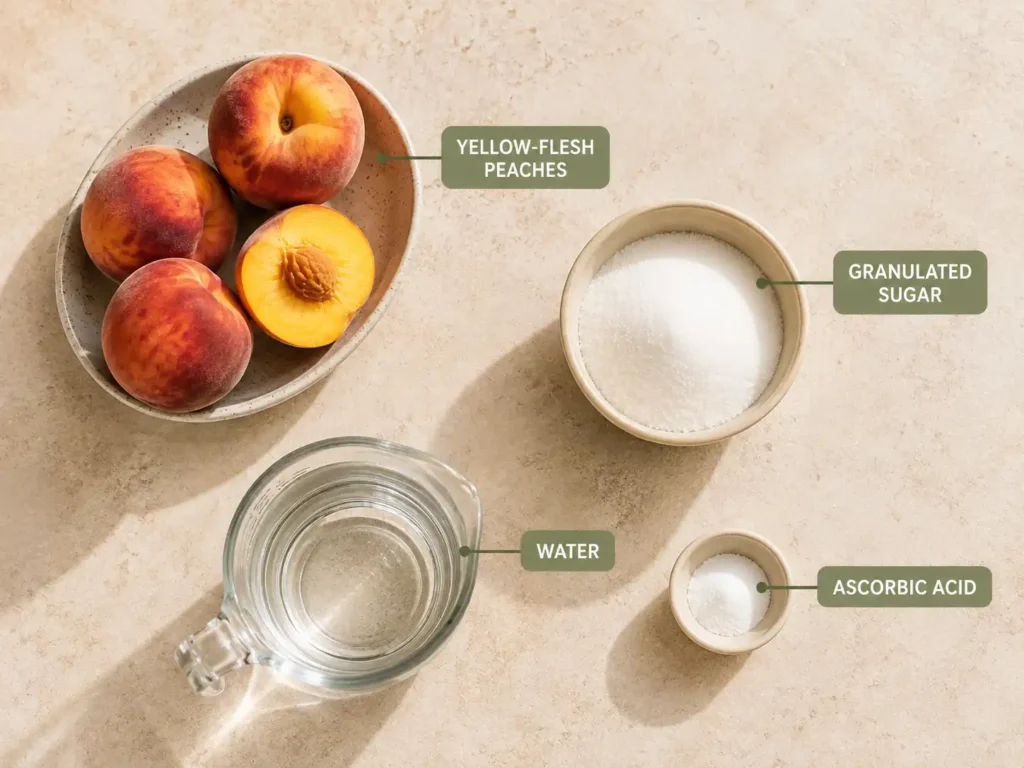
Use Yellow-Flesh Peaches Only
The tested processing instructions in this guide apply specifically to traditional yellow-flesh peaches. Do not apply the same procedure to a different fruit or to white-flesh peaches.
Why White Peaches Are Excluded
The natural pH of some white peaches may exceed 4.6, which makes them lower in acid than traditional yellow varieties. No researched acidification procedure or low-acid pressure process is currently available for white-flesh peaches.
Adding lemon juice to a jar does not make the yellow-peach process suitable for white peaches. The recommended home-preservation method for white peaches is freezing.
Freestone vs Clingstone Peaches
Freestone peaches release more easily from the pit, so they are usually simpler to halve and prepare. Clingstone peaches hold tightly to the pit and may be easier to process as slices.
Either type may be used as long as the peaches have yellow flesh and are in good condition.
How Ripe Should Peaches Be?
Choose ripe, mature yellow peaches that are suitable for eating fresh or cooking. They should have good color and flavor while remaining firm enough to handle. Avoid moldy, badly bruised, damaged, or excessively soft fruit.
Equipment You Need
- Boiling-water canner with a fitted lid and rack
- Seven quart canning jars, or the required number of pint jars
- New flat canning lids
- Compatible screw bands in good condition
- Jar lifter
- Canning funnel
- Bubble remover and headspace tool
- Large saucepan for the packing liquid and peaches
- Large pot for blanching
- Slotted spoon
- Large bowl for cold water
- Large bowl for the ascorbic acid holding solution
- Clean towels
Helpful Tools for This Guide
A jar lifter protects your hands while keeping hot jars upright. A canning funnel reduces spills around the rims, while a headspace tool makes it easier to maintain the required 1/2-inch space. A proper boiling-water canner should be deep enough to keep the jar tops covered throughout processing.
No particular brand is required. Choose equipment made for home canning, inspect every jar for cracks or chips, and follow the manufacturer’s directions for preparing the lids.
Choose Your Canning Liquid
Yellow peaches may be packed in very light, light, or medium sugar syrup. The NCHFP procedure also permits water, apple juice, or white grape juice.
Syrup Measurements
| Syrup | Water for 9 Pints | Sugar for 9 Pints | Water for 7 Quarts | Sugar for 7 Quarts |
|---|---|---|---|---|
| Very light | 6 1/2 cups | 3/4 cup | 10 1/2 cups | 1 1/4 cups |
| Light | 5 3/4 cups | 1 1/2 cups | 9 cups | 2 1/4 cups |
| Medium | 5 1/4 cups | 2 1/4 cups | 8 1/4 cups | 3 3/4 cups |
Heat the water and sugar together and bring the syrup to a boil. For hot pack, add the drained peaches to the liquid and bring the mixture back to a boil before filling the jars immediately.
Canning Peaches Without Added Sugar
You may use plain boiling water instead of sugar syrup. The tested process does not depend on added sugar for safety, but fruit packed in water may lose flavor, color, or shape more quickly during storage.
Using Apple Juice or White Grape Juice
Apple juice and white grape juice are also permitted packing liquids. Heat the juice before using it. For hot pack, add the drained peaches and bring the fruit and juice to a boil before filling the jars.
What Sugar Does and Does Not Do
Sugar syrup helps canned fruit retain flavor, color, and shape. It does not replace heat processing and does not make an incorrectly processed jar safe. Safety depends on using yellow peaches, an approved liquid, the correct jar size, 1/2-inch headspace, and the complete processing time for the selected altitude.
Hot Pack vs Raw Pack Peaches
| Feature | Hot Pack | Raw Pack |
|---|---|---|
| Preparation | Fruit and packing liquid are brought to a boil before filling jars | Raw fruit is packed into hot jars and covered with boiling liquid |
| Fruit float | Usually less floating because heating removes some trapped air | More floating and shrinkage may occur |
| Color during storage | Generally better color retention | Trapped air may contribute to discoloration |
| Processing time | Shorter | Five minutes longer for the same jar size and altitude |
| Recommendation | Preferred for quality | Approved alternative for yellow peaches |
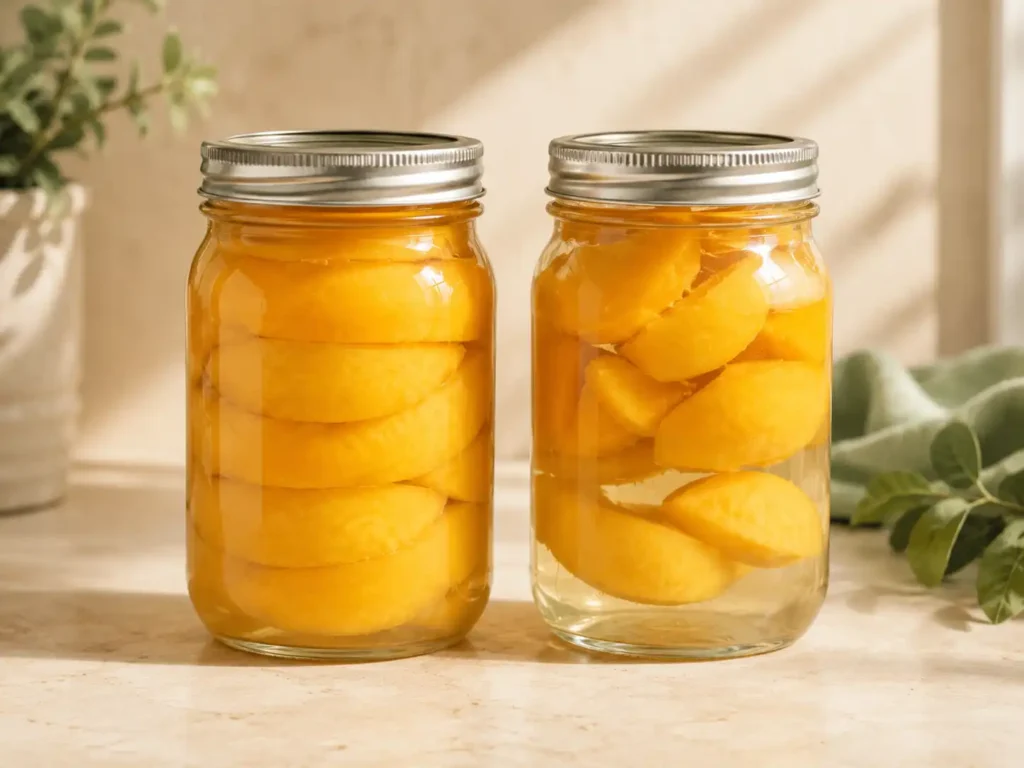
The printable recipe below uses hot pack. If you choose raw pack, follow the separate raw-pack directions and use the raw-pack column in the processing table.
How to Can Peaches in a Water Bath
1. Prepare the Canner
Place the rack in the canner and add clean water. For hot-packed peaches, preheat the water to about 180°F. If you choose raw pack, preheat it to about 140°F.
The final water level must remain at least 1 inch above the tops of the filled jars. Use at least 2 inches of water above the jars when the selected processing time exceeds 30 minutes.
2. Prepare the Jars and Lids
Wash the jars in hot, soapy water and rinse them well. Inspect the rims for cracks, chips, or rough areas. Keep the jars hot until filling.
Because every processing time in this guide is at least 20 minutes, the empty jars do not need to be pre-sterilized. Prepare new flat lids according to the lid manufacturer’s current instructions. Clean screw bands may be reused if they are not rusty, bent, or damaged.
3. Blanch and Peel the Peaches
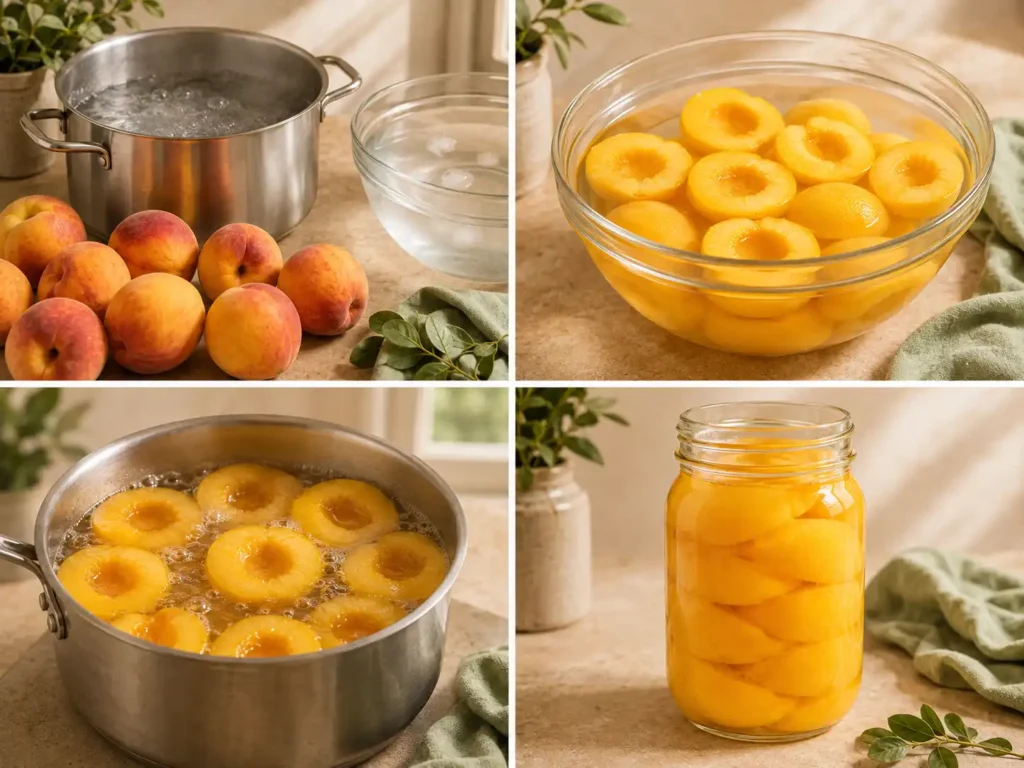
Wash the peaches gently under cold running water. Dip a few peaches at a time in boiling water for 30 to 60 seconds, or until the skins loosen. Transfer them quickly to cold water and slip off the skins.
Cut each peach in half, remove the pit, and leave the fruit in halves or cut it into slices.
4. Prevent Browning
Keep the peeled peaches in an ascorbic acid solution while preparing the full batch. Use one of the following options:
- 1 level teaspoon pure powdered ascorbic acid in 1 gallon cold water
- Six crushed 500 mg vitamin C tablets in 1 gallon cold water
- A commercial ascorbic acid color-protection mixture prepared according to its package directions
This solution helps maintain the fruit’s color. It does not acidify white peaches and does not make them suitable for this process.
5. Prepare the Hot Pack
Prepare and boil your chosen very light, light, or medium syrup. You may instead use water, apple juice, or white grape juice.
Drain the peaches from the ascorbic acid solution. Place the drained fruit in the hot syrup, water, or juice and bring the mixture to a boil.
6. Fill the Jars
Fill one hot jar at a time with hot peaches. If using halves, arrange them in layers with the cut sides facing down. Pack slices evenly without crushing them.
Add the hot cooking liquid and leave exactly 1/2 inch of headspace. Slide a nonmetallic bubble remover around the inside of the jar to release trapped air. Recheck the headspace and add more hot liquid if necessary.
Wipe the rim clean. Center a prepared flat lid on the jar and apply the screw band until fingertip tight.
7. If You Choose Raw Pack
Pack peeled, raw yellow peaches into hot jars. Arrange halves with the cut sides facing down. Add boiling syrup, water, apple juice, or white grape juice, leaving 1/2 inch of headspace.
Remove bubbles, recheck the headspace, clean the rims, and apply the lids. Use only the raw-pack processing times in the table below.
8. Process the Jars
Keep each jar upright as you lower it onto the canner rack. Add boiling water if needed to maintain the required level above the jar tops. Cover the canner and bring the water to a vigorous boil.
Start the timer only when the water reaches a full boil. Maintain a complete boil throughout the processing period. If the water stops boiling at any point, return it to a vigorous boil and restart the full processing time from the beginning.
9. Cool and Check the Seals
When the processing time is complete, turn off the heat and remove the canner lid. Wait 5 minutes before lifting out the jars.
Place the jars upright on a towel or cooling rack, leaving at least 1 inch between them. Let them cool undisturbed at room temperature for 12 to 24 hours. Do not press the lids or retighten the screw bands while the jars cool.
After 12 to 24 hours, remove the bands and examine the lids. A sealed lid should curve slightly downward and should not spring up when pressed in the center.
Canning Peaches Processing Times by Altitude
| Altitude | Hot Pack Pints | Hot Pack Quarts | Raw Pack Pints | Raw Pack Quarts |
|---|---|---|---|---|
| 0 to 1,000 ft | 20 minutes | 25 minutes | 25 minutes | 30 minutes |
| 1,001 to 3,000 ft | 25 minutes | 30 minutes | 30 minutes | 35 minutes |
| 3,001 to 6,000 ft | 30 minutes | 35 minutes | 35 minutes | 40 minutes |
| Above 6,000 ft | 35 minutes | 40 minutes | 40 minutes | 45 minutes |
Match all three variables before processing: packing method, jar size, and altitude. Do not use the hot-pack time for a raw-packed jar or shorten the listed time.
Troubleshooting Canned Peaches
| Problem | Possible Explanation | What to Do |
|---|---|---|
| Fruit floats | Raw fruit contains trapped air and may shrink during processing | Use hot pack for the next batch. Floating alone does not prove that a properly processed, sealed jar has spoiled. |
| Fruit darkens | Exposure to air, trapped bubbles, insufficient covering liquid, or omitted color treatment | Use the ascorbic acid holding solution, remove bubbles, maintain the correct headspace, and keep the fruit covered with liquid. |
| Liquid is lost during processing | Trapped air, incorrect headspace, temperature fluctuations, or an overly vigorous boil may contribute | Do not open a sealed jar to replace the liquid. Let it cool, verify the seal, and check for spoilage before use. |
| A jar does not seal | Food on the rim, a damaged jar or lid, or incorrect lid application | Refrigerate and use within one week, freeze with appropriate freezer headspace, or follow the tested reprocessing procedure within 24 hours. |
| The peaches are very soft | The fruit may have been overripe or processed longer than required | Use ripe but firm peaches and follow the exact processing time for your method, jar size, and altitude. |
Do not taste food from an unsealed jar or a jar that shows signs of spoilage. Discard the contents if you find a swollen or unsealed lid, mold, spurting liquid, an unnatural odor, unusual color, or unexplained rising bubbles.
Join the ZikoRecipes newsletter for more seasonal preserving guides and practical recipe ideas.
What to Do If a Jar Does Not Seal
Check every seal after the jars have cooled for 12 to 24 hours. If a jar did not seal, choose one of these options:
- Refrigerate: Keep the jar refrigerated and consume the peaches within one week.
- Freeze: Transfer or adjust the product to a freezer-safe container with 1 inch of headspace. The NCHFP allows unsealed jars to be frozen for up to one year.
- Reprocess within 24 hours: Use this option only if the original batch followed an up-to-date, research-tested method. Empty the contents into a saucepan, heat them to boiling, fill a clean jar, remove bubbles, apply a new prepared lid, and process using the complete tested hot-pack time.
If the original batch did not follow a current tested recipe, do not attempt to rescue it for shelf-stable storage.
How to Store Home-Canned Peaches
After checking the seals, remove the screw bands. Wash and dry the outside of the jars if syrup or food residue remains. Label each jar with the contents and canning date.
Store sealed jars without their screw bands in a clean, cool, dark, dry location. For best quality, keep the storage area between 50 and 70°F and plan to use the jars within one year.
Do not store the jars in direct sunlight, beside a stove or furnace, near hot pipes, in a damp location, or where temperatures regularly exceed 95°F. Check the seal and inspect the contents each time you open a jar.
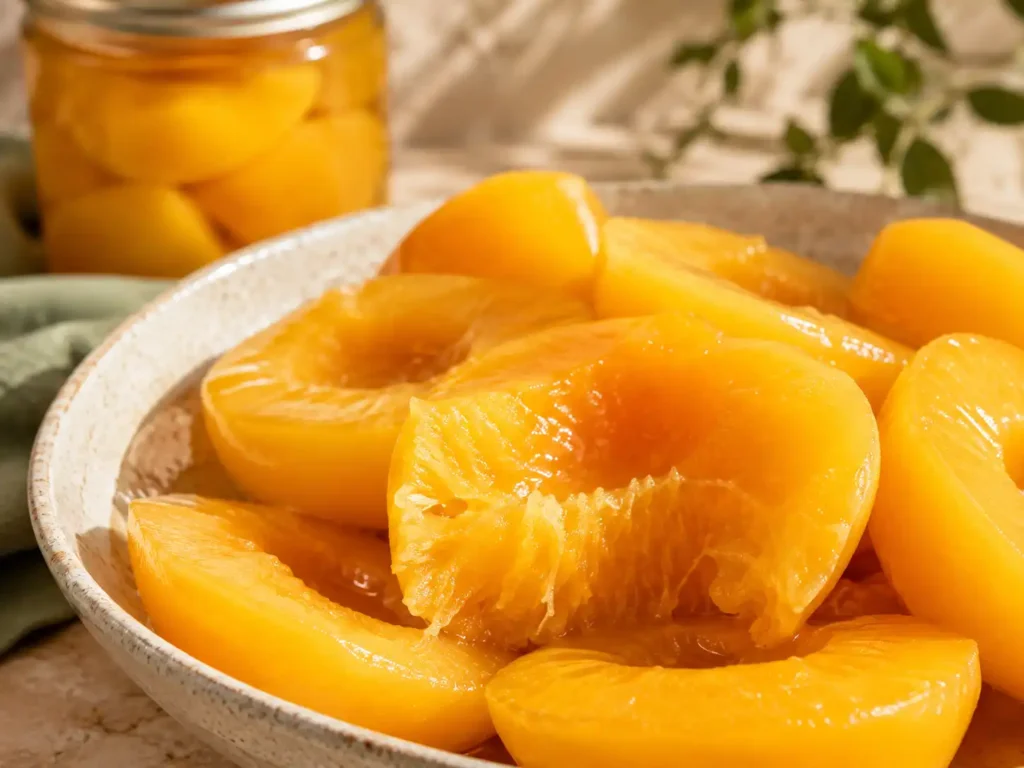
Ways to Use Home-Canned Peaches
- Serve chilled or at room temperature in a small bowl.
- Spoon the drained fruit over oatmeal or yogurt.
- Add drained slices to pancakes or waffles after cooking.
- Blend drained peaches into a smoothie.
- Chop the fruit and serve it over a plain cake or biscuit.
If you also have fresh peaches, save this fresh peach cobbler recipe and this peach crisp. You can also browse these peach dessert recipes for more seasonal inspiration.
For a different preserving project, see this homemade peach jam. The jam article follows a separate recipe and storage method, so do not substitute its instructions for the canning process on this page.
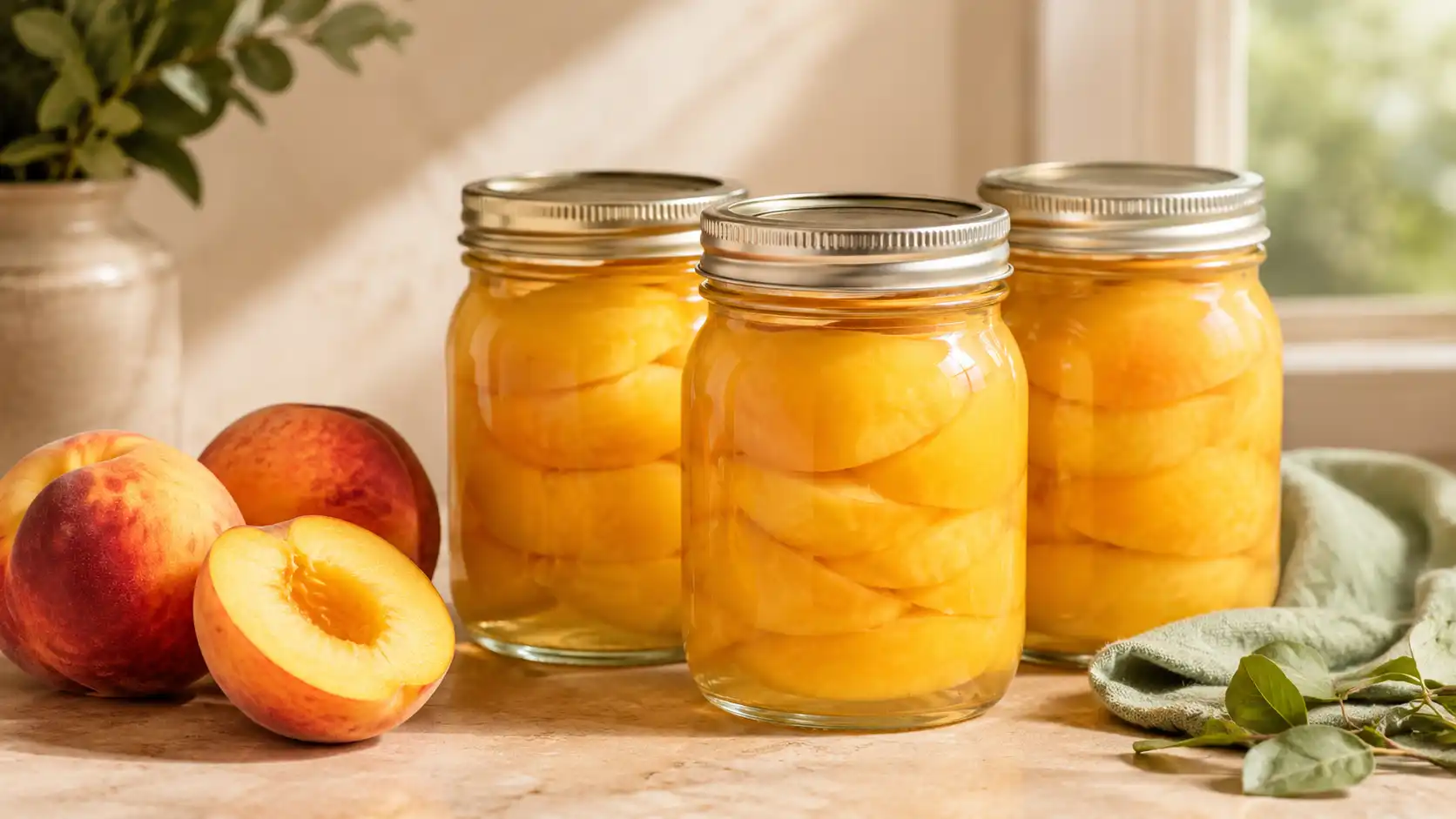
Hot-Pack Canning Peaches
Ingredients
Equipment
Method
- Place the rack in a boiling-water canner. Add clean water and preheat it to approximately 180°F (82°C) for the hot-pack method.
- Wash and inspect seven quart jars. Discard any jar with cracks, chips, or a damaged rim. Keep the jars hot until filling. Prepare new flat lids according to the lid manufacturer’s current directions.
- Combine 10 1/2 cups (2.48 L) water and 1 1/4 cups (250 g) granulated sugar in a large saucepan. Bring the syrup to a boil.
- Combine 1 gallon (3.79 L) cold water with 1 level teaspoon of pure powdered ascorbic acid. Alternatively, use six crushed 500 mg vitamin C tablets or a commercial ascorbic acid mixture prepared according to its package directions.
- Wash the yellow-flesh peaches gently under cold running water. Discard fruit that is moldy, badly bruised, damaged, or excessively soft.
- Dip a few peaches at a time in boiling water for 30 to 60 seconds, or until the skins loosen. Transfer them immediately to cold water, then slip off the skins.
- Cut the peaches in half, remove every pit, and leave the fruit in halves or cut it into slices.
- Place the prepared peaches in the ascorbic acid solution while finishing the remaining fruit. This solution limits browning but does not make white peaches safe for canning.
- Drain the peaches from the color-protection solution. Add them to the boiling syrup and return the fruit and syrup to a boil.
- Fill one hot jar at a time with hot peaches. Arrange peach halves in layers with their cut sides facing down, or pack slices evenly without crushing them.
- Cover the peaches with hot cooking liquid, leaving exactly 1/2 inch (1.3 cm) of headspace. Slide a nonmetallic bubble remover around the inside of the jar to release trapped air. Recheck the headspace and add more hot liquid if necessary.
- Wipe the jar rim clean. Center a prepared flat lid on the jar and apply the screw band until fingertip tight.
- Place each filled jar upright on the canner rack. Keep the water at least 1 inch (2.5 cm) above the jar tops. Use at least 2 inches (5 cm) of water above the jars when the required processing time exceeds 30 minutes.
- Cover the canner and bring the water to a vigorous boil. Start the processing timer only when the water reaches a complete boil.
- Process hot-packed quart jars for 25 minutes at 0 to 1,000 feet, 30 minutes at 1,001 to 3,000 feet, 35 minutes at 3,001 to 6,000 feet, or 40 minutes above 6,000 feet.
- Maintain a complete boil throughout processing. If the water stops boiling, return it to a vigorous boil and restart the full processing time from the beginning.
- When the processing time is complete, turn off the heat, remove the canner lid, and wait 5 minutes before removing the jars.
- Lift the jars out while keeping them upright. Place them on a towel or cooling rack with at least 1 inch between jars. Let them cool undisturbed for 12 to 24 hours. Do not press the lids or retighten the bands.
- After 12 to 24 hours, remove the screw bands and inspect the lids. A sealed lid should curve slightly downward and should not spring up when pressed in the center.
- Clean and dry the sealed jars, label them with the contents and canning date, and store them without screw bands in a cool, dark, dry place.
Notes
Frequently Asked Questions
Can you can peaches without sugar?
Yes. Yellow peaches may be hot-packed in boiling water, apple juice, or white grape juice instead of sugar syrup. Follow the same 1/2-inch headspace and the processing time for the selected packing method, jar size, and altitude.
Can white peaches be canned in a water bath?
No approved water-bath procedure is currently available for white-flesh peaches. Their natural acidity may be too low or inconsistent for the yellow-peach method. Adding lemon juice does not turn this into a tested process. Freeze white peaches instead.
Is hot pack or raw pack better for peaches?
Hot pack is recommended for better quality. Heating the fruit before filling removes some trapped air, which can reduce floating, shrinkage, and discoloration. Raw pack remains an approved option for yellow peaches, but it requires longer processing.
Why do canned peaches float or turn brown?
Floating commonly occurs when raw fruit contains trapped air and then shrinks during processing. Browning may result from oxygen, trapped bubbles, insufficient covering liquid, or failure to use a color-protection solution. Hot packing and careful bubble removal can help.
What should I do if a jar does not seal?
Refrigerate the jar and consume the peaches within one week, freeze them with appropriate freezer headspace, or reprocess within 24 hours using the complete tested hot-pack procedure and a new lid. Reprocessing is appropriate only when the original batch followed a current research-tested recipe.
Authoritative Canning Sources
- NCHFP: Peaches, Halved or Sliced
- NCHFP: Preparing and Using Syrups for Canning Fruit
- NCHFP: Using Boiling-Water Canners
- NCHFP: Cooling Jars and Testing Seals
- NCHFP: Storing Home-Canned Foods