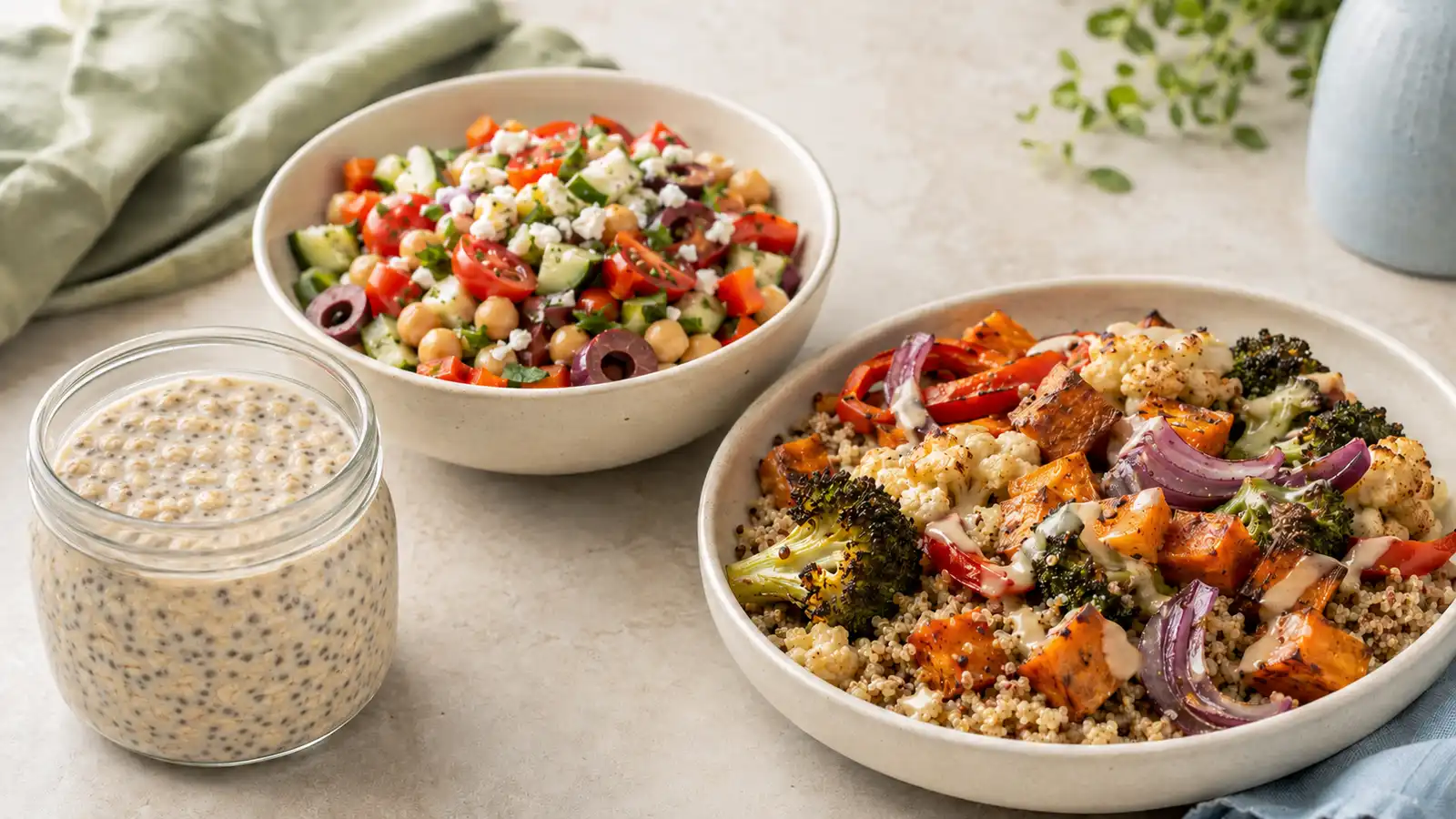
Adding more fiber to your meals does not require complicated ingredients or a completely different way of cooking. Oats, chia seeds, chickpeas, quinoa, vegetables, fruit, nuts, and seeds can all contribute meaningful amounts when the portions are large enough.
This guide brings together three easy high-fiber recipes from ZikoRecipes, with one option for breakfast, lunch, and dinner. You will also find practical snack combinations, meal-prep guidance, and a clear explanation of how the recipes were selected.
Quick Answer
For this guide, a high-fiber recipe provides an estimated 6 grams or more of dietary fiber per serving. The FDA lists 28 grams as the Daily Value for dietary fiber and considers 20 percent or more of a nutrient per serving to be high. Twenty percent of 28 grams equals 5.6 grams, so 6 grams works as a practical editorial benchmark.
The three featured recipes use oats and chia seeds, chickpeas and fresh vegetables, or whole grains and roasted vegetables to reach that benchmark. All nutrition figures remain estimates because brands, measurements, optional toppings, and serving sizes can change the final values.
| Recipe | Meal | Estimated Fiber | Time | Servings |
|---|---|---|---|---|
| High-Protein Overnight Oats | Breakfast | About 6g+ | 5 minutes plus chilling | 1 jar |
| Mediterranean Chickpea Salad | Lunch | About 7g | 15 minutes | 4 |
| Roasted Veggie Grain Bowl | Lunch or dinner | About 6g+ | 45 minutes | 3 bowls |
Nutrition values are estimated per serving. The overnight oats estimate excludes optional toppings. The grain bowl estimate uses the quinoa version and excludes optional toppings.
What Counts as a High-Fiber Recipe?
The phrase “high fiber” needs more than the presence of one vegetable or a spoonful of oats. The complete recipe, total yield, and portion size all matter.
For this collection, each qualifying serving must reach approximately 6 grams of fiber. This standard uses the FDA Nutrition Facts guidance as a practical benchmark, not as a guarantee that every variation will have identical nutrition.
Common fiber-containing ingredients include:
- Legumes: chickpeas, lentils and beans
- Whole grains: oats, quinoa, barley and brown rice
- Fruit: raspberries, pears and apples with edible skin
- Vegetables: broccoli, peas, sweet potatoes and cauliflower
- Nuts and seeds: chia seeds, almonds, pumpkin seeds and flaxseed
The amounts still matter. A recipe with a small sprinkle of seeds may contain some fiber without reaching the high-fiber threshold.
How These Recipes Were Selected
Each main recipe meets the following requirements:
- It has a complete ingredient list and defined serving count.
- Its primary fiber sources appear in meaningful quantities.
- Its preparation time and storage guidance can be checked on the original recipe page.
- It fits a different part of the day, making the collection easier to use.
- It avoids unsupported medical and weight-management promises.
The estimates are intentionally conservative. Exact nutrition will vary when you change the grain, milk, yogurt, protein powder, dressing amount, toppings, or portion size.
High-Fiber Breakfast Recipe
High-Protein Overnight Oats
These high-protein overnight oats combine 1/2 cup rolled oats, 1/2 cup milk, 1/2 cup Greek yogurt, and 1 tablespoon chia seeds. Protein powder is optional, so you can prepare the base without it.
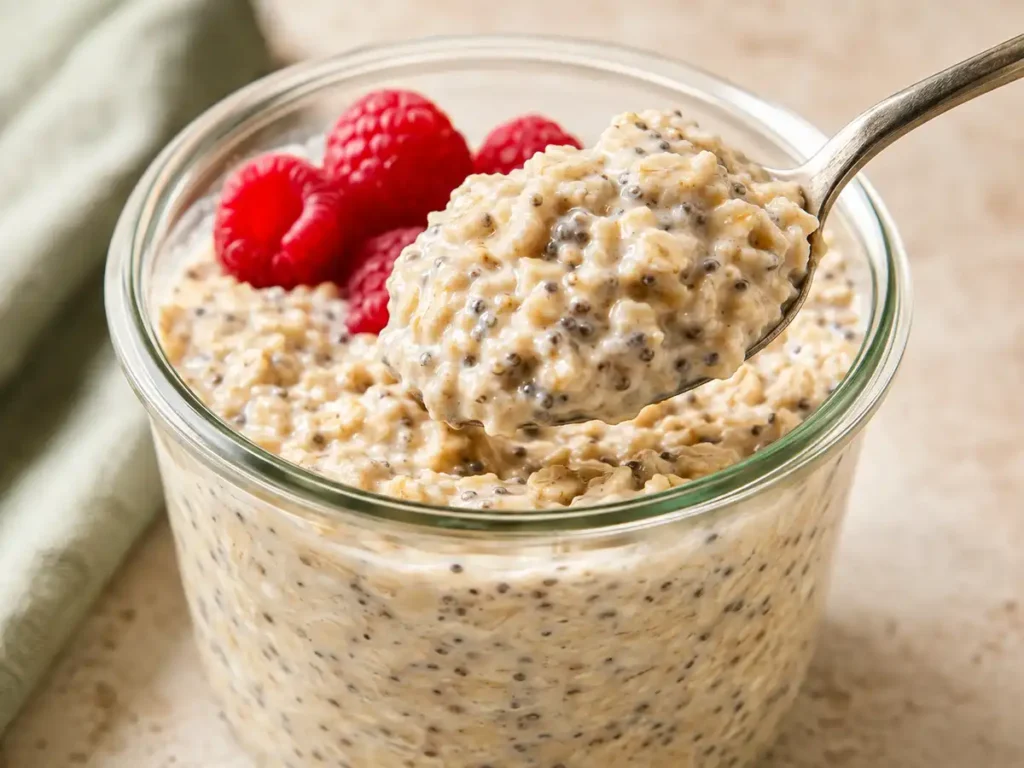
The oats and chia seeds provide most of the fiber. Based on standard ingredient values, the base jar should provide at least 6 grams before you add fruit, nut butter, flaxseed, or other toppings. Because milk, yogurt, and protein powder vary by brand, the complete nutrition should remain labeled as estimated.
- Prep time: 5 minutes
- Chill time: At least 4 hours or overnight
- Yield: 1 jar
- Estimated fiber: About 6 grams or more before toppings
Why This Breakfast Works
Rolled oats provide the creamy base, while chia seeds absorb liquid and thicken the jar. Greek yogurt adds body, and the milk keeps the mixture spoonable. If you add protein powder, mix it into the milk first to reduce dry or chalky pockets.
Meal-Prep Tip
Keep the oats refrigerated in a sealed jar or container and use them within three to four days for the best texture. Add nuts, seeds, or other crunchy toppings immediately before eating.
High-Fiber Lunch Recipe
Mediterranean Chickpea Salad
This Mediterranean chickpea salad combines one can of chickpeas with tomatoes, cucumber, red onion, red bell pepper, Kalamata olives, feta, parsley, and a lemon dressing. The recipe makes four servings and requires no cooking.
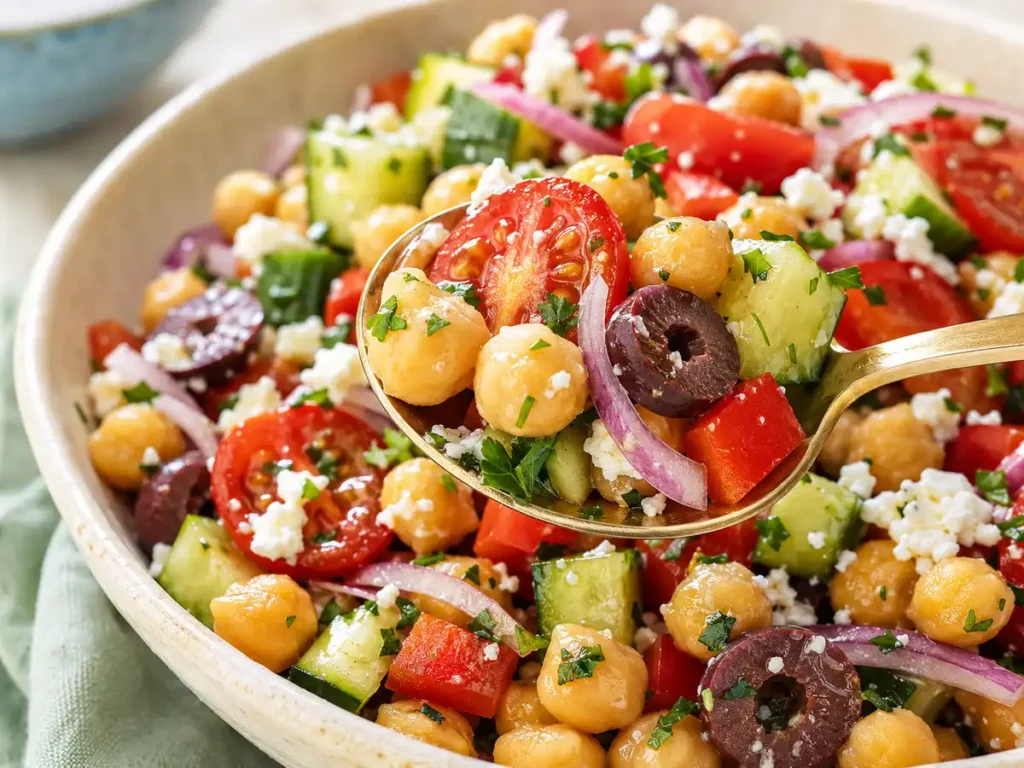
The current recipe formula provides an estimated 7 grams of fiber per serving. Chickpeas supply most of it, while the cucumber, tomatoes, bell pepper, onion, and herbs add smaller amounts.
- Prep time: 15 minutes
- Cook time: None
- Yield: 4 servings
- Estimated fiber: About 7 grams per serving
How to Prevent a Watery Salad
Drain and rinse the chickpeas, then pat them dry. Halve the tomatoes, dice the cucumber, and drain any visible excess liquid before mixing. Start with about three-quarters of the dressing and add the rest only if the salad needs it.
Soaking the chopped red onion in cold water for 10 minutes can soften its sharp flavor. Drain and dry it before adding it to the bowl.
Storage Tip
Store the salad in an airtight container in the refrigerator and use it within three days for the best texture. If you prepare it more than one day ahead, keep part of the dressing separate and add the feta closer to serving.
High-Fiber Dinner Recipe
Roasted Veggie Grain Bowl
The roasted veggie grain bowl uses one cup of dry quinoa or farro, a medium sweet potato, cauliflower, broccoli, red bell pepper, red onion, and a lemon tahini dressing. The complete recipe makes three bowls.
Use quinoa when following the estimate in this guide. One serving receives approximately one-third of the cooked grain, roasted vegetables, and tahini dressing. That combination should comfortably clear the 6-gram benchmark, although the exact value needs recalculation if you use farro or add optional toppings.
- Prep time: 15 minutes
- Cook time: 30 minutes
- Yield: 3 bowls
- Estimated fiber: About 6 grams or more per bowl
Roasting Temperature and Doneness
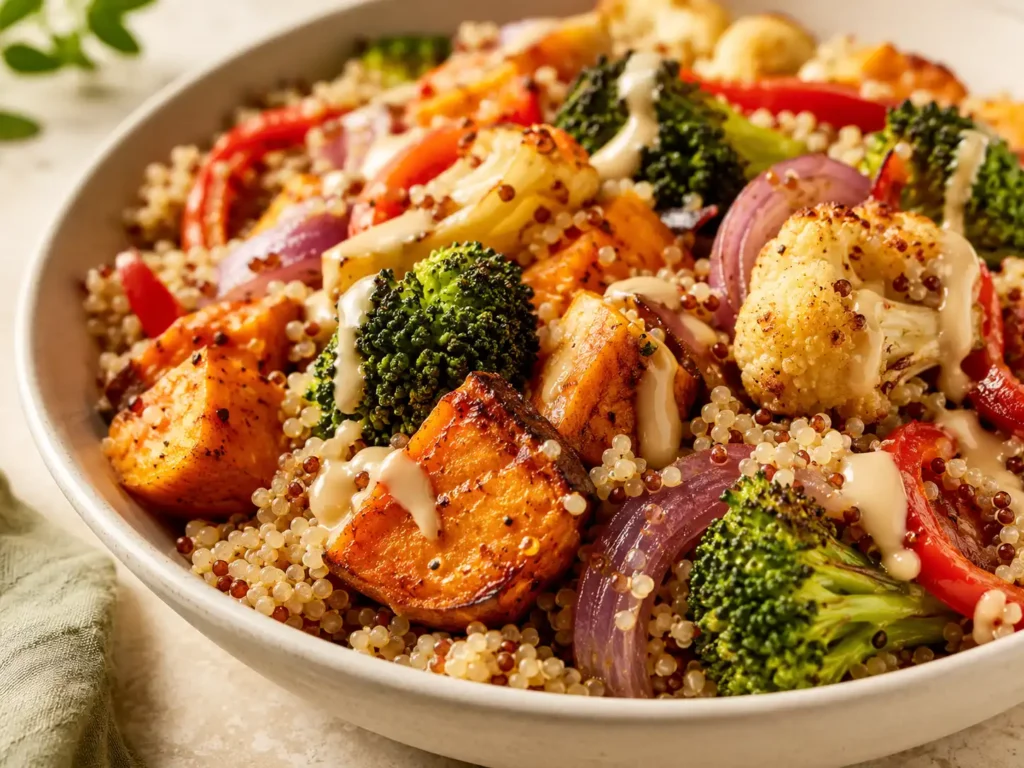
Heat the oven to 425°F. Spread the vegetables in a single layer and roast for 25 to 30 minutes, turning them halfway through. They are ready when the sweet potato is tender and the vegetables have browned edges and caramelized spots.
Avoid crowding the baking sheet. When the vegetables sit too close together, trapped moisture can make them steam instead of brown.
Meal-Prep Tip
Store the cooked grain, roasted vegetables, and dressing in separate airtight containers for up to four days in the refrigerator. Reheat the grain and vegetables, then add the dressing and any fresh toppings after warming.
How to Build More Fiber Into Everyday Meals
You do not need to rebuild every recipe from scratch. A few measured additions can make an ordinary meal more fiber-forward.
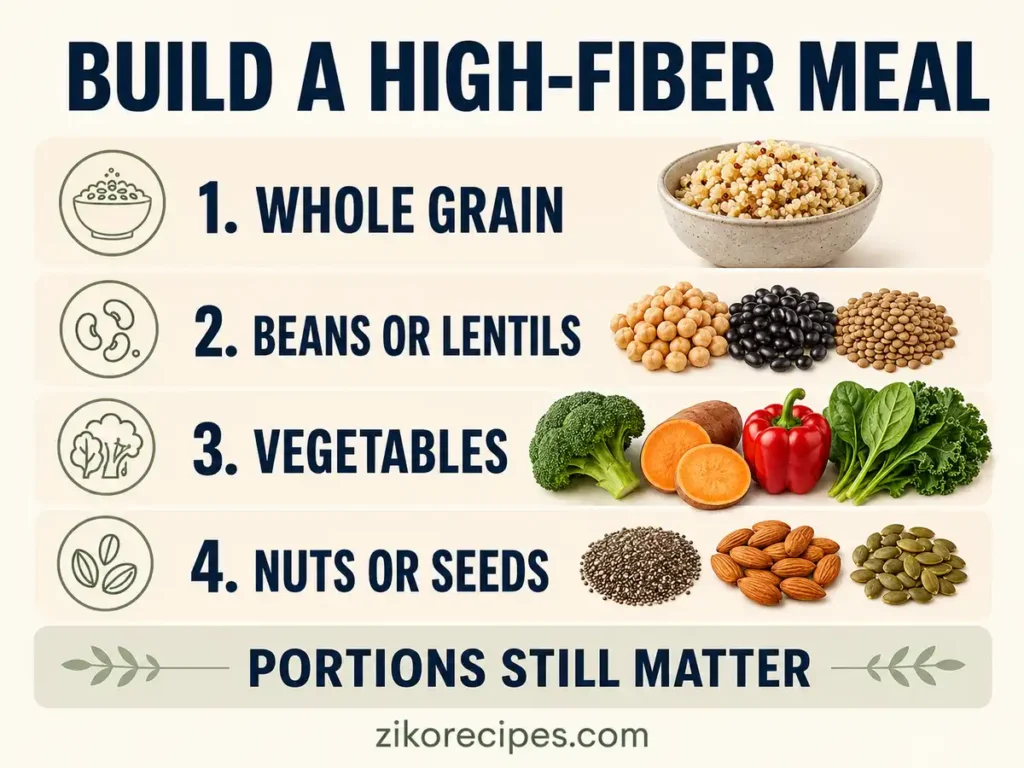
Start With a Fiber-Containing Base
Use oats for breakfast or quinoa, barley, brown rice, beans, or lentils for lunch and dinner. A small serving will contribute less than a full bowl, so consider the complete portion.
Add Legumes to Bowls and Salads
Chickpeas, black beans, lentils, and other legumes can add substance to salads, soups, and grain bowls. For more ways to combine grains, vegetables, protein, and dressing, use this guide to building healthy salad bowls.
Use Several Vegetables
One vegetable may not provide enough fiber on its own. Combining broccoli, sweet potato, cauliflower, peppers, greens, or peas creates more variety and a larger total contribution.
Finish With Nuts or Seeds
Chia seeds, flaxseed, almonds, pumpkin seeds, and other nuts or seeds can contribute extra fiber. Measure them rather than assuming a small garnish changes the nutrition significantly.
Simple High-Fiber Snack Pairings
The following are simple combinations rather than complete recipes. The estimates come from the Mayo Clinic chart of high-fiber foods.
- One cup of raspberries: Approximately 8 grams of fiber
- One medium pear plus 1 ounce of almonds: Approximately 9 grams combined
- Three cups of air-popped popcorn plus 1 ounce of almonds: Approximately 7 grams combined
Serving sizes matter, and packaged products may differ from standard food-composition values. Check the Nutrition Facts label when using a branded product.
Increase Fiber Gradually
Adding a large amount of fiber all at once may cause gas, cramping, or bloating. Mayo Clinic recommends increasing fiber gradually and drinking sufficient fluids as intake rises.
A practical approach is to begin with one higher-fiber meal, observe how you feel, and add another source gradually. Individual fluid needs vary, so this article does not prescribe a universal amount. The National Institute of Diabetes and Digestive and Kidney Diseases also identifies whole grains, legumes, fruits, vegetables, and nuts as useful food sources.
If you have a diagnosed digestive condition or have received specific dietary instructions, follow the guidance of your healthcare professional.
High-Fiber Meal-Prep Storage Guide
| Recipe | Refrigerator Guidance | Best Storage Method |
|---|---|---|
| Overnight oats | 3 to 4 days | Sealed jar or container |
| Chickpea salad | Best within 3 days | Airtight container, with some dressing held separately |
| Veggie grain bowl | Up to 4 days | Store grain, vegetables, and dressing separately |
Refrigerate the prepared food promptly. Discard anything that has developed an unusual odor, appearance, or texture, even when it remains within the suggested storage window.
Helpful Tools for High-Fiber Meal Prep
No specialized appliance is required, but a few basic tools make these recipes easier to prepare and store:
- Measuring cups and spoons: Useful for consistent oats, grains, chia seeds, and dressing portions
- Sealed jars: Convenient for individual overnight oat servings
- Large mixing bowl: Provides enough room to toss chickpeas and vegetables without crushing them
- Large sheet pan: Helps the vegetables roast in a single layer
- Airtight meal-prep containers: Keep cooked grains, vegetables, dressing, and toppings separate
Frequently Asked Questions
How many grams of fiber make a recipe high in fiber?
This guide uses approximately 6 grams per serving as its minimum. That figure corresponds to about 20 percent of the FDA Daily Value of 28 grams.
Do I need to get 28 grams of fiber from one meal?
No. The 28-gram FDA value is a daily reference, not a target for every individual meal. Fiber can come from several meals and snacks throughout the day.
Can I prepare these recipes ahead?
Yes. Overnight oats keep for three to four days, the chickpea salad tastes best within three days, and the grain bowl components can be refrigerated separately for up to four days.
Should I increase fiber all at once?
No. A gradual increase is generally more comfortable. Add one measured source at a time and consume enough fluids for your individual needs.
Are these recipes vegetarian?
Yes, all three are vegetarian as written. Use plant-based milk and yogurt for dairy-free overnight oats. Omit the feta from the chickpea salad for a dairy-free version. The base grain bowl is plant-based when prepared without optional dairy toppings.
More Fiber-Forward Recipe Inspiration
These three recipes create a useful starting point, but you can continue exploring dishes built around chickpeas, vegetables, grains, and beans.
- Try these quinoa chickpea cucumber bowls and verify their fiber calculation before labeling them high fiber.
- Browse the taco salad recipe collection for combinations that include black beans, corn, quinoa, vegetables, or avocado.
- Explore more summer salad recipes for cold lunches and warm-weather dinners.
Final Takeaway
A practical high-fiber meal starts with portions that matter. Rolled oats and chia seeds work well at breakfast, chickpeas build a sturdy lunch, and quinoa with roasted vegetables creates a flexible dinner.
Start with one of these three recipes, keep the portions consistent, and increase your intake gradually. Treat every nutrition figure as an estimate, especially when you change brands, grains, toppings, or serving sizes.
Want more practical meal ideas? Subscribe to the ZikoRecipes newsletter for new recipes, seasonal collections, and meal-prep inspiration.