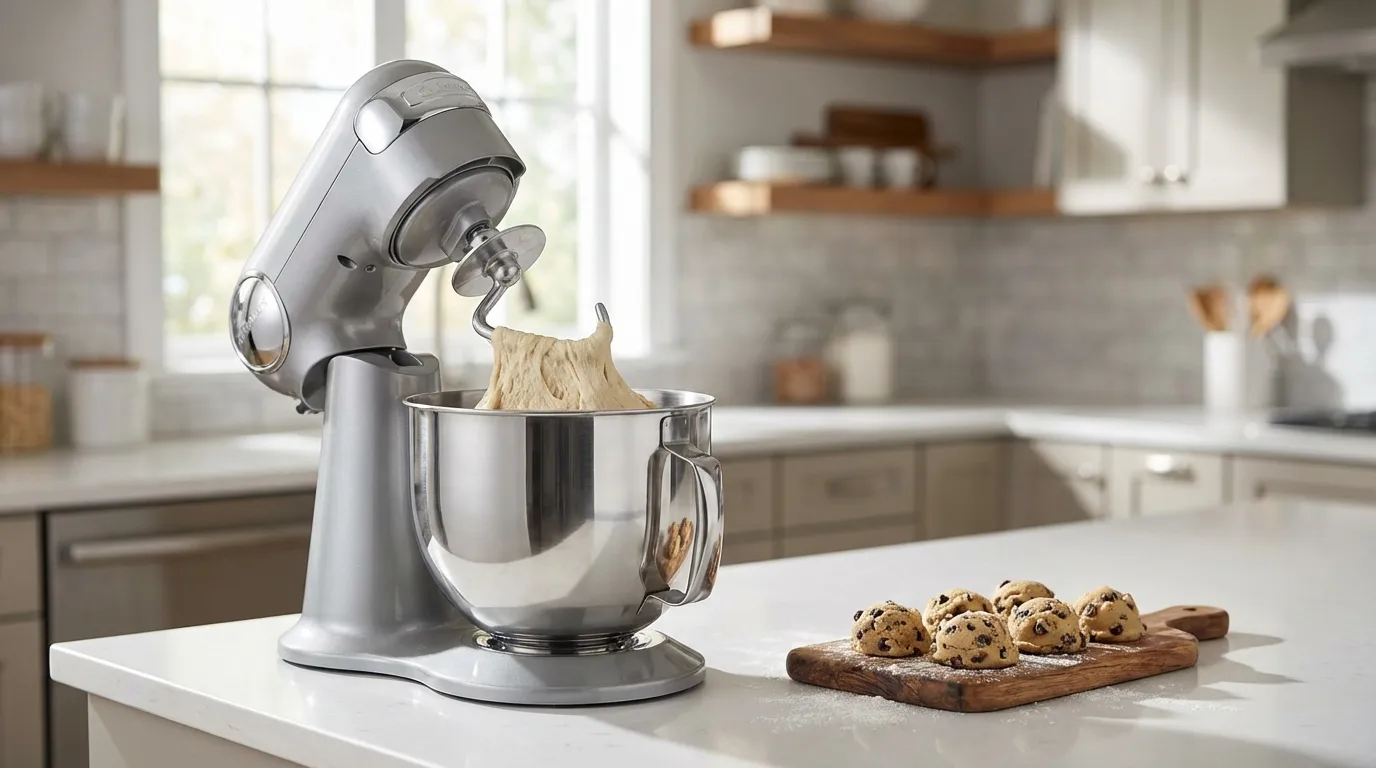
Choosing the right stand mixer can feel overwhelming, especially when dozens of models promise more power, more capacity, and better performance. However, the best stand mixer for your kitchen depends on what you actually bake most. In this guide, we evaluate real world performance, usability, and long term value to help home bakers make a confident choice.
Whether you regularly prepare dough like our readers who enjoy recipes such as this cottage cheese banana bread or prefer lighter batters and whipped desserts, the right mixer should save time while delivering consistent results. According to the U.S. Department of Energy, choosing efficient kitchen appliances can also improve long term energy use in the home.
Use the quick picks and comparison tools below to find the stand mixer that fits your baking style, kitchen space, and budget.
As an Amazon Associate, I earn from qualifying purchases.
Quick Picks (Top Stand Mixers at a Glance)
If you want the fastest path to the right stand mixer, start here. These top picks are based on real world baking needs such as bread dough strength, small batch performance, stability, and everyday usability. Later in the guide, you will find the full comparison table and detailed reviews.
Best Overall Stand Mixer
KitchenAid Artisan Series
Best for: Most home bakers who want reliability and versatility
Why it wins:
- Excellent balance of power and ease of use
- Wide attachment ecosystem
- Consistent results for cakes, cookies, and moderate dough
Trade offs:
- Not ideal for very heavy bread dough
- Premium price compared to budget models
This model works especially well for everyday baking projects similar to this 4 ingredient banana bread, where consistent mixing matters more than extreme dough power.
Best Stand Mixer for Bread Dough and Sourdough
Bosch Universal Plus
Best for: Frequent bread bakers and large dough batches
Why it wins:
- Exceptional dough handling capacity
- Strong motor with efficient torque
- Large bowl suited for bulk baking
Trade offs:
- Less traditional design
- Learning curve for new users
If you regularly prepare hearty dough recipes or meal prep baked goods, this type of mixer provides the strength that lighter models often lack.
Best for Cookies and Thick Dough
KitchenAid Professional 600
Best for: Heavy cookie dough and dense batters
Why it wins:
- Bowl lift design improves stability
- Handles thick mixtures well
- Durable construction
Trade offs:
- Heavier and bulkier
- Requires more cabinet clearance
This category is ideal for bakers who frequently prepare dense mixtures similar to recipes like peanut butter cookies, where motor strength and stability matter.
Best Stand Mixer for Small Batches
Kenwood Chef Major Titanium
Best for: Whipping, small cakes, and precision mixing
Why it wins:
- Excellent whisk reach
- Performs well with small volumes
- Smooth speed control
Trade offs:
- Higher price tier
- Attachments can be expensive
Small batch performance is often overlooked, yet it is critical if you frequently make lighter recipes such as this blueberry protein muffins or whipped toppings.
Best Budget Stand Mixer
Cuisinart SM-50
Best for: Entry level buyers and occasional bakers
Why it wins:
- Strong value for the price
- Good everyday performance
- Multiple color options
Trade offs:
- Louder than premium models
- Not built for constant heavy dough
Best Premium Stand Mixer
Ankarsrum Assistent Original
Best for: Serious bakers and heavy weekly use
Why it wins:
- Outstanding dough kneading
- Very durable build quality
- Unique rotating bowl design
Trade offs:
- Expensive
- Different workflow than tilt head mixers
Best for Small Kitchens
SMEG Retro Style Stand Mixer
Best for: Style focused kitchens with limited space
Why it wins:
- Compact footprint
- Attractive design
- Good for light to moderate baking
Trade offs:
- Premium price for the performance
- Not ideal for heavy bread dough
Next, we will compare these mixers side by side so you can quickly see which model fits your needs.
Stand Mixer Comparison Table (Side by Side)
This comparison table gives a clear snapshot of how top stand mixers match up across features that matter most to home bakers and everyday cooks. Use this to quickly narrow down which model fits your baking patterns, kitchen space, and budget before reading the full reviews.
Tip: Swipe left to compare all specs.
| Model | Price Range | Bowl Size | Head Type | Motor Power | Weight | Footprint | Stability | Dough Performance | Small Batch | Attachment Ecosystem | Best For |
|---|---|---|---|---|---|---|---|---|---|---|---|
| KitchenAid Artisan | Mid | 5–6 qt | Tilt head | Mid | Mid | Medium | Medium | Good | Very Good | Excellent | Everyday Baking |
| Bosch Universal Plus | High | 6+ qt | Bowl assisted | High | High | Large | High | Excellent | Good | Good | Heavy Dough |
| KitchenAid Professional 600 | Mid High | 6 qt | Bowl lift | High | High | Large | High | Very Good | Good | Excellent | Dense Dough |
| Kenwood Chef Major Titanium | High | 6–7 qt | Bowl lift | High | High | Large | High | Excellent | Excellent | Excellent | Small Batches |
| Cuisinart SM-50 | Low Mid | 5.5 qt | Tilt head | Mid | Mid | Medium | Medium | Good | Good | Good | Best Budget |
| Ankarsrum Assistent | Premium | 7 qt | Roller bowl | Very High | High | Large | Very High | Outstanding | Good | Good | Serious Bakers |
| SMEG Retro Style | Premium | 4.8–5 qt | Tilt head | Mid | Mid | Small | Medium | Good | Very Good | Good | Small Kitchens |
This table also serves as a ready reference when comparing these models against recipes you might regularly prepare, such as strawberry crunch cake or garlic parmesan chicken pasta, where the consistency and distribution of mixing can impact your end result.
In general larger bowl sizes and stronger motors are better for heavy dough tasks and larger batches while lighter weight and smaller footprints favor small kitchens or occasional baking.
Many models in the table above also come with robust attachment ecosystems that allow you to expand their usefulness to tasks like pasta making, shredding, grinding, and more. Later in this guide, we discuss how to decide which attachments are worth investing in based on your baking goals.
How to Choose a Stand Mixer
Before you focus on brands or price, it is important to match the mixer to how you actually bake. Many buyers overspend on power they never use, while others choose a model that struggles with their weekly dough. The sections below will help you quickly identify what matters most for your kitchen.
Start With What You Bake Most
Your typical recipes should drive your decision.
- Bread and sourdough bakers need strong dough handling and stable kneading.
- Cookie and bar makers benefit from good torque and consistent paddle mixing.
- Cake and whipped dessert fans should prioritize whisk performance and small batch capability.
- Occasional bakers usually do well with mid range tilt head models.
For example, if your routine includes soft batters similar to this lemon olive oil cake, you do not need the same heavy duty machine required for weekly bread dough.
Bowl Size That Actually Fits Your Batch
Bowl capacity is one of the most misunderstood specs.
- 4.5 to 5 qt works well for small households and light baking
- 5.5 to 6 qt suits most families
- 6.5 to 7 qt and above is best for frequent bread makers and bulk batches
Keep in mind that maximum bowl size is not the same as effective dough capacity. Dense dough takes more power and space than cake batter.
Tilt Head vs Bowl Lift
This is one of the biggest design decisions.
Tilt head mixers
Pros:
- Easier bowl access
- Typically lighter
- Better for casual baking
Cons:
- Slightly less stable with heavy dough
- Limited maximum capacity
Bowl lift mixers
Pros:
- More stable for thick mixtures
- Usually more powerful
- Better for bread dough
Cons:
- Bulkier
- Requires more vertical clearance
If your kitchen has limited cabinet space, measure clearance carefully. Guidance from the National Institute of Standards and Technology emphasizes accurate appliance measurements before purchase to avoid fit issues.
Motor Power and Real World Performance
Higher wattage does not always mean better mixing. What matters more is how efficiently the mixer transfers power into torque.
Prioritize:
- Stable low speed kneading
- No overheating during dough
- Smooth speed transitions
- Minimal bowl scraping required
Many mid range mixers handle everyday recipes such as banana cottage cheese pancakes perfectly well without needing commercial level motors.
Stability, Weight, and Counter Movement
Heavier mixers tend to stay put during thick dough mixing. However, they are harder to move and store.
Choose heavier models if you:
- Bake bread weekly
- Mix stiff cookie dough
- Run long kneading cycles
Choose lighter models if you:
- Bake occasionally
- Need to store the mixer in a cabinet
- Have limited counter space
Noise and Everyday Comfort
Noise is rarely mentioned in product specs, yet it strongly affects daily use.
Look for:
- Smooth low speed operation
- Minimal vibration
- Solid base construction
This matters especially in open kitchens or early morning baking sessions.
Cleaning and Ease of Use
Convenience often determines whether a mixer gets used regularly.
Prioritize:
- Dishwasher safe bowl and tools
- Easy bowl locking
- Simple speed controls
- Splash guard availability
If a mixer is frustrating to clean or assemble, it often ends up unused on the counter.
Attachment Ecosystem and Future Flexibility
Many buyers overlook long term versatility. A strong attachment system can turn a stand mixer into a multi purpose kitchen tool.
Common useful attachments include:
- Pasta roller
- Meat grinder
- Shredder and slicer
- Extra bowls and whisks
If you enjoy expanding your kitchen capabilities beyond basic baking, attachments can add significant value over time.
Next, we will explain exactly how we evaluated and scored each stand mixer so you can understand the rankings.
How We Evaluated Stand Mixers
To provide meaningful recommendations, we focused on real kitchen performance rather than marketing claims alone. Each stand mixer was assessed using practical tests that reflect how home bakers actually use these machines. This approach helps reveal differences that spec sheets often hide.
The Four Core Performance Tests
We aligned our evaluation with the most common home baking tasks.
1. Cookie Dough Test
This test measures torque and paddle efficiency using thick dough. Mixers that struggle here often show motor strain or require frequent bowl scraping.
2. Bread and Pizza Dough Test
Kneading performance is critical for serious bakers. We looked for:
- Smooth low speed kneading
- Minimal overheating
- Stable operation without excessive movement
- Even gluten development
This matters especially if you regularly prepare yeast based recipes similar to this protein bagels.
3. Whipping Test
We evaluated how well each mixer handles lighter tasks such as:
- Whipping cream
- Beating egg whites
- Mixing light batters
Small batch performance is particularly important here, since many mixers perform well with large volumes but struggle with smaller quantities.
4. Usability and Daily Workflow
Beyond raw power, we assessed how comfortable each mixer is to use regularly. Factors included:
- Bowl access
- Control responsiveness
- Attachment changes
- Cleaning convenience
- Counter stability
The Scorecard Criteria
Each mixer was rated across the factors that most influence real world satisfaction.
- Dough strength and consistency
- Small batch performance
- Even mixing with minimal scraping
- Stability during heavy mixing
- Noise and vibration
- Build quality and durability
- Ease of use
- Attachment value and availability
- Warranty and support
We prioritized performance characteristics that directly affect home results, especially for recipes that require consistent mixing like vegan chocolate chip cookies.
What We Did Not Overweight
Some popular specs can be misleading, so we deliberately avoided overvaluing them.
- Raw wattage numbers alone
- Number of speed settings
- Cosmetic design features
- Marketing claims without performance evidence
Instead, our focus remained on measurable kitchen outcomes and long term usability. For broader consumer guidance on evaluating household appliances, the USA.gov consumer resources recommend comparing durability, usability, and real performance rather than relying only on advertised specifications.
In the next section, we will review the best stand mixers in depth, starting with the top overall performer.
Best Stand Mixers In Depth Reviews
Below you will find detailed reviews of the top stand mixers. Each model was evaluated using the same real world framework so you can compare performance, usability, and long term value with confidence.
We begin with the best overall choice for most home kitchens.
KitchenAid Artisan Series 5 Quart
Best Overall Stand Mixer for Most Home Bakers
Quick Specs
- Bowl size: 5 quart
- Head type: Tilt head
- Speeds: 10
- Weight: about 22 to 26 pounds
- Warranty: 1 year limited
The Artisan series features a durable metal construction and 10 speeds designed to knead, mix, and whip a wide range of recipes. (kitchenaid)
Best For
- Everyday home baking
- Cookies, cakes, and moderate bread dough
- Users who want strong attachment compatibility
Performance Summary
Dough Performance: Good
The Artisan handles standard sandwich bread and enriched dough reliably. However, very stiff or high hydration sourdough batches can push it toward its limits.
Small Batch Performance: Very Good
Thanks to effective whisk reach and bowl geometry, this mixer performs well with smaller volumes compared with many large bowl lift machines.
Whipping Performance: Excellent
Produces stable whipped cream and egg whites quickly across multiple speeds.
Cookie Dough Performance: Very Good
The flat beater delivers consistent mixing with minimal need for bowl scraping.
This balanced performance profile makes it well suited for everyday baking projects such as eggless banana bread and soft cookie recipes.
Pros
- Excellent versatility for most households
- Very large attachment ecosystem
- Smooth and predictable speed control
- Widely available parts and support
- Proven long term durability
Cons
- Not ideal for heavy weekly bread production
- Premium price versus entry level mixers
- May move slightly with very stiff dough
Who Should Buy This
- Home bakers mixing several times per week
- Households wanting one multipurpose mixer
- Users planning to expand with attachments
Who Should Skip
- High volume sourdough or bagel bakers
- Buyers who need commercial level torque
Attachment Notes
KitchenAid offers one of the broadest attachment ecosystems in the stand mixer market. Optional hub powered accessories include pasta makers, food grinders, and slicers. Many models support more than ten optional attachments, allowing the mixer to expand well beyond basic baking tasks.
However, always confirm compatibility between tilt head and bowl lift families before purchasing additional accessories.
Bottom Line
For most kitchens, the KitchenAid Artisan remains the safest all around choice. It delivers consistent performance across cakes, cookies, and moderate dough while staying manageable in size and weight. If you bake regularly but not in heavy commercial volumes, it is still one of the most practical stand mixers available.
Bosch Universal Plus
Best Stand Mixer for Bread Dough and Large Batches
Quick Specs
- Bowl size: 6.5 quart
- Head type: Bowl driven system
- Speeds: 4 plus pulse
- Weight: about 13 pounds (base only)
- Warranty: 1 year limited
The Bosch Universal Plus uses a bottom driven bowl system rather than the traditional tilt head or bowl lift design. This configuration focuses on torque efficiency and dough performance, making it especially popular among frequent bread bakers.
Best For
- Heavy bread and sourdough batches
- Large family baking
- Bulk dough preparation
Performance Summary
Dough Performance: Excellent
This is where the Bosch Universal Plus clearly stands out. It handles dense dough with impressive stability and minimal strain, even during longer kneading cycles. For bakers who regularly prepare yeast recipes similar to these protein bagels, the extra torque makes a noticeable difference.
Small Batch Performance: Good
The large bowl design is optimized for volume. It performs adequately with smaller mixes, but very small whipping tasks are not its strongest area compared with premium whisk focused mixers.
Whipping Performance: Good
With the proper attachments installed, the Bosch can whip cream and eggs effectively, though setup takes slightly more effort than tilt head machines.
Cookie Dough Performance: Excellent
Handles thick cookie dough with very little motor strain. The mixing action distributes ingredients evenly across larger batches.
Pros
- Outstanding bread dough capability
- Very efficient torque transfer
- Large effective batch capacity
- Runs cooler during long kneading
- Stable even with heavy mixtures
Cons
- Less intuitive for first time users
- Fewer speed steps than some competitors
- Bulkier bowl footprint
- Attachment changes take practice
Who Should Buy This
- Serious bread and sourdough bakers
- Large families who batch bake
- Users who regularly mix dense dough
Who Should Skip
- Occasional bakers
- Users focused mainly on whipping tasks
- Buyers who prefer traditional tilt head design
Attachment Notes
The Bosch ecosystem includes useful accessories such as dough hooks, whisks, and food processing add ons. While the selection is smaller than KitchenAid’s, the available tools are well optimized for heavy kitchen work.
If your weekly routine includes frequent dough mixing alongside lighter recipes like high protein overnight oats, consider whether you value maximum dough strength or broader everyday versatility.
Bottom Line
The Bosch Universal Plus is one of the strongest performers for bread and large batch mixing. While it requires a short learning curve, serious home bakers will appreciate its torque, efficiency, and ability to handle workloads that challenge many traditional stand mixers.
KitchenAid Professional 600
Best Stand Mixer for Thick Dough and Heavy Cookie Batches
Quick Specs
- Bowl size: 6 quart
- Head type: Bowl lift
- Speeds: 10
- Weight: about 29 to 30 pounds
- Warranty: 1 year limited
The KitchenAid Professional 600 is designed for users who need more stability and power than typical tilt head mixers provide. Its bowl lift structure improves rigidity during dense mixing tasks, making it a popular step up for serious home bakers.
Best For
- Thick cookie dough
- Frequent baking
- Moderate to heavy bread use
- Bakers who want KitchenAid compatibility with more stability
Performance Summary
Dough Performance: Very Good
The Professional 600 handles most bread dough reliably and remains stable during longer kneading sessions. It performs better than most tilt head mixers when working with dense mixtures.
Small Batch Performance: Good
Because of the larger bowl and higher whisk clearance, very small whipping jobs can be slightly less efficient. However, standard household batches still perform well.
Whipping Performance: Very Good
Produces consistent whipped cream and egg whites, though it may require slightly larger minimum volumes than smaller mixers.
Cookie Dough Performance: Excellent
This is one of the model’s strengths. The bowl lift design keeps the mixer steady when working through stiff doughs similar to recipes like peanut butter cookies.
Pros
- Strong and stable bowl lift design
- Handles thick mixtures confidently
- Large bowl capacity
- Wide KitchenAid attachment compatibility
- Durable metal construction
Cons
- Heavier and harder to move
- Requires more vertical clearance
- Small batch whipping is not its strongest area
- Louder than some tilt head models
Who Should Buy This
- Frequent bakers who outgrew tilt head mixers
- Households making thick cookie dough often
- Users who want more power but stay within the KitchenAid ecosystem
Who Should Skip
- Very small batch bakers
- Users with limited cabinet clearance
- Buyers who need a lightweight mixer
Attachment Notes
Like other KitchenAid bowl lift models, the Professional 600 supports a wide range of hub powered attachments. This makes it attractive for users who want to expand into pasta making, shredding, or grinding.
However, always confirm attachment compatibility because some accessories differ between tilt head and bowl lift families.
Bottom Line
The KitchenAid Professional 600 is a strong upgrade for bakers who need more stability and capacity than the Artisan provides. It excels with thick dough and frequent baking, though it is less convenient for very small batches.
Kenwood Chef Major Titanium
Best Stand Mixer for Small Batches and Precision Mixing
Quick Specs
- Bowl size: 6.7 quart
- Head type: Bowl lift
- Speeds: Variable with pulse
- Weight: about 24 to 26 pounds
- Warranty: typically 1 year limited
The Kenwood Chef Major Titanium is known for refined speed control and excellent whisk reach. While it has the power for dough, its real advantage appears in precision mixing and small to medium batch performance.
Best For
- Small batch baking
- Frequent whipping and light batters
- Precision focused home bakers
- Users who want premium build quality
Performance Summary
Dough Performance: Very Good
The Kenwood handles standard bread dough well and maintains steady kneading. It is not as specialized for heavy dough as the Bosch, but it performs reliably for most home baking needs.
Small Batch Performance: Excellent
This is where the mixer shines. The whisk design reaches lower into the bowl, allowing efficient whipping of smaller quantities that often challenge large bowl machines.
Whipping Performance: Excellent
Produces stable whipped cream and egg whites quickly with very smooth speed transitions.
Cookie Dough Performance: Very Good
Mixes thick dough consistently, although extremely dense batches may require slightly longer mixing than heavy duty dough specialists.
Its precision makes it especially useful for recipes that require controlled mixing, such as blueberry protein muffins or delicate batters.
Pros
- Outstanding small batch capability
- Very smooth variable speed control
- Strong build quality
- Good overall versatility
- Stable during most mixing tasks
Cons
- Higher price tier
- Attachments can be expensive
- Large footprint for some kitchens
- Less common in some markets
Who Should Buy This
- Bakers who frequently whip cream or egg whites
- Users frustrated by poor small batch performance
- Home bakers who want premium precision
Who Should Skip
- Buyers focused mainly on heavy bread dough
- Budget conscious shoppers
- Users who prefer widely available attachments
Attachment Notes
Kenwood offers a solid range of optional accessories including pasta tools and food preparation attachments. While the ecosystem is strong, availability may vary by region compared with KitchenAid.
Bottom Line
The Kenwood Chef Major Titanium is one of the best choices for bakers who value precision and small batch performance. It delivers refined control and consistent results, though heavy dough specialists may prefer a torque focused machine.
Cuisinart SM-50
Best Budget Stand Mixer for Everyday Baking
Quick Specs
- Bowl size: 5.5 quart
- Head type: Tilt head
- Speeds: 12
- Weight: about 17 to 18 pounds
- Warranty: 3 year limited
The Cuisinart SM-50 is positioned as a value focused alternative to premium stand mixers. It offers solid everyday performance at a more accessible price point, making it attractive for occasional bakers and first time buyers.
Best For
- Budget conscious households
- Occasional baking
- Light to moderate dough
- Entry level stand mixer users
Performance Summary
Dough Performance: Good
The SM-50 handles standard bread dough and everyday batters reasonably well. However, very dense dough or long kneading sessions can push the motor harder than premium models.
Small Batch Performance: Good
The tilt head design and bowl geometry allow decent performance with smaller quantities, although whisk efficiency is slightly behind higher end mixers.
Whipping Performance: Good
Produces acceptable whipped cream and egg whites, especially for standard household volumes.
Cookie Dough Performance: Very Good
Mixes most cookie dough effectively, including thicker recipes similar to 3 ingredient banana muffins, though extremely stiff dough may require pauses.
Pros
- Strong value for the price
- More speed options than many competitors
- Lighter and easier to move
- Good everyday versatility
- Longer warranty than some rivals
Cons
- Louder under heavy load
- Not ideal for frequent bread bakers
- Build quality below premium models
- Can vibrate with very stiff mixtures
Who Should Buy This
- First time stand mixer buyers
- Occasional bakers
- Households on a tighter budget
- Users prioritizing value over heavy duty performance
Who Should Skip
- Weekly bread or sourdough bakers
- Users wanting premium durability
- Heavy batch meal preppers
Attachment Notes
Cuisinart offers several compatible attachments, including pasta and food prep tools. The ecosystem is smaller than KitchenAid’s but still useful for expanding basic functionality.
Bottom Line
The Cuisinart SM-50 is one of the better entry level stand mixers for everyday baking. While it cannot match heavy duty models for dense dough, it delivers reliable performance for cakes, cookies, and occasional bread at a more approachable price.
Ankarsrum Assistent Original
Best Premium Stand Mixer for Serious Bakers
Quick Specs
- Bowl size: 7 quart
- Head type: Rotating bowl with roller and scraper
- Speeds: Variable with timer
- Weight: about 19 pounds
- Warranty: typically up to 7 years depending on region
The Ankarsrum Assistent Original uses a unique rotating bowl system that differs from traditional planetary mixers. This design focuses on torque efficiency and gentle but powerful dough development, which is why many dedicated bread bakers consider it a long term investment.
Best For
- Serious bread and sourdough bakers
- Large batch mixing
- Long kneading sessions
- Users who want a buy it for life machine
Performance Summary
Dough Performance: Outstanding
This is one of the strongest dough performers in the home stand mixer category. The rotating bowl and roller system develops gluten efficiently while keeping motor strain low. It excels with large batches and long kneading cycles.
Small Batch Performance: Good
Because the bowl is large and optimized for volume, very small whipping tasks are adequate but not class leading. It performs best when mixing medium to large quantities.
Whipping Performance: Very Good
With the proper whisk attachment installed, the mixer produces stable whipped cream and egg whites, though setup takes slightly more time than tilt head designs.
Cookie Dough Performance: Excellent
Handles thick dough smoothly and distributes ingredients evenly, even in larger batches similar to vegan chocolate chip cookies.
Pros
- Exceptional bread dough capability
- Runs cool during long kneading
- Very durable construction
- Large effective capacity
- Long warranty coverage
Cons
- Premium price
- Different workflow than planetary mixers
- Learning curve for new users
- Takes more counter space during use
Who Should Buy This
- Weekly sourdough bakers
- High volume home bakers
- Users prioritizing long term durability
- Households making large dough batches
Who Should Skip
- Occasional bakers
- Small batch focused users
- Buyers wanting a traditional mixer feel
- Budget focused shoppers
Attachment Notes
The Ankarsrum ecosystem includes dough tools, whisks, and several food preparation accessories. While the selection is smaller than KitchenAid’s, the core tools are highly optimized for heavy duty baking.
Bottom Line
The Ankarsrum Assistent Original is one of the most capable premium stand mixers available. It requires a short adjustment period, but for serious bread bakers who want maximum dough performance and long term durability, it remains a top tier choice.
SMEG Retro Style Stand Mixer
Best Stand Mixer for Small Kitchens and Design Focused Homes
Quick Specs
- Bowl size: 4.8 to 5 quart
- Head type: Tilt head
- Speeds: 10
- Weight: about 20 to 22 pounds
- Warranty: typically 1 year limited
The SMEG Retro Style stand mixer is best known for its distinctive design and compact footprint. While it delivers solid everyday performance, its main appeal is for users who want a mixer that blends well with modern or style focused kitchens.
Best For
- Small kitchens
- Light to moderate baking
- Design conscious buyers
- Occasional home bakers
Performance Summary
Dough Performance: Good
The SMEG handles standard dough and everyday baking tasks reliably. However, very stiff bread dough or large batches can push it toward its limits compared with heavier duty mixers.
Small Batch Performance: Very Good
Thanks to its smaller bowl and good whisk reach, the mixer performs well with lighter quantities and whipping tasks.
Whipping Performance: Very Good
Produces consistent whipped cream and egg whites with smooth speed transitions.
Cookie Dough Performance: Good
Mixes most cookie dough adequately, including everyday recipes similar to earl grey cookies, though extremely thick dough may require occasional pauses.
Pros
- Compact and counter friendly
- Attractive retro design
- Smooth everyday mixing
- Good small batch capability
- Easy to operate
Cons
- Premium price for the power level
- Not ideal for heavy bread dough
- Smaller effective capacity
- Fewer heavy duty credentials
Who Should Buy This
- Style focused kitchens
- Occasional bakers
- Users with limited counter space
- Buyers prioritizing aesthetics and ease of use
Who Should Skip
- Frequent bread bakers
- Large batch meal preppers
- Users needing maximum torque
- Value focused heavy users
Attachment Notes
SMEG offers a modest range of optional accessories such as pasta and food preparation tools. The ecosystem is functional but smaller than the KitchenAid platform.
Bottom Line
The SMEG Retro Style stand mixer is a strong choice for users who want reliable everyday performance in a compact and visually appealing package. While it is not built for heavy dough workloads, it performs well for typical home baking needs.
Small Batch Performance
Small batch performance is one of the most overlooked factors when choosing a stand mixer. Many machines handle large dough well but struggle when whipping small amounts of cream or mixing a single batch of batter. If your baking routine often includes modest quantities, this section can help you avoid a common frustration.
Why Small Batches Fail in Some Mixers
Not all mixers are optimized for low volume work. Several design factors influence how well a machine performs with small quantities.
Whisk reach
If the whisk does not extend close enough to the bottom of the bowl, ingredients may spin without properly incorporating. This is a frequent issue in large bowl lift models.
Bowl geometry
Wide bowls distribute ingredients over a larger surface area. While this helps with large batches, it can reduce efficiency when working with small volumes.
Beater clearance
Improper beater height can leave unmixed pockets at the bottom. Many mixers allow adjustment, but factory settings vary.
These limitations become noticeable when preparing lighter recipes such as banana cottage cheese pancakes or whipped toppings.
Minimum Effective Volumes
Based on typical home testing patterns, here are practical guidelines.
Egg whites
- Ideal mixers can whip as little as 1 to 2 egg whites
- Large bowl machines may require 3 to 4 for best results
Whipped cream
- Efficient mixers handle 1 cup smoothly
- Some large models perform better at 2 cups or more
Cookie dough
- Most mixers handle single batches well
- Oversized bowls may require scraping with very small mixes
Cake batter
- Tilt head mixers typically perform better with small cake volumes
- Large bowl lift units favor medium to large batches
Best Stand Mixers for Small Batches
If small volume performance is a priority, these models consistently perform well:
- Kenwood Chef Major Titanium for excellent whisk reach
- KitchenAid Artisan for balanced everyday use
- SMEG Retro Style for compact bowl efficiency
These mixers are especially practical if your routine includes smaller baking projects or lighter batters similar to this 3 ingredient banana muffins.
Tips to Improve Small Batch Results
Even a powerful mixer can struggle with very small quantities. These adjustments often help:
- Lower the whisk height if your model allows adjustment
- Use the correct attachment for the task
- Start at lower speeds before increasing
- Scrape the bowl early in the mixing process
- Avoid overfilling large bowls with tiny batches
According to guidance from the USDA, proper mixing technique and equipment sizing both influence consistency in home food preparation.
Attachments and Compatibility Guide
A stand mixer becomes far more valuable when you understand how its attachment system works. While most buyers focus on motor power and bowl size, long term versatility often depends on the quality and compatibility of available accessories.
Choosing wisely here can turn your mixer into a true multi purpose kitchen tool.
KitchenAid Attachment Compatibility
KitchenAid offers one of the largest attachment ecosystems in the stand mixer market. However, not every accessory fits every model, and this is where many buyers make mistakes.
Tilt head vs bowl lift differences
- Most front hub attachments are broadly compatible
- Bowl lift and tilt head models sometimes use different bowl and beater designs
- Some specialty accessories are model specific
Before purchasing add ons, always confirm your exact mixer family. This is especially important if you plan to expand beyond basic baking tasks.
For home cooks who frequently move between baking and savory recipes such as this garlic butter chicken bites, the KitchenAid ecosystem offers excellent flexibility.
Bosch and Ankarsrum Ecosystems
While smaller than KitchenAid’s, both Bosch and Ankarsrum focus on performance oriented attachments.
Bosch Universal Plus
Strengths:
- Dough focused tools
- Grain and food processing options
- Efficient large batch accessories
Best for users who prioritize heavy duty kitchen prep alongside baking.
Ankarsrum Assistent
Strengths:
- Highly specialized dough tools
- Durable stainless components
- Strong bread baking focus
This ecosystem is ideal for serious bakers who value durability over sheer accessory quantity.
Kenwood and SMEG Accessory Options
Kenwood
- Solid range of food prep tools
- Good pasta and slicing attachments
- Often premium priced
SMEG
- Functional but smaller ecosystem
- Focused on core kitchen tasks
- Fewer heavy duty options
If you mainly bake occasional treats such as vegan brownie recipe, a large attachment ecosystem may be less critical.
Must Have Attachments by Buyer Type
Choosing the right accessories depends on how you cook and bake.
Bread bakers
Prioritize:
- Dough hook quality
- Extra bowls
- Grain or flour accessories if applicable
Meal prep households
Prioritize:
- Food grinder
- Slicer and shredder
- Pasta roller
Dessert focused bakers
Prioritize:
- High quality whisk
- Flex edge beater
- Extra mixing bowls
Occasional users
Often best to start with the core mixing tools and expand later only if needed.
Attachment Buying Mistakes to Avoid
Many buyers overspend on accessories they rarely use. Keep these points in mind:
- Do not assume all attachments fit every model
- Avoid buying the full bundle upfront
- Prioritize your most frequent tasks first
- Check storage space for large accessories
- Compare attachment prices before committing to a mixer ecosystem
Attachments can dramatically extend the usefulness of your stand mixer, but only when chosen strategically. In the next section, we will cover the most common buying mistakes that lead to disappointment and how to avoid them.
Common Mistakes People Make When Buying a Stand Mixer
Even high quality stand mixers can disappoint if they are poorly matched to your kitchen habits. Many buyers focus on brand or price alone and overlook the practical details that determine daily satisfaction. Avoiding the mistakes below will help you choose a mixer that truly fits your needs.
Buying Too Small for Bread Dough
One of the most frequent errors is choosing a mixer that cannot comfortably handle dough.
Signs you may need more capacity or torque:
- You bake bread weekly
- You mix double batches often
- You prefer stiff or low hydration dough
- Your mixer struggles or overheats during kneading
If your routine includes yeast recipes similar to protein waffle recipe dough preparation or enriched breads, make sure the mixer is rated for regular dough work, not just occasional use.
Buying Too Large for Your Actual Usage
The opposite mistake is also common. Many home cooks buy the biggest mixer available and then rarely use its full capacity.
Oversized mixers can:
- Perform worse with small batches
- Take up unnecessary counter space
- Be harder to move and clean
- Cost significantly more
If you mostly prepare moderate recipes or occasional desserts, a mid size mixer is often the smarter choice.
Ignoring Kitchen Clearance and Storage
Stand mixers vary widely in height and footprint. Buyers often forget to measure cabinet clearance before purchasing.
Always check:
- Counter to cabinet height
- Storage cabinet dimensions
- Counter depth
- Weight if you plan to move the mixer
This step is especially important for bowl lift models, which typically require more vertical space.
Overvaluing Wattage Numbers
Higher wattage does not automatically mean better performance. What matters more is torque efficiency and mixer design.
Instead of focusing only on watts, look for:
- Stable low speed kneading
- Good dough reviews
- Minimal mixer movement
- Consistent mixing results
Many mid range mixers handle everyday recipes such as cottage cheese banana bread perfectly well without extreme wattage.
Buying Attachments Too Early
Another common mistake is purchasing a large bundle of attachments upfront.
In reality:
- Many users only use one or two accessories
- Storage becomes an issue
- Some attachments are rarely needed
- Compatibility varies by model
A better approach is to start with core tools and expand later based on real usage.
Ignoring Noise and Counter Stability
Noise and vibration rarely appear in marketing materials, yet they strongly affect daily comfort.
Pay attention to:
- Reports of mixer walking on the counter
- High vibration at low speeds
- Loud operation in open kitchens
- Base weight and grip
These factors become especially noticeable during longer mixing sessions.
Choosing Style Over Performance
Design focused mixers can look beautiful on the counter, but performance should still match your baking habits.
Before prioritizing aesthetics, confirm:
- Dough capability
- Bowl capacity
- Motor reliability
- Long term durability
A visually appealing mixer is best when it also meets your functional needs.
Avoiding these common mistakes will dramatically increase your satisfaction with whichever stand mixer you choose. In the next section, we answer the most frequently asked questions to help you finalize your decision.
FAQ About Stand Mixers
Below are answers to the most common questions home bakers ask before buying a stand mixer. These quick clarifications can help you finalize your decision with confidence.
Do I need a stand mixer or a hand mixer?
A stand mixer is best if you:
- Bake weekly or more
- Make bread or thick dough
- Want hands free mixing
- Plan to use attachments
A hand mixer is usually enough if you only prepare light batters occasionally. However, once your baking routine grows to recipes like banana bread recipe without baking soda, many home bakers find the convenience of a stand mixer worth the upgrade.
What size stand mixer do I need?
For most households:
- 4.5 to 5 qt works for occasional baking
- 5.5 to 6 qt fits most families
- 6.5 qt and above suits frequent bread bakers
If you often double recipes or bake in bulk, choosing slightly larger capacity can prevent future limitations.
Is tilt head or bowl lift better?
Neither is universally better. It depends on usage.
Choose tilt head if you:
- Bake occasionally
- Want easier bowl access
- Prefer lighter machines
Choose bowl lift if you:
- Mix heavy dough regularly
- Want maximum stability
- Need larger batch capacity
What is the best stand mixer for bread dough?
Mixers known for strong dough performance typically include:
- Bosch Universal Plus
- Ankarsrum Assistent
- KitchenAid Professional series
These models maintain stability during long kneading sessions and handle dense dough more comfortably.
Which stand mixer is best for small batches?
For small quantities such as whipped cream or single cake batters, look for:
- Good whisk reach
- Smaller bowl geometry
- Smooth low speed control
Models like the KitchenAid Artisan and Kenwood Chef Major Titanium usually perform well in this area.
Are stand mixer attachments worth it?
Attachments can add significant value if you plan to use them regularly. The most commonly worthwhile accessories include:
- Pasta roller
- Food grinder
- Slicer and shredder
- Extra bowls
However, many buyers only use one or two attachments. It is usually smarter to expand gradually based on real needs.
How long should a stand mixer last?
A quality stand mixer often lasts:
- 5 to 10 years for mid range models
- 10 years or more for premium machines
Longevity depends on build quality, frequency of use, and proper maintenance.
How do I stop my stand mixer from walking on the counter?
Try these fixes:
- Use lower speeds for dough
- Ensure the mixer sits on a dry surface
- Avoid overloading the bowl
- Place a silicone mat underneath
- Verify the mixer is on a level counter
Heavier bowl lift models naturally resist movement better during thick mixing.
What speed should I knead dough on?
Most manufacturers recommend low speed kneading. Higher speeds can:
- Overwork the motor
- Heat the dough
- Reduce gluten quality
- Increase mixer movement
For best results, keep kneading at the lowest effective speed.
Is a higher wattage mixer always better?
Not necessarily. Real world performance depends more on:
- Torque efficiency
- Gear design
- Stability
- Cooling performance
Many mid range mixers perform perfectly for everyday recipes such as protein bagels without needing extremely high wattage.
Final Verdict
Choosing the best stand mixer ultimately depends on how you bake, how often you mix dough, and how much space you have in your kitchen.
If You Want One Mixer for Everything
The KitchenAid Artisan remains the safest all around choice for most home bakers. It balances versatility, usability, and attachment support.
If You Mainly Bake Bread
The Bosch Universal Plus or Ankarsrum Assistent deliver superior dough performance and long kneading stability.
If You Mostly Bake Cookies and Cakes
Mid size tilt head mixers such as the KitchenAid Artisan or Kenwood Chef Major Titanium provide excellent everyday results.
If You Have a Small Kitchen
Compact tilt head models like the SMEG Retro Style are easier to manage and store.
If You Want the Best Value
The Cuisinart SM-50 offers solid everyday performance at a more accessible price point.
Pro tip: Start by reviewing the comparison table above, then choose the mixer that best matches your most frequent recipes and batch sizes. The right match will save time, improve consistency, and make baking far more enjoyable.
FAQ About Stand Mixers
What size stand mixer do I need?
For most households, a 5 to 6 quart stand mixer is the best balance of capacity and usability. Smaller 4.5 to 5 quart models work for occasional baking, while 6.5 quart and larger mixers are better suited for frequent bread baking and large batches.
Is tilt head or bowl lift better?
Tilt head mixers are easier to access and better for casual baking. Bowl lift mixers are more stable and better suited for heavy dough and large batches. The best choice depends on how often you bake and the types of recipes you make.
What is the best stand mixer for bread dough?
For frequent bread dough and long kneading sessions, torque focused mixers tend to perform best. Models such as the Bosch Universal Plus, Ankarsrum Assistent, and bowl lift KitchenAid mixers are commonly preferred for heavy dough work.
Which stand mixer is best for small batches?
For small batches like whipped cream or a few egg whites, look for mixers with strong whisk reach, smaller bowl geometry, and smooth low speed control. Many mid size tilt head mixers perform better than large bowl machines for small quantities.
Is a higher wattage mixer always better?
No. Real performance depends more on torque, gearing, and stability than raw wattage. A well designed mixer with moderate wattage can outperform a higher wattage model that is less efficient under load.