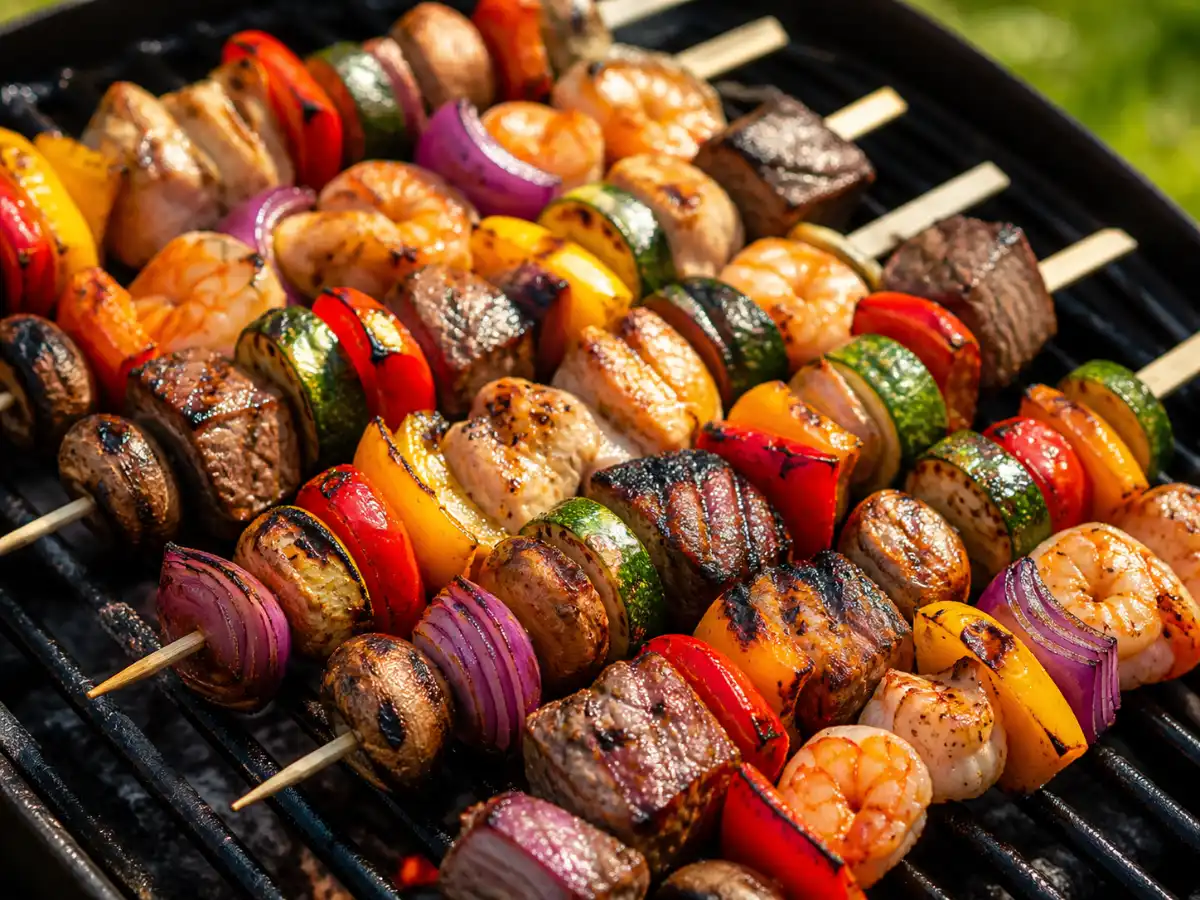
Kabobs on the grill are one of the easiest summer dinners when the pieces are cut evenly, the grill heat is steady, and the ingredients are grouped by cook time. Without those three basics, chicken can dry out, vegetables can burn, shrimp can turn rubbery, and the skewers can stick to the grates.
This guide shows you how to grill chicken, steak, shrimp, and vegetable kabobs with less guesswork. You will learn the best grill temperature, how long kabobs take, when to use direct or indirect heat, how to keep wooden skewers from burning, and how to fix common problems like sticking, burning, and uneven cooking.
For a full warm-weather menu, pair these kabobs with simple sides from our summer dinner ideas guide.
Quick answer: Grill kabobs over medium to medium-high heat, about 375°F to 400°F. Cook chicken kabobs for 10 to 15 minutes, steak kabobs for 7 to 10 minutes, shrimp kabobs for 4 to 6 minutes, and vegetable kabobs for 8 to 12 minutes. Turn every few minutes and use a food thermometer for meat.
If you already know which protein you want to grill, start with a full recipe version: Chicken Kabobs on the Grill, Shrimp Kabobs on the Grill, or Steak Kabobs on the Grill. Use this guide when you need the timing, temperature, skewer tips, and grilling method.
Kabob Grill Times at a Glance
Use this chart as a quick guide before you start grilling. Cook time can change based on the size of the pieces, the grill temperature, and how closely the food is packed on the skewer.
| Kabob Type | Best Grill Heat | Approx. Cook Time | Done When |
|---|---|---|---|
| Chicken kabobs | Medium | 10 to 15 minutes | 165°F in the thickest piece |
| Steak kabobs | Medium-high | 7 to 10 minutes | Preferred doneness; USDA guidance for beef steaks is 145°F with a 3-minute rest |
| Shrimp kabobs | Medium-high | 4 to 6 minutes | Pearly or white and opaque |
| Vegetable kabobs | Medium-high | 8 to 12 minutes | Tender with light char marks |
For meat and seafood, cook time is only a guide. The safest way to check doneness is with a food thermometer. FoodSafety.gov lists safe internal temperature guidance for poultry, beef, seafood, and other foods in its safe minimum internal temperature chart.
Why Kabobs Can Be Tricky on the Grill
Kabobs look simple, but they need a little planning because meat, seafood, and vegetables do not cook at the same speed. Chicken needs enough time to reach a safe internal temperature. Shrimp cooks quickly. Vegetables soften at different rates depending on their size and water content.
The best way to avoid burning, sticking, or uneven cooking is to cut ingredients evenly, group similar cook times together, and use steady medium to medium-high heat.
Uneven Ingredient Sizes
Cut meat and vegetables into pieces that are close in size. Aim for 1 to 1 1/2 inch pieces for most grilled kabobs. Smaller pieces can dry out quickly, while larger pieces may stay undercooked in the center.
Try to match the size of your vegetables to the size of your meat. For example, if you cut chicken into 1 1/2 inch chunks, cut bell peppers and onions into wide pieces that can handle the same grill time.
Too Much Direct Heat
High heat can char the outside before the inside is done. This is especially common with chicken kabobs because chicken needs enough time to cook through.
Medium to medium-high heat works better for most kabobs. If your grill runs hot, start the skewers over direct heat for color, then move them to a cooler side so the inside can finish cooking without burning the outside.
Meat and Vegetables Cook at Different Speeds
Meat and vegetables can go on the same kabob when they have similar cook times. Bell peppers, onions, and thick zucchini slices work well with chicken or steak. Softer vegetables, such as tomatoes and mushrooms, often cook better on separate skewers because they finish faster.
Separate skewers also give you more control. You can remove vegetable kabobs as soon as they are tender and keep meat kabobs on the grill until they reach the right doneness.
Best Ingredients for Grilled Kabobs
The best kabobs start with ingredients that can handle grill heat without falling apart. Choose meat that stays tender, vegetables that hold their shape, and marinades that add flavor without too much sugar.
Also, think about cook time before you build the skewers. Chicken, steak, shrimp, and vegetables all behave differently over heat. When you match the right foods together, kabobs cook more evenly and taste better.
Best Meats for Kabobs
Chicken, steak, and shrimp all work well for kabobs on the grill. Chicken thighs are the most forgiving because they stay juicy over steady heat. Chicken breasts also work, but they need even 1 to 1 1/2 inch pieces and careful timing so they do not dry out.
For beef kabobs, choose sirloin, ribeye pieces, tenderloin tips, or strip steak. These cuts cook quickly and stay tender when cut into bite-size pieces. For shrimp kabobs, use large shrimp because smaller shrimp can overcook in just a few minutes.
For a smoky finish, brush chicken, steak, or vegetable skewers near the end of grilling with this 3 ingredient BBQ sauce.
Best Vegetables for Kabobs
Bell peppers, red onions, zucchini, mushrooms, cherry tomatoes, and corn pieces are good choices for grilled kabobs. They bring color, sweetness, and texture, but each vegetable needs a slightly different setup.
Cut peppers and onions into wide chunks so they do not slip through the grill grates. Slice zucchini thick enough to stay on the skewer. Keep mushrooms whole or halved, depending on size. If you use cherry tomatoes, thread them gently because they can burst as they cook.
For a lighter summer plate, serve grilled kabobs with fresh sides like this cucumber tomato salad or browse more ideas from our summer salad recipes collection.
Wooden vs. Metal Skewers
Both wooden and metal skewers work, but they act differently on the grill. Wooden skewers are cheap and easy to find. Soak them in water before grilling so they are less likely to scorch. Metal skewers are reusable, sturdy, and good for heavier foods like steak, chicken, and thick vegetables.
Flat metal skewers are better than round ones because they keep food from spinning when you turn the kabobs. If you use wooden skewers, choose sturdy bamboo skewers and avoid overloading them.
How to Prep Kabobs for Even Cooking
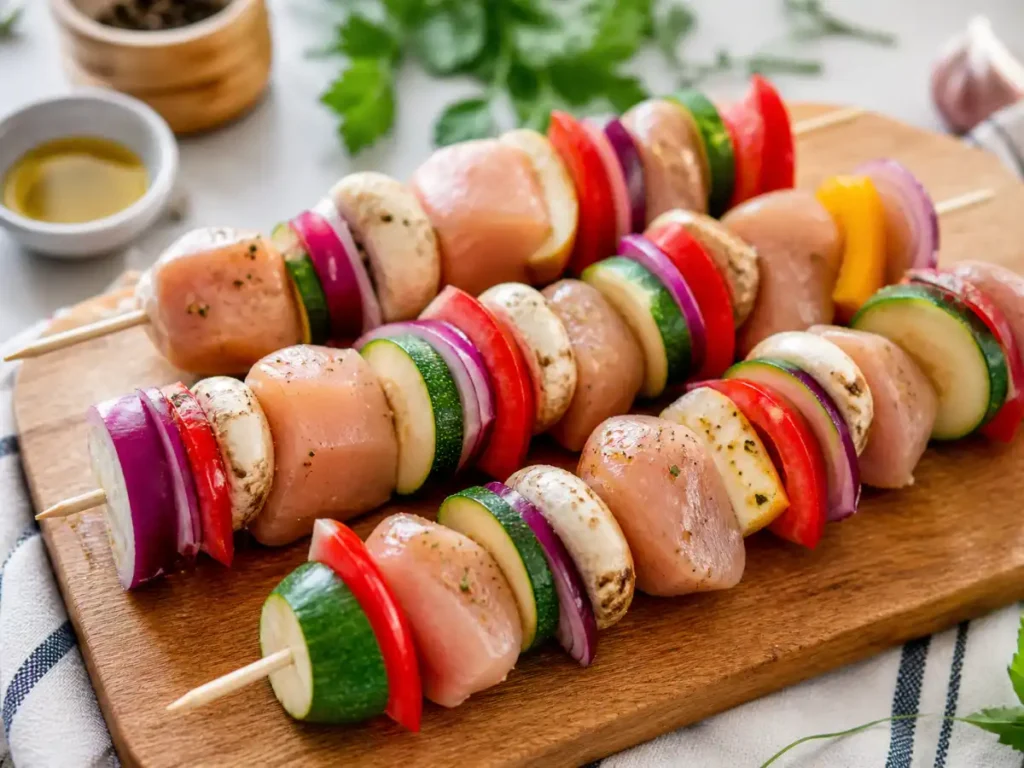
Good prep makes grilled kabobs easier to cook. Before you turn on the grill, cut the ingredients, season the meat, and build the skewers with a little space between each piece. This helps heat reach every side.
First, keep the pieces close in size. Next, pair foods with similar cook times. Then, use a light coat of oil so the kabobs brown well and release from the grill more easily.
How Big to Cut Meat and Vegetables
Cut chicken and steak into 1 to 1 1/2 inch pieces. This size cooks fast but still stays juicy. If the pieces are too small, they can dry out. If they are too large, the outside may brown before the center is done.
Cut vegetables a little larger than you think you need. Bell peppers and onions shrink as they cook. Zucchini should be sliced thick enough to stay firm on the skewer. Mushrooms can stay whole if they are small.
Should You Marinate Kabobs First?
Yes, marinating adds flavor and helps meat taste more seasoned. Chicken and steak kabobs can sit in marinade for 30 minutes to 4 hours. Shrimp needs less time, usually 15 to 30 minutes, because it absorbs flavor quickly.
Avoid marinades with too much sugar if you plan to use direct heat. Sugar can burn before the meat is done. If you want a sweet glaze, brush it on near the end of cooking instead.
If you use marinade on raw meat, discard the used marinade after removing the meat. If you want to use marinade as a sauce, set some aside before it touches raw meat.
How Long to Soak Wooden Skewers
Soak wooden skewers in water for at least 30 minutes before grilling. This helps lower the chance of burning. Use a shallow dish or a rimmed pan so the skewers can lie flat under the water.
Even after soaking, the tips may darken over the flame. That is normal. To help protect them, avoid leaving long bare ends over the hottest part of the grill.
How to Assemble Kabobs for Even Heat
Thread the ingredients snugly, but do not press them tightly together. Leave a small gap between pieces so hot air can move around the food. This helps the kabobs cook more evenly.
For mixed kabobs, use firm vegetables with meat. Bell peppers, onions, and thick zucchini slices work well. For soft vegetables or quick-cooking items, make separate skewers so you can remove them from the grill sooner.
Grill Setup for Perfect Kabobs
The right grill setup helps kabobs cook evenly and release from the grates without tearing. Start with a clean grill, steady heat, and a light coat of oil on the grates. These small steps make a big difference once the skewers hit the heat.
Most kabobs do best over medium to medium-high heat. This gives the outside enough color while the center cooks through. However, if the grill is too hot, the marinade can scorch and the vegetables can blacken before the meat is ready.
Best Grill Temperature for Kabobs
Set the grill to about 375°F to 400°F for most kabobs. This heat range works well for chicken, steak, shrimp, and vegetable skewers. It is hot enough to brown the outside, but not so hot that the food burns right away.
For chicken kabobs, stay closer to steady medium heat if the pieces are thick. For shrimp and thin steak pieces, medium-high heat works well because they cook fast.
Direct vs. Indirect Heat
Direct heat means the kabobs sit right over the flame or hot coals. This works well for quick-cooking foods like shrimp, steak pieces, peppers, and onions.
Indirect heat means the kabobs sit away from the hottest part of the grill. Use this method when chicken pieces are thick, or when the outside is browning too fast. You can start kabobs over direct heat for color, then move them to indirect heat to finish cooking.
How to Oil the Grill Grates to Prevent Sticking
Clean the grill grates before cooking. Then oil them lightly before you add the kabobs. Use tongs to hold a folded paper towel dipped in a little high-heat oil, then rub it across the hot grates.
Do not pour oil straight onto the grill because it can cause flare-ups. Also, let the kabobs cook for a few minutes before turning them. If you turn them too soon, the meat may stick and tear.
Gas Grill vs. Charcoal Grill
A gas grill gives steady heat and easy temperature control. It is a good choice for chicken kabobs because you can lower the heat if the outside browns too fast.
A charcoal grill gives deeper smoky flavor, but it can run hotter in spots. To control the heat, pile the coals on one side of the grill. Then use the cooler side when the kabobs need more time.
If you are building a full summer plate, serve grilled kabobs with cold salads, corn, dips, or other easy cookout side dishes.
Essential Tools for Grilling Kabobs
You do not need many tools to make good kabobs, but a few simple items make grilling easier and safer.
| Tool | Why It Helps |
|---|---|
| Flat metal skewers | Hold heavier pieces and keep food from spinning when turned |
| Bamboo skewers | Useful for casual grilling when soaked before use |
| Food thermometer | Helps check chicken, steak, and seafood safely |
| Long tongs | Make it easier to turn kabobs without pressing the food |
| Basting brush | Useful for brushing sauce or glaze near the end of grilling |
A food thermometer is especially useful for chicken kabobs. The USDA also recommends using a food thermometer to check that cooked foods reach a safe internal temperature. You can review its safe temperature chart for more guidance.
How Long to Cook Kabobs on the Grill
Kabob cook time depends on the protein, the size of the pieces, and the grill heat. Most kabobs cook in 6 to 15 minutes over medium to medium-high heat.
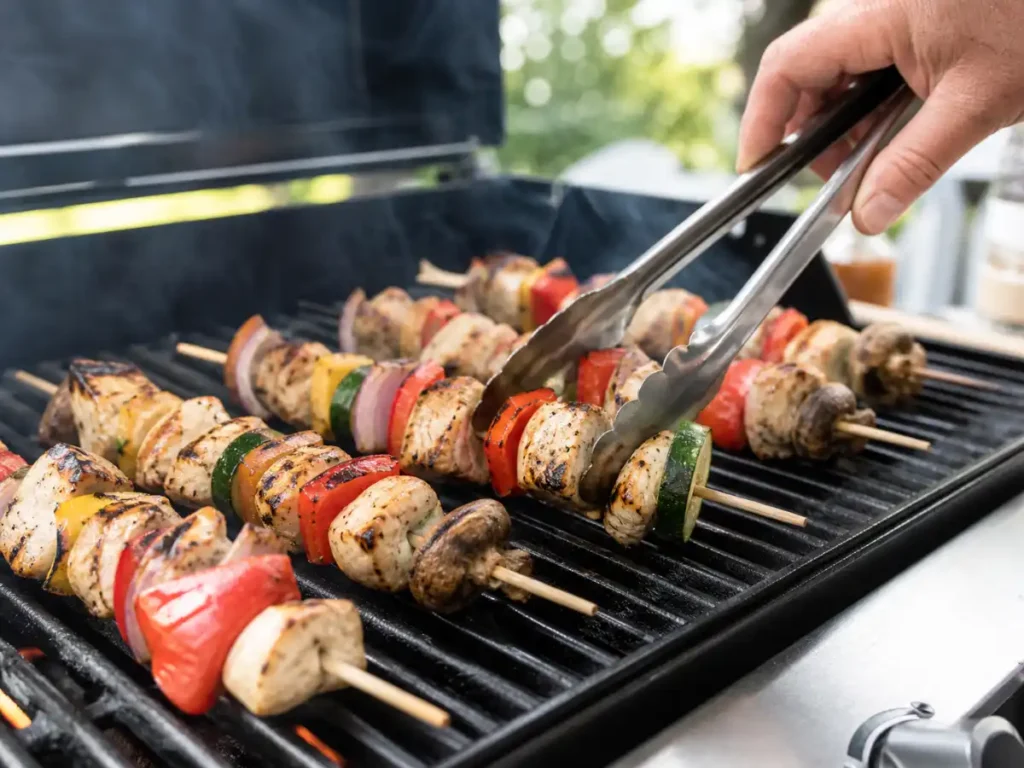
Use time as a guide, not as the final test. For meat and seafood, check the center with a food thermometer when needed. For shrimp and vegetables, use visual cues such as opaque shrimp and tender vegetables with light char marks.
Chicken Kabobs Cook Time
Chicken kabobs usually take 10 to 15 minutes on the grill. Turn them every 3 to 4 minutes so each side browns evenly.
Chicken is done when the thickest piece reaches 165°F. If the outside browns too fast, move the skewers to a cooler part of the grill and let them finish there.
For a complete recipe with marinade, vegetables, grilling time, and serving tips, see these Chicken Kabobs on the Grill.
Steak Kabobs Cook Time
Steak kabobs usually take 7 to 10 minutes, depending on the size of the pieces and how done you like them. Smaller pieces cook faster, so keep a close eye on them.
For juicier steak kabobs, avoid cooking until the pieces feel firm all the way through. Let steak kabobs rest for a few minutes before serving so the juices settle back into the meat.
For a heartier grilled dinner, make these Steak Kabobs on the Grill. They work well with peppers, onions, mushrooms, potatoes, salads, and classic cookout sides.
Shrimp Kabobs Cook Time
Shrimp kabobs cook fast, usually in 4 to 6 minutes. Turn them once or twice while grilling.
Shrimp are done when they turn pearly or white and opaque. If they curl tightly and feel rubbery, they are likely overcooked.
For a fast seafood option, try these Shrimp Kabobs on the Grill. They cook quickly and pair well with rice, corn salad, cucumber salad, and cold summer sides.
Vegetable Kabobs Cook Time
Vegetable kabobs usually take 8 to 12 minutes. Firm vegetables like onions, peppers, and zucchini hold up well over grill heat.
Brush vegetables with oil before grilling so they brown instead of drying out. Turn them often, and pull them off when they are tender with light char marks.
Three Easy Marinades for Kabobs
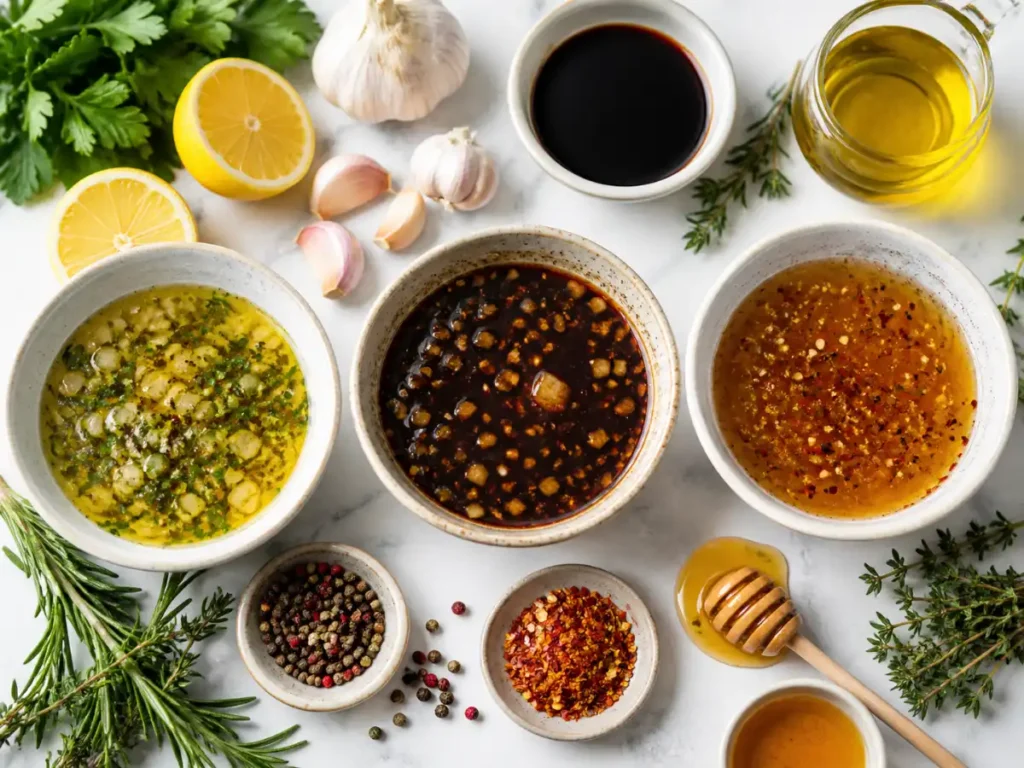
A good marinade should add flavor without hiding the taste of the meat or vegetables. For kabobs on the grill, use a mix of oil, acid, salt, herbs, and a little sweetness when needed.
Keep the marinade light enough so it coats the food without dripping too much over the flames. Also, save sugary sauces for the last few minutes of grilling because they can brown quickly.
Lemon Garlic Chicken Marinade
This marinade works well with chicken breast, chicken thighs, zucchini, bell peppers, and red onion.
| Ingredient | Amount |
|---|---|
| Olive oil | 1/4 cup |
| Lemon juice | 2 tablespoons |
| Minced garlic | 3 cloves |
| Dried oregano | 1 teaspoon |
| Paprika | 1 teaspoon |
| Salt | 1 teaspoon |
| Black pepper | 1/2 teaspoon |
Mix the marinade in a bowl. Add the chicken pieces and toss to coat. Cover and chill for 30 minutes to 4 hours. Then thread the chicken with firm vegetables and grill until the chicken reaches 165°F.
Steakhouse Herb Marinade
This marinade works best with sirloin, ribeye pieces, strip steak, mushrooms, onions, and bell peppers.
| Ingredient | Amount |
|---|---|
| Olive oil | 1/4 cup |
| Worcestershire sauce | 2 tablespoons |
| Soy sauce | 1 tablespoon |
| Red wine vinegar | 1 tablespoon |
| Minced garlic | 2 cloves |
| Dried thyme | 1 teaspoon |
| Black pepper | 1/2 teaspoon |
Stir the marinade in a large bowl. Add steak pieces and coat well. Chill for 30 minutes to 2 hours. Thread the steak onto skewers with onions, peppers, or mushrooms. Grill over medium-high heat until the steak reaches your preferred doneness.
Honey Garlic or Smoky Barbecue Marinade
This marinade is great for chicken, shrimp, and vegetable kabobs. It has a sweeter finish, so brush extra sauce on near the end instead of letting it sit over direct heat for too long.
| Ingredient | Amount |
|---|---|
| Olive oil | 3 tablespoons |
| Honey | 2 tablespoons |
| Soy sauce | 2 tablespoons |
| Minced garlic | 2 cloves |
| Smoked paprika | 1 teaspoon |
| Apple cider vinegar | 1 tablespoon |
| Black pepper | 1/2 teaspoon |
Mix all ingredients in a bowl. Add chicken, shrimp, or vegetables. Marinate shrimp for 15 to 30 minutes. Marinate chicken for 30 minutes to 4 hours.
For more smoky flavor, brush the kabobs during the last few minutes with this 3 ingredient BBQ sauce.
Step-by-Step: How to Grill Kabobs
Grilling kabobs is easier when you work in order. Prep the skewers first, heat the grill, oil the grates, then cook with steady turns. This keeps the outside browned while the inside cooks through.
Use this method for chicken, steak, shrimp, and vegetable kabobs. Adjust the cook time based on the protein and the size of the pieces.
1. Preheat the Grill
Preheat the grill to 375°F to 400°F. Let it heat for at least 10 minutes so the grates get hot enough to brown the food.
A hot grate helps the kabobs release better once the surface has seared. If you place kabobs on a cold grill, the meat is more likely to stick.
2. Place Kabobs Over the Right Heat Zone
Place chicken kabobs over medium heat. They need enough time to cook through without burning outside.
Place steak, shrimp, and firm vegetable kabobs over medium-high heat. These cook faster and benefit from quick browning.
If the kabobs start to char too fast, move them to a cooler side of the grill. Then let them finish cooking with gentler heat.
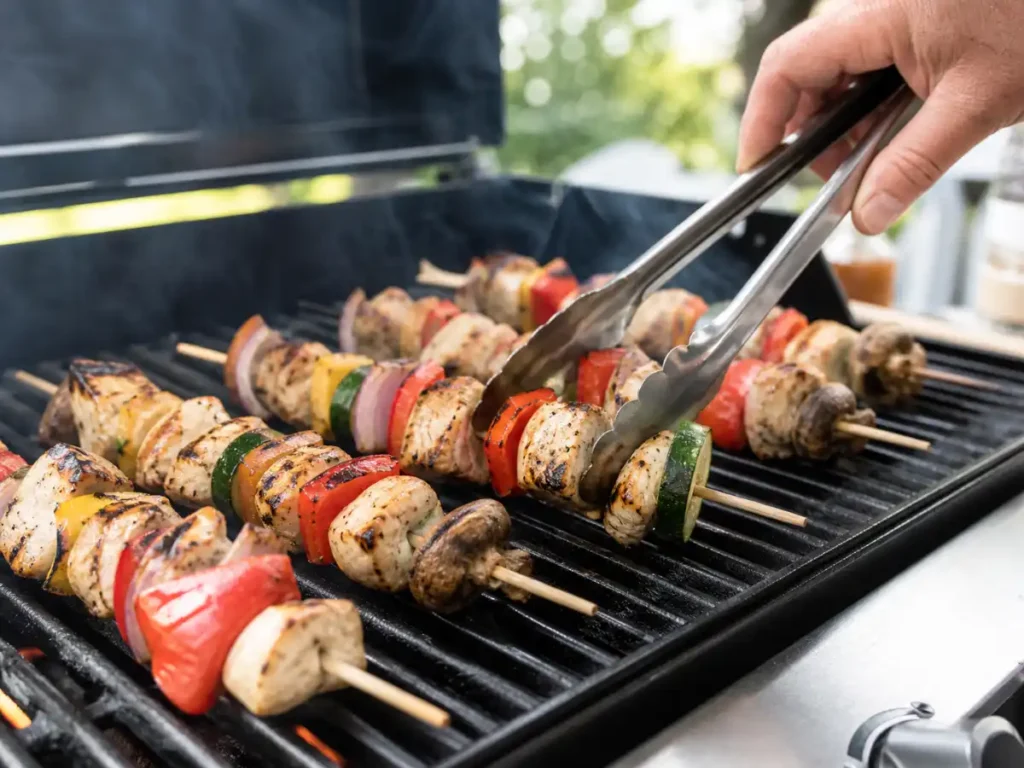
3. Turn the Skewers Every Few Minutes
Let the kabobs cook for 2 to 4 minutes before the first turn. If you try to move them too soon, the meat may stick.
Turn the skewers every few minutes so each side gets color. Use tongs, and avoid pressing the food against the grates. Pressing can squeeze out juices and make the meat dry.
4. Check for Doneness
Check doneness based on the protein. Chicken is done when the thickest piece reaches 165°F. Steak should be cooked to your preferred doneness. Shrimp is ready when it turns pearly or white and opaque. Vegetables are done when tender with light char marks.
For mixed kabobs, check the meat first. If the meat needs more time but the vegetables are already soft, move the skewers to indirect heat.
5. Rest and Serve
Let chicken and steak kabobs rest for 3 to 5 minutes after grilling. This helps the juices settle before serving.
Shrimp and vegetable kabobs do not need much rest. Serve them right away while they are warm and tender.
For a full summer dinner, serve kabobs with rice, flatbread, grilled corn, pasta salad, cucumber salad, or a cool dipping sauce.
Troubleshooting Grilled Kabobs
Even good kabobs can run into problems on the grill. The most common issues are sticking, burning, dry meat, and loose pieces that fall off the skewer. Most of these problems come from heat that is too high, pieces that are cut too small, or skewers that are packed too tightly.
Use the fixes below when your kabobs are not cooking the way you want.
Why Kabobs Stick to the Grill
Kabobs usually stick when the grates are dirty, the grill is not hot enough, or the food is turned too soon. Meat needs a few minutes to sear before it releases from the grates.
To fix this, clean the grates before grilling. Then oil them lightly with a folded paper towel held with tongs. After you place the kabobs on the grill, let them cook for 2 to 4 minutes before turning.
Also, use enough oil in the marinade or brush the kabobs lightly before grilling. A dry surface is more likely to stick.
Why Vegetables Burn Before Meat Is Done
Vegetables burn before meat is done when the grill is too hot or when soft vegetables are paired with thick meat pieces. Zucchini, tomatoes, and mushrooms can cook faster than chicken.
To fix this, cut meat into smaller, even pieces. Use firm vegetables such as bell peppers and red onions on meat skewers. For softer vegetables, make separate vegetable skewers so you can take them off the grill sooner.
You can also start kabobs over direct heat for color, then move them to indirect heat to finish cooking.
Why Chicken Dries Out
Chicken dries out when the pieces are too small, the grill is too hot, or the kabobs cook too long. Chicken breast is more likely to dry out than chicken thighs.
To fix this, cut chicken into 1 to 1 1/2 inch pieces. Marinate it for at least 30 minutes. Then grill over steady medium heat and pull it off when the thickest piece reaches 165°F.
Let chicken kabobs rest for a few minutes before serving. This helps keep the meat juicy.
Why Kabobs Fall Apart on Skewers
Kabobs fall apart when the pieces are too small, too soft, or pushed too close to the skewer tip. They can also fall apart if the skewer is overloaded.
To fix this, cut ingredients into sturdy pieces. Thread each piece through the center. Leave a little room between pieces, but do not leave large gaps.
For heavy kabobs, use flat metal skewers. They hold food better and make turning easier.
Serving Ideas and Sides
Kabobs can stand alone, but they make a better dinner when you add one cool side, one starch, and one sauce. This balance keeps the plate fresh, filling, and easy to serve.
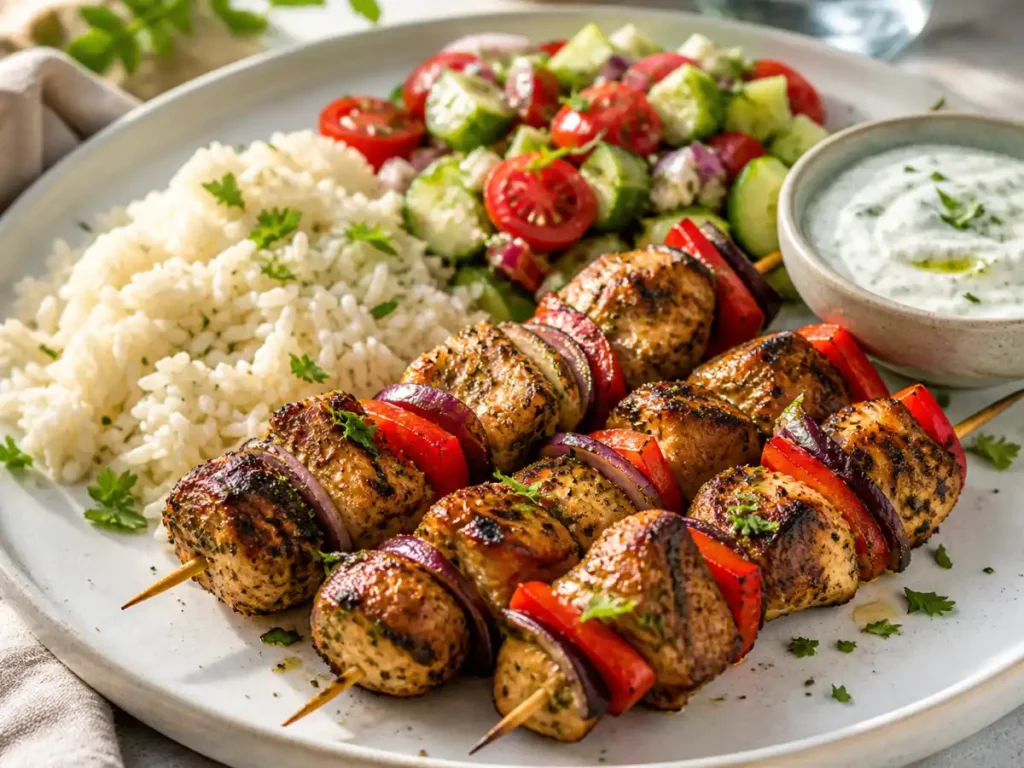
For a simple summer meal, pair chicken or steak kabobs with rice, pita bread, grilled corn, cucumber salad, or pasta salad. For shrimp kabobs, use lighter sides like tomato salad, lemon rice, or a crisp green salad.
Easy Sides for Kabobs
Here are easy sides that work well with kabobs on the grill:
| Side Dish | Best With |
|---|---|
| Rice pilaf | Chicken, steak, shrimp |
| Pita bread or flatbread | Chicken, steak, vegetables |
| Grilled corn | Chicken, steak, shrimp |
| Pasta salad | Chicken, steak, vegetable kabobs |
| Cucumber tomato salad | Shrimp, chicken, steak |
| Green salad | Any kabob dinner |
| Roasted or grilled potatoes | Steak, chicken, vegetable kabobs |
For a complete side-dish guide, see what to serve with kabobs. If you want cold sides for a cookout plate, start with these cookout side dishes. For a pasta side that can be made ahead, use this summer pasta salad recipes guide.
Fresh Salads to Serve with Kabobs
A crisp salad helps balance smoky grilled meat. Cucumber, tomato, corn, chickpeas, and leafy greens all work well with kabobs.
For a quick side, try this cucumber tomato salad. You can also serve kabobs with creamy cucumber salad when you want something cool and rich.
For more light sides, browse our full summer salad recipes collection.
Sauces for Kabobs
Sauces make grilled kabobs more fun to serve. Add one sauce to the table so people can spoon, dip, or drizzle as they like.
| Sauce | Best With |
|---|---|
| Garlic yogurt sauce | Chicken, vegetable kabobs |
| BBQ sauce | Chicken, steak |
| Tahini sauce | Vegetable, chicken, shrimp kabobs |
| Lemon herb dressing | Shrimp, chicken, vegetables |
| Spicy mayo | Shrimp, steak, chicken |
For a smoky finish, brush the kabobs with this 3 ingredient BBQ sauce near the end of grilling. If you want a creamy, nutty sauce for vegetable or chicken kabobs, try this tahini sauce.
Build a Complete Kabob Dinner
For an easy summer plate, choose one skewer, one cool side, one filling base, and one sauce.
- Chicken kabobs: serve with rice, cucumber tomato salad, and garlic yogurt sauce.
- Steak kabobs: serve with grilled potatoes, corn, and BBQ sauce.
- Shrimp kabobs: serve with lemon rice, summer salad, and tahini sauce.
- Vegetable kabobs: serve with flatbread, creamy cucumber salad, and a bright herb sauce.
This setup works well for family dinners, cookouts, and meal prep because each part can be made ahead or served in bowls.
Related Summer Dinner Guides
This kabob guide works as part of a larger summer dinner cluster. If you are planning a full meal, these related guides can help you choose the main dish, sides, salads, pasta salads, sauces, and BBQ-friendly add-ons.
- Summer Dinner Ideas for more warm-weather meals, no-oven dinners, grilled mains, and make-ahead options.
- Cookout Side Dishes for BBQs, potlucks, grilled meals, cold sides, corn, slaw, and make-ahead cookout plates.
- Summer Pasta Salad Recipes for cold, make-ahead pasta salads that work with kabobs, BBQ chicken, steak, shrimp, and grilled vegetables.
- Summer Salad Recipes for fresh, colorful sides that keep grilled dinners light.
- 3 Ingredient BBQ Sauce for brushing chicken, steak, shrimp, or vegetables before serving.
Build your kabob dinner next: Once the skewers are planned, use this guide to what to serve with kabobs for salads, pasta salads, corn, rice, pita, sauces, dips, and easy summer menu ideas.
FAQ
Grill most kabobs over medium-high heat, between 375°F and 400°F. This gives the outside a nice char while allowing the inside to cook evenly without burning.
Cook times depend on the protein. Shrimp takes 4 to 6 minutes, steak takes 8 to 10 minutes, and chicken takes 10 to 15 minutes. Always turn them every few minutes for even cooking.
Keep the lid closed for thicker chicken, or steak to help the center cook through. Keep the lid open for fast-cooking items like shrimp or thin vegetables so you can monitor them closely.
Yes. Meat and vegetables cook at different speeds. Separating them gives you total control, preventing overcooked beef or undercooked onions. If you do mix them, ensure everything is cut to the same size.
Soak wooden or bamboo skewers in water for at least 30 minutes before grilling. Also, try to push your ingredients to the ends so there isn’t a long piece of exposed wood directly over the flames.
The safest way is to use an instant-read meat thermometer on the largest piece of meat. Chicken should reach 165°F, and steak 135°F to 145°F depending on your preferred doneness.
Final Tips for Better Kabobs on the Grill
The easiest way to make better kabobs is to keep the setup simple: choose one protein, two vegetables, one marinade, and one side. Cut everything evenly, avoid packing the skewers too tightly, and keep the grill around medium to medium-high heat.
For mixed skewers, use firm vegetables like bell peppers, onions, and thick zucchini slices. For softer vegetables or quick-cooking foods like shrimp, separate skewers give you more control and help prevent burning.
Serve the kabobs as soon as they are done with rice, flatbread, corn, pasta salad, cucumber salad, or a simple sauce. For more meal planning ideas, use this summer dinner ideas guide or build a cookout plate from these cookout side dishes.